

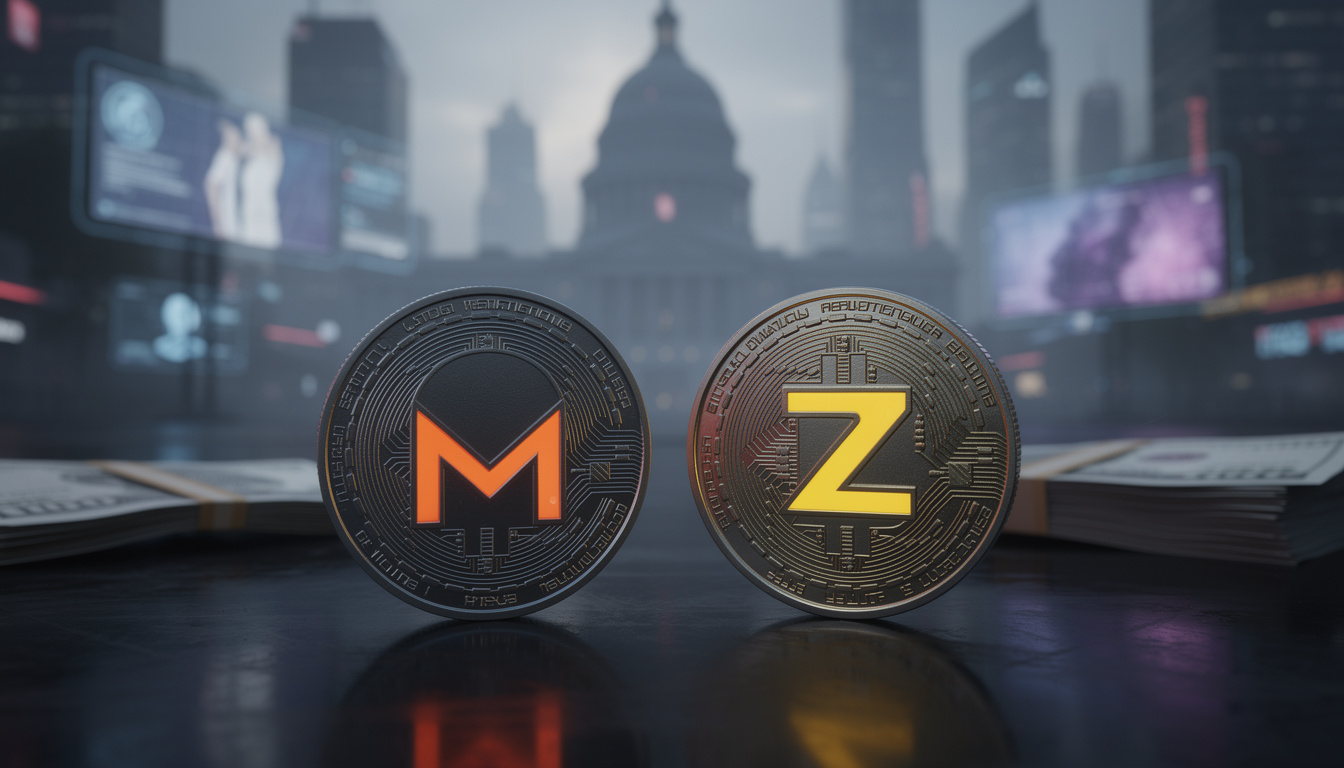
Privacy Coins in 2026: Are Monero and Zcash still legal where you live? Rules are shifting fast, exchange access is shrinking, and the answer now depends heavily on your country.
On a phone screen, a familiar crypto app opens, and then comes the surprise: Monero is gone, Zcash looks harder to find, and the rules page suddenly matters more than the price chart. That is the reality for many users now. Privacy Coins in 2026 are no longer just a niche topic for crypto veterans, because legal access, exchange listings, and compliance checks have become deeply local questions.
Since MiCA took effect across the EU and FATF Travel Rule enforcement expanded, the legal map for privacy-focused assets has split in two. Some jurisdictions still allow ownership and trading, while others block listings or pressure platforms to remove them. For anyone holding XMR or ZEC, what matters now is not just the tech, but where you live and how you access the market.
Privacy Coins in 2026, why the legal picture feels so fragmented
The biggest shift is that legality and availability are no longer the same thing. In many places, Monero and Zcash may still be legal to own, yet hard to buy on major centralized exchanges. That distinction matters, because many readers assume a delisting automatically means a ban.
As of March 2026, at least 10 countries have either strict exchange restrictions or direct limits on privacy coins, according to reports cited across industry coverage and mainstream aggregators such as MSN. In the EU, MiCA compliance pressures have pushed platforms to reassess coins with always-on privacy features, while in the USA, AML expectations and spillover effects from broader crypto rulemaking have made exchange support more cautious.
This is also why the debate around financial privacy has widened beyond crypto circles. DualMedia recently examined how cryptocurrency regulation affects privacy rights, and that tension now sits at the center of the Monero and Zcash story.
Monero vs Zcash, the legal difference regulators actually care about
Monero and Zcash are often grouped together, but regulators do not see them as identical. Monero uses mandatory privacy by default, with ring signatures, stealth addresses, RingCT, and the FCMP++ upgrade strengthening anonymity further. That architecture makes compliance teams nervous, because there is no transparent mode for routine audits.
Zcash takes a different path. Its shielded transactions rely on zk-SNARKs and newer Orchard-era privacy, but the network still supports transparent transfers and selective disclosure through viewing keys. Based on the reported design direction and compliance posture, this is one reason Zcash has looked more acceptable in regulated settings than Monero.
That does not mean Zcash is free from scrutiny. It means regulators and exchanges can more easily imagine a compliance workflow around it. In a post-MiCA market, that distinction has become one of the most important survival advantages any privacy coin can have.
For readers tracking broader market stress, this fits a larger pattern seen across digital assets, especially during periods of policy uncertainty and liquidity shocks covered in pieces like US crypto regulation lag.
Where Monero and Zcash are still available, and where access is shrinking
Exchange support tells a practical story, even if it is not the whole legal story. The available market data used in 2026 roundups points to 70 or more delistings affecting Monero since 2024, with pressure strongest in parts of Europe and Asia. Japan and South Korea have long been tough environments for privacy-focused assets, and EU enforcement added fresh pressure.
Zcash has also faced removals, but fewer across major platforms. Dash, by contrast, has often avoided the same level of pressure because its privacy features are optional and its base layer is transparent. For that reason alone, some compliance teams treat Dash less like Monero and more like a conventional payment coin with an extra feature.
If you are checking what is still possible, the answer often looks like this:
- Legal to hold in many jurisdictions, even where major exchanges no longer list the asset
- Legal to trade only through certain platforms, depending on national AML enforcement
- Harder to access through CEXs for Monero than for Zcash
- Still active on peer-to-peer and decentralized routes, where local law still applies to the user
This split has created a market where the same coin can feel mainstream in one country and nearly invisible in another. That is the key insight many casual holders miss.
| Key detail | Why it matters |
|---|---|
| Monero privacy is always on | It raises more AML concerns for centralized exchanges and regulators |
| Zcash supports viewing keys | It offers a clearer compliance path for audits and selective disclosure |
| EU MiCA enforcement changed listings | Platforms faced stronger pressure to reassess privacy coin exposure |
| Delisting does not always mean illegal | Users may still legally hold assets, depending on local law |
| P2P access remains active | Liquidity can survive even after major exchange removals |
Why Monero still leads on privacy, even as Zcash gains regulatory ground
If the only question is privacy strength, Monero still sits at the front of the pack. Its design hides sender, receiver, and amount by default, and FCMP++ has expanded anonymity sets in ways that make chain analysis even harder. That is one reason Monero remains dominant in censorship-resistant transfers and darknet-adjacent use cases, despite shrinking CEX liquidity.
Zcash remains technically impressive. In shielded mode, its privacy is strong, and the cryptography has earned lasting respect from researchers and developers. The issue is adoption, because only part of the supply sits in shielded pools, which weakens privacy for users who remain in transparent flows.
Dash is still relevant as a payment coin, but not as a serious privacy leader. Its PrivateSend model offers lighter mixing on a transparent base layer, which is much easier for regulators to tolerate and much less compelling for users seeking maximum anonymity.
That leaves a clear pattern in 2026. Monero wins on pure privacy, Zcash wins on regulatory survivability, and Dash wins only on transactional simplicity.
Readers who want a broader primer on this corner of the market can also look at this overview of Bitcoin, Zcash, and Monero trends and DualMedia’s reporting on crypto security and privacy.
What users should check before buying or moving privacy coins
The first step is simple but often skipped: check local exchange policy and local law separately. A platform may block trading because of internal compliance policy even when your jurisdiction still allows ownership. That difference can affect taxes, reporting, and how you move funds between wallets.
The second issue is custody. For users focused on privacy and resilience, self-custody tools have become more important as listings contract. Based on the reported ecosystem direction, Monero users often lean toward wallets such as the official GUI or Feather, while hardware wallet support from brands like Ledger and Trezor remains part of the discussion depending on the asset and workflow.
A final check is risk exposure. Privacy coins face higher regulatory scrutiny than Bitcoin or Ethereum, and that can affect liquidity overnight. If your route to access depends on a single exchange, that is a weak setup in the current market.
Frequently asked questions
Is Monero illegal in the USA or the EU?
Not generally. In many cases, Monero is still legal to own, but exchange access has become much more limited, especially where platforms face stronger AML and MiCA-related compliance pressure.
Why is Zcash treated differently from Monero?
Zcash supports optional privacy and viewing keys, which can help with audits and selective disclosure. Monero does not offer that flexible compliance path, because privacy is built into every transaction.
Does a delisting mean a privacy coin is banned?
No. A delisting usually reflects exchange risk policy or local compliance pressure, not necessarily a direct legal ban on ownership. You still need to check the rules in your country or state.
Are privacy coins still used in 2026?
Yes, but usage is more fragmented. Monero remains the strongest coin for private transfers, while Zcash keeps attracting attention from users who want stronger privacy with a more regulator-friendly design.
What to watch next
The next phase will hinge on whether regulators keep treating privacy as a red flag or begin distinguishing between opaque systems and auditable privacy tools. That is where Zcash may keep gaining ground, especially if shielded adoption rises and selective disclosure becomes more useful to institutions.
Monero, though, is not fading quietly. It still has the strongest privacy stack in this category, real usage, and a community that has adapted to delistings before. The real answer to the title question is no longer universal, it is jurisdiction by jurisdiction, platform by platform, and increasingly wallet by wallet.
Cryptocurrency carries financial and regulatory risk. Privacy coins face heightened scrutiny, and users should verify local laws before buying, holding, or transferring these assets.
Want more tech and innovation coverage like this? DualMedia Innovation News tracks the technology shifts that actually matter, from AI to foldable hardware to the next wave of consumer products.
 EN
EN  FR
FR  ES
ES