

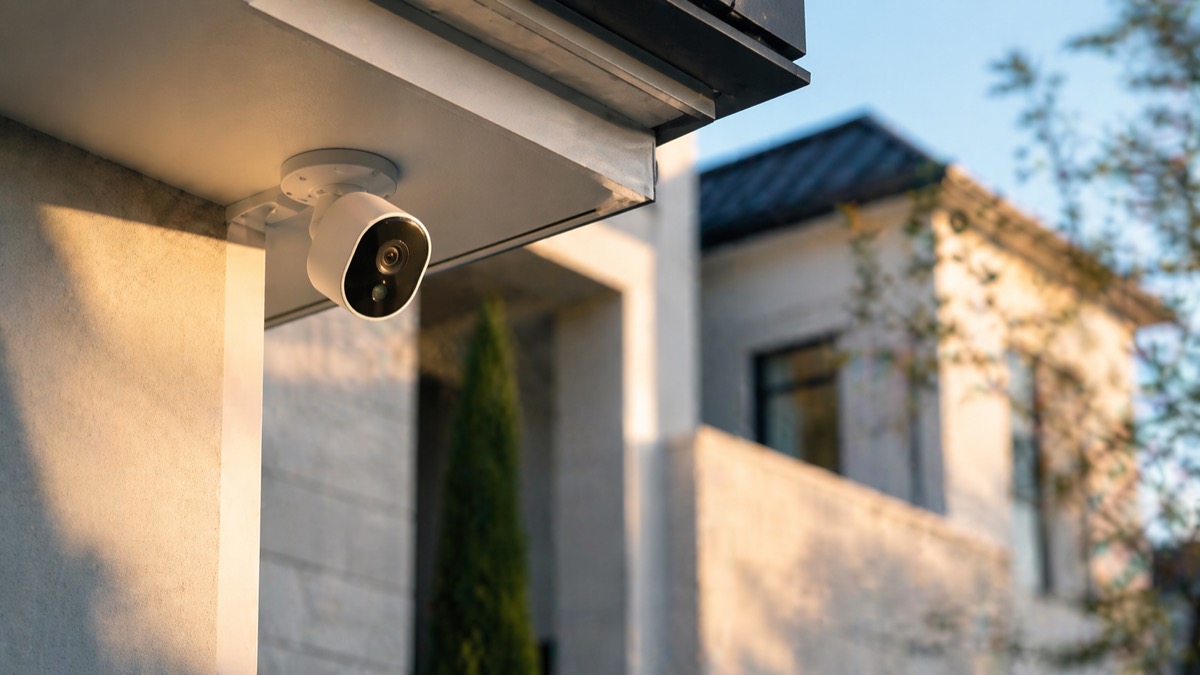
Best wireless outdoor security cameras in 2026: Arlo Pro 6, Nest Cam, Ring Outdoor Cam Plus, Tapo and Eufy compared, with real opinions.You want a wireless outdoor camera that actually works, does not hold your video history hostage behind a subscription, and survives a winter outside. Easy to say. Hard to find. The market moved significantly in 2025-2026, with new flagships from Arlo, Ring, Google Nest, and a rising budget tier led by TP-Link Tapo that quietly redefined what $100 buys you. This is the 2026 guide written with one filter in mind: what would a reviewer who actually uses these things install at a friend’s house? Here are the models worth your attention, and the ones you can safely ignore.
What actually changed in outdoor security cameras in 2026
Three shifts matter more than the marketing. First, on-device AI processing went mainstream. Mid-tier cameras in 2026 now handle person, animal, and vehicle detection locally rather than streaming footage to the cloud for analysis, which means faster alerts, better privacy, and features that keep working during internet outages. Tom’s Guide tested six major brands in April 2026 to compare AI accuracy across Google Nest, Arlo, Wyze, Ring, Blink, and Eufy, and the gap between them narrowed significantly compared with the 2023 test cycle.
Second, the subscription economics shifted. Google’s Nest Cam (battery, 2nd gen) now includes free person, animal, and vehicle alerts plus a 3-hour video history, per SafeWise’s April 2026 review, which is a meaningful change for users who refused to pay monthly fees. Meanwhile, TP-Link Tapo’s C460 offers subscription-free AI detection processed on-device, according to The Gadgeteer’s April 2026 review, at roughly $100 per camera.
Third, Matter support and HomeKit integration finally matured enough to matter. You can now mix cameras from different brands into the same smart home without the old reliability headaches, which changes how buyers should approach camera selection.
Arlo Pro 6: the premium all-rounder worth the price
If budget is not the primary constraint, the Arlo Pro 6 is the camera to buy in 2026. CNET’s 2025-2026 expert testing landed on it as the top overall outdoor home security camera, citing 2K HDR image quality, built-in spotlight, reliable two-way audio, and Arlo’s new Intelligence AI platform that detects specific events rather than just motion.
At roughly $125 per camera, the Arlo Pro 6 undercuts floodlight-class competitors while matching most of what they offer. The tradeoff is Arlo’s ecosystem: you need Arlo Secure (starts at around $8 per month) to unlock the full AI detection feature set, which is a real subscription commitment for households with three or more cameras.
Best for: homeowners who want the strongest image quality and AI accuracy, are comfortable with a subscription, and value a mature app ecosystem.
Google Nest Cam (battery, 2nd gen): the best subscription-free option
The 2nd-generation Nest Cam battery is the 2026 answer for anyone fed up with Ring’s and Arlo’s paywalls. Reviewed.com ranked it as the best outdoor home security camera in late 2025 thanks to the combination of free intelligent alerts (person, motion, vehicle, animal detection) and a free 3-hour video history, an unusual thing in this market.
Build quality is solid with an IP54 rating, color night vision out to 20 feet, and tight integration with the Google Home app. The flagship feature in 2026 is the built-in local video storage that keeps the camera recording up to a week even when your internet drops, a differentiator competitors have not matched.
One caveat worth stating: Google notes that the battery will not charge in freezing temperatures, so in cold climates you may need to bring the camera inside for charging during winter. Arlo, Reolink, and other battery-powered rivals share this limitation, but it is worth knowing before install.
Best for: subscription-averse users already inside the Google ecosystem, or anyone who wants strong free features with the option to upgrade later.
Ring Outdoor Cam Plus: the Alexa-first choice
Ring’s 2025 update to the Outdoor Cam Plus (formerly Stick Up Cam) pushed resolution to 2K and kept the familiar design that has anchored the Ring lineup for years. It is the obvious pick for households already invested in Alexa and Echo Show displays, where the viewing experience genuinely integrates better than with third-party cameras.
The honest caveat: the 2K resolution upgrade is less visible in real-world footage than the marketing suggests, per Reviewed’s April 2026 testing. The jump from 1080p to 2K on a small sensor at outdoor distances is modest, not transformative. If you already own older Ring cameras, upgrading is not urgent.
Ring still requires Ring Protect (starts at $4.99 per month) for video history, which remains its biggest friction point. SafeWise and Security.org both flagged this as the most common complaint among Ring users in 2026 reviews.
Best for: deep Alexa users who want plug-and-play integration and are comfortable with the Ring subscription.
TP-Link Tapo C460: the 2026 budget surprise
The most interesting outdoor camera of 2026 is not from Arlo, Ring, or Nest. The TP-Link Tapo C460 shoots 4K with on-device AI person, animal, and vehicle detection, comes with a solar panel option, and retails around $100, per The Gadgeteer’s April 2026 review.
On-device AI is the key phrase. The C460 processes footage locally rather than sending it to the cloud, which means faster alerts, better privacy, and no ongoing subscription required for the AI features. The magnetic mounting base makes installation a five-minute job with no drilling.
The tradeoff is smaller app ecosystem depth compared with Arlo or Nest. If you want advanced integrations, professional monitoring tie-ins, or deep smart home automation, Tapo is not there yet. If you want 80% of the functionality at 40% of the price, it is the pragmatic pick.
Best for: value-focused buyers who want 4K, AI detection, and subscription-free operation without paying flagship prices.
One more thing worth knowing in 2026: TP-Link is under regulatory scrutiny in the US. The FCC added foreign-made consumer routers to its Covered List in March 2026, and there have been security concerns raised at the federal and state level about the company’s networking hardware. Importantly, these actions target TP-Link’s routers, not the Tapo camera line, and the C460 itself uses on-device processing with local storage that limits cloud exposure. But if your threat model includes nation-state concerns, factor in the corporate-parent overlap before buying. For most households, it remains the best value in the category.
Eufy SoloCam S220 and EufyCam S3 Pro: the local storage route
Eufy’s approach has always been local storage first, cloud optional. The SoloCam S220 is solar-powered and weatherproof, designed for permanent outdoor install without wiring. The EufyCam S3 Pro sits one tier up with better resolution and lower latency alerts.
What Eufy gets right in 2026 is the permanent storage-on-device model. You pay once for the camera, insert a microSD card or rely on HomeBase storage, and never touch a subscription. The paid Eufy cloud plan exists but adds little beyond remote video access, per SafeWise’s 2026 review.
What Eufy gets wrong: the brand faced serious trust issues in 2022-2023 over its encryption claims, and while the company has patched the underlying problems, some buyers remain hesitant. Fair or not, it is a real factor in purchase decisions.
Best for: privacy-minded users who want minimal cloud dependency and can live with microSD card management.
The 2026 outdoor camera comparison at a glance
| Camera | Best for | Approximate price |
|---|---|---|
| Arlo Pro 6 | Premium all-rounder with mature AI platform | Around $125 per camera |
| Google Nest Cam battery (2nd gen) | Free AI alerts, 3-hour free video history | Around $179 |
| Ring Outdoor Cam Plus | Alexa-first households | Around $149 |
| TP-Link Tapo C460 | 4K with subscription-free on-device AI | Around $100 |
| Eufy SoloCam S220 | Solar-powered, local storage focus | Varies by retailer |
The specs that actually matter in 2026 (and the ones that do not)
Resolution is overemphasized. The gap between a well-tuned 1080p camera and a mediocre 2K camera is smaller than the spec sheet suggests, especially at outdoor distances. What matters more is the sensor quality, the HDR handling, and the night vision mode. A camera with color night vision out to 20 feet is more useful than a higher-resolution unit with weaker low-light performance.
Field of view above 130 degrees is enough for most residential placements. Pushing to 160 degrees adds fisheye distortion without meaningfully improving coverage. Do not pay extra for a wider angle unless your use case specifically demands it, like a large driveway or a yard corner.
Weatherproofing ratings are worth checking. IP65 handles rain and dust for most climates. IP66 and IP67 add margin for coastal or humid environments. IPX5 (the lower tier some older cameras carry) is borderline for long-term outdoor use.
AI detection accuracy varies more than the marketing admits. Tom’s Guide’s April 2026 comparison of six brands found meaningful false-alarm gaps between models, with the best systems flagging relevant events cleanly and the weakest triggering on wind-blown branches. If you have not tested the AI yourself, read recent reviews from outlets that run actual stress tests rather than unboxing videos.
For larger properties, retail spaces, or installations that require wired coverage and careful camera placement, working with a professional cctv installation in new york provider can help reduce blind spots and ensure the system is configured correctly.
Frequently asked questions
What is the best wireless outdoor security camera in 2026?
The Arlo Pro 6 wins most expert rankings for premium use, per CNET’s 2025-2026 testing, thanks to 2K HDR image quality, AI detection, and a mature ecosystem. For subscription-averse users, the Google Nest Cam (battery, 2nd gen) is the strongest free-feature option, according to Reviewed.com’s late 2025 ranking.
Which outdoor security camera works without a subscription?
The TP-Link Tapo C460 processes AI detection on-device and requires no subscription. The Eufy SoloCam S220 uses local storage with a microSD card. The Google Nest Cam battery offers free person, animal, and vehicle alerts plus 3 hours of free video history, per SafeWise’s April 2026 review.
How long do wireless outdoor camera batteries last?
Battery life varies significantly by model and usage. Most flagship wireless cameras in 2026 run between two to six months per charge under moderate activity. Solar panel accessories effectively eliminate the charging cycle if your install location gets reasonable sunlight. Note that most batteries will not charge in sub-freezing temperatures, a limitation shared across Arlo, Nest, Reolink, and others.
Do I need a 4K camera for outdoor security?
Not really. The real-world image improvement from 1080p to 2K or 4K is modest at outdoor distances, and sensor quality plus night vision performance matter more. A well-built 2K camera from Arlo or Ring will usually outperform a cheaper 4K unit with a weaker sensor.
Are wireless outdoor cameras safe from hackers?
The major brands (Arlo, Ring, Google Nest, Eufy, Tapo) all use end-to-end encryption and two-factor authentication in 2026 configurations. No system is fully hack-proof, but enabling 2FA on your account, keeping firmware updated, and avoiding default passwords eliminates the most common attack vectors. Eufy, Ring, and TP-Link have all had security incidents in recent years that have since been patched.
The bottom line
The wireless outdoor security camera market in 2026 finally offers real options across price tiers without forcing a subscription trap. Pick the Arlo Pro 6 if you want the best overall with a mature AI platform. Pick the Google Nest Cam battery if you refuse to pay monthly fees. Pick the TP-Link Tapo C460 if you want 4K and on-device AI at a quarter of the flagship price. Pick Eufy if local storage matters more than cloud features.
The one camera category not worth buying in 2026 is legacy 1080p models with cloud-only AI and subscription dependencies. The market has moved. So should your shortlist.
Want more tech and innovation coverage like this? DualMedia Innovation News tracks the technology shifts that actually matter, from AI to foldable hardware to the next wave of consumer products.
 EN
EN  FR
FR  ES
ES