

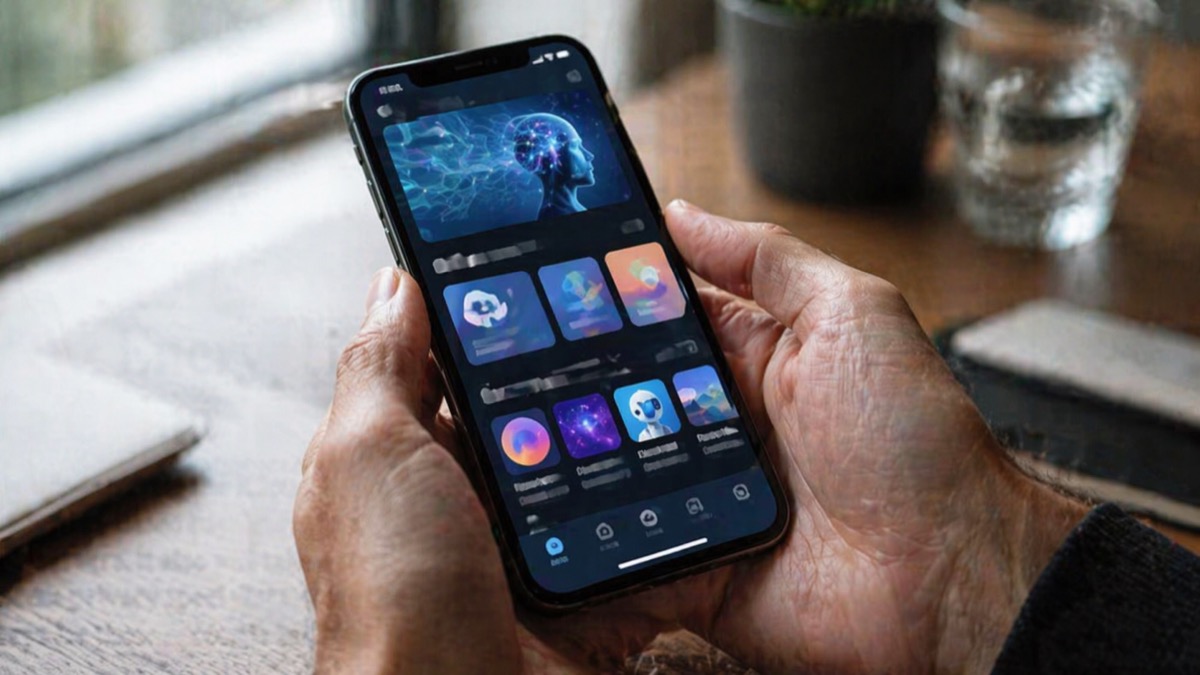
AI-powered mobile apps are reshaping the App Store in 2026, with releases up 104% in April. Here are the ones actually worth your attention.
You open your phone at 9 pm, scroll the App Store homepage, and realize something strange. Half of the featured apps did not exist a year ago. That is not a marketing illusion. According to market intelligence firm Appfigures, global app releases jumped 60% year over year in Q1 2026, and 104% in April 2026 alone, as reported by Digital Trends and Tom’s Guide. The cause is clear. AI-powered mobile apps have rewired how software gets built, launched, and used. But the flood has a problem. Finding the ones that actually work, among thousands that imitate each other, takes time. Here is a sharper cut.
What changed in 2026: ChatGPT dethroned TikTok
The most symbolic shift this year is the top of the App Store rankings. ChatGPT has overtaken TikTok as the top trending app globally in 2026, according to a Designveloper ranking published in mid-April 2026 and IBTimes data from March 2026. ChatGPT logged roughly 770 million downloads in 2025 alone, based on IBTimes figures.
That change matters because it reshapes what counts as a “must-have” app. Productivity has entered the global top five app categories for the first time in years, per Appfigures data cited by Digital Trends in April 2026. Utilities sit second. Lifestyle third. Games still lead overall, but the ground underneath them is moving.
The mobile app economy itself is projected to hit around $330 billion by the end of 2026, based on Designveloper’s April 2026 market analysis. The money is following the AI shift, not the other way around.
The AI assistants worth trying in 2026
Four apps dominate the AI assistant category, and each one has a different strength.
ChatGPT from OpenAI remains the default for most users. It handles writing, coding help, research, and image generation inside a single mobile interface. It is the most downloaded AI app globally and the benchmark others get measured against.
Claude from Anthropic is the thoughtful alternative. Built with a safety-focused training approach, it handles long documents, careful reasoning, and enterprise-sensitive tasks well. Built In and Guru both flagged Claude as the pick for users who want more measured conversations in their 2026 roundups.
Gemini from Google is the Android-native option. It ties deeply into Gmail, Drive, and the broader Google ecosystem, which makes it the strongest context-aware assistant for users already inside that stack.
Perplexity is the one to use when sources matter. It backs responses with citations, which makes it a better fit for research, fact-checking, and journalism-adjacent work than a pure chatbot.
The underrated AI-powered mobile apps worth a look
Beyond the big four, a second tier of AI-first apps has been quietly growing in 2026. These are the ones reviewers keep citing but most users have not tried yet.
Cleo is an AI financial assistant with a conversational style. It talks to you about your spending, roasts your bad decisions gently, and works for users who hate traditional budgeting apps. Guru highlighted it in its 2026 best-AI-apps guide.
NotebookLM from Google turns your own documents into an interactive knowledge base. You upload notes, PDFs, or research, and it generates summaries, audio overviews, and mindmaps from your material. MSN flagged it in April 2026 as one of the productivity tools reshaping how students and professionals organize information.
Otter handles real-time transcription and meeting summaries. For journalists, students, and anyone sitting through too many calls, it is the kind of tool that pays for itself in the first week.
Socratic from Google is a free homework-help app for students. It scans problems, explains steps, and has stayed relevant in 2026 even as ChatGPT took over broader tutoring use cases.
AI-powered mobile apps 2026 at a glance
| App | Why it matters in 2026 |
|---|---|
| ChatGPT | Top-downloaded app globally, 770M downloads in 2025 per IBTimes |
| Claude | Best for long documents and careful reasoning, per Built In 2026 ranking |
| Gemini | Deep Android and Google Workspace integration |
| Perplexity | AI answers with cited sources, built for research |
| NotebookLM | Turns your own documents into an interactive knowledge base |
| Cleo | Conversational AI financial coach, different from traditional budgeting apps |
Why the old list of “innovative apps” no longer works
If you read guides to “innovative mobile apps” from two or three years ago, the names have aged badly. Clubhouse, once featured everywhere, collapsed as a cultural phenomenon by 2022 and lost most of its daily active users. TikTok and Instagram are still massive, but calling them “innovative” in 2026 misreads where the frontier has moved.
The real innovation sits in two less obvious places. The first is AI-native apps that could not have existed before 2023, like NotebookLM or Perplexity. The second is traditional categories quietly rebuilt around AI, like personal finance, language learning, or mental wellness, where the AI layer changes the user experience without replacing the core product.
Duolingo is a clean example. It is still the gamified language app most readers know. But in 2025 and 2026, the company restructured much of its content pipeline around AI, which changed how lessons get generated and personalized. The user-facing app looks similar. The engine underneath is not.
What to watch in mobile apps for the rest of 2026
Three signals will shape the next six months. The first is whether agent-style apps, which can take actions on your behalf rather than just answer questions, move from demo to daily use. The second is how Apple and Google handle AI app discovery inside their stores, especially now that categories like productivity are pushing games for the first time. The third is whether the surge in app releases, 104% year over year in April 2026, produces real winners or just more noise.
One thing is already clear. The “top apps” lists from 2023 and 2024 have limited relevance for anyone choosing what to install today. The mobile landscape has not just grown. It has reorganized.
Frequently asked questions
What are the best AI-powered mobile apps in 2026?
The most widely used AI mobile apps in 2026 are ChatGPT, Claude, Gemini, and Perplexity for general assistance, plus specialized tools like NotebookLM for knowledge management, Cleo for finance, and Otter for transcription. Rankings vary by region and use case.
Is ChatGPT really the top mobile app in 2026?
Yes, based on multiple rankings published in early 2026. ChatGPT overtook TikTok in global download rankings and logged roughly 770 million downloads in 2025 alone, according to IBTimes data from March 2026. The shift reflects broader demand for AI-assisted productivity.
Are AI apps replacing traditional mobile apps?
No. Contrary to earlier predictions, app releases have actually surged in 2026, with Appfigures reporting a 104% year-over-year increase in April 2026. AI is expanding the app market, not shrinking it. Traditional categories like games, social, and lifestyle remain strong, with productivity entering the global top five for the first time in years.
Which AI mobile app is best for research?
Perplexity is the strongest choice for research because it provides cited sources with every answer. Claude is also a solid option for long document analysis and careful reasoning. ChatGPT works well for general queries but does not cite sources by default on the free tier.
Are AI mobile apps safe to use?
Most major AI apps, including those from OpenAI, Anthropic, and Google, follow published safety practices and offer data controls. Still, users should avoid sharing sensitive personal, medical, or financial information unless the platform explicitly supports it, and should check each app’s privacy settings before daily use.
The bottom line
The story of mobile apps in 2026 is not about one new TikTok or one new Instagram. It is about a category reset. AI-powered mobile apps have pulled productivity, utilities, and research tools into the foreground, and pushed older “innovative app” lists into irrelevance.
If you want to stay current, the easy move is to install one AI assistant, one specialized AI tool that matches your actual workflow, and leave the rest alone. ChatGPT or Claude for general use. Perplexity if you research often. NotebookLM if you read a lot of long documents. Cleo if budgeting feels like a chore. That stack covers more ground than the average user’s top 20 apps did two years ago.
The real measure of an “innovative” app in 2026 is whether it saves you time on a task you do every week. Most of them will not. A handful will. Those are the ones that matter.
Want more tech and innovation coverage like this? DualMedia Innovation News tracks the technology shifts that actually matter, from AI to foldable hardware to the next wave of consumer products.