

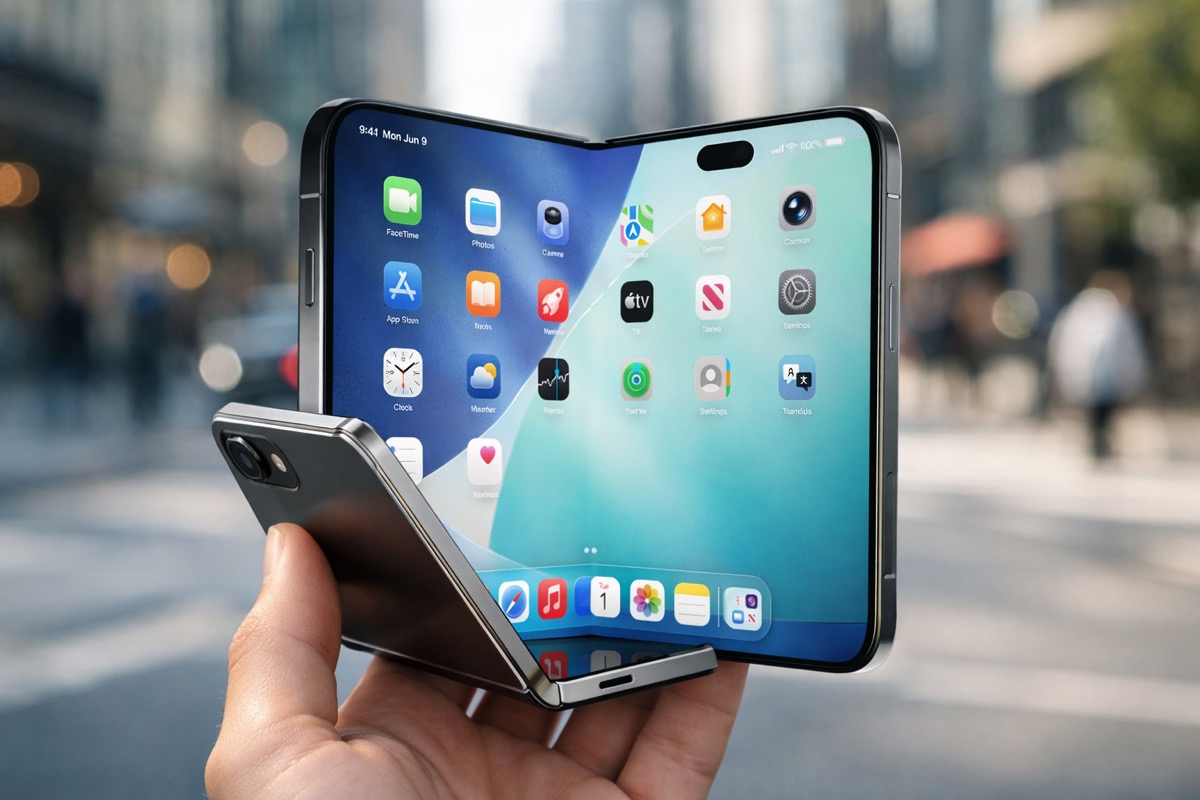
You pull a phone from your pocket, answer a text, then open it and suddenly it feels closer to a small tablet than a regular handset. That is the pitch behind the iPhone Fold, and after years of rumors, the product is starting to look much more real. Recent dummy-unit leaks and fresh reporting around Apple’s launch plans suggest the company may finally be ready to enter the foldable market, but in a way that looks different from what Samsung, Google, and others have already done.
What makes this moment interesting is not only that Apple appears close to launching a foldable iPhone. It is that the design shown in recent leaks points to a wider, more tablet-like shape than most competing foldables. That choice may sound minor at first, but it gets to the heart of why many foldable phones still feel like niche products. A lot of them look futuristic, yet their square-ish inner screens do not always feel ideal for reading, browsing, multitasking, or watching video. If Apple is leaning into a wider format, it may be trying to solve one of the biggest problems in the category instead of simply joining it.
The iPhone Fold leaks reveal a very different shape
The latest attention around the iPhone Fold surged after well-known leaker Sonny Dickson shared images of alleged dummy units showing the foldable iPhone next to what are said to be iPhone 18 Pro and iPhone 18 Pro Max models. Dummy units are not working phones, but they are often used to preview general size, proportions, and industrial design before launch. In these images, the foldable stands out immediately because it looks noticeably wider than most book-style foldables on the market today.
That wider body changes the whole story. Instead of opening into a nearly square panel, the iPhone Fold appears designed to create a more rectangular, mini-tablet-like workspace. That matters because most content people use every day is already built for rectangular displays. News sites, streaming apps, productivity tools, photos, and documents all tend to feel more natural on a wider screen. Several reports have highlighted this as the most striking part of the leak, because it suggests Apple is not copying the standard foldable template.
Quick summary:
| Key detail | Why it matters |
|---|---|
| Wider foldable shape | More natural for apps and video |
| Shorter body when folded | Easier to carry in a pocket |
| Tablet-like inner display | Better use of extra screen space |
| Pro model comparison | Shows Apple is creating a new tier |
Why Apple may be taking this approach
Apple usually enters product categories late. It did not invent the smartwatch, the wireless earbud, or the tablet. What it often does is wait until the hardware, software, and user behavior are mature enough, then launch a version that feels more polished and easier to live with. That may be the real strategy here. Foldable phones have been around for years, but they still come with trade-offs around thickness, durability, price, and awkward screen ratios. Apple may be betting that people do want a foldable, but only if it feels less experimental and more useful.
That is why the wider iPhone Fold design could matter more than any headline spec. A foldable phone only makes sense if it improves your daily routine. You want a device small enough to carry comfortably, but large enough to make reading, messaging, video, maps, and multitasking feel better. If the inner screen lands closer to an iPad mini-style experience than a square compromise, Apple may have found a stronger reason for mainstream users to care. Reports tied to the recent leaks say the unfolded panel is expected to be roughly in that small-tablet range, which would support that strategy.
iPhone Fold release date: what the latest reports say
The iPhone Fold release date is still not official, but the current reporting is more optimistic than it was a few days ago. Bloomberg’s Mark Gurman reported that Apple’s foldable iPhone remains on track for a debut in the company’s normal September 2026 launch window. That is important because earlier supply-chain reporting had sparked fear that the product might slip into 2027 due to manufacturing and testing pressure. Gurman’s update directly pushed back on those concerns and argued that the fear had been overstated.
That does not mean the risk is gone. Foldables are harder to build than standard phones, and Apple is known for being demanding about fit, finish, and long-term reliability. Hinge design, crease visibility, battery performance, internal space, and display durability all put pressure on the timeline. So the strongest current line is this: September 2026 looks like the best target right now, but it is still smarter to treat it as a likely window, not a locked date.
How the iPhone Fold compares with the Pro lineup
Another reason these leaks matter is the side-by-side comparison with the Pro models. The dummy units make the foldable look shorter and stubbier when closed, especially next to the Pro Max. That could end up being one of its biggest advantages. A standard Pro Max gives you a large screen, but it is still a tall slab. The iPhone Fold seems positioned to deliver something different: compact portability when shut, then a much larger workspace when opened.
This is where Apple’s product strategy gets interesting. The iPhone Fold does not look like a replacement for the Pro or Pro Max. It looks more like the start of a new premium tier. People who want a familiar flagship will still have the classic iPhone shape. People who want a hybrid device that blurs the line between phone and tablet may get a new option above the standard lineup. That positioning would fit Apple’s history of expanding a category upward instead of replacing its core product overnight.
The real challenge is not the hinge
The obvious question with any foldable is durability. That matters, but it is not the only hurdle. Price could be just as important. Multiple reports and analysts have suggested Apple’s first foldable may land at the very high end of the market, with estimates around or above the $2,000 range. If that happens, the iPhone Fold will need to do more than look impressive. It will need to feel worth carrying every day.
That means Apple’s success may depend less on the novelty of folding and more on whether the device solves real problems. Does it make travel easier because one product replaces both a phone and a small tablet? Does it make work easier because apps have more room? Does reading feel better? Does video finally make sense on a foldable screen? Those are the questions that will decide whether the iPhone Fold becomes a luxury curiosity or the start of a major shift in Apple’s lineup. This is an inference based on the leaked design direction and Apple’s past product strategy.
FAQ
When is the iPhone Fold expected to launch?
The strongest current reporting points to Apple’s usual September 2026 launch window, though Apple has not officially confirmed the product or date.
What makes the iPhone Fold different from other foldables?
Recent leaks suggest a wider design that could create a more natural tablet-like screen when opened, instead of the nearly square shape used by many rivals.
Is the leaked design confirmed?
No. The current images are dummy units and leak-based reporting, not official Apple product photos.
Will the iPhone Fold replace the iPhone Pro Max?
Nothing currently suggests that. The leaks point more toward a new high-end option alongside the regular Pro lineup. This is an inference from the reported design comparisons and Apple’s broader product strategy.
What to watch next
The iPhone Fold story has changed fast. This is no longer only a rumor about Apple testing ideas in the background. We now have leaked dummies, a much clearer sense of the device’s shape, and stronger reporting around a possible 2026 debut. If the final product keeps that wider design and launches on schedule, Apple may do something the foldable market has struggled to do for years. It may make foldable phones feel normal.