

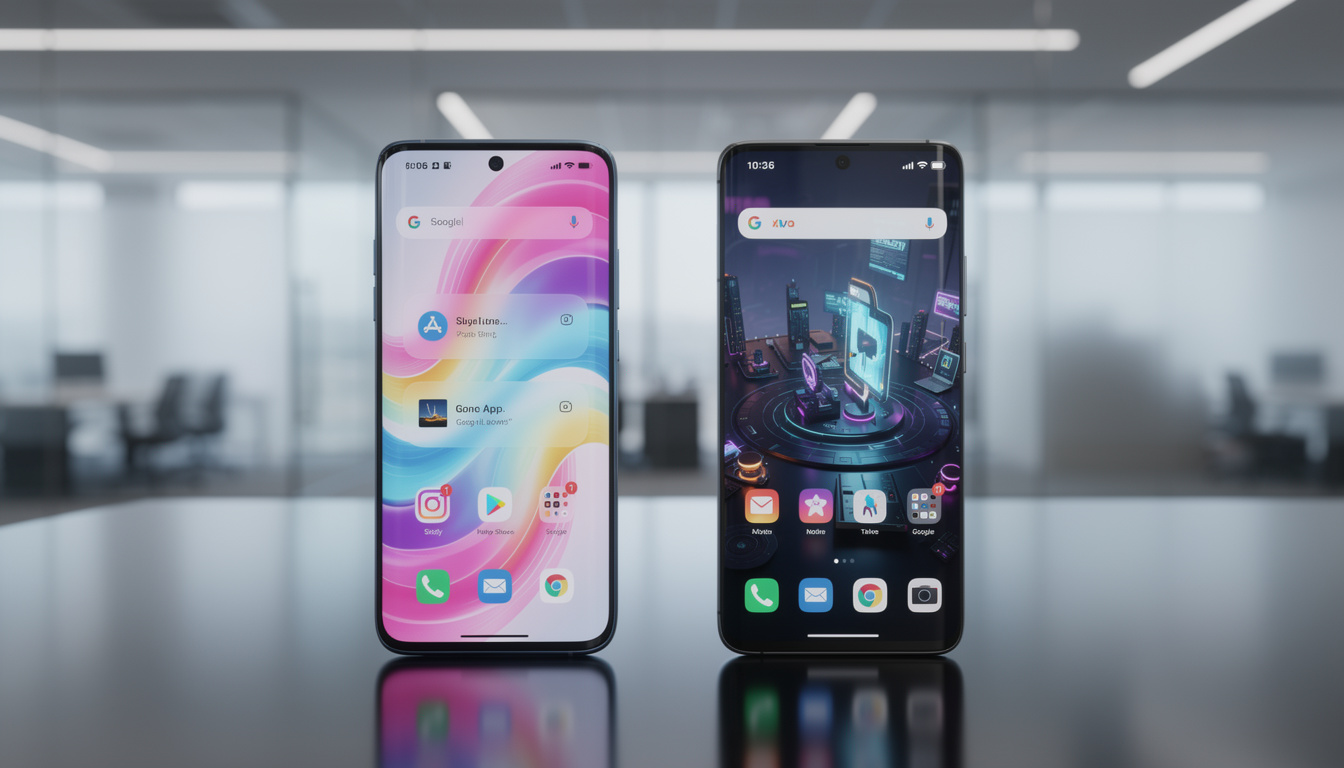
Progressive Web Apps vs Native Apps in 2026, the real winner depends on speed, budget, SEO, and hardware needs. Here’s where each approach pulls ahead.
On a crowded commuter train, a product team watches install numbers stall while mobile traffic keeps climbing. That scene captures why Progressive Web Apps vs Native Apps is still one of the most consequential product debates this year. The choice affects launch speed, budget, discoverability, retention, and even how fast a company can fix mistakes after release.
For startups and established firms alike, this is no longer a narrow engineering call. It is a distribution decision, a revenue decision, and often a growth decision. Based on recent browser support changes, app store economics, and the current state of iOS and Android, the gap has narrowed in some areas and stayed wide in others.
Progressive Web Apps vs Native Apps, what actually changes
A Progressive Web App, or PWA, runs through the browser but can feel close to an installed app. It uses standard web technologies such as HTML, CSS, and JavaScript, plus service workers and a web app manifest for offline caching, home screen installation, and some notification support.
A native app is built for a specific mobile OS, usually iOS with Swift and Android with Kotlin. That tighter connection to the operating system gives native software deeper hardware access, smoother animations under load, and stronger support for complex background tasks.
The biggest practical difference is distribution. Native apps live in the App Store or Google Play, while PWAs live on the web and can be installed from the browser. That single split shapes SEO, release cycles, transaction fees, and user acquisition.
Where Progressive Web Apps pull ahead in 2026
PWAs still have a strong case when a business needs reach fast. A single codebase can serve mobile and desktop users across platforms, which usually lowers development and maintenance costs compared with separate iOS and Android apps.
They also offer something native apps cannot match, SEO visibility. If your acquisition depends on search, landing pages, content, or product URLs, a PWA gives Google indexable pages instead of a store listing alone. That matters for commerce, publishing, SaaS dashboards, and service marketplaces.
Recent platform changes helped. Apple added web push for installed PWAs on iOS 16.4 in March 2023, closing one of the most cited gaps on iPhone. The nuance matters, though: notifications require installation to the home screen, they do not behave like native push in every browser context.
For companies focused on mobile discoverability and lighter install friction, PWAs can look especially attractive. That logic also shows up across consumer guides on mobile apps and phone experiences, where speed and accessibility often matter more than store distribution.
In practical terms, PWAs are usually the best fit in cases like these:
- Content-heavy platforms that rely on search traffic and fast updates
- MVP launches that need to go live in weeks, not months
- Ecommerce or booking flows where users arrive from links, ads, or search
- B2B tools where app store discovery adds little value
Industry guidance from 2023 to 2025 consistently placed PWA delivery windows around 8 to 16 weeks for a focused MVP, while dual-platform native builds often stretch from 16 to 40 weeks. This is an inference based on recurring agency benchmarks and project ranges cited across startup development reports, not a universal rule.
Why native apps still win for performance and hardware
There are still clear situations where native is the right call. Graphics-heavy games, advanced multimedia editors, AR tools, and apps that depend on deep Bluetooth, NFC, background audio, or sensor integration generally work better as native software.
That is partly about speed, but not only speed. Native apps tap directly into platform SDKs and device features, so they can deliver more reliable offline behavior, richer interactions, and tighter OS integration. For categories like streaming, gaming, or secure finance, that difference remains hard to ignore.
Real-world use cases support this divide. Instagram and Spotify continue to depend on native strengths because camera processing, media control, and persistent background behavior are core to the product. By contrast, companies such as Starbucks, Pinterest, and Twitter Lite have shown that a web-first path can work when lightweight access and broad reach matter more.
The same pattern appears in adjacent categories. DualMedia’s look at native apps for gaming and streaming highlights why responsiveness and hardware control can outweigh web flexibility when the app itself is the experience.
Cost, timelines, and app store trade-offs
When teams compare Progressive Web Apps vs Native Apps, cost is often the fastest filter. A PWA usually needs one codebase, one deployment flow, and one core web team. A native strategy often means separate iOS and Android work, even when cross-platform tooling reduces some duplication.
That changes the math quickly. Across startup and agency estimates published between 2023 and 2025, a medium-scope PWA often lands in the $25,000 to $70,000 range, while dual-platform native projects commonly start above $70,000 and can move past $180,000 depending on complexity. These are directional ranges, not fixed market prices.
Then there is the platform tax. Apple’s Small Business Program has kept many developers at a 15 percent commission threshold below $1 million in annual proceeds, while the standard rate remains higher for many transactions. If your users already come through search, email, or direct links, store fees can become a permanent drag rather than a growth engine.
| Key detail | Why it matters |
|---|---|
| PWA uses a single web codebase | Lower build cost and faster updates across devices |
| Native often needs separate platform work | Higher cost, but better optimization for iOS and Android |
| PWA updates ship instantly on the web | Teams can fix issues without waiting for store review |
| Native gets official app store placement | Improves trust and can support discovery in some categories |
| Store fees may apply to native monetization | Revenue share can materially change long-term margins |
Security also deserves attention here. Native apps benefit from OS-level controls, but web apps are not automatically weak if HTTPS, secure authentication, and careful storage practices are in place. The bigger risk is sloppy implementation, a point echoed in reporting on mobile app security vulnerabilities and broader mobile app risk patterns.
How to decide without guessing
The cleanest way to choose is to start with the business model, not the framework preference. If search is a major acquisition channel, if the budget is tight, and if the product needs to launch fast, a PWA often has the stronger business case.
If the product depends on sensors, heavy animations, advanced offline workflows, or premium App Store positioning, native is usually the safer bet. The wrong question is which approach is superior in theory. The better question is which one supports the user journey with the least waste.
A common path now is staged delivery. Teams launch a PWA first, validate demand, then add a wrapper for store presence or invest in native only if hardware limitations start blocking growth. Based on the reported design direction and Apple’s past strategy, that hybrid sequence should remain attractive as browser capabilities keep expanding but do not fully erase native advantages.
That phased logic also fits products where trust and identity are central. For example, authentication-heavy apps increasingly need a careful passkey plan, whether they ship on the web or inside a store, as seen in DualMedia’s reporting on passkey rollout for mobile apps.
Frequently asked questions
Is a PWA better than a native app?
Not across the board. A PWA is often better for fast launch cycles, lower cost, and SEO-driven growth, while a native app is better for hardware-heavy features and top-end performance.
Can a PWA replace a native app completely?
For some products, yes. Content platforms, ecommerce flows, booking systems, and many B2B services can work very well as PWAs, but apps that rely on AR, advanced Bluetooth, deep offline processing, or background media still lean native.
Do Progressive Web Apps work on iPhone now?
Yes, including home screen installation and push notifications for installed PWAs on supported iOS versions. The key limitation is that some features still behave differently from native apps, especially around background tasks and certain device APIs.
Which is cheaper to build in 2026?
In most standard cases, a PWA is cheaper because one team can ship one web codebase across platforms. Native development usually costs more because platform-specific optimization, testing, and release work add time and complexity.
What to watch next
The most likely outcome is not total victory for either side. Progressive Web Apps vs Native Apps is becoming less of a binary argument and more of a sequencing decision, especially for startups and digital publishers. Build where your users already are, then deepen the stack only when the product proves it needs more.
In other words, the winner in 2026 is context. For search-led products and lean teams, PWAs remain the practical front-runner. For immersive experiences, demanding hardware access, and categories where app stores still shape trust and discovery, native keeps the edge.
Want more tech and innovation coverage like this? DualMedia Innovation News tracks the technology shifts that actually matter, from AI to foldable hardware to the next wave of consumer products.