

Nvidia technology aims to boost path tracing performance by over 2x
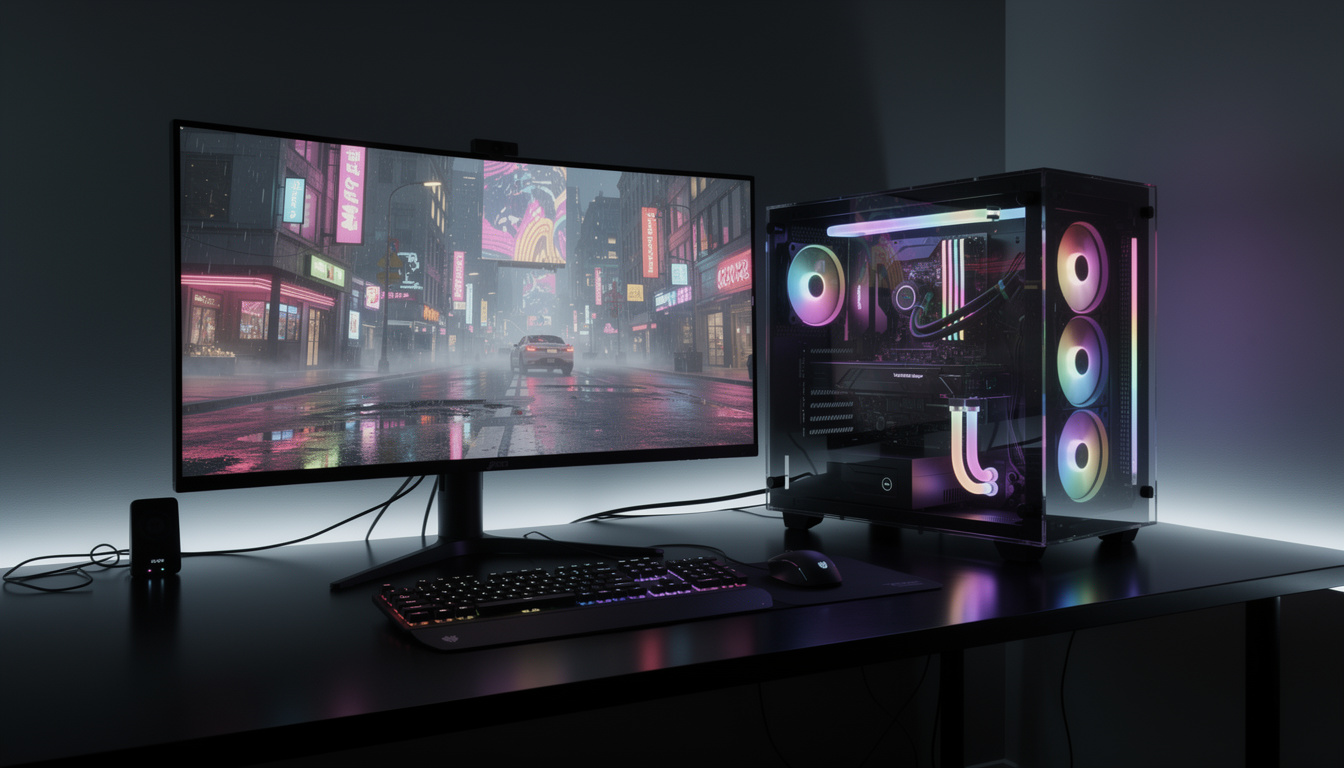
A neon-lit street in a modern game can look stunning until the frame rate collapses the moment full path tracing is enabled. That tension between visual ambition and playable performance has defined advanced PC graphics for years. NVIDIA now says it has a meaningful answer with ReSTIR PT Enhanced, a research advance that could Boost Path Tracing Performance by Over 2x while also improving image quality.
The timing matters. Path tracing has moved from tech demos into shipping games such as Cyberpunk 2077, Alan Wake 2, and upcoming high-end titles that rely on realistic global illumination. According to details tied to an NVIDIA research paper published on April 21, 2026, the company’s updated approach is nearing production readiness and focuses on one of the hardest rendering problems in real-time graphics: handling direct and indirect lighting efficiently without overwhelming the GPU.
That claim deserves attention because path tracing remains far more demanding than selective ray-traced effects like shadows or reflections. In practical terms, developers often still need DLSS Super Resolution, Ray Reconstruction, and Frame Generation just to keep performance acceptable. If NVIDIA can reduce the raw cost at the algorithm level, the impact goes beyond benchmark headlines. It could change how many studios treat full-scene lighting in their default graphics presets.
Why ReSTIR PT Enhanced could boost path tracing performance by over 2x in real games
The core issue is not just that path tracing is heavy. It is heavy in a very specific way. Every pixel may require many lighting calculations, and those calculations multiply fast when scenes include glossy surfaces, moving lights, smoke, or reflective materials. NVIDIA’s reported improvement comes from reducing redundant work and better organizing how samples are reused across space and time.
In plain terms, ReSTIR PT Enhanced appears to refine the company’s existing spatiotemporal importance resampling method for path tracing. The paper indicates a more unified treatment of direct and indirect lighting, which matters because games do not render these effects in isolation. A hallway lit by sunlight from a broken window, for example, also depends on how that light bounces off walls, metal, glass, and dust. The visual result can improve only if those interactions stay coherent from frame to frame.
This is where the reported 2x to 3x uplift becomes more interesting than a simple speed claim. NVIDIA also says the new method reduces artifacts. That means fewer distracting flickers, fewer unstable lighting transitions, and fewer moments where denoisers have to work overtime to hide errors. For players, smoother lighting often matters as much as higher average fps. For artists, cleaner output means fewer compromises during production.
There is also a wider lesson here. Rendering progress is no longer driven only by brute-force silicon gains. Software techniques, AI-assisted reconstruction, and smarter sampling are carrying more of the load. That same logic appears across other technical fields, including platform engineering and optimization, where performance is the real product. Graphics is simply one of the clearest examples because the trade-offs are visible on screen in real time.
Based on the available reporting, tests were run on a workstation-class GPU roughly comparable to a GeForce RTX 5080 level of capability, not the absolute top gaming part in the Blackwell stack. That does not guarantee broad scaling across all hardware, but it is a useful signal. This is an inference based on the reported test platform and NVIDIA’s stated direction toward developer adoption, yet it suggests the company is not framing path tracing as an ultra-niche feature reserved only for flagship cards.
The practical takeaway is straightforward. If developers can get more stable full-scene lighting at lower cost, path tracing stops looking like a luxury setting and starts looking like a default design target. That shift would matter far more than any isolated benchmark.
For readers tracking NVIDIA’s broader rendering strategy, that aligns with ongoing coverage around DLSS and refresh-rate gains, where raw rendering and AI-assisted output increasingly work as one pipeline rather than separate features.
What the research means for developers, GPUs, and visual fidelity
The most important phrase in the current reporting may be “closer to production-ready.” Research papers often showcase ideas that take years to reach game engines, if they arrive at all. Here, NVIDIA appears to be signaling a shorter path from lab result to SDK integration. Since ReSTIR PT already sits within the RTX SDK ecosystem, the barrier to experimentation is lower than it would be for an entirely new rendering framework.
That matters to studios building visually dense games. Consider the current pressure on developers: players want film-like lighting, but they also expect high refresh rates, clean motion, and scalable settings for a wide install base. A modern AAA team cannot simply turn on full path tracing and hope the hardware catches up. It needs tools that lower cost per frame while preserving artistic intent. NVIDIA’s latest approach speaks directly to that production reality.
A few implications stand out:
- Higher efficiency can let studios reserve more GPU budget for geometry, effects, or animation.
- Cleaner indirect lighting can reduce visible instability in dark interiors and reflective scenes.
- Better scalability can help path-traced modes reach more than only premium-tier systems.
- Closer SDK readiness can shorten the gap between research and actual game deployment.
There is a business angle too. Path tracing is increasingly part of platform branding for NVIDIA, AMD, and major engine vendors. If one company can show a credible route to making full-scene lighting more practical, it influences purchasing decisions for gamers and technical planning for studios. It also strengthens the case for neural rendering systems that combine sampling, denoising, upscaling, and frame generation into a single performance strategy.
That pattern mirrors other sectors of advanced computing, where workflow complexity has become a major risk factor. The same operational discipline discussed in pieces about managing AI workflows and technical risk also applies to game rendering pipelines. When multiple acceleration layers interact, reliability becomes just as important as speed.
| Key detail | Why it matters |
|---|---|
| Reported 2x to 3x uplift | Suggests meaningful algorithmic gains beyond raw hardware scaling |
| Direct and indirect lighting handled together | Improves coherence in scenes with complex light bounces |
| Fewer artifacts | Helps image stability and reduces distracting shimmer or flicker |
| Near production readiness | Raises the odds of developer adoption in real shipping projects |
| Tested below absolute flagship tier | Hints at wider relevance across future RTX-class systems |
One point should stay clear, though. NVIDIA’s claims come from its own research context, and real-world game performance will vary by engine, scene complexity, and how aggressively a title leans on DLSS, Frame Generation, or ray reconstruction. Even so, the design direction is persuasive. The future of graphics will be defined by smarter light transport, not just faster silicon.
Where this fits in the 2026 graphics race
By 2026, the argument over path tracing is no longer about whether it looks better. That part is settled. The real question is who can make it practical across enough hardware to matter commercially. NVIDIA has been building that case for several years through RTX, DLSS, and neural rendering, and this latest ReSTIR update looks like another attempt to remove one more major bottleneck.
There is historical context worth keeping in view. Earlier generations of ray tracing often felt like premium toggles for screenshots rather than features players would leave on during long sessions. The leap to full path tracing raised visual ambition but also exposed severe performance costs. NVIDIA’s own messaging at events like GDC has tied future architectures, including Blackwell and later roadmap discussions around Rubin, to increasingly dramatic improvements in path-traced workloads. This latest paper is more credible than broad futuristic claims because it points to a specific engineering method, not just a distant target.
Could this reshape game development over the next few years? Very possibly. Based on the reported design direction and NVIDIA’s past strategy, the company appears to be treating path tracing as a foundation for future content pipelines rather than an optional effect layer. That would influence engine features, artist workflows, and GPU purchasing cycles all at once.
Players may feel the result in simpler terms. Night scenes could look richer. Indoor lighting could feel less synthetic. Reflections, shadows, and bounced light could behave with more consistency instead of appearing as disconnected tricks. When those gains arrive without crushing performance, adoption tends to follow quickly.
The next milestone to watch is not another headline number. It is integration. Once developers start shipping titles that use this upgraded method in public builds, the industry will have a clearer measure of whether NVIDIA can truly Boost Path Tracing Performance by Over 2x in the messy conditions that define real games.
That is where the technical story turns into a market story, and it is the part worth following most closely.
What to watch next
NVIDIA has made a strong case that smarter sampling and better lighting reuse can cut the cost of full path tracing while improving image stability. The claim is significant because it is tied to a named technique, a dated research paper, and a clear production goal rather than vague future branding. That gives developers and enthusiasts something more tangible to evaluate.
The next questions are practical ones. Which engines adopt the method first? How well does it scale across Blackwell-class GPUs and lower tiers? And how much of the real-world uplift depends on the rest of the RTX stack, including DLSS Super Resolution, Ray Reconstruction, and Frame Generation?
If those answers land well, the graphics settings menu could start changing in a familiar way. Options that once looked extravagant can become standard once the pipeline matures. Full path tracing may be heading toward that threshold faster than many expected.
What is ReSTIR PT Enhanced?
It is NVIDIA’s updated path tracing technique designed to improve efficiency in how lighting samples are selected and reused. The reported result is better performance, fewer artifacts, and more stable global illumination in demanding scenes.
How much faster is NVIDIA saying it can be?
Current reporting tied to the April 21, 2026 research paper says the method can improve path tracing performance by more than 2x, with some references pointing to a 2x to 3x range. Actual game results will depend on engine design, scene complexity, and supporting technologies like DLSS.
Will this matter only for flagship GPUs?
The early signal is encouraging because the reported testing was not framed around the absolute highest-end gaming card. That suggests NVIDIA is thinking beyond a tiny enthusiast niche, although broad adoption will still depend on developer support and hardware scaling.
Why is path tracing still so demanding?
Unlike limited ray-traced effects, path tracing simulates a much larger portion of how light behaves across an entire scene. That means far more calculations for direct light, indirect bounces, reflections, and material interactions, all of which put heavy pressure on the GPU.
Want more tech and innovation coverage like this? DualMedia Innovation News tracks the technology shifts that actually matter, from AI to foldable hardware to the next wave of consumer products.
 EN
EN  FR
FR  ES
ES