

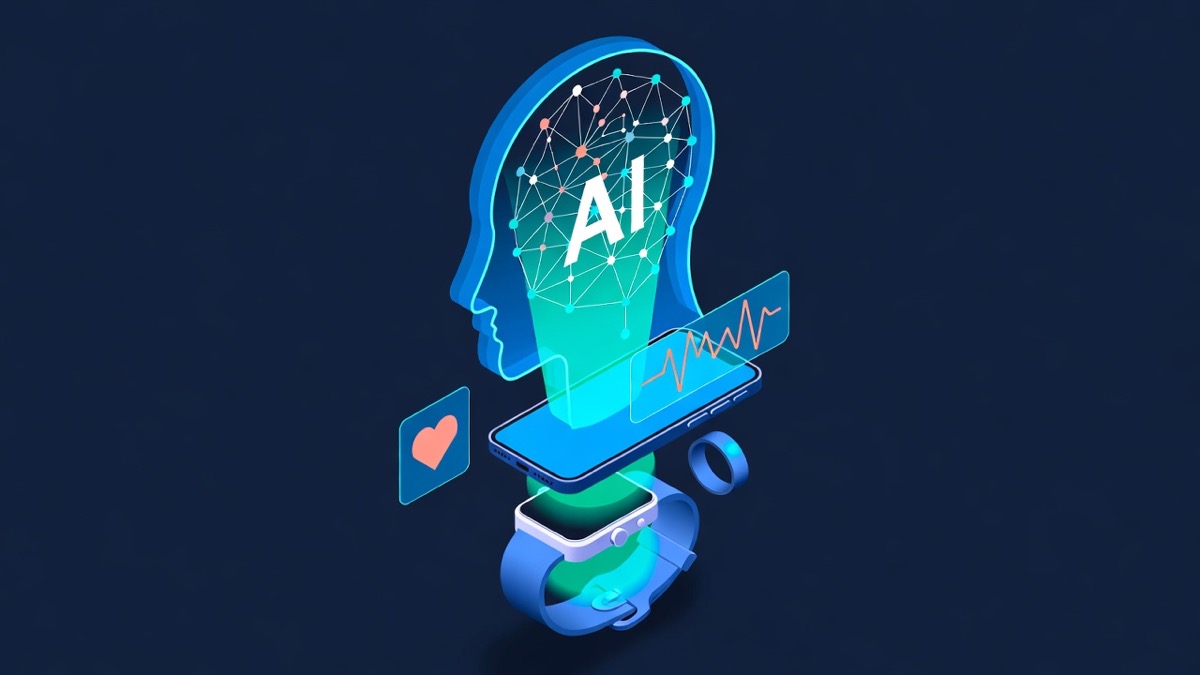
The wearables market crossed 500 million active devices globally in 2024, and the trajectory of the past two years has been less about explosive growth than about the quiet medicalization of consumer tech. The Apple Watch got a blood pressure monitoring feature that actually cleared regulatory review in multiple markets. Oura Ring hit 5 million users and started selling directly to enterprise wellness programs. Garmin kept dominating endurance sports while Whoop pushed deeper into recovery analytics. Underneath the hardware, AI-powered diagnostic tools moved from research settings into primary care workflows, and the data protection questions finally got serious regulatory attention.
I’ve been testing consumer health tech seriously since 2021 — rotating devices, comparing their data, seeing which health signals actually translate into useful behavioral changes versus which just generate dashboard anxiety. The picture in 2026 is clearer than most marketing suggests. Here’s what’s working, what’s still early, and where the line between consumer wellness and medical device is getting genuinely blurry.
Wearables: the hardware plateau, the software leap
Hardware specs on flagship wearables stopped changing dramatically around 2022. Optical heart rate sensors, SpO2, temperature, ECG on select models, GPS, basic strain metrics — the sensor stack that shipped on a 2022 Apple Watch Series 8 or Garmin Epix Gen 2 is roughly what you get on today’s premium devices, with incremental improvements in accuracy and battery life. What changed is the software layer making sense of that data.
Sleep analytics is the clearest example. In 2020, most wearable sleep scores were gentle suggestions built on accelerometer patterns plus heart rate, with accuracy that clinical sleep researchers politely described as “directionally useful.” By 2026, the combination of better sensor fusion, heart rate variability trends, respiratory rate estimation and temperature baselines produces stage detection that correlates with polysomnography results within acceptable margins for personal use. It’s still not medical-grade, but it’s no longer a random number generator dressed up as insight.
The training and recovery side evolved similarly. Whoop’s strain and recovery framework spawned imitators across basically every wearable ecosystem, and the interesting research question now is whether these metrics actually change behavior in useful ways. My reading of the evidence: they help about 30% of motivated users sustain better training consistency, they’re neutral for another 40%, and for roughly 30% they generate enough anxiety about “red recovery days” to be counterproductive. If you’re shopping for fitness-focused wearables, FitnessWarriorNation has been running some of the clearest head-to-head comparisons between Garmin, Polar, Whoop and Coros — the kind of long-term device testing that reveals software update patterns you never see in launch reviews.
The AI diagnostics question: hype versus clearances
AI-powered diagnostics is a category where the gap between “announced” and “actually deployed in clinical settings” has been painfully wide for years. That gap narrowed meaningfully in 2024-2025. The FDA’s list of AI/ML-enabled medical devices passed 900 cleared products by late 2025, and the European MDR pathway started producing comparable numbers. These aren’t consumer products — they’re tools for radiologists, dermatologists, ophthalmologists, cardiologists — but the infrastructure is real and the integration into clinical workflows is happening.
For consumers, the more interesting shift is around at-home testing backed by AI analysis. The wave of consumer-facing diagnostic apps promising to detect skin cancers, atrial fibrillation, diabetic retinopathy or cognitive decline through smartphone cameras — a category that embarrassed itself repeatedly in 2018-2021 — finally produced a handful of products that work well enough to be useful adjuncts to professional care. The WHO’s 2024 guidance on AI ethics in health laid out reasonable expectations for how these tools should be marketed and validated, and regulators in major markets are catching up to enforcement.
The caveat worth stating: even the good consumer diagnostic apps are screening tools, not diagnostic tools. A skin lesion app that flags something suspicious gets you to a dermatologist faster, which is genuinely useful. It doesn’t replace the dermatologist. The apps that marketed themselves as replacement for clinical care in 2020-2022 mostly either pivoted or folded, and the products left standing have learned to position as triage aids rather than substitutes.
Health data and privacy: the 2026 reckoning
For a long time, health data protection in consumer wearables operated in a regulatory gray zone. Your fitness data wasn’t covered by HIPAA in the US (which applies to healthcare providers and specific “covered entities”), and European GDPR enforcement on wearable data was sporadic. That started changing. The FTC’s 2023 action against BetterHelp set a precedent on health data sharing with advertisers, and the 2024-2025 wave of enforcement actions against fitness and wellness apps that shared biometric data with third parties established expectations the industry can’t ignore.
What this means practically for users: the apps and devices you trust with heart rate, sleep, menstrual cycle, weight and mood data are handling information that can infer pregnancy, mental health status, substance use patterns, and medical conditions. The terms of service on wellness apps in 2026 are more restrictive than they were three years ago, but the default for many products is still to collect everything and monetize the aggregate. Checking actual data sharing practices (not marketing pages, the privacy policy) before committing to a long-term platform remains worth the ten minutes it takes.
Beauty Reflections has covered this intersection of beauty tech, skin analysis apps and data privacy with more rigor than most wellness publications — their coverage digs into what specific camera-based skincare apps actually transmit, which ones run analysis locally versus in the cloud, and what the data retention defaults look like. That’s the level of detail that matters when you’re committing your biometric or imaging data to a service you’ll use for years.
Lifestyle, beauty tech and the longevity-adjacent market
Step back from devices for a moment. The biggest public health story of the past decade isn’t wearables or AI diagnostics. It’s the behavioral economics of what gets people to sustain lifestyle changes — sleep, nutrition, movement, stress management — in the face of environments that pull in the other direction. Technology helps at the margins, but the evidence on what actually works at population scale points to social, environmental and habit-formation factors that gadgets alone can’t deliver. HealthyLifeVitality has been pushing wellness content in that evidence-anchored direction, breaking down what actually moves the needle in daily routines rather than chasing the aesthetic wellness imagery that dominates social feeds.
The beauty and fragrance side of the wellness economy is where the digital transformation has been most visible in 2024-2026. AI skin analysis apps moved from gimmick to real consumer tool — the better ones now provide meaningful assessments of pigmentation, hydration and UV damage that correlate with professional dermatological evaluation. Scent-matching algorithms trained on chemical fingerprints are reshaping how fragrance gets discovered online, with niche perfumery brands benefiting more than legacy houses. Parfums et Beauté has built one of the deeper encyclopedic resources on the intersection of fragrance, cosmetic chemistry and the consumer-facing technology being layered on top — useful reference material when you’re trying to understand what’s actually happening in a category that’s mostly covered by product reviews or marketing copy.
For adults over 40, the wellness conversation has shifted toward healthspan rather than just lifespan — the decades of functional health rather than the raw years of survival. That framing has implications for how to evaluate sleep tech, cardiovascular screening, strength training, cognitive maintenance. It’s also reshaping how physical activity gets covered at the crossroads of sport, media and longevity research. Basketball Evolution tracks the training science and recovery protocols behind elite NBA performance — the interesting thing is how much of that pro-level sports science quietly makes its way into general wellness recommendations, from sleep optimization to heart rate variability monitoring to nutrition periodization.
Travel health: the quiet fintech-adjacent revolution
One area where digital health and global mobility collide is travel medicine. The pandemic experience accelerated what was a slow-moving corner of healthcare into a legitimate digital-first category. Vaccination records are increasingly portable across jurisdictions, prescription verification for international travel works better than it did five years ago, and telemedicine for travelers became a real service tier rather than a fringe offering.
The insurance layer matters more than most travelers realize. Traditional travel insurance models assumed healthy travelers needing occasional emergency coverage; the current reality includes people traveling with chronic conditions, digital nomads relocating across jurisdictions, and retirees spending months abroad — each with different health infrastructure needs. IntlTravelCare covers the intersection of international health insurance and practical travel medicine — the kind of coverage comparisons that only make sense if you actually understand how claims get processed when you’re sick in a country where you don’t speak the language and your home insurer can’t directly reimburse local providers.
The tech stack serving travelers has also matured. Real-time multilingual telemedicine consultations, prescription pickup coordination through partner pharmacies in major travel destinations, digital health insurance cards that actually get accepted — these services existed in primitive forms in 2020 and work reasonably well in 2026. They still fail in edge cases and emerging markets, but the base case has improved substantially.
What actually matters for personal wellness tech in 2026
The practical framing for most users: your wellness tech should help you execute simple routines consistently, not promise optimization that only elite athletes benefit from. Pick one wearable and use it for a year before switching. Use sleep data to catch patterns (chronic deficit, caffeine timing, late meals) rather than chase a specific score. Take skin and mole monitoring apps seriously as triage tools but see a dermatologist for anything flagged. Treat AI diagnostic apps as reasons to seek professional care, not reasons to skip it.
The data protection side is where most users under-invest their attention. Privacy defaults on wellness apps are usually configurable, rarely privacy-preserving by default, and worth the fifteen minutes of setup to tighten. The CDC’s health statistics center publishes annual data on US population health trends that’s useful for contextualizing your own metrics against meaningful baselines rather than comparing against fitness influencer benchmarks that are the wrong reference population.
What’s worth watching into 2027
Non-invasive glucose monitoring is the big unknown. Multiple companies have been chasing continuous glucose monitoring without finger pricks for a decade, and the 2026 product announcements from Apple and Samsung suggest commercially viable versions are approaching. If they launch with clinical-grade accuracy, the implications for diabetes management, pre-diabetic screening and nutritional feedback are substantial.
Mental health diagnostic AI is a category moving faster than the public conversation acknowledges. Tools measuring speech patterns, typing cadence, and facial expression signals for depression and anxiety markers are progressing rapidly. The clinical validation is uneven, the privacy implications are serious, and regulatory frameworks are still forming. Expect 2027 to be the year this category either breaks through or crashes into a regulatory wall, possibly both.
Finally, the convergence of wearable data with primary care workflows is accelerating. Several major health systems now accept Apple Watch ECG data and Oura Ring sleep data as part of patient records. That integration question — what data flows from consumer devices into medical records, under what protections, with what consent frameworks — will shape the next decade of personal health tech more than any specific product announcement.
The health and wellness tech stack in 2026 is better than ever at helping motivated users execute reasonable routines more consistently. It’s still bad at producing outcomes in users who weren’t already motivated. No amount of AI, biometric tracking or optimization apps fixes that asymmetry — and nothing in the 2027 product pipeline suggests it’s about to.