

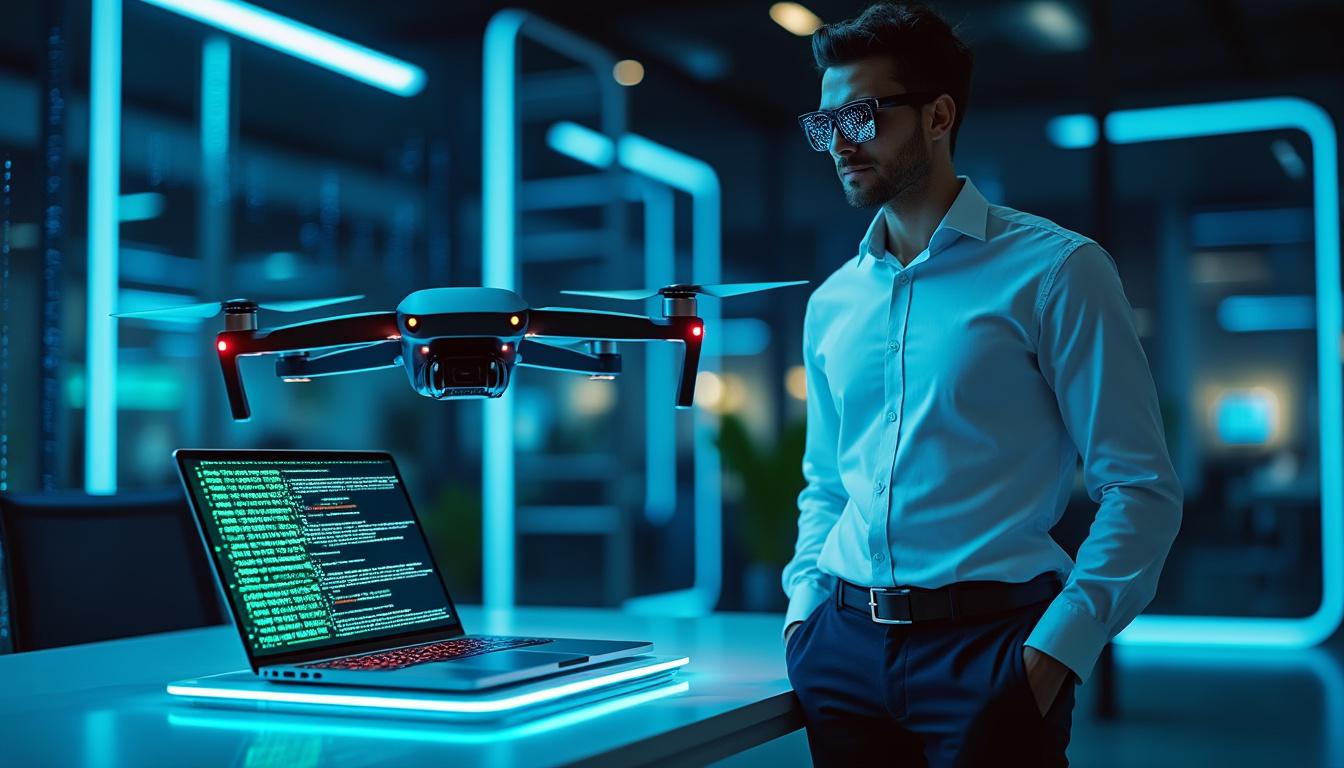
From malware to drones: innovative strategies from a hacking expert shows how cyber defense is moving from screens to the sky, where radio signals, software flaws, and fast adaptation now shape public safety, military planning, and the future of drone security.
From Malware to Drones, Why a Hacking Expert Changed Focus
From malware to drones: innovative strategies from a hacking expert starts with a simple truth. The biggest security stories no longer stay inside laptops, servers, or phones. They move into streets, borders, supply chains, and battlefields. That shift explains why a veteran malware researcher with more than 35 years of experience would turn attention from viruses and spyware toward unmanned aircraft.
At a major security event in Las Vegas in 2025, Mikko Hyppönen described cyber defense as “cybersecurity Tetris”. The point was sharp. When defenders succeed, nothing happens, so the public sees no drama. When defenders fail, the damage stacks up fast. That idea fits malware history, and it fits drones even more. A blocked virus stays invisible. A missed drone threat becomes visible in seconds.
From malware to drones: innovative strategies from a hacking expert also reflects geography and politics. Living in Finland, within reach of the Russian border, changes the way security risks are judged. The war in Ukraine forced much of Europe’s security community to face a new reality. Small, cheap flying systems now shape reconnaissance, disruption, and lethal attacks. Reports from the conflict pushed many specialists to accept a difficult fact. Digital weakness now creates physical consequences at scale.
His career arc helps explain why this move makes sense. In the 1980s, reverse engineering started with video game code and anti-piracy protections on home computers. From there came malware analysis at a Finnish firm that later became F-Secure. Early malicious code often spread through floppy disks. Form.A became one of those global nuisances of the early 1990s. It traveled far without always destroying data, proving that software needed only one weak path to move worldwide.
Then came a turning point. In 2000, the ILOVEYOU worm hit more than 10 million Windows systems. It spread through email, corrupted files, and copied itself across contact lists. The lesson was brutal. Scale changes everything. Since then, malware has shifted from curiosity-driven code toward extortion, espionage, and covert access. Ransomware groups, spyware vendors, and state-backed operators replaced hobbyist virus writers.
From malware to drones: innovative strategies from a hacking expert matters because cyber defense matured while drone defense still looks young. Modern smartphones are far harder to crack than early PCs. High-end browser or phone exploits often cost six or seven figures, which pushes many common criminals away. Drones present a different picture. Their radio links, command systems, firmware, and navigation layers still expose gaps. For readers tracking broader industry trends, recent cybersecurity innovations show how fast defense models are changing, while critical infrastructure security offers a useful parallel. Both fields deal with systems where failure affects daily life, not only data.
The strategic message is clear. From malware to drones: innovative strategies from a hacking expert is not a career detour. It is a map of where security pressure is heading next.

From Malware to Drones, How Old Cyber Tactics Work Against New Air Threats
From malware to drones: innovative strategies from a hacking expert becomes more useful when the technical parallels are made plain. Malware defense has long relied on signatures, behavioral patterns, anomaly detection, and rapid response. Drone defense uses many of the same ideas, except the medium is different. Instead of scanning files and memory, teams inspect radio traffic, control protocols, firmware behavior, and navigation patterns.
The core method starts with signal intelligence. A drone controlled over radio leaves traces. Researchers record IQ samples, isolate frequencies, and identify the protocol used between operator and aircraft. Once a known pattern appears, defenders build a signature. That signature helps classify friendly traffic, suspicious traffic, and hostile traffic. The logic sounds familiar because it mirrors antivirus practice from earlier decades.
What makes the drone field more urgent is speed. If a defender finds a flaw in a drone command protocol, the result is immediate. The aircraft loses stability, mission flow breaks, or the unit drops from the sky. In malware work, exploitation often opens a long campaign. In drone defense, as Hyppönen has argued, the first step often becomes the last step. Find the weak point, interfere once, and the incident ends right there.
From malware to drones: innovative strategies from a hacking expert also raises a practical question. What does a strong anti-drone workflow look like? A simple model helps.
| Defense Layer | What Teams Monitor | Why It Matters |
|---|---|---|
| Radio detection | Frequencies, IQ samples, protocol traits | Finds aircraft before visual contact |
| Classification | Known vs unknown control patterns | Reduces false alarms |
| Interference | Jamming or protocol disruption | Breaks hostile control links |
| Forensics | Firmware, telemetry, mission logs | Builds future signatures |
A law enforcement scenario makes the point clearer. Picture a stadium on a sold-out night. Security teams pick up an unfamiliar signal near the venue. The drone itself is not the first clue. The first clue is the radio behavior. Detection starts before panic starts. That is why engineers with a malware background fit this work so well. They are trained to read hidden systems through traces and patterns.
Several risks now dominate the field:
- GPS spoofing, which feeds false location data
- Command hijacking, where an outsider interferes with operator control
- Data interception, which exposes video, telemetry, or mission plans
- Firmware abuse, where weak update paths lead to compromise
Market pressure adds another reason for urgency. The global drone market is projected at about $58.4 billion in 2026, while reported hacking incidents in the segment have risen sharply. That gap between adoption and security maturity invites trouble. Readers following adjacent trends in AI-related cyber risks or military cyber training will recognize the same pattern. New systems spread fast. Protection standards lag behind.
From malware to drones: innovative strategies from a hacking expert proves that old defensive thinking still works, once teams learn how to read signals instead of files.
The next challenge is broader than defense alone. Industries, regulators, and the public all have a stake in what happens next.
From Malware to Drones, What Businesses, Cities, and Governments Need Next
From malware to drones: innovative strategies from a hacking expert does not belong only to military planners or niche security labs. The issue now touches delivery networks, farms, ports, police operations, event management, and energy sites. Drones inspect pipelines, map crops, carry sensors, film infrastructure, and support emergency response. Each use case creates value. Each one also creates an attack surface.
The strongest argument for urgent action is simple. Drone insecurity scales across sectors. A compromised delivery aircraft disrupts logistics. A hijacked inspection unit exposes industrial data. A spoofed emergency drone delays rescue work. This is why stakeholders need security by design, not security after launch. The same lesson shaped modern software and mobile ecosystems. The drone sector needs to absorb it faster.
A practical roadmap starts with procurement. Buyers should ask hard questions before signing contracts. Are communications encrypted? Is there secure boot? How are updates verified? What logs are stored after an incident? Who owns telemetry data? These are not abstract concerns. They determine whether a drone becomes a managed asset or a liability.
From malware to drones: innovative strategies from a hacking expert also supports a policy shift. Regulators often focus on flight safety, airspace, and operator licensing. Cyber resilience needs equal weight. A drone with compliant flight hardware but weak command security still threatens public safety. Recent attention to cybersecurity reform and information sharing rules suggests where the next debate will go. Standards need to connect manufacturers, operators, telecom providers, and public agencies.
For businesses, the most useful steps are plain:
- Map every drone asset, including controllers, apps, and update servers
- Separate drone networks from core business systems
- Test radio resilience in real conditions, not lab-only settings
- Train staff for signal anomalies, spoofing signs, and takeover attempts
- Keep incident logs for legal review and future detection models
There is also a human factor. Good defenders do not chase novelty for its own sake. They look for repeatable patterns. That is why a veteran malware analyst adapts so well to anti-drone work. The tools change. The discipline does not. Observe the system, classify the threat, break the attacker’s advantage, then learn from the encounter before the next one arrives.
What should readers take from this shift? From malware to drones: innovative strategies from a hacking expert signals a wider transition in security culture. Cyber defense is no longer limited to protecting information. It now protects movement, infrastructure, and lives. If your organization depends on connected devices in the air, the right time to ask security questions was yesterday. The second-best time is now. Share this article with a team member who handles operations, risk, or procurement, then compare how prepared your drone plans look under pressure.
For readers who want visual context on how experts discuss these shifts in public forums, the conversation has become much broader across security and tech circles.
En bref
Why are drone threats now part of cybersecurity?
Drones rely on software, radio links, sensors, and remote control systems. When those layers are weak, attackers do not only steal data. They interfere with real-world movement and safety.
What makes malware expertise useful in anti-drone defense?
Malware analysts study hidden behavior, signatures, protocols, and attacker adaptation. Those same habits help teams detect drone control patterns, classify threats, and interrupt hostile activity fast.
Are consumer devices now safer than drones?
In many cases, yes. Phones and major browsers gained years of hardening, secure update systems, and large defensive investment. Many drone platforms still lag behind in secure design and radio resilience.
What should a company check before buying drones?
Start with encryption, update security, logging, access control, and incident response support. Also review how the drone handles GPS anomalies, command interference, and third-party software dependencies.