

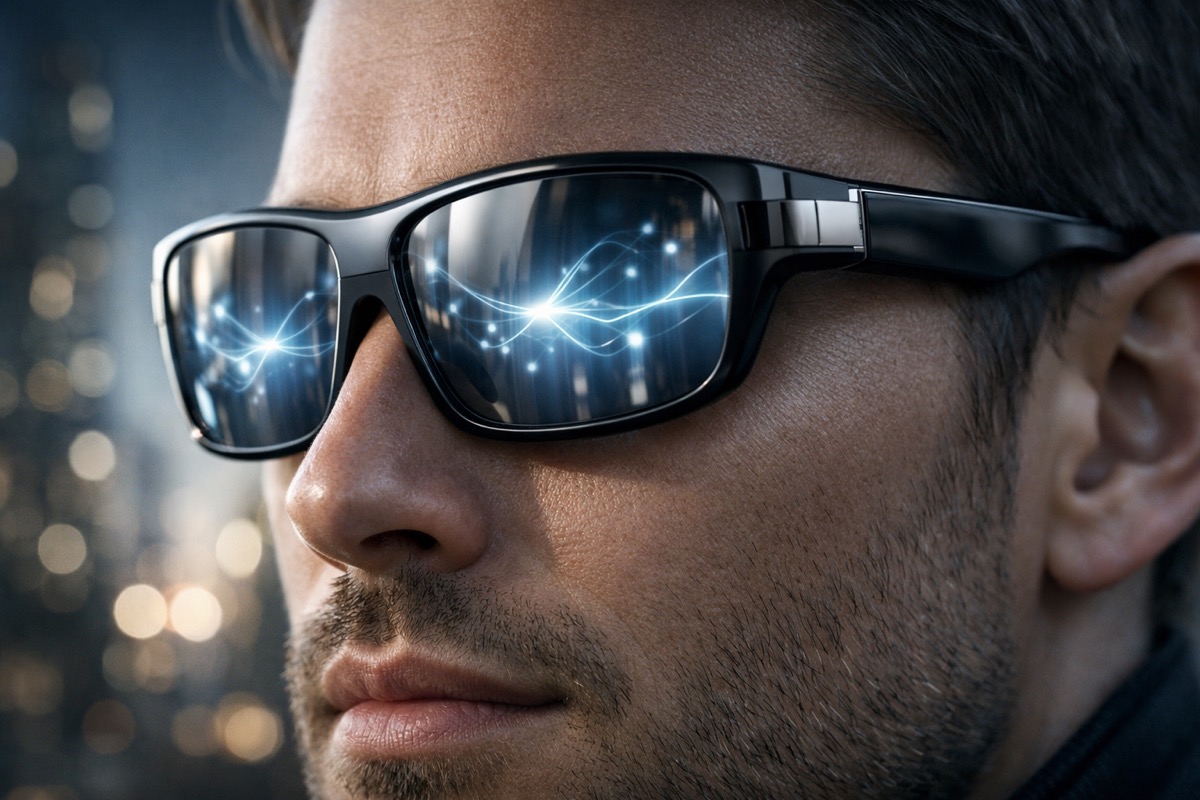
You’re walking down the street. Your glasses snap a photo, whisper directions, and remind you about your next meeting. No screen. No distraction. Just subtle assistance.
This is the vision behind Apple’s upcoming smart glasses.
While Meta already leads the category with its Ray-Ban smart glasses, Apple is preparing a different approach. Instead of chasing flashy features, Apple focuses on design, integration, and everyday usefulness.
A Different Take on Smart Glasses
Apple is not building augmented reality glasses, at least not yet. These first smart glasses will not include a display. That choice matters.
Instead of overlaying digital elements on your vision, the glasses will act more like a wearable assistant. Think of a mix between the Apple Watch and AirPods.
They will include:
| Feature | What it does |
|---|---|
| Camera | Capture photos and videos |
| Microphones | Handle calls and voice commands |
| Sensors | Understand your environment |
| AI integration | Deliver contextual assistance |
This approach keeps the experience simple. No screens means fewer distractions. The focus stays on real life, not digital overlays.
Design First: Apple’s Core Strategy
Apple rarely enters a market without a strong design angle. This time is no different.
Apple plans to use acetate, a material often found in premium eyewear. Compared to plastic, it feels more durable and refined.
The goal is clear. Create glasses that people want to wear all day.
Several styles are already in development:
| Frame Style | Description |
|---|---|
| Rectangular large | Inspired by classic Wayfarer designs |
| Slim rectangular | Minimal and modern |
| Oval or circular | Larger, softer shapes |
| Compact oval | More discreet and refined |
Color options may include black, ocean blue, and light brown. The camera design will also stand out, with a vertical oval shape and visible indicator lights.
This is not about blending in with tech. It is about making tech look like fashion.
Competing With Meta Without Copying It
Meta has a head start with its Ray-Ban collaboration. Those glasses already offer photo capture, streaming, and voice features.
But Apple is not trying to replicate that success directly.
Instead, it builds on its ecosystem.
The real advantage lies in how the glasses connect with existing products:
| Device | Role in the ecosystem |
|---|---|
| iPhone | Central processing and connectivity |
| AirPods | Audio and voice interaction |
| Apple Watch | Health and notifications |
| Smart glasses | Visual context and capture |
This creates a seamless experience. Each device handles a specific task, but together they feel like one system.
The Bigger AI Vision
These glasses are only one part of a larger plan.
Apple is working on multiple AI-powered wearables. Reports mention new AirPods with advanced sensors and even a camera-equipped pendant.
All these devices share a common goal. Feed real-world data into Siri and Apple Intelligence.
This enables features such as:
| Use case | Example |
|---|---|
| Navigation | Turn-by-turn directions without looking at your phone |
| Reminders | Context-based alerts tied to your surroundings |
| Visual understanding | Identify objects or places in real time |
The idea is simple. Your devices understand what you see and help you act faster.
Why Apple Is Delaying AR
Apple is still working on full augmented reality glasses. Those will include displays and advanced visuals.
But they are not ready yet.
Launching a simpler product first allows Apple to:
| Benefit | Impact |
|---|---|
| Test adoption | See how users react to wearable AI |
| Refine hardware | Improve comfort and battery life |
| Build ecosystem | Strengthen integration across devices |
This step-by-step approach reduces risk. It also gives Apple time to perfect AR technology before releasing it.
What This Means for You
If you already use Apple devices, these glasses could feel like a natural extension of your daily routine.
You won’t need to learn a new interface. You simply wear them and interact through voice and subtle feedback.
But there are trade-offs:
| Advantage | Limitation |
|---|---|
| Lightweight and discreet | No visual display |
| Strong ecosystem integration | Dependent on Apple devices |
| Premium design | Likely higher price |
The key question is whether users prefer simplicity over advanced visuals.
But does this really work?
Early smart glasses struggled because they tried to do too much. Displays drained battery and distracted users.
Apple’s approach avoids that problem. By focusing on useful features and strong design, it may reach a wider audience.
Launch Timeline and Expectations
The first version of Apple’s smart glasses is expected around late 2026 or early 2027.
That timeline gives Apple time to refine both hardware and software. It also allows its AI ecosystem to mature.
By the time these glasses arrive, the competition will be stronger. But Apple rarely rushes.
It waits, observes, then enters with a clear vision.
FAQ
Will Apple smart glasses have a display?
No. The first version will not include a display. It focuses on audio, sensors, and AI features.
How will they differ from Meta’s Ray-Ban glasses?
They will rely more on Apple’s ecosystem and design, with deeper integration into Siri and other devices.
When will Apple smart glasses launch?
Current reports point to late 2026 or early 2027.
Will Apple release AR glasses later?
Yes. Apple is still developing advanced AR glasses, but they are expected to arrive later.
What to Watch Next
Apple’s move into smart glasses is not about catching up. It is about redefining the category.
If this strategy works, smart glasses may shift from niche gadgets to everyday essentials.
What do you think? Would you wear AI-powered glasses without a screen?
 EN
EN  FR
FR  ES
ES