

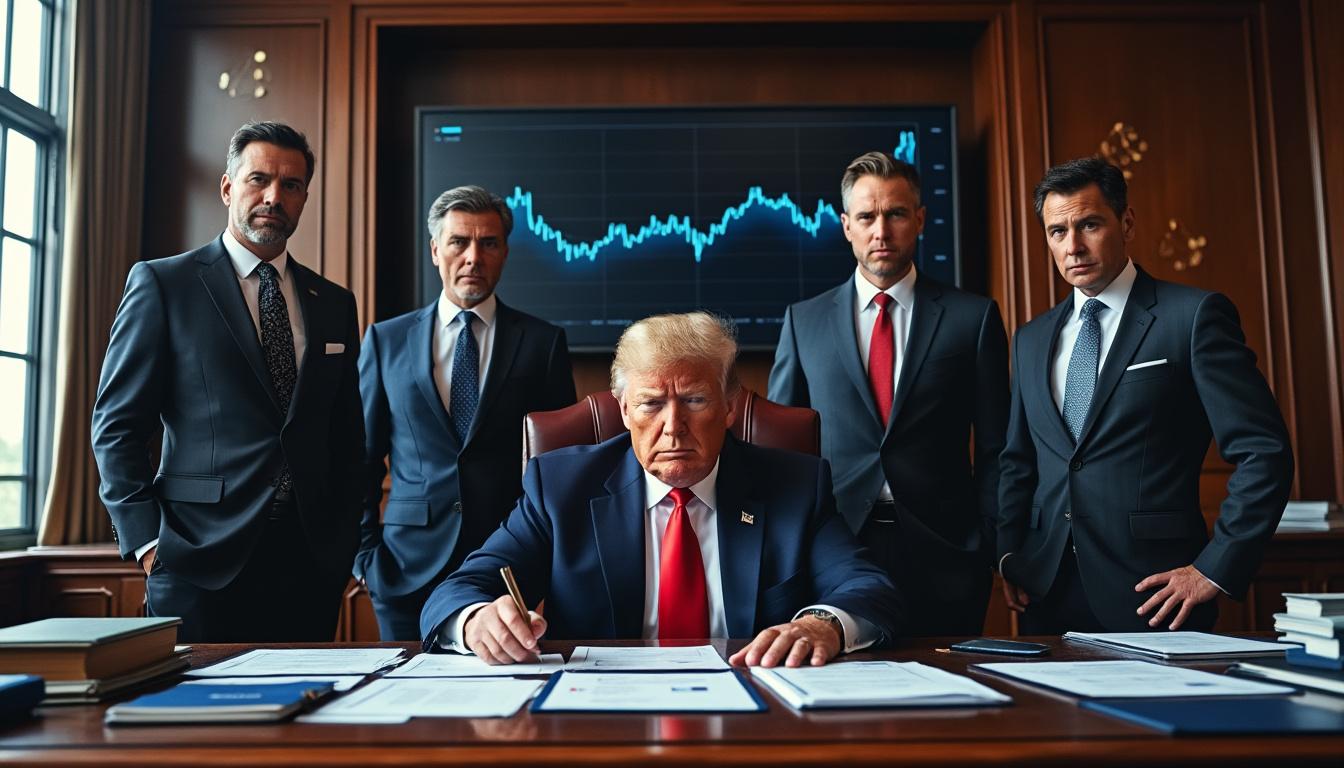
Across ten tense months in 2025, Trump signed off on a rapid-fire series of crypto pardons that reshaped the way cryptocurrency crime, presidential mercy, and money intersect. Ross Ulbricht, the creator of Silk Road, the BitMEX founders, and Binance boss Changpeng “CZ” Zhao all walked away from federal judgments after years of legal drama and billions in crypto-related flows. Critics describe this streak as a crypto cleanse designed to reset the record for selected crypto convicts while shielding allies and donors from the full legal and financial cost of their actions. Supporters argue Trump corrected prosecutorial overreach in an industry where regulation lags far behind code, markets, and political influence.
Behind the headlines, the numbers and timelines tell a sharp story. Ulbricht left prison while wallets linked to him still showed hundreds of BTC, worth tens of millions of dollars. BitMEX leadership escaped the long shadow of Bank Secrecy Act convictions after paying personal fines. CZ exited four months in prison and a $50 million penalty into a market where Trump-linked crypto ventures and speculative trading interest surged again. Each decision came as crypto politics, ETF-fueled adoption, and global regulation tightened, from US enforcement rhetoric to stricter regimes like Canada’s tax crackdown and new legalization efforts abroad. Together, the 10‑month crypto cleanse blurred the line between justice and revenue, raising a hard question for 2026: is presidential clemency in cryptocurrency cases now a legal tool, a political weapon, or an expensive service priced in influence and Bitcoin?
Inside Trump’s Crypto Cleanse And Three High-Profile Convicts
The phrase “crypto cleanse” captures how concentrated Trump’s cryptocurrency pardons became in 2025. Between January and October, three major episodes reshaped the lives of crypto criminals and signaled to markets that old cases could be rewritten if the politics lined up. Ross Ulbricht received a full and unconditional pardon after more than a decade behind bars, despite prosecutors tying Silk Road to roughly $1 billion in drug-linked transactions settled largely in Bitcoin.
Two months later, the founders of BitMEX and a senior executive saw their Bank Secrecy Act convictions neutralized in Washington, even though regulators had described the exchange as a money laundering engine. By October, CZ’s clemency added a global cryptocurrency icon to the list. Each case involved different fact patterns and legal theories, yet all converged on the same outcome: crypto convicts walked away with criminal records softened or erased while significant private wealth and industry influence remained intact.
Ross Ulbricht: Bitcoin, Silk Road And A Sudden Legal Reset
Ross Ulbricht’s pardon on January 21, 2025 marked the opening move of Trump’s crypto cleanse. Sentenced in 2013 to double life for building Silk Road, Ulbricht became a symbol of both online libertarianism and the dark side of cryptocurrency. The marketplace ran on Bitcoin, and prosecutors argued it enabled massive volumes of illegal drug transactions, including heroin, cocaine, and LSD. For over a decade, his case stood as the cautionary tale for anyone who believed cryptocurrency transactions sat outside serious legal risk.
The pardon arrived with a direct message on Truth Social and an explicit nod to libertarian voters. Trump framed the prosecution as an example of weaponized government, while Ulbricht’s family and supporters had campaigned for clemency for years. Blockchain analysis later reported that wallets linked to Ulbricht still controlled around 430 BTC, worth more than $45 million at the time. That detail sparked new debate: when a cryptocurrency conviction ends through a pardon, how much financial cost does the convict truly bear in the end?
BitMEX Founders, AML Failures And The Cost Of A Crypto Pardon
The March 27, 2025 pardons for Arthur Hayes, Benjamin Delo, Samuel Reed, and former BitMEX executive Gregory Dwyer highlighted a different angle of Trump’s crypto cleanse. These figures did not run a darknet market, but a major derivatives exchange that failed to implement anti-money laundering and know‑your‑customer controls. US prosecutors accused BitMEX of operating as a money laundering platform, leaving compliance gaps that regulators argue enable illicit flows across borders.
The legal outcome before clemency included guilty pleas to Bank Secrecy Act violations, $10 million civil fines for each co‑founder, and a $100 million payment from BitMEX itself. Yet with the presidential pardon, the long-term stigma of felony convictions receded. Hayes publicly thanked Trump, while Delo framed the decision as proof the enforcement response had been excessive. For traders, the message was mixed: AML rules still mattered, but political connections sometimes mattered more.
Money Laundering Rules Versus Crypto Market Appetite
The BitMEX episode exposes a recurring tension in cryptocurrency regulation. Trading venues chase volume, leverage, and global reach, while regulators insist on strict KYC and AML frameworks. Institutions entering the market, such as large ETF issuers, demand clarity on these issues. Reports on products like the largest Bitcoin ETF from BlackRock underline how institutional capital expects tight compliance to coexist with speculative demand.
Trump’s pardon of BitMEX leadership downplayed the long-term consequences of AML failures at a time when lawmakers are pushing new rules, including proposals in US crypto legislation for 2026. The decision placed political judgment above regulatory priorities and signaled to some offshore venues that legal risk might be negotiable if relationships and timing aligned. In practice, the crypto cleanse raised a difficult question for exchange operators: should they prioritize compliance frameworks, or assume that successful platforms will find political protection if trouble arrives?
CZ, Binance And The Global Flashpoint Of Trump’s Crypto Politics
Changpeng “CZ” Zhao’s pardon on October 23, 2025 became the defining symbol of Trump’s crypto cleanse. CZ had pleaded guilty in 2023 to enabling money laundering at Binance, resigned as CEO, agreed to a $50 million fine, and served four months in prison. Regulators detailed years of compliance gaps, from weak identity checks to exposure to sanctioned jurisdictions. For many observers, his case looked like the template for how global regulators target large crypto exchanges that treat legal obligations as optional.
Trump’s decision triggered immediate backlash. Critics pointed to Binance’s earlier settlements and new business ties to a Trump family crypto venture. Investigative reports described a $2 billion agreement between Binance and World Liberty Financial, a Trump-branded cryptocurrency project. The pardon of one of the world’s richest crypto figures, shortly after such deals, fueled accusations that clemency had transformed into a premium service for those with deep pockets and direct access to the president.
From Crypto Crime To Cleansed Reputation
CZ’s shift from crypto criminal in the eyes of US prosecutors to pardoned executive illustrates how political power reshapes reputations. Before the pardon, Binance faced intense media scrutiny, regulatory oversight, and customer concerns over compliance failures. After clemency, Trump allies framed Zhao as an innovator unfairly targeted by a hostile bureaucracy, echoing talking points from earlier stages of the crypto cleanse involving Ulbricht and BitMEX leaders.
Markets reacted in complex ways. Trading volumes on major exchanges rose again, and some analysts tied part of the renewed risk appetite to political signals that high-profile crypto figures could negotiate softer outcomes. Articles examining crypto market moves during Trump-related news noted how narratives around “forgiveness” and “second chances” influenced sentiment. For retail participants, that dynamic sat beside higher volatility, as seen in coverage of steep drawdowns like broad cryptocurrency market dips when sentiment reversed.
The True Financial Cost Of Crypto Pardons
On paper, the financial cost of these crypto crimes looks heavy. Silk Road transactions hit roughly $1 billion. BitMEX paid $100 million and its founders surrendered $10 million each. CZ delivered $50 million and watched Binance agree to sweeping compliance commitments. Yet the crypto cleanse highlights a crucial distinction between fines paid and wealth preserved. Pardons removed or softened criminal exposure but did not claw back all gains generated during the years of questionable activity.
Ulbricht-associated wallets with more than 400 BTC illustrate this gap clearly. Even after harsh sentencing, a large stack of cryptocurrency sat beyond conventional seizure, subject to price swings instead of prison schedules. For BitMEX and Binance, brand damage and fines mattered, yet the structures and code they helped standardize continue to support liquid derivatives markets and global trading flows. In effect, a crypto pardon often works like a reset button on legal history while leaving much of the financial architecture in place.
Who Pays For A Crypto Cleanse: Taxpayers, Markets Or Convicts?
The true cost of Trump’s crypto cleanse spreads far beyond the individual convicts. Taxpayers fund investigations, task forces, and years of litigation. When pardons arrive at the end of that process, some enforcement agencies feel their work has been devalued. Markets also absorb the signal that regulatory outcomes are not purely legal, but political. Episodes like the 2025 crypto crash and rebound show how quickly sentiment changes when traders factor in political risk alongside technical indicators.
At the same time, individual convicts often retain some measure of wealth, social capital, or brand recognition that converts into future ventures, book deals, or advisory roles. Reports on other crypto prosecutions, such as the case of a Colorado pastor involved in cryptocurrency fraud, show that not every offender receives the same path back to influence. Trump’s decisions highlighted a two‑tier system where large platforms and charismatic founders find redemption far easier than small‑scale scammers without political reach.
Crypto Criminals, Legal Systems And Unequal Punishment
The contrast between high-status crypto convicts and ordinary defendants surfaces in case after case. On one side stand figures like Ulbricht, Hayes, and CZ, whose stories dominate headlines and podcasts. On the other side sit hundreds of less visible offenders: low‑level money launderers, romance scam operators, and retail fraudsters. Studies of schemes like Bay Area “pig butchering” scams, referenced in coverage such as large-scale crypto fraud reports, highlight victims who lose life savings and receive limited restitution.
Trump’s crypto cleanse centered on convicts whose cases already carried media attention, lobbying campaigns, and ideological narratives. That selectivity raised hard questions about the rule of law. If a president uses the pardon power largely for those with massive cryptocurrency holdings or corporate ties, future defendants might conclude that their legal outcome depends as much on their follower count as on the facts. In legal terms, the power remains constitutional. In ethical terms, the pattern erodes confidence in a neutral justice system.
How Crypto Crime Patterns Deepen The Divide
Data on illicit cryptocurrency flows suggests this divide will not narrow without policy changes. Research summarized in sources like analyses of $28 billion in illicit crypto funds points to a mix of darknet markets, ransomware, mixing services, and exchange-based laundering. While law enforcement targets some large hubs, many smaller operations never reach the public eye. Those who do, and who lack political or financial leverage, rarely receive clemency discussions.
By shifting the spotlight to celebrity defendants, Trump’s crypto cleanse shaped public perception of what cryptocurrency crime looks like. Instead of anonymous ransomware crews or regional investment scammers, attention fixated on star founders and disruptive platforms. This narrative choice influences lobbying, legislative hearings, and even how juries view lesser-known cases. Over time, it risks normalizing the idea that wealth and visibility serve as informal legal shields in the cryptocurrency ecosystem.
Trump’s Crypto Politics, Donors And Market Signals
The 10‑month crypto cleanse did not happen in isolation. Trump’s broader relationship with cryptocurrency deepened as ETFs expanded, AI-integrated projects grew, and donors with digital asset fortunes entered the political arena. Reports on financial backers, including pieces such as coverage of major crypto-linked donations, show how campaign finance and token wealth intersect. The pardons fit into this environment, where sympathy for crypto entrepreneurs coexisted with significant fundraising and business contacts.
At the same time, policy debates intensified. The Senate’s evolving stance on digital assets, seen in votes tracked by resources like Senate crypto vote overviews, framed the industry as both innovative and risky. Trump leaned hard into the pro-crypto side, painting regulators and prosecutors as obstacles to freedom and growth. The crypto cleanse amplified that stance, telegraphing to markets that a Trump White House prioritized friendly conditions for large platforms and token holders.
Market Reactions To Pardons And Political Headlines
Traders have learned to track political cues alongside on-chain metrics and macro data. Announcements around Trump’s crypto policy moves often correlated with spikes in trading activity. When analysts examined patterns such as the 2025 crypto rollercoaster, they found that regulatory news, ETF launches, and clemency rumors all fed into price swings. Pardons for high-profile figures signaled a friendlier enforcement environment to some investors, even if underlying regulations did not change overnight.
Retail traders often misread these signals. Articles exploring behavior shifts, like reports on Bitcoin retail trader trends, describe newcomers chasing hype rather than understanding legal context. They see a president forgiving crypto convicts and interpret it as a green light for speculative leverage, ignoring the fact that only a tiny elite group enjoys access to such protection. When volatility surges again, those same traders absorb the losses while politically connected whales reposition in the background.
Global Crypto Regulation, Trump’s Cleansing Narrative And Future Risk
While Trump framed his crypto cleanse as correcting domestic injustice, other jurisdictions moved in a different direction. Canada intensified its enforcement efforts around disclosure and taxation in moves followed by outlets tracking Canadian crypto crackdowns. South Korea slowed implementation of its new digital asset rules but reinforced the message that compliance would tighten, as described in reports on delayed South Korean regulations. In contrast, countries like Turkmenistan explored formal legalization frameworks for certain use cases.
These shifts show that global regulators learned from years of exchange scandals, frauds, and unstable lending schemes. From a European crackdown on privacy coins to US debates about self-custody and stablecoins, every new incident informed a patchwork of responses. Trump’s pardons stepped into that process by signaling leniency at the top of the American system, even as agencies beneath continued to issue guidance and pursue new cases. For multinational exchanges, the message was simple: risk shifted, but did not disappear.
Crypto Cleanse Versus Regulatory Clean-Up
Trump’s crypto cleanse reflected a political choice to forgive particular individuals, not an overhaul of underlying laws. Yet the rhetoric around those pardons suggested a broader “clean-up” of what supporters called regulatory overreach. This clashed with the direction of many rulemaking efforts, especially those focusing on investor protection, reporting standards, and anti-fraud tools. Cases involving organized crime adoption of cryptocurrency, as discussed in sources about mafia bookmaking with crypto, remind policymakers why enforcement still matters.
The tension between top-down political mercy and bottom-up regulatory tightening will shape the next phase of cryptocurrency’s legal journey. If executives expect potential pardons, they might treat fines as operating expenses. If regulators assume the president will reverse certain cases, they might prioritize bulletproof documentation or shift focus to targets unlikely to gain political sympathy. Either way, the cost of enforcement rises, even as the probability of certain outcomes becomes less predictable.
Comparing Crypto Convicts And Trump’s 10‑Month Crypto Cleanse
The three major cryptocurrency-related pardons in 2025 share some themes but differ in technical details. Looking at them side by side clarifies how the legal and financial cost played out, and how Trump’s decisions affected enforcement narratives. The following table summarizes key elements from each case, from charges to estimated money flows and post-pardon implications.
| Crypto convict | Main cryptocurrency link | Key legal issue | Financial cost reported | Impact of Trump’s crypto cleanse |
|---|---|---|---|---|
| Ross Ulbricht (Silk Road) | Bitcoin used for darknet marketplace payments | Operating an illegal marketplace tied to drugs and other contraband | Roughly $1B in illegal volume, wallets still holding 430+ BTC | Double life sentence erased, remaining cryptocurrency holdings preserved |
| Arthur Hayes, Benjamin Delo, Samuel Reed, Gregory Dwyer (BitMEX) | Bitcoin derivatives and leveraged trading | Bank Secrecy Act violations, AML and KYC failures | $10M civil fine each for co-founders, $100M payment by BitMEX | Criminal liability softened, reputational reset for a major derivatives exchange |
| Changpeng “CZ” Zhao (Binance) | Global multi-asset cryptocurrency exchange | Enabling money laundering through compliance failures | $50M personal fine, multi-billion regulatory settlement for Binance | Short prison term wiped, political controversy over exchange ties to Trump ventures |
This comparison shows how central Bitcoin and major exchanges are to Trump’s cryptocurrency pardon record. Each convict operated at scale, shaped global trading behavior, and faced complex enforcement actions. The crypto cleanse did not erase fines already paid, but it reduced the longer-term legal obstacles for these figures, leaving them freer to influence markets again. For regulators and legislators, these outcomes force a rethink about how to design penalties that retain deterrent value even in a world where presidential pardons remain an option.
Key Lessons For Future Crypto Legal Battles
Legal teams, investors, and developers watching the 10‑month crypto cleanse draw several lessons from these cases. None of them suggest that breaking laws around money laundering or fraud is safe. Instead, they point to how outcomes diverge for high-profile defendants and how intertwined cryptocurrency has become with politics and state power. These lessons also inform how institutions assess risk when entering or expanding in the digital asset space.
For practitioners building long-term strategies, a structured view of these insights helps. The following list outlines core takeaways that will likely guide future crypto legal battles and risk frameworks:
- Enforcement remains aggressive for AML, KYC, and fraud violations, even when some executives later receive pardons.
- Political alignment, donations, and media narratives influence which crypto convicts receive consideration for clemency.
- Financial cost in the form of fines does not always match the wealth preserved through early cryptocurrency gains.
- Retail traders often misinterpret pardons as signals of broad safety, which increases exposure during market downturns.
- Global regulators respond to high-profile failures and clemency with tighter rules, especially around reporting and exchange oversight.
Each of these points ties back to the same central issue: the gap between the glamorous front page stories of pardoned cryptocurrency leaders and the slower, less visible work of building a safer and more transparent digital finance system. Closing that gap will demand more than symbolic clemency or headline-grabbing penalties. It will require legal tools that focus on restitution, accountability, and consistent treatment, regardless of who sits in the Oval Office.