

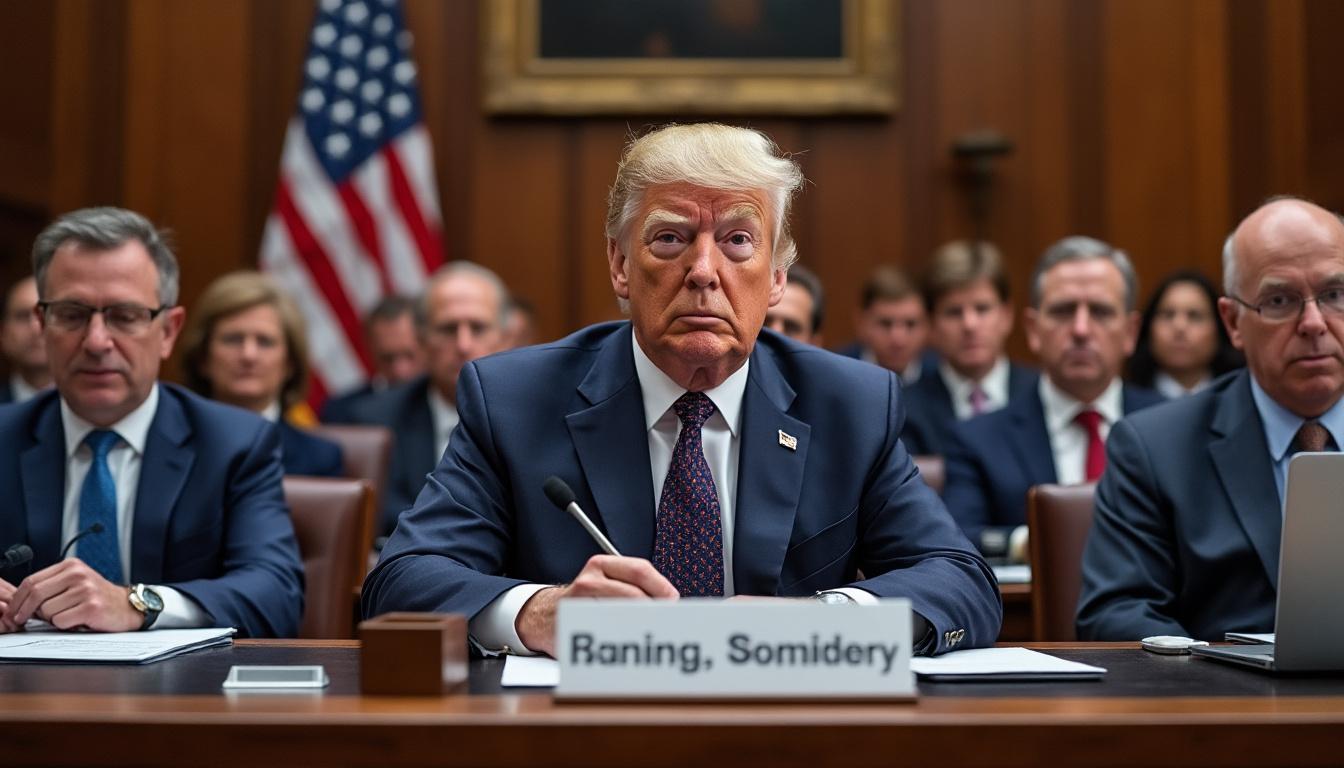
The Senate Banking Committee has postponed a key Vote on Crypto Legislation that many industry participants expected to see progress on This Week. After weeks of negotiations between Republican and Democratic lawmakers, Chairman Tim Scott confirmed there will be no markup session, which effectively pushes any structured debate on federal Cryptocurrency Regulation into next year and possibly to 2026. For exchanges, custodians, and institutional investors that hoped for legal clarity on market structure, this delay extends a period of uncertainty over how digital asset businesses should organize their compliance, risk management, and product strategies.
This decision arrives at a moment when global regulators move faster, from the EU’s MiCA framework to targeted rules in Asia and emerging markets. The United States now sends a mixed signal: interest in a comprehensive crypto law exists, but political alignment inside the Senate Banking Committee remains incomplete. As a result, companies like the fictional exchange “BlockHarbor Markets” must operate in a gray zone, relying on existing securities and commodities rules while tracking every twist in Congressional debate. For traders and long-term holders, the latest postponement raises questions about enforcement patterns, tax treatment, and how aggressive future legislation will be after such a long buildup.
Senate Banking Committee decision on crypto legislation timing
The Senate Banking Committee decision to postpone the Vote on Crypto Legislation This Week stems from unresolved disagreements over market structure, consumer protection, and agency jurisdiction. Lawmakers continue to argue over where the line sits between securities, commodities, and payment tokens. Some want more authority for the SEC, others favor a balanced split with the CFTC or new bespoke rules for digital assets. Until this internal debate stabilizes, no markup session moves forward.
Industry experts track these developments alongside broader discussions in Congress on tax compliance and anti-money-laundering. Analyses such as those on crypto regulation bills in Congress show how fragmented proposals remain, with separate texts on stablecoins, market structure, and reporting rules. When combined with reports on the impact of cryptocurrency regulation on markets, the current pause looks less like a single event and more like another chapter in a long institutional learning curve.
Why the crypto market structure vote was postponed
The immediate reason the Senate Banking Committee Postpones the Vote lies in negotiation fatigue and unresolved technical points. Staff from both parties spent weeks drafting language on custody standards, exchange registration, and consumer disclosures. Each revision raised new questions around enforcement capacity and how rules interact with existing securities law. Without a clear coalition in support, leadership chose delay instead of risking a failed markup.
For a company like BlockHarbor Markets, this delay alters operational planning. Executives expected to adapt systems, reporting pipelines, and KYC workflows according to the new federal Regulation. Instead, they continue using a patchwork of state money-transmitter laws and guidance letters. Commentators who follow recent crypto regulation bills and votes note a recurring pattern: ambitious legislative calendars slip once details reach the committee stage.
Implications of postponing crypto legislation for market participants
Postponing the Vote on Crypto Legislation This Week leaves exchanges, custodians, and DeFi developers in an uncertain legal environment. On one side, enforcement actions continue based on existing securities and commodities rules. On the other, formal acknowledgment of a specific “crypto market structure” framework remains out of reach. The gap between practice and statute raises operational risk and complicates long-term product design.
Research on cryptocurrency regulations and compliance strategies highlights how firms adapt by overbuilding internal controls. They invest in enhanced surveillance, chain analytics, and external audits to prepare for stricter rules ahead. For individual investors, this period also intersects with political narratives around digital assets, including debates tracked in pieces such as Bitcoin and crypto in upcoming political cycles. Regulation now sits at the center of both market behavior and campaign messaging.
How institutional actors adjust to Senate delays
Institutional desks and funds respond to the Senate Banking Committee delay through scenario-based risk modeling. BlockHarbor Markets, for example, built three internal scenarios: a permissive market structure bill, a restrictive enforcement-heavy approach, and continued ambiguity. Each scenario links to portfolio limits, onboarding standards, and counterparty risk thresholds. Without firm Legislation, these models depend on probabilities tied to political signals instead of final statutory text.
At the same time, banks and broker-dealers monitor related US efforts such as Senate work on stablecoin legislation. Progress or setbacks in that area often predicts sentiment toward broader crypto Regulation. When stablecoin talks slow, expectations for a comprehensive market structure bill also drop. This feedback loop shapes how aggressively institutions enter or expand cryptocurrency services for clients.
Comparing Senate crypto regulation efforts with global legislation
While the Senate Banking Committee postpones its Vote, other jurisdictions continue to refine Cryptocurrency Regulation. The European Union advances MiCA implementation, while countries in Asia experiment with licensing frameworks for exchanges and custody providers. These developments provide reference points for US lawmakers but also competitive pressure. If the delay lasts until 2026, global capital might favor regions with clearer rules.
Case studies describe how national strategies diverge. Some states pursue tight consumer protection and strict exchange licensing. Others promote innovation sandboxes combined with strong monitoring of fraud and market abuse. Articles on global crypto regulation updates and implications and country-specific cryptocurrency legislation illustrate how different legal cultures converge on themes such as transparency, taxation, and systemic risk.
Senate crypto approach vs international regulatory models
US Regulation under discussion in the Senate Banking Committee focuses strongly on market structure and asset classification. In contrast, several Asian and European models emphasize licensing and operational risk management first, then refine asset categories over time. This order of priorities shapes how quickly firms obtain permission to operate and how supervision evolves as products mature.
For a global exchange like the hypothetical BlockHarbor Markets, the delayed Vote means continued reliance on overseas rulesets for core operations. Many strategies align with guidelines discussed in resources such as expert opinions on cryptocurrency regulation, where legal scholars stress flexibility and cross-border coordination. If the US takes too long, liquidity centers may consolidate in jurisdictions with earlier, coherent frameworks.
| Aspect | US Senate Banking Committee crypto efforts | Typical non-US crypto legislation model |
|---|---|---|
| Primary focus | Market structure, asset classification, agency jurisdiction | Licensing of exchanges, custody rules, consumer safeguards |
| Current status | Vote postponed, markup delayed to next year or 2026 | Many frameworks enacted or in phased rollout |
| Regulatory clarity for businesses | Fragmented, relies on existing securities and commodities law | Clearer categories with dedicated digital asset licenses |
| Impact on innovation | Uncertainty slows large-scale US-based projects | Sandbox models support pilots under supervision |
| International competitiveness | Risk of lagging as other hubs attract liquidity | Strengthened position as predictable regulatory homes |
Cybersecurity, risk, and the crypto bill delay
The postponement of Crypto Legislation also intersects with cybersecurity and financial stability concerns. Lawmakers on the Senate Banking Committee received briefings on exchange hacks, ransomware payments, and wallet theft incidents. They seek a framework where Regulation promotes better operational security without stifling innovation in key areas like self-custody and multi-signature setups. Achieving this balance requires technical insight and coordination with agencies focused on cyber risk.
Studies on emerging threats, such as those discussed in future cyber security trends and online safety and cybersecurity threats, highlight how digital asset platforms now sit at the intersection of finance and information security. For BlockHarbor Markets, investment in cold storage, hardware security modules, and incident response drills becomes non-negotiable regardless of when the Senate completes its Vote. Security maturity becomes both a regulatory expectation and a business necessity.
Concrete steps crypto firms take while regulation is pending
Instead of waiting passively for the next Senate Banking Committee session, serious actors implement a set of defensive and strategic measures. They build compliance playbooks aligned with likely Regulation scenarios and reinforce cyber resilience. This dual focus reduces risk whether the final law turns strict or more permissive. It also builds credibility with institutional clients and banking partners.
Typical actions include internal audits, chain analytics integration, red-team simulations, and legal reviews of token listings. Articles such as analyses on international cybercrime cooperation emphasize how cross-border crime trends influence domestic lawmaking. Firms that anticipate this angle design controls consistent with global enforcement patterns, not narrow local requirements.
- Strengthen KYC and AML monitoring, including on-chain analysis of Cryptocurrency flows.
- Run cybersecurity drills and penetration tests against exchange and wallet infrastructure.
- Document internal policies as if future Regulation required detailed supervisory reviews.
- Engage with policymakers and industry groups to inform upcoming crypto Legislation.
- Prepare communication plans for clients regarding legal shifts after a Senate Vote.
Political dynamics shaping future Senate crypto regulation
The Senate Banking Committee decision does not occur in a vacuum. Crypto now plays into broader debates on financial inclusion, campaign funding, and geopolitical competition. Some lawmakers highlight success stories where entrepreneurs used blockchain to improve payments or savings options. Others point to fraud cases and speculative cycles as evidence for tighter controls. The framing chosen in upcoming hearings will influence whether the eventual law focuses on innovation, restriction, or a calibrated mix.
Commentary on topics such as recent crypto policy victories and the wider cyber agenda in Congress indicates that digital assets now sit beside issues like AI, quantum security, and data privacy. When legislative calendars get crowded, complex proposals like a crypto market structure bill face higher risk of postponement. Observers expect fresh momentum around moments of market stress or major enforcement actions, which often trigger renewed calls for statutory clarity.
From delay to decision: possible next steps for lawmakers
Once the immediate bottleneck passes, several paths exist for the crypto Legislation discussed by the Senate Banking Committee. One option involves a narrow bill focusing on definitions and agency jurisdiction before broader issues like DeFi and NFTs. Another paths combine crypto rules with adjacent topics such as payments innovation or cyber resilience in financial infrastructure. The choice depends on how leadership weighs urgency against political risk.
Analysts who track longer-term narratives, such as those addressing crypto’s role in financial transformation and projections of large-scale crypto adoption, argue that postponement changes timing but not direction. Demand for clear rules continues to rise as institutions deepen engagement with digital assets and as other jurisdictions consolidate their frameworks.
Our opinion
The latest decision by the Senate Banking Committee to postpone the Vote on Crypto Legislation This Week extends uncertainty, but it also underscores how central digital assets have become to financial policy. The complexity of defining Cryptocurrency categories, assigning supervisory roles, and aligning Regulation with cybersecurity objectives explains why lawmakers proceed slowly. Yet each delay carries a cost in terms of competitive positioning, legal risk, and missed opportunities for structured innovation.
From a practical standpoint, businesses and investors should assume that comprehensive crypto Legislation in the United States remains a matter of “when” rather than “if.” The combination of global developments, technological progress, and persistent market demand leaves little room for indefinite inaction. Until a final Vote occurs, firms that strengthen compliance, cyber resilience, and transparent governance gain an edge, both in preparation for new rules and in building trust with clients. The Senate’s choice to wait raises the stakes for the next round of debate and will shape how the US fits into a global cryptocurrency ecosystem that moves ahead regardless of Washington’s calendar.