
Humanoid robots from China have moved from factory demos to uncanny consumer products. UBTECH’s new UWORLD U1 Series, unveiled in Shenzhen on June 30, 2026, starts at 119,800 yuan, about $17,600, and promises bionic faces, custom looks, 88 degrees of freedom and lip-sync latency within 20 milliseconds. The appeal is obvious. So is the discomfort.
Humanoid robots from China now have a price tag
UBTECH Robotics used its 2026 Global Launch Event in Shenzhen to introduce the UWORLD U1 Series: U1 Lite, U1 Pro and U1 Ultra. The launch matters because it puts a full-size humanoid, marketed for homes and public-facing work, into the same mental category as a premium car option rather than a research lab curiosity.
The cheapest model, U1 Lite, starts at 119,800 yuan, reported by China Daily, PR Newswire and AFP via Techxplore in 2026 as roughly $17,600. U1 Pro is listed at 169,800 yuan, while U1 Ultra rises sharply: 990,000 yuan for the male edition and 880,000 yuan for the female edition, according to China Daily and Gasgoo.
Those prices explain the strange feeling around the launch. Humanoid robots from China are no longer just industrial policy, investor theater or trade-show choreography. They’re becoming products with deposits, delivery windows and buyers who may expect companionship as much as utility.
UBTECH said cumulative orders for the U1 Series had surpassed 13,361 units by launch day. If every one of those orders were only for the entry U1 Lite at 119,800 yuan, that would imply about 1.6 billion yuan in gross order value in 2026, before cancellations, upgrades, deposits or service packages. In dollar terms, using the reported $17,600 starting price, that’s around $235 million. A rough calculation, but it frames the scale.
What the UBTECH UWORLD U1 is supposed to do
The U1 Series is being sold as an “ultra-bionic” humanoid line, not a warehouse bot with a plastic face attached. PR Newswire and The Register reported 88 degrees of freedom and the ability to replicate up to 90% of fundamental human movements, which is a big claim and one that will depend heavily on what counts as “fundamental.”
UBTECH’s marketing points to companionship, emotional support, reception and hospitality, elder care, psychological support, tourism, exhibitions, research, education and premium domestic service. That mix is ambitious. Frankly, it’s also messy: greeting visitors in a lobby is a very different job from supporting an older person at home.
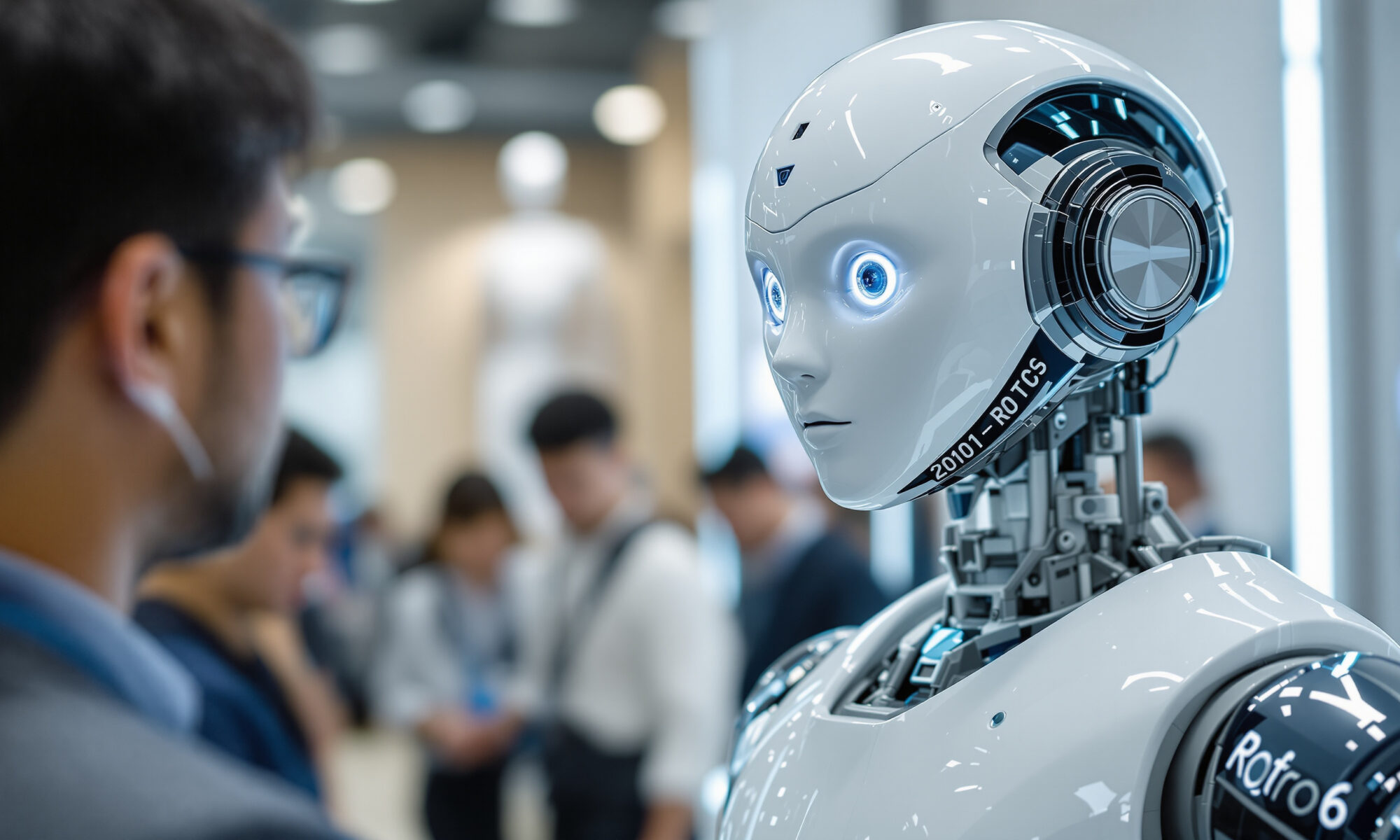
AFP’s Techxplore report said the robots have eye cameras, chest sensors and listening microphones. Hair, face and outfits can be customized to resemble a loved one, a celebrity or an imaginary character. That last part is where the product stops feeling like a robot appliance and starts feeling like a social experiment with motors.
The Register also reported that the system uses something UBTECH calls “Agent Memory OS,” while noting that the company has not said much about it. Anyone following AI agents that act on a user’s behalf will recognize the larger trend: software is being asked to remember preferences, infer intent and behave less like a tool, more like a presence.
| Model | Reported 2026 price | Approx. USD reference | What stands out |
|---|---|---|---|
| UWORLD U1 Lite | 119,800 yuan | About $17,600 | Entry model and the headline mass-market price |
| UWORLD U1 Pro | 169,800 yuan | Roughly $25,000, depending on exchange rate | Mid-tier option reported by China Daily and Gasgoo |
| UWORLD U1 Ultra female edition | 880,000 yuan | Roughly $129,000, depending on exchange rate | High-end custom humanoid format |
| UWORLD U1 Ultra male edition | 990,000 yuan | Roughly $145,000, depending on exchange rate | Most expensive listed configuration |
The creepy pop-star problem
The phrase “creepy pop star action figures” stuck because it describes the tension better than the official launch language does. These machines are designed to be familiar, expressive and attractive enough for hotels, exhibitions and homes. Yet the closer a robot gets to looking human, the less forgiving you become.
Lip synchronization is the easiest place to see it. UBTECH’s claim, reported by PR Newswire and The Register, is speech-to-lip synchronization latency within 20 milliseconds. On paper, that’s fast: film sound is commonly discussed in frames, and at 25 frames per second one frame is 40 milliseconds. A 20-millisecond delay can be below what many people consciously notice.
Still, latency isn’t the whole performance. If the mouth shapes are wrong, if the face holds a smile too long, or if the eyes don’t match the voice, your brain catches the mismatch. That’s the pitfall many spec sheets skip. A technically low delay can still feel fake if the expression model is weak.
Humanoid robots from China also face a cultural presentation problem. A robot that looks like a stylized idol, host or family member may play well in a themed showroom, but the same machine in a quiet kitchen at night is a different proposition. Context changes everything.
Why Shenzhen is the center of this push
Shenzhen is not a random backdrop. Xinhua described the city’s Nanshan district as “Robot Valley” in 2026, and the area has the supply chain density, manufacturing experience and hardware talent to make humanoid projects move faster than they would in many other places.
China’s humanoid sector is unusually crowded. AFP, via Techxplore, cited Chinese government figures saying that by 2025 more than 140 Chinese companies had launched more than 330 humanoid robot models. The same report cited Barclays saying China accounted for 85% of the world’s humanoid installations in 2025.
Numbers like that need context. Installations are not the same as satisfied users, and model launches are not the same as mature products. Even so, they show why humanoid robots from China are attracting attention: the country is testing many designs in parallel, with strong incentives to turn prototypes into manufactured goods.
The AI side matters too. Physical robots now sit on top of speech recognition, computer vision, memory systems and planning software, all fields where quality control is hard. If you track how AI tools are changing engineering quality skills, humanoids are the stress test: failures aren’t just bad text outputs, they can be awkward movements, privacy leaks or unsafe interactions.
Order details, delivery timing and the fine print
Gasgoo reported on July 1, 2026, that UWORLD pre-sales launched on JD.com on June 2, 2026. Buyers could secure a first-batch spot with a 3,000 yuan deposit through July 15, with shipments expected no later than September 15, according to that report.
AFP via Techxplore also reported that deliveries are due to start in September 2026. That schedule is quick for a full-size humanoid with a custom appearance layer, and it raises a practical question: how much of the experience will be ready on day one, and how much will arrive through software updates?
Single-source details from Gasgoo said pre-sale listings showed a male model at 183 cm and 42 kg, and a female model at 168 cm and 35.2 kg, with two to four hours of battery life per charge. If accurate, that battery figure is the hidden constraint. Four hours is not “all day companionship.” Two hours could be a long demo, a reception shift segment or a classroom session, but not continuous home presence.
Before you read the preorder number as proof of mass adoption, check what an order means. A 3,000 yuan deposit is only about 2.5% of the 119,800 yuan entry price. It’s a meaningful signal, but not the same as full payment for 13,361 robots.
- Ask whether the quoted price includes customization, delivery, setup, maintenance and software services.
- Check battery life under the exact task you care about, not under demo conditions.
- Find out where camera, microphone and memory data are processed and stored.
- Confirm whether the robot can safely operate around children, pets, stairs and clutter.
- Separate lip-sync latency from the quality of facial animation and conversation.
Who would actually buy one?
Early buyers probably aren’t typical households. The best fit is a showroom, hotel lobby, museum, shopping mall, tourism venue, university lab or robotics classroom where novelty has business value and the environment can be controlled.
For elder care or psychological support, caution is warranted. A humanoid companion can remind, entertain and monitor, but it can also blur emotional boundaries, especially when customized to resemble a loved one. Honestly, this option only makes sense if the buyer treats it as assistive technology, not a replacement for human care.
Education is more convincing. A full-size robot gives students a concrete way to study sensors, movement, speech systems and human-machine interaction, and it fits the broader shift covered in technology’s role in modern classrooms. The risk is that schools pay for spectacle rather than curriculum.
Privacy may become the harder sales objection. Eye cameras, microphones and memory software are exactly the features that make a social robot useful, but they’re also the features that make it sensitive. The same security instincts behind safer AI system integrations apply here, only with a face in the room.
What this means for the humanoid robot market
UBTECH is not alone, but the U1 launch is a marker. Humanoid robots from China are being positioned as consumer-facing social machines at a pace that Western buyers may find surprising, and the first wave will probably be judged less by walking performance than by reliability, maintenance and emotional acceptability.
A counter-argument deserves space: the uncanny look may be a temporary problem, not a fatal one. Early smartphones had bad cameras, early voice assistants misunderstood basic requests, and early home robots often felt like expensive toys. If manufacturing scale improves quickly, today’s awkward singer-doll aesthetic may look like a first draft.
Price pressure is the bigger story. At around $17,600 for the entry model in 2026, the U1 Lite is still expensive, but it’s no longer a million-dollar lab platform. At this price, it’s hard to ignore if your business can turn public attention into revenue.
For ordinary homes, wait. The useful question isn’t whether a humanoid can talk, blink and move its mouth nearly in time. It’s whether you want a camera-equipped imitation person remembering things about your life, and whether the company selling it can support the machine for years.
FAQ
How much do UBTECH UWORLD U1 humanoid robots cost?
In 2026, reported prices start at 119,800 yuan for U1 Lite and 169,800 yuan for U1 Pro. China Daily and Gasgoo reported U1 Ultra at 990,000 yuan for the male edition and 880,000 yuan for the female edition.
When will the UWORLD U1 robots ship?
AFP via Techxplore reported deliveries are due to start in September 2026. Gasgoo reported first-batch shipments were expected no later than September 15, 2026, for eligible pre-sale buyers.
What can humanoid robots from China like the U1 do?
UBTECH markets the U1 Series for companionship, reception, hospitality, elder care, exhibitions, tourism, education, research and premium domestic service. Reported features include 88 degrees of freedom, cameras, sensors, microphones and low-latency speech-to-lip synchronization.
Why do these robots look unsettling?
They sit near the uncanny valley: human-like enough to trigger social expectations, but still imperfect in expression, movement and timing. Even a reported 20-millisecond lip-sync latency won’t fix facial animation that feels unnatural.
Are these robots meant for normal homes?
Not yet for most people. The price, battery life, privacy questions and support needs make them more realistic for businesses, institutions and wealthy early adopters than everyday households in 2026.
 EN
EN  FR
FR  ES
ES