

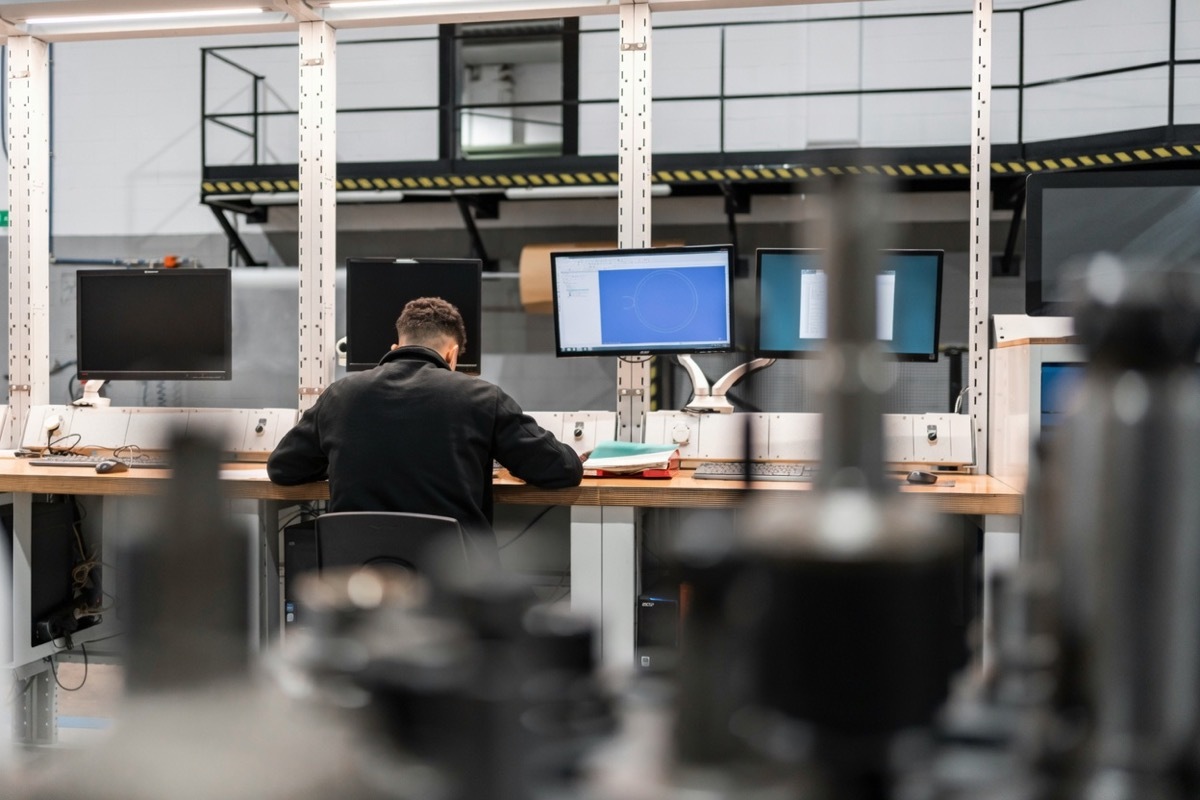
Software has quietly moved to the center of the factory floor. The machines that cut metal and mold plastic now run on code, sensors, and models that flag a defect before a human spots it. For a tech audience watching automation spread, manufacturing is one of the clearest test cases. The same digital wave that reshaped marketing and logistics is now rewriting the job description of a quality engineer.
That shift puts pressure on training. Older quality habits leaned on paper checklists and a senior inspector’s eye. New tools read measurement data in real time, compare it to a 3D model, and predict failure rates across a batch. Engineers who want to keep pace often turn to focused programs such as Excedify, which teach quality methods in a self-paced, online format. The goal is simple: pair human judgment with machine speed.
This article looks at where that change is heading. It covers the skills under pressure, the tools doing the work, and the way smart software is folding into a job that used to run on calipers and gut feel.
Why Is Quality Engineering Changing So Fast?
Quality work used to be a back-end check. A part got made, an inspector measured it, and a report went into a drawer. That model breaks down when a line produces 10,000 units a shift and a 1 percent defect rate means 100 bad parts every few hours.
Modern sensors close that gap. Vision systems scan each part, log dimensions, and feed the numbers into a dashboard. The newest plants treat this stream the same way developers treat application logs. Coverage of how AI reaches into daily operations shows the pattern clearly: data first, decisions second.
Three forces are driving the change:
- Speed: production runs faster than any manual inspection can follow.
- Volume: more parts mean more data than a clipboard can hold.
- Cost: a single recall can erase a year of margin in one week.
What Skills Do Engineers Need Now?
The core math has not changed. Tolerances, statistics, and root-cause analysis still anchor the field. What has changed is the speed at which an engineer must apply them and the tools that sit in between.
Geometric Dimensioning and Tolerancing, often shortened to GD&T, remains the shared language of precision parts. A study of the broader role of smart software in technical work points to a clear trend. The people who pair a method with a tool move ahead of those who only know one.
Method discipline still matters most. The Six Sigma framework, documented by ASQ, gives teams a repeatable way to cut defects toward the target of 3.4 errors per million chances. Pairing that rigor with live data is where the real gains sit.
Engineers building for the next decade tend to focus on four areas:
- Statistics: reading variation, not just averages.
- Tolerancing: writing specs a machine can verify.
- Data fluency: moving numbers between systems without errors.
- Process design: building checks into the line, not after it.
How Does AI Fit Into Daily Quality Work?
AI rarely replaces the engineer. It handles the repetitive scan so the person can spend time on the hard call. A model can review 1,000 images in the time it takes to drink a coffee, then surface the 5 that look wrong.
The clearest gains show up in three tasks:
- Pattern detection: spots drift in a process before it crosses a limit.
- Predictive models: estimate when a tool will wear out.
- Draft reports: write the first version of an inspection note for a human to edit and sign.
National standards bodies are tracking this closely. The manufacturing program at NIST works on shared rules so data from one machine reads correctly on the next. That groundwork matters, because an AI model is only as good as the labeled data behind it.
How Should Teams Train for the Shift?
Self-paced study has become the default for working engineers. A person can finish a module after a shift, repeat a hard section, and apply the lesson the next morning. That rhythm beats a one-week seminar that fades within a month.
Good programs share three traits. They tie each lesson to a real part or process. They use short tests to confirm the idea stuck. They map to recognized methods such as DOE, FMEA, and APQP, which hiring managers already know by name. Roughly 150 manufacturers now expect this kind of structured background from new technical hires.
The smartest plan blends formats. Pair an online course with a mentor on the floor, and the abstract idea meets the real machine within days.
Frequently Asked Questions
Will AI Replace Quality Engineers?
No, and the evidence points the other way. AI handles repetitive scanning, sorting, and first-draft reports, which frees engineers for analysis and judgment calls. A machine can flag a suspect part, but a person decides whether to stop the line, adjust the process, or accept the variation. The role is shifting toward oversight and decision-making rather than manual measurement. Engineers who learn to direct these tools tend to gain responsibility, not lose it.
How Long Does It Take to Learn GD&T?
Most working engineers reach a solid grasp of core GD&T in 4 to 8 weeks of part-time study. The symbols and rules are finite, so the early curve is steep but short. Real fluency comes from applying the system to actual drawings over the following months. A self-paced course lets a person revisit hard topics, such as datum reference frames, as often as needed. Pairing study with daily practice on real parts speeds the process.
Is Six Sigma Still Relevant With AI Tools?
Yes. Six Sigma supplies the structure that data tools fill with numbers. The framework defines what to measure, how to test a change, and when to call a fix proven. AI can crunch the figures faster, yet it still needs a method to decide which questions matter. Teams that pair the two get cleaner experiments and a shared vocabulary across plants.
What Background Do You Need to Start?
A basic engineering or technical foundation helps, but it is not a strict gate. Many people enter quality roles from machining, drafting, or production and build the theory through focused courses. Comfort with simple statistics and an eye for detail matter more than a specific degree. The first goal is reading a drawing and a data set with equal confidence.