

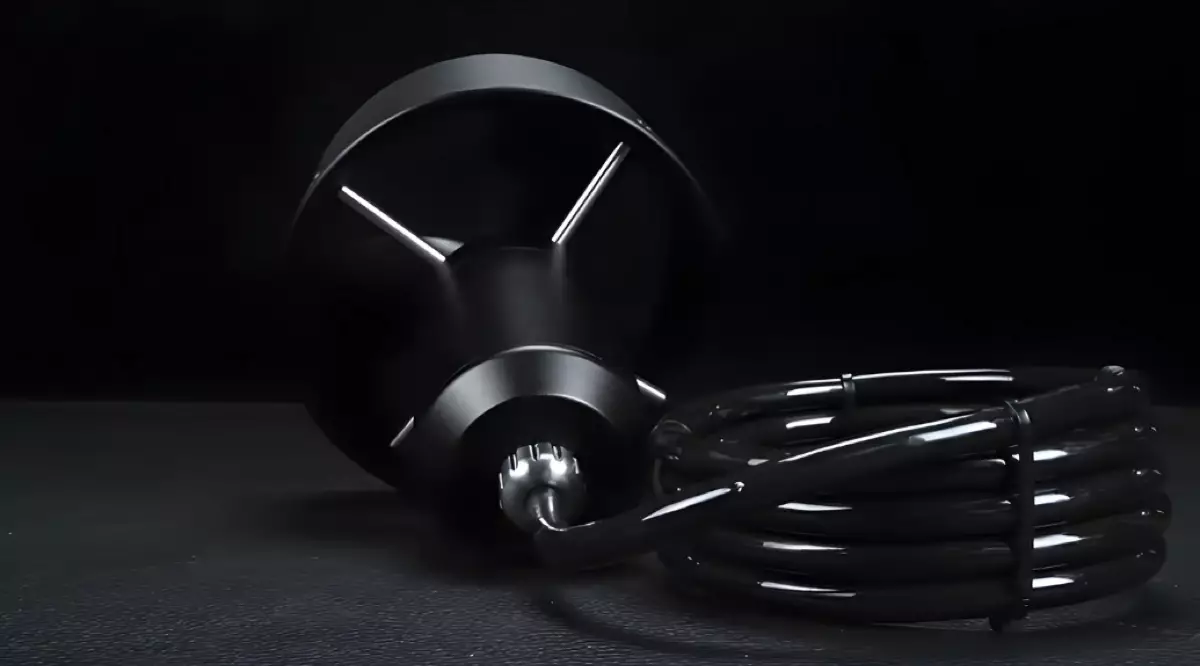
The underwater vehicles should be able to navigate in a reliable manner in a place where they are constantly subjected to the effects of water pressure, drag, and varying currents. Remotely operated vehicles (ROVs) rely on their propulsion systems to provide stability and maneuverability, whether they are being used for inspection, research, offshore maintenance, or exploration. An ROV with a small, efficient thruster can produce a large amount of thrust with minimal loss of energy. Compact propulsion systems have become more and more significant to increase operational efficiency without requiring an increase in vehicle size and weight as underwater technology evolves.
Why Propulsion Efficiency Matters in Underwater Operations
Propulsion efficiency is one of the key parameters in the performance of an underwater vehicle. An efficient propulsion system will enable an ROV to move further, hold a steady position, and perform challenging work in the water with less energy loss.
Underwater propulsion is subject to much larger resistance forces due to water density than propulsion in air. All parts of the propulsion, such as the motor, propeller, housing and sealing mechanism, contribute to the propulsion performance of the vehicle in water.
A small thruster has many operating benefits, both because it is less weight than is needlessly added and because it provides adequate thrust. Additionally, the use of smaller propulsion units provides engineers with increased flexibility in designing vehicle layouts, optimizing balance and facilitating the use of multiple propulsion units for precise vehicle movement.
Modern underwater missions often require vehicles to:
- Maintain stable positioning during inspections
- Perform accurate lateral and vertical movements
- Navigate confined underwater structures
- Operate efficiently over extended periods
- Minimize unnecessary power consumption
When propulsion systems are properly optimized, the vehicle experiences smoother control, better responsiveness, and improved mission reliability.
Design Features That Improve Compact Thruster Performance
Underwater thrusters are designed to be very compact, yet produce a lot of power. This balance is achieved by careful mechanical design, material choice and thermal management.
A big factor in propulsion efficiency is hydrodynamic optimization. A streamlined housing eliminates drag, enabling water to flow around the thruster without causing unnecessary turbulence. The lower the resistance, the more energy from the motor that will be directly applied to the forward motion.
The selection of materials is also very important. The precision-cast aluminum alloy offers a good combination of strength, corrosion resistance and lightweight construction. These attributes contribute to structural stability which lasts even in marine conditions.
Sealings of the advanced type further contribute to performance, stopping water from entering into the critical internal parts. Dual-chamber sealing ensures low mechanical losses and high run reliability with low-friction dynamic shaft seals.
Another factor to consider is efficient heat dissipation. Most current underwater thrusters have a high thermal conductivity potting material and direct water cooling, so that they can operate continuously and maintain stable internal temperatures.
Selecting the Right ROV Thruster for Different Mission Requirements
Choosing the right ROV Thruster is not as simple as picking the one with the highest thrust. Each underwater application has specific operational requirements, such as vehicle size, depth requirements, maneuverability, payload capacity, and available power supply.
In smaller inspection platforms, small thrust propulsion systems are able to provide adequate maneuvering capability and save electric power. In some cases, larger ROVs used for an industrial inspection or subsea intervention may need more thrust output to keep them stable in the water.
Several propulsion characteristics should be evaluated before selecting a thruster:
Important Selection Factors
- Required operating depth
- Available onboard voltage
- Maximum static (bollard) thrust
- Vehicle weight and payload
- Corrosion resistance
- Long-term sealing reliability
- Overall propulsion efficiency
Many manufacturers like CubeMars offer several underwater thruster models for various operating scenarios. For instance, DW10 is rated at 36V and has a minimum static thrust of 10 kgf and a depth of about 350 m. The DW15, DW20 and DW25 models add thrust of at least 15 kgf, 20 kgf and 25 kgf, respectively, and are ideal for larger ROV and AUV platforms in challenging subsea conditions.
Choosing a propulsion system to fit the design of the vehicle can lead to higher efficiency and better underwater maneuvering, even if it is not the most powerful option in terms of thrust.
How Compact Construction Supports Better Vehicle Performance
A smaller propulsion system means more than just space savings. Compact thrusters help to enhance vehicle dynamics with more even weight distribution and greater installation flexibility.
Multiple small thrusters can be mounted around an ROV to provide fine control in multiple directions. This configuration improves hovering precision, rotation and station keeping during inspection and maintenance operations.
Smaller propulsion systems also cut down on the total vehicle mass, which helps to improve its acceleration and the amount of energy needed to change direction. These benefits are especially important when entering confined areas underwater or performing sensitive inspections of subsea infrastructure.
Modern compact underwater thrusters also take maintenance efficiency into account. The fully enclosed construction ensures protection of internal components from seawater exposure, and corrosion-resistant materials help to build longer operational life and lower servicing needs.
The propulsion system will take up less internal space, allowing more room for cameras, sensors, lighting systems, batteries, manipulators or scientific instruments without much additional bulk.
ROV Thruster Technologies That Enhance Reliability
When conducting underwater operations with expensive or difficult-to-recover equipment, reliable propulsion is a must. To achieve consistent performance under demanding operating conditions, a modern ROV Thruster has several engineering improvements.
An important development is dual-chamber independent sealing structures. These systems offer further resistance to water penetration and will aid long-term durability under high hydrostatic pressure.
Other technologies commonly incorporated into modern underwater thrusters include:
Reliability-Enhancing Features
- Precision-cast aluminum alloy construction
- Low-friction dynamic shaft seals
- High-thermal-conductivity internal potting
- Direct water cooling for thermal control
- Corrosion-resistant structural components
- Fully enclosed waterproof architecture
- Maintenance-friendly mechanical design
In fact, many of these design elements are found throughout CubeMars’ underwater propulsion products. The DW series is designed to operate at depths up to around 350 meters, and shallow water systems are available, such as the SW7, SW12 and SW17, for shallow applications like unmanned surface vessels, handheld propulsion systems and other light-duty underwater platforms up to about 30 meters. The W30 underwater thruster takes versatility one step further by being a compact propulsion package capable of operating to depths of approximately 200 m, suitable for marine robotics, ROVs, AUVs and more.
These engineering solutions contribute to a more reliable and consistent operation and minimize the risk of propulsion-related mission interruptions during underwater missions.
Balancing Power, Efficiency, and Durability
It is not sufficient to have high thrust to ensure efficient underwater propulsion. The best propulsion systems achieve a balance of adequate power generation, energy use, structural strength and thermal stability.
If the propulsion system is too large, it will waste electric power, and if it is too small, it will not be able to cope sufficiently with the underwater currents and the increase in payload. A properly matched thruster will result in better efficiency over a broad range of operating conditions.
Durability also has a direct impact on efficiency over the long term. A corrosion-resistant material ensures structural integrity and stability, and a reliable sealing system minimizes maintenance needs and ensures performance over time.
Thermal management is also critical; high internal temperatures can decrease motor performance and affect component life. Compact underwater thrusters can be designed to operate in stable conditions for long missions by using direct water cooling and high-conductivity internal materials.
These can be meticulously incorporated into a propulsion system and provide an operator with reliable performance, consistent thrust production and increased overall mission productivity.
The Future of Compact Underwater Propulsion
Propulsion systems will continue to develop into more efficient and compact designs, as underwater robotics continue to grow in the areas of scientific research, offshore energy, infrastructure inspection, environmental monitoring, and defense applications.
Future developments should include further improvements in hydrodynamic performance, electrical losses, corrosion resistance and dependability in operation at greater and more severe depths. As ROV platforms become more complex with advanced imaging systems, autonomous navigation and specialized subsea tools, compact propulsion systems will likely be used to support them.
Manufacturers will also specialize to enhance the long-term durability of the components further, while keeping them compact, with lightweight materials, sealing technologies, and cooling methods being expected to be continually improved. As underwater vehicles are increasingly designed to meet very specific operational requirements, custom propulsion configurations become more and more important.
Conclusion
To get a higher propulsion efficiency, it’s necessary to start with a compact thruster made for underwater use. But the ability to provide efficient propulsion is not just a matter of thrust; the hydrodynamic design, sealing, material quality, thermal management, and system integration are all important factors. Compact thrusters offer significant benefits: weight reduction, enhanced maneuverability, optimized energy utilization and optimized vehicle design. Modern underwater propulsion technologies continue to improve the capabilities of ROVs in many professional marine applications with features like corrosion-resistant aluminum alloy construction, advanced sealing systems, efficient water cooling and reliable performance at great depths.