

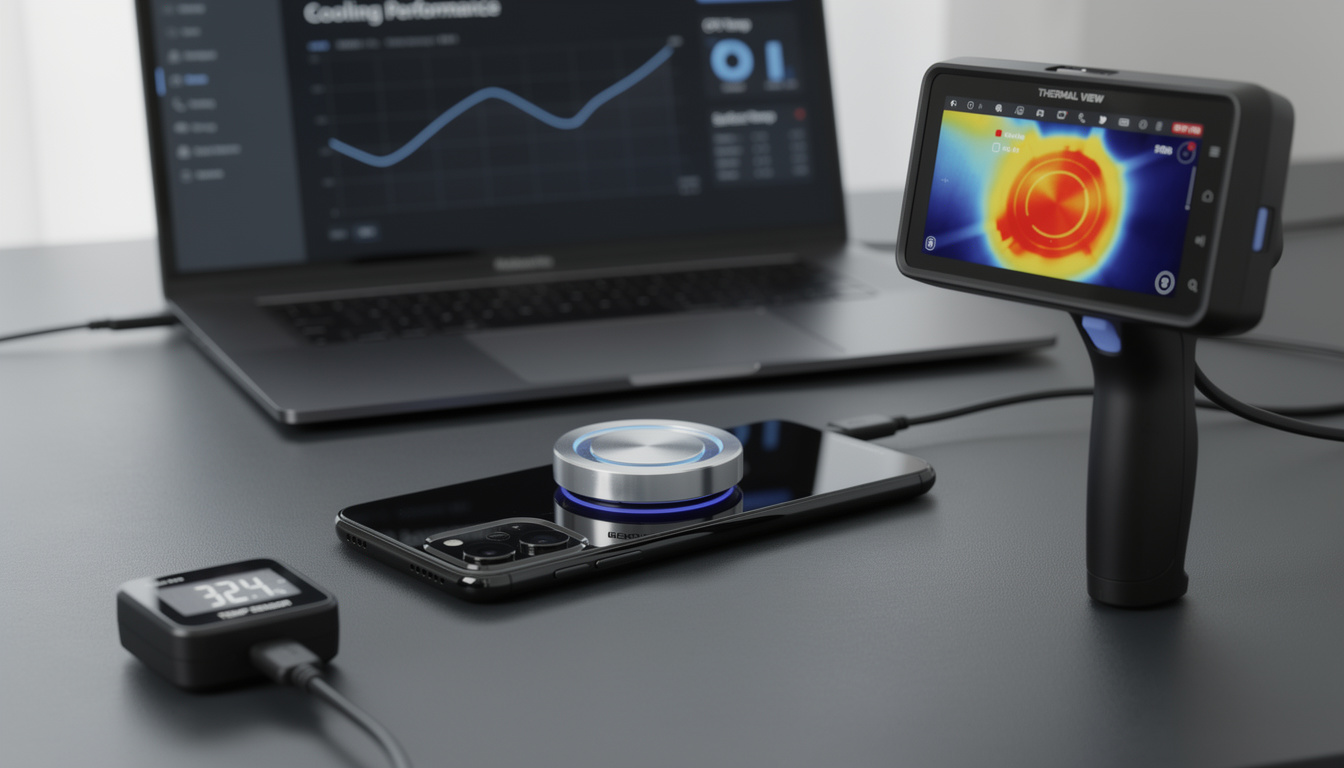
Phone cooling accessories tested: do magnetic coolers really help?
You notice it first during a long gaming session, a 4K video export, or a sun-soaked drive with maps running on the dashboard. The phone gets hot, brightness dips, frame rates wobble, and charging slows down. That is exactly where phone cooling accessories have found an audience, especially magnetic coolers that snap onto MagSafe-compatible iPhones and many Android phones with metal rings.
These gadgets promise lower temperatures and better sustained performance, but the real question is simple: do they actually work outside marketing demos? Recent testing across mobile gaming, video recording, and fast charging suggests the answer is yes, with caveats. The gains are real in the right conditions, but not every cooler is worth carrying in your bag.
Phone cooling accessories work best when throttling is the real problem
A magnetic cooler is usually a small fan paired with a thermoelectric plate, often called a Peltier module. Once attached to the back of the phone, it pulls heat away from the chassis and helps the device stay below the point where the processor starts cutting performance. In practical terms, that can mean steadier frame rates in titles like Genshin Impact or Call of Duty: Mobile, and fewer brightness drops while recording video outdoors.
This lines up with how modern smartphones manage heat. Apple, Samsung, and Qualcomm all tune their devices to reduce speed when internal temperatures rise too far. Reviews from outlets such as GSMArena and Notebookcheck over the past year have repeatedly shown that sustained performance, not peak speed, is where heat management matters most.
That distinction matters. If your phone only gets warm during short bursts, a cooler may change very little. If it gets hot during 20-minute gaming sessions, wireless charging, or 4K capture, the difference becomes easier to notice.
What testing shows during gaming, charging, and video recording
In hands-on testing, magnetic coolers tend to deliver the clearest benefit during graphically heavy gaming. The phone may still feel warm around the edges, but the center back panel drops faster, and the device often holds peak brightness and smoother frame pacing for longer. The effect is usually strongest on phones that already run near their thermal limits.
Fast charging is another useful case. Heat is one of the main reasons charging speeds taper off, so active cooling can help some phones stay in their faster charging window longer. This is an inference based on reported charging behavior across flagship devices and the way battery protection systems respond to temperature.
Video is more complicated. During extended 4K or high-frame-rate recording, a cooler can delay overheating warnings, but sunlight, ambient temperature, and camera processing load still matter a lot. If the phone is baking on a car mount in summer, a small magnetic cooler helps, but it is not magic.
| Key detail | Why it matters |
|---|---|
| Gaming benefits are the most consistent | Lower surface heat can reduce thermal throttling and keep frame rates steadier |
| Charging gains depend on the phone | Some devices maintain higher charging speeds longer when heat drops |
| Video recording sees mixed results | Ambient temperature and direct sun can overpower a compact cooler |
| Magnetic alignment matters | Poor placement reduces heat transfer and overall efficiency |
Why some magnetic coolers disappoint
Not all phone cooling accessories are built the same. Some budget models are little more than noisy fans in a plastic shell, with weak contact pressure and limited cooling power. Without a strong thermoelectric element and good thermal contact, they mainly move air around the back of the phone.
Compatibility also trips people up. MagSafe makes attachment easy on recent iPhones, but Android users often rely on adhesive magnetic rings, cases, or clip-on systems. A thick case, uneven back panel, or off-center camera island can all reduce the cooler’s effect.
Then there is condensation risk. If a cooler drives the contact plate far below ambient temperature in a humid room, moisture can appear on the surface. Better brands usually include safeguards, but it is still wise to avoid extreme settings in sticky weather.
Which phone cooling accessories are actually worth buying
The best options generally come from accessory makers with a track record in mobile gaming gear, such as Black Shark, REDMAGIC, and ESR. These brands tend to publish clearer specs on fan speed, cooling plate design, and magnetic compatibility, even if real-world results still vary from phone to phone.
If your main goal is gaming, prioritize strong magnetic alignment, a solid clamp force if applicable, and external power over tiny internal batteries. If your goal is charging or dashboard navigation, quieter operation matters more. That is where a cooler becomes a daily tool instead of a novelty.
Readers comparing devices may also want to check broader buying context, especially if heat is tied to a handset upgrade. DualMedia’s look at the best smartphones you can buy in 2025 is useful here, because thermal behavior often comes down to the phone itself as much as the accessory attached to it.
When a cooler is useful, and when it is just another gadget
There is a simple test. If your phone slows down, dims, or stops charging at top speed during the tasks you care about, a magnetic cooler can be a practical fix. If you mostly text, browse, and stream indoors, it is probably unnecessary.
This is where phone cooling accessories split into two camps. For mobile gamers, creators, and power users, they can solve a specific thermal bottleneck. For everyone else, they risk joining the pile of impulse buys better suited to a roundup like the most useless gadgets of 2025.
The most sensible shortlist looks like this:
- Buy one if you game for 20 minutes or more, record long 4K clips, or fast-charge in warm conditions
- Skip it if your phone only gets mildly warm during casual use
- Choose magnetic alignment carefully if you use Android with a ring or case adapter
- Avoid ultra-cheap models that rely mostly on fan airflow without strong contact cooling
In other words, the cooler should solve a repeat problem, not create a new one in your pocket.
Frequently asked questions
Do magnetic phone coolers lower internal phone temperature?
They can lower the back surface temperature and help the phone shed heat faster. That often leads to lower internal temperatures over time, especially during sustained loads like gaming or 4K recording.
Do magnetic coolers work on Android phones?
Yes, but many Android models need a magnetic ring, compatible case, or clip system. Results depend heavily on how flat and centered the contact area is on the back of the phone.
Are phone cooling accessories safe for batteries?
Used properly, they are generally safer than letting a phone stay hot for long periods. Extreme cooling in very humid environments can create moisture, so reasonable settings and good-quality products matter.
Do coolers help while fast charging?
They often do, because charging systems reduce speed when heat rises too much. The size of the benefit depends on the phone model, charger, ambient temperature, and battery management software.
What to watch next
The next wave of mobile accessories will likely blend smarter thermal control with software signals from the phone itself. That could mean coolers that react to processor load, charging state, or camera use instead of just blasting at full speed all the time.
That broader trend fits a larger hardware story. As AI features push more local processing onto devices, thermal design matters more, not less. For a wider look at where consumer and enterprise tech are heading, DualMedia’s report on McKinsey technology trends 2025 adds useful context.
For now, the verdict is straightforward: phone cooling accessories do work, especially magnetic coolers with real thermoelectric hardware. They are not essential for everyone, but for the right user, they can keep a phone performing like it should when heat would otherwise get in the way.
Do magnetic phone coolers really work?
Yes, the better ones do. They are most effective during long gaming sessions, extended video capture, and warm-condition charging where thermal throttling is the real issue.
Can a magnetic cooler damage a smartphone?
A reputable model used correctly is unlikely to damage a phone. The main watch-out is condensation in humid environments if the cooling plate gets too cold.
Are magnetic coolers only for iPhone?
No. They work easily with MagSafe-compatible iPhones, but many Android phones can use them with magnetic rings, cases, or clamp systems.
Should casual users buy phone cooling accessories?
Usually not. They make the most sense for gamers, creators, and heavy users who regularly hit heat-related slowdowns or charging limits.
Want more tech and innovation coverage like this? DualMedia Innovation News tracks the technology shifts that actually matter, from AI to foldable hardware to the next wave of consumer products.
 EN
EN  FR
FR  ES
ES