

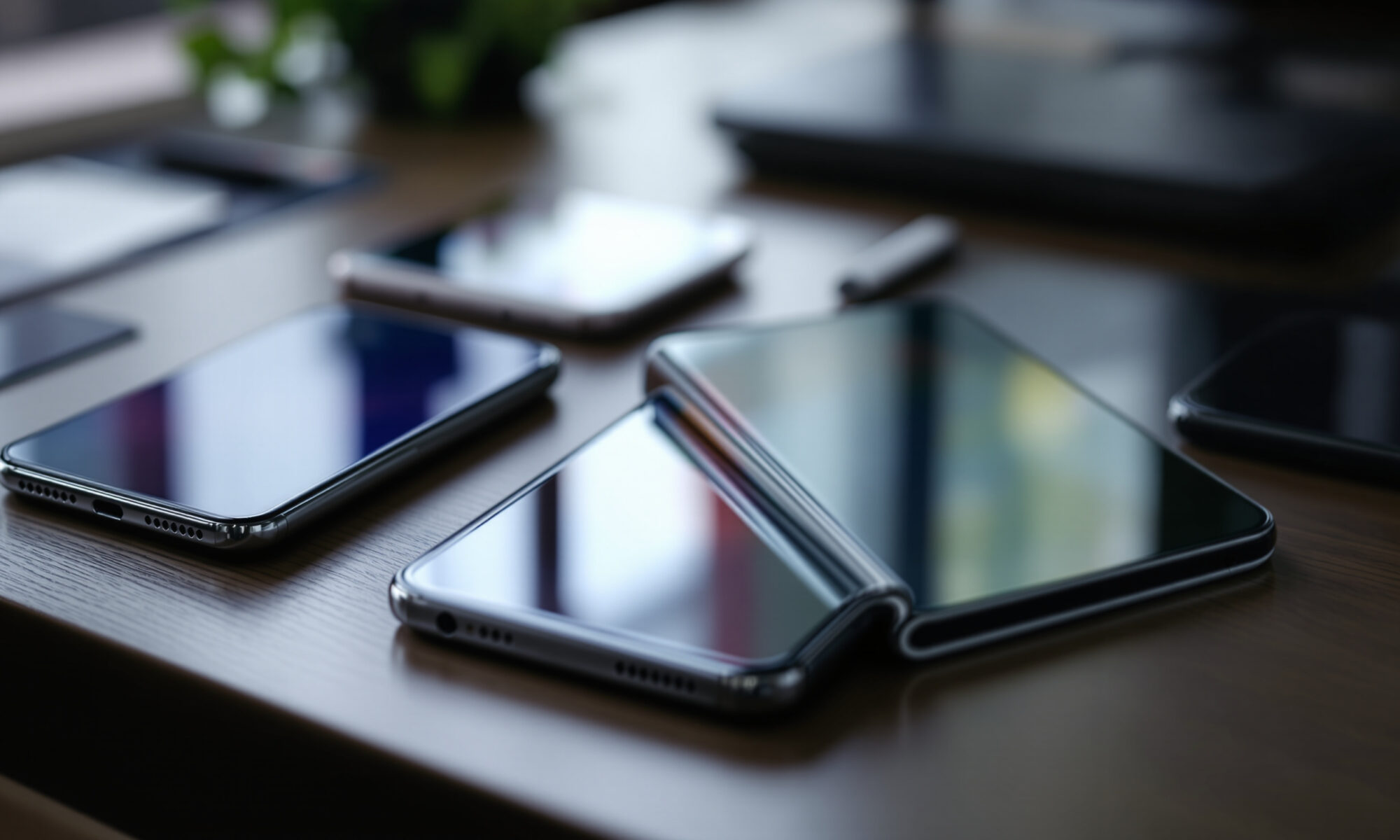
The iPhone Fold 2026 is still unannounced, but the credible rumor picture points to a book-style foldable iPhone arriving around September 2026, likely priced near $1,999 to $2,500. Samsung’s Galaxy Z Fold7 is the real benchmark: it launched in July 2025 at $1,999.99 with known durability specs. If you’re choosing before September, the question is simple: buy proven Samsung now, or wait for Apple’s first attempt.
iPhone Fold 2026 versus Galaxy Z Fold7: what’s actually known
Search intent here is mostly informational with a strong comparison angle. You want to know whether the iPhone Fold 2026 is worth waiting for, how it may compare with Samsung’s foldable, and which risks are real rather than forum noise.
Apple hasn’t officially announced an “iPhone Fold” or “iPhone Fold 2026” as of July 9, 2026. That matters. Every launch date, price, hinge detail, and screen claim attached to Apple’s foldable remains rumor-based, even when the sources are supply-chain reports, analyst notes, or publications with decent track records.
Samsung, by contrast, has shipping hardware. The Galaxy Z Fold7 was announced in New York on July 9, 2025, and general availability began on July 25, 2025. Its U.S. starting price was $1,999.99 in 2025, and Samsung publicly lists Armor FlexHinge, an Advanced Armor Aluminum frame, Corning Gorilla Glass Ceramic 2 cover glass, and IP48 water and dust resistance.
The cleanest way to frame it: Apple may be trying to beat Samsung on the crease and ecosystem polish, while Samsung already has years of foldable manufacturing, repair experience, and user feedback behind it. For background on Apple’s broader timing, our separate look at the iPhone 18 Pro release window helps place the foldable rumor inside the 2026 iPhone cycle.
When does the foldable iPhone launch?
Multiple 2026 rumor roundups place Apple’s first foldable iPhone in the iPhone 18 cycle, with a possible September 2026 debut. MacRumors reported on June 24, 2026, that Apple was still targeting a September 2026 foldable iPhone launch despite hinge-related reports, with production said to be set for July.
Digital Camera World reported on July 7, 2026, citing Nikkei Asia supply-chain claims, that Apple had booked parts and components for 80 million late-2026 iPhones, including its first foldable. Treat that as meaningful but not definitive. Component bookings can shift, and Apple has killed or delayed products late when the experience wasn’t good enough.
September makes business sense. Apple already owns that consumer attention window, carriers are ready for upgrade promotions, and a foldable could sit above the iPhone 18 Pro Max as an ultra-premium model. Still, I wouldn’t plan a trade-in around an unannounced device until Apple sends invitations.
If Apple does reveal the iPhone Fold 2026 in September, retail availability could follow the normal iPhone pattern or slip later if yields are tight. Foldable displays and hinges are harder to produce than flat phones, and first-generation Apple hardware often arrives in limited quantities.
Price math: the part most buyers underestimate
Reports in 2026 commonly put the expected iPhone Fold 2026 price around $1,999 to $2,500. Samsung’s Galaxy Z Fold7 started at $1,999.99 in the U.S. in 2025. On paper, Apple might land near Samsung; in real life, storage tiers, AppleCare, cases, and carrier terms can push the cost into laptop territory.
Here’s the concrete calculation. If Apple launches at $2,299 in 2026, which sits near the middle of the rumored range, and you add AppleCare-style coverage at around a few hundred dollars depending on final terms, plus a case, you’re plausibly staring at a package close to $2,600 before taxes. In a 8.875% sales-tax city like New York City, that kind of basket would add roughly $231 in tax. Suddenly the purchase is near $2,831.
A hidden pitfall: foldables punish “I’ll skip protection” thinking more than normal phones. A cracked cover display is one thing; hinge or inner-screen damage can be a far more expensive repair category. If you want a deeper look at durability trade-offs by brand, read our guide to foldable phone durability in 2026 before you buy anything this expensive.
| Category | iPhone Fold 2026 rumors | Samsung Galaxy Z Fold7 facts |
|---|---|---|
| Status | Unannounced as of July 9, 2026 | Announced July 9, 2025; available July 25, 2025 |
| Expected price | Around $1,999–$2,500 in 2026 reports | $1,999.99 U.S. starting price in 2025 |
| Design | Rumored book-style foldable | Book-style Galaxy Z Fold design |
| Crease approach | Rumored reduced or near-invisible crease | Armor FlexHinge water-droplet design reduces visible creasing |
| Durability claims | Rumored durable hinge; possible Liquid Metal hinge in analyst note | Armor FlexHinge, Advanced Armor Aluminum, Gorilla Glass Ceramic 2, IP48 |
Hinge, crease, and durability: where the fight gets serious
The crease will define early reactions to the iPhone Fold 2026. CMBI’s January 2, 2026 research note expected Apple’s foldable to use new screen technology for “crease-free” visuals and a Liquid Metal hinge. MacRumors, citing ETNews, reported on February 25, 2025, that Apple aimed to eliminate the foldable display crease “regardless of price,” with Amphenol seen as a hinge supplier frontrunner.
Samsung is not standing still. The Galaxy Z Fold7’s Armor FlexHinge uses an enhanced water-droplet design and multi-rail structure, according to Samsung, to reduce visible creasing and disperse stress. Android Central reported on July 3, 2026, citing Ice Universe, that the Galaxy Z Fold8 may get a redesigned hinge aimed at further improving the crease.
My view: a barely visible crease in a press demo is not the same as a barely visible crease after 14 months of commuting, gym bags, grit, and one-handed opening. That’s the part spec sheets don’t capture. Dust resistance is especially worth watching because Samsung’s Fold7 has IP48, while Apple’s rating, if the product exists, is still unknown.
There’s a counter-argument to the Apple hype, and it’s a fair one. Samsung has already learned through public generations of foldables, including hinge geometry, display layers, customer support, and carrier logistics. Apple may ship a more polished first foldable, but first-generation hardware is still first-generation hardware.
Should you wait for Apple or buy Samsung now?
If your current phone is failing and you want a foldable today, buy the Samsung rather than waiting on the iPhone Fold 2026. The Fold7 is expensive, but it’s a known product with public specifications, retail availability, and an established accessory and service channel.
Waiting makes sense if you’re heavily invested in Apple services, iMessage, FaceTime, iCloud Photos, Apple Watch, or AirPods. A foldable iPhone could become the best large-screen device for people who already live inside Apple’s ecosystem. Our broader analysis of why an iPhone Fold could change Apple’s future gets into that strategic angle.
Before you decide, use this simple filter:
- Wait for Apple if you keep phones for four years, use an Apple Watch daily, and can tolerate a possible $2,500 starting price.
- Buy Galaxy Z Fold7 if you need a foldable for multitasking now and are comfortable with Android.
- Hold your current phone if your main reason is curiosity, because first-generation foldables are rarely the cheapest way to satisfy it.
- Budget for protection either way, because hinge and inner-screen repairs are the wrong place to be optimistic.
One more practical point: selling your old handset early can backfire if Apple delays the launch. If you’re preparing for a trade-in, follow a proper data-wipe process like the one in our guide to selling your old phone safely, but don’t wipe or ship your daily phone before a real preorder is live.
Software and ecosystem may matter more than specs
Hardware gets the headlines, yet software will decide whether the iPhone Fold 2026 feels like a bigger iPhone or a new class of device. Samsung already supports split-screen multitasking, floating windows, taskbar-style workflows, and years of app adaptation across the Z Fold line. Some people genuinely use that power; others unfold the phone, check email, and fold it again.
Apple’s advantage is developer gravity. If the company gives developers clear layout tools and a strong reason to adapt, iPad-style app behavior could make the first foldable iPhone feel coherent quickly. If it merely stretches standard iPhone apps, the magic will evaporate fast.
Operating-system differences will also be sharp in 2026. If you care about file handling, sideloading rules, AI features, or cross-device continuity, compare the two platforms beyond the hinge; our iOS 19 vs Android 17 feature comparison is a useful starting point. For travel-heavy buyers, eSIM handling also matters on a $2,000-plus phone, and our guide to eSIM plans for international travel explains the practical differences.
Honestly, the Apple option only makes sense if the large inner screen changes how you work or create. If you just want the newest iPhone because it’s the newest iPhone, a Pro Max-class device will probably be easier to carry, cheaper to insure, and less stressful to repair.
The September 2026 buying strategy
Don’t preorder the iPhone Fold 2026 on rumor momentum alone. Watch the launch for four details: the official starting price, the water and dust rating, repair pricing, and whether Apple shows the crease under harsh angled lighting. Product videos are flattering. Store lights and review photos are less forgiving.
Samsung’s countermove will matter too. Galaxy Z Fold8 rumors in July 2026 already point to hinge and crease changes, and Android Central has reported possible European price increases for an Ultra variant. If Samsung raises prices while Apple enters near $2,299, the old “Samsung is the cheaper foldable” assumption may weaken.
A smart buyer should compare the real monthly cost, not just the sticker price. A $2,299 phone over 36 months is about $63.86 per month before tax, insurance, interest, or carrier credits. A $1,999.99 Fold7 over the same period is about $55.56 per month. The difference is only $8.30 monthly before add-ons, but the upfront risk of an unproven first-generation Apple foldable is much larger than that neat number suggests.
My recommendation is cautious: wait for Apple’s announcement if you can, then wait again for full independent reviews. If reviewers find a visible crease, fragile hinge behavior, poor app scaling, or weak battery life, the Galaxy line will look safer. If Apple nails those four things, September 2026 could become the first time many iPhone loyalists seriously consider a foldable.
FAQ
Is the iPhone Fold 2026 confirmed by Apple?
No. As of July 9, 2026, Apple has not officially announced an iPhone Fold or an iPhone Fold 2026. Launch timing, price, and hardware details are based on reports and analyst claims.
How much will the iPhone Fold cost?
Multiple 2026 reports place the expected price around $1,999 to $2,500. The final price could vary by storage, region, taxes, and any AppleCare-style protection plan.
Will the iPhone Fold have no crease?
Reports say Apple is targeting a reduced or near-invisible crease, with some claims pointing to new display technology and advanced hinge materials. Until Apple ships the device, crease performance remains unproven.
Is Galaxy Z Fold7 better than waiting for iPhone Fold?
Galaxy Z Fold7 is better if you need a foldable now because it’s a real product with official durability specifications. Waiting for Apple makes sense if you’re tied to the Apple ecosystem and can accept first-generation risk.