

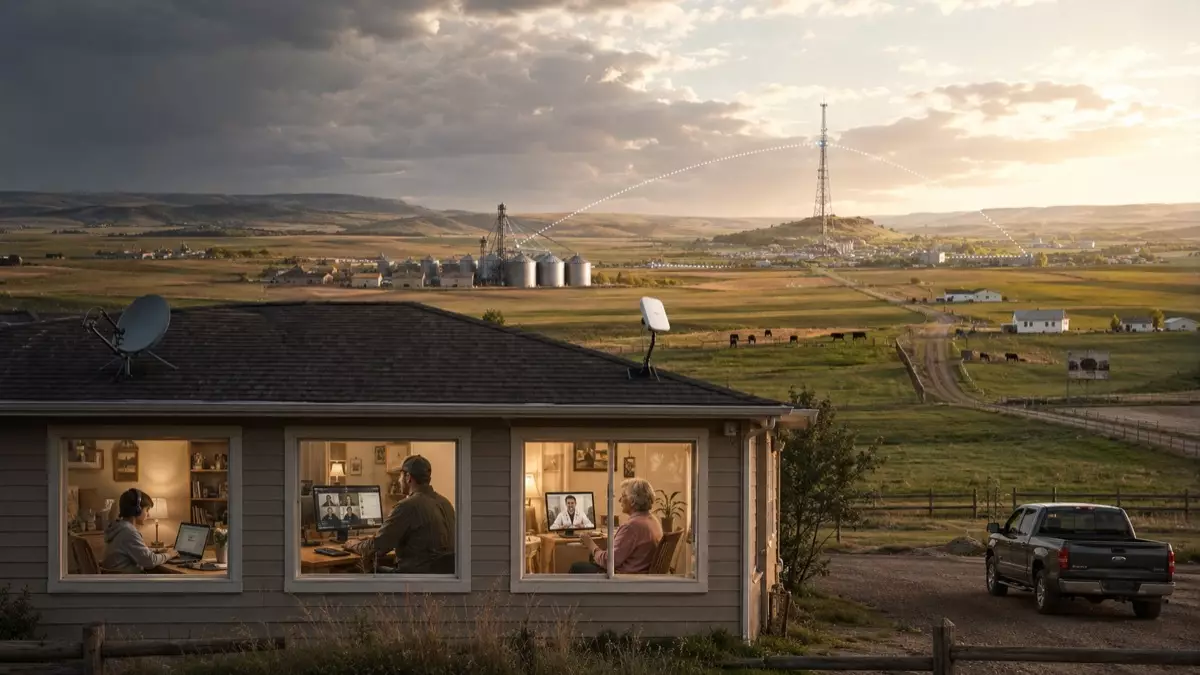
For years, the Hendersons down the county road had to time their video calls around the weather. A rainstorm could knock out their satellite connection for hours. Homework that required watching a video lesson meant driving into town. They’d park outside the library after it closed. That way, they could borrow the Wi-Fi signal leaking through the windows. It sounds like something from decades ago. For a lot of families in rural Colorado and Nebraska relying on options like Viaero home internet service, it was still happening within the last few years.
Why rural internet has lagged behind
The reason isn’t complicated, even if it’s frustrating to live with. Laying fiber cable costs roughly the same whether it serves twenty city houses or two farmhouses. For companies weighing where to invest first, dense neighborhoods win almost every time. That left huge stretches of Colorado, Nebraska, Kansas, and Wyoming relying on satellite internet. Weather sensitivity and lag were common problems. So were DSL connections that struggled to keep up with modern life.
This isn’t just an inconvenience. It’s an equity gap. A family in a rural county shouldn’t have a harder time reaching a doctor online. They shouldn’t get a worse education just because of where they live. National carriers have historically treated rural coverage as an afterthought. They built out cities first and circled back to farm country when budgets allowed.
What changed
What actually moved the needle for a lot of these households was fixed wireless internet. Instead of digging trenches for cable, it uses existing cell towers. Those towers are already scattered across rural counties. They deliver a home internet signal through a small antenna mounted on the house. Because it works with infrastructure that’s often already standing, regional providers reach homes fiber companies wrote off years ago.
Viaero Wireless has been part of that shift for a long time. The company has served rural communities in Colorado, Nebraska, Kansas, and Wyoming for more than 30 years. It owns 1,000+ privately owned towers across that footprint. It doesn’t lease space from someone else. That local ownership shows up in everyday life. When a tower needs maintenance, it’s Viaero’s own crew making the call. It isn’t a national contractor working through a queue. Viaero employs around 500 people across the region. Many of the people answering support calls actually live in the communities they serve.
What reliable internet actually changes at home
Ask someone who just got dependable internet what it means to them. The answer is rarely about the internet at all. It’s about what became possible because of it.
For parents, it means kids can finish a video-based assignment without the connection dropping. For someone managing a chronic health condition, it can mean a telehealth appointment with a distant specialist. That appointment happens from the kitchen table instead of a long drive. For people who took remote jobs, a stable connection can mean keeping that job. Without it, a dropped video call could cost them the position. For the small businesses that keep rural downtowns alive, a stable connection matters too. It means processing card payments without interruption or simply having a website that works.
None of that requires advanced technology. It just requires a connection that’s actually there when people need it.
A regional option still showing up
Viaero is one option households across the region have turned to. Many turned to it when other options fell short. Coverage isn’t universal everywhere in Colorado, Nebraska, Kansas, and Wyoming. It’s worth checking availability at a specific address. The company’s long history in these states matters here. So does its ownership of the towers themselves. That’s part of why it’s remained an option worth checking. It’s especially useful for households outside the reach of bigger carriers.
The bigger picture
Reliable internet in rural America was never going to arrive on its own. It wasn’t profitable enough for the biggest players to prioritize. It arrived because regional providers built where national companies didn’t. They used infrastructure suited to wide-open geography instead of dense cities. For families like the Hendersons, that shift wasn’t about faster streaming. It was about no longer planning their lives around whether the internet would hold.