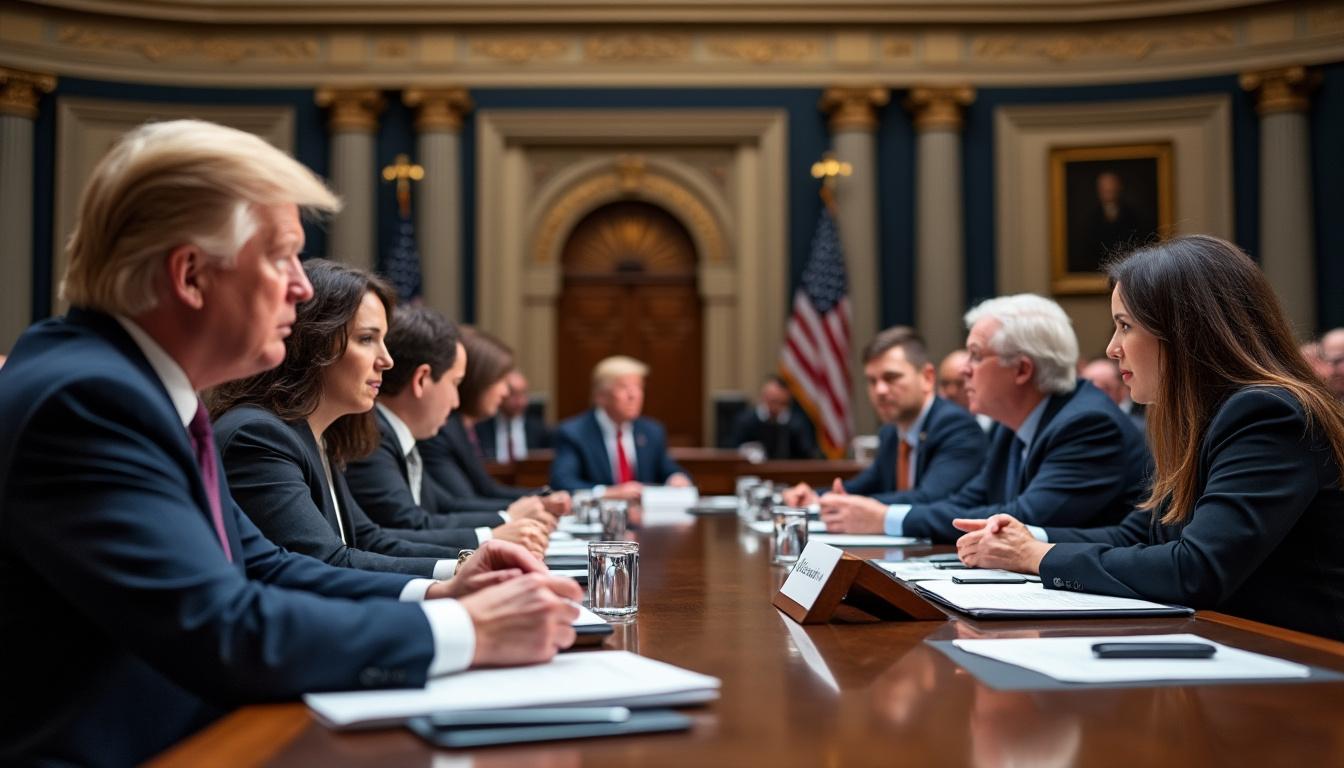
A former FBI cyber chief has issued a stark warning: a cornerstone statute that has quietly enabled rapid threat intelligence exchange between private firms and federal agencies is scheduled to lapse on September 30, 2025 unless Congress intervenes. For a decade this legal framework—commonly referenced as CISA 2015—served as the scaffolding for real-time collaboration that
A decline in cybersecurity budgets and a reduction in security team sizes
The tightening of corporate wallets has shifted cybersecurity from a growth story to one defined by prioritization and triage. Organizations across sectors are reporting slowed budget increases, frozen hiring and, in some cases, headcount reductions within security teams. This pivot is reshaping tool selection, incident response capabilities and long-term risk posture. The analysis below examines
Leveraging security expertise to enhance communication effectiveness
Security expertise is increasingly a communication discipline as much as a technical one. In modern organizations, the ability to translate threat analysis, incident response, and secure design principles into actionable, stakeholder-focused messages determines whether controls are adopted, budgets are allocated, and risks are mitigated. The convergence of cybersecurity, DevOps and executive decision-making creates a demand
Accenture expands its cybersecurity expertise in Asia Pacific with the acquisition of CyberCX
Accenture expands its cybersecurity expertise in Asia Pacific with the acquisition of CyberCX marks a defining consolidation in regional cyber capabilities. The transaction brings a leading Australia‑born security services provider into Accenture’s global cyber organization, combining local operational depth with worldwide scale. This move addresses acute gaps in AI‑era defenses and compliance, while reshaping the
Trump 2.0 faces its initial federal cybersecurity crisis
A significant federal cybersecurity incident has emerged early in the second Trump administration: a breach of the United States federal judiciary’s electronic case filing platform has forced courts to revert to paper backups, raised questions about exposed sealed records, and intensified debate over federal cyber posture and operational hygiene. The incident—detected around July 4 and
Researchers warn that careless AI security measures risk reverting cybersecurity to a 1990s state
Security researchers are raising alarms that rushed or superficial AI security measures could undo decades of progress in defensive practices, nudging enterprises back toward the permissive, perimeter-focused era of the 1990s. Rapid product launches, weak governance, and a false sense of protection from AI-enabled tooling create a landscape where old vulnerabilities resurface and new attack
black hat and def con provide valuable insights for congress
Black Hat and DEF CON frequently surface as technical crucibles where researchers, operators and policy-minded practitioners expose real-world threats and practical mitigations. Coverage by outlets such as Wired, KrebsOnSecurity and Dark Reading often translates these deep-technical findings into narratives that can inform lawmakers. For Congress, the value lies less in spectacle and more in distilled,
Corporations enlist AI agents to bolster their cyber defense teams
Corporations are accelerating the adoption of agentic AI to reinforce cyber defense teams, responding to a surge in AI-enabled attacks that generate convincing deepfakes, bespoke phishing and automated exploit tooling. Security leaders are deploying specialized AI teammates that automate routine triage, correlate signals across global estates, and perform initial containment actions so human analysts can
New bipartisan legislation aims to establish a national strategy for quantum computing cybersecurity
The United States Senate has advanced a focused legislative response to a rapidly approaching cryptographic threat: the potential of quantum computers to render current encryption obsolete. This piece examines the technical, administrative, and industrial implications of the proposed National Quantum Cybersecurity Migration Strategy Act, the directives it places on the White House and federal agencies,
Cybersecurity support from ‘hacker-volunteers’ aims to bolster water utilities
Community-Driven Cybersecurity: How Hacker-Volunteers Enhance Water Industry Defenses The increasing reliance of water utilities on digital operational technologies has introduced unprecedented vulnerabilities, exposing critical infrastructures to potential cyber threats. In response, the innovative concept of CyberSafe hacker-volunteers has emerged as a vital defensive strategy. These ethical hackers, acting as GuardianCyber agents, volunteer their expertise to
Israeli cybersecurity company reveals a vulnerability in ChatGPT
In a rapidly evolving technological landscape, the intersection of artificial intelligence and cybersecurity presents both groundbreaking opportunities and significant challenges. Recent developments have spotlighted vulnerabilities within AI platforms that were once considered robust. Notably, an Israeli cybersecurity firm has uncovered a critical vulnerability in ChatGPT, one of the most widely used AI chatbots globally. This
CISA and FEMA unveil over $100 million in grants to bolster community cybersecurity efforts
The Cybersecurity and Infrastructure Security Agency (CISA) along with the Federal Emergency Management Agency (FEMA) have announced a landmark initiative providing over $100 million in grant funding aimed at elevating cybersecurity standards across communities nationwide. This funding targets critical vulnerabilities at the local and tribal levels, where defenses often lag behind rapidly evolving cyber threats.
How ai is reshaping adversarial testing in cybersecurity: insights from the founder of pentera
Adversarial testing in cybersecurity is undergoing a profound transformation driven by the integration of artificial intelligence. With cyber threats growing increasingly sophisticated, traditional pentesting methods face limitations in scope and speed. The founder of Pentera, a pioneer in automated security validation, highlights how AI accelerates and refines adversarial testing—moving from periodic assessments to continuous, dynamic
the tea data breach highlights the need for caution with new apps in the age of AI
The recent data breach of the Tea app starkly reveals the critical vulnerabilities that new mobile applications face, especially in a rapidly evolving AI-driven environment. By exposing private selfies, identification documents, and deeply personal messages, this incident serves as a timely reminder for users and developers alike: vigilance, advanced security measures, and awareness must be
Ohio introduces new cybersecurity regulations for local governments, mandating public consent for ransomware payouts
Ohio has enacted pioneering cybersecurity regulations targeting local governments, a decisive response to the escalating threats of ransomware and cyberattacks observed over recent years. This legislative framework mandates increased transparency by requiring public consent before ransom payments can be authorized, signaling a transformative approach to data protection and digital safety within the public sector. The
China’s cybersecurity authority calls Nvidia to address chip security concerns
China’s cybersecurity regulator recently summoned Nvidia representatives to discuss serious security concerns related to the AI chips the company sells in the country. The Cyberspace Administration of China (CAC) specifically focused on Nvidia’s H20 chip, tailored for the Chinese market amid tightened U.S. export regulations. This unprecedented move raises critical questions about hardware security, semiconductor
China’s cybersecurity authorities call on Nvidia to address chip security concerns
China’s cybersecurity authorities have escalated their scrutiny of Nvidia’s latest artificial intelligence (AI) semiconductors, demanding urgent clarifications and resolutions regarding potential chip security flaws. This development highlights a growing tension at the intersection of technology innovation and national data protection policies. Nvidia’s advanced H20 AI chips, which were recently allowed to re-enter the Chinese market
Noma Security secures $100 million funding to combat vulnerabilities posed by AI agents
In the rapidly evolving landscape of cybersecurity, a new frontier has emerged with the explosive adoption of AI agents in corporate environments. The innovative startup Noma Security has recently secured $100 million in Series B funding, underscoring the urgency and growing demand for specialized protection technologies tailored to AI-driven risks. This significant infusion of capital
China’s cybersecurity authority calls Nvidia to address chip security concerns
The growing tensions between technological innovation and national security have come to a head as China’s top cybersecurity regulator has summoned Nvidia to address potential security vulnerabilities associated with its AI chips, particularly the H20 chip variant tailored for the Chinese market. This move reflects broader geopolitical concerns as global technology companies face increased scrutiny
DHS highlights: CISA nominee under scrutiny, new FEMA reform legislation introduced
The Department of Homeland Security (DHS) continues to draw significant attention this quarter, with a focus on leadership appointments and organizational reforms that could reshape federal approaches to cybersecurity, disaster relief, and crisis response. At the forefront, Sean Plankey’s nomination as head of the Cybersecurity and Infrastructure Security Agency (CISA) has sparked mixed reactions in
Surge in ransomware attacks targeting the oil and gas industry
The oil and gas industry, integral to global energy supply, has witnessed an unprecedented surge in ransomware attacks, disrupting operations and threatening national security. Between April 2024 and April 2025, attacks targeting this sector soared by 935%, signaling a critical shift in the cyber threat landscape. Automation and digitization of industrial control systems have widened
Insights from cybersecurity experts regarding the data breach at Tea
The recent data breach at Tea, a mobile application designed for women to share their dating experiences and safety concerns, has ignited a series of reactions from cybersecurity experts worldwide. The incident, involving unauthorized access to approximately 72,000 user images, including 13,000 selfies submitted for identity verification, exposes critical vulnerabilities in modern app security frameworks.
A challenging breach in CIBR prompted our departure and the missed opportunity for a new entry
The 2025 cybersecurity landscape continues to spotlight the profound consequences of critical breaches within Cyber Incident and Breach Response (CIBR) initiatives. As enterprises heighten their reliance on digital frameworks, the integrity of breach management becomes pivotal. One recent scenario involving a challenging breach under CIBR protocols led to an organizational withdrawal and foreclosed a potential
Three leading cybersecurity stocks worth investing in right now – DualMedia Innovation News
The cybersecurity landscape is undergoing rapid transformation as threat actors employ increasingly sophisticated tactics. Organizations across the globe are compelled to enhance their defenses against an expanding array of cyber risks—from zero-day exploits to ransomware campaigns. This surge in demand for robust security solutions continues to make the cybersecurity sector a critical arena for investors
promising cybersecurity startups that venture capitalists are keeping an eye on
The cybersecurity industry continues to evolve rapidly, driven by increasing global threats and the demand for robust digital defenses. Venture capitalists are strategically funneling investments into startups that demonstrate innovative approaches to combating advanced cyber threats. From AI-driven threat detection to cloud security and endpoint protection, investors focus on startups that not only address current
End of contract results in unexamined critical infrastructure cybersecurity sensor data at national laboratory
At a crucial juncture for national cybersecurity resilience, critical threat-detection sensor data from vital infrastructure remain unanalyzed following the expiration of a key government contract at a national laboratory. This unexpected lapse has ignited concerns among cybersecurity professionals and lawmakers alike. The suspension of data analysis impacts the operational technology (OT) networks which are essential
Sensitive client data potentially compromised in cybersecurity breach at hedge fund manager Waratah
The cybersecurity breach reportedly impacting Waratah Capital Advisors Ltd. has thrust the company into the spotlight, exposing the inherent risks hedge funds face in safeguarding sensitive client data. Waratah, managing around $4 billion in assets primarily for affluent Canadians, faces scrutiny amid revelations of potential unauthorized access to personal client information. This incident underscores the
avoid these common misconceptions about cybersecurity
In the escalating face of cyber threats that persistently evolve alongside technological advancements, navigating the labyrinth of cybersecurity requires clarity beyond myths and misconceptions. Not unlike the complexities in engineering or the nuances in software development, cybersecurity demands precision, informed strategies, and a grasp of factual realities. Misunderstandings about hackers, security measures, and protective tools
Tune in live as the Senate holds a hearing to discuss cybersecurity and health care
The Senate Health, Education, Labor and Pensions Committee convenes this Wednesday at 10 a.m. EDT to examine critical issues surrounding cybersecurity in the health care sector and the privacy protection of Americans’ sensitive data. The committee’s agenda includes evaluating technological implementations designed to strengthen privacy safeguards amidst increasing cyber threats. This hearing gains heightened significance
Top 5 stock recommendations from an analyst for navigating the new age of cybersecurity challenges
Heightened geopolitical tensions and increasing cyber threats to critical infrastructure have significantly influenced cybersecurity investment landscapes. Experts forecast that the US government’s amplified cybersecurity budget will shape market dynamics, favoring companies with strong federal ties and advanced technological capabilities. This evolving scenario presents strategic stock opportunities, particularly among firms pioneering AI-driven security solutions and zero-trust