

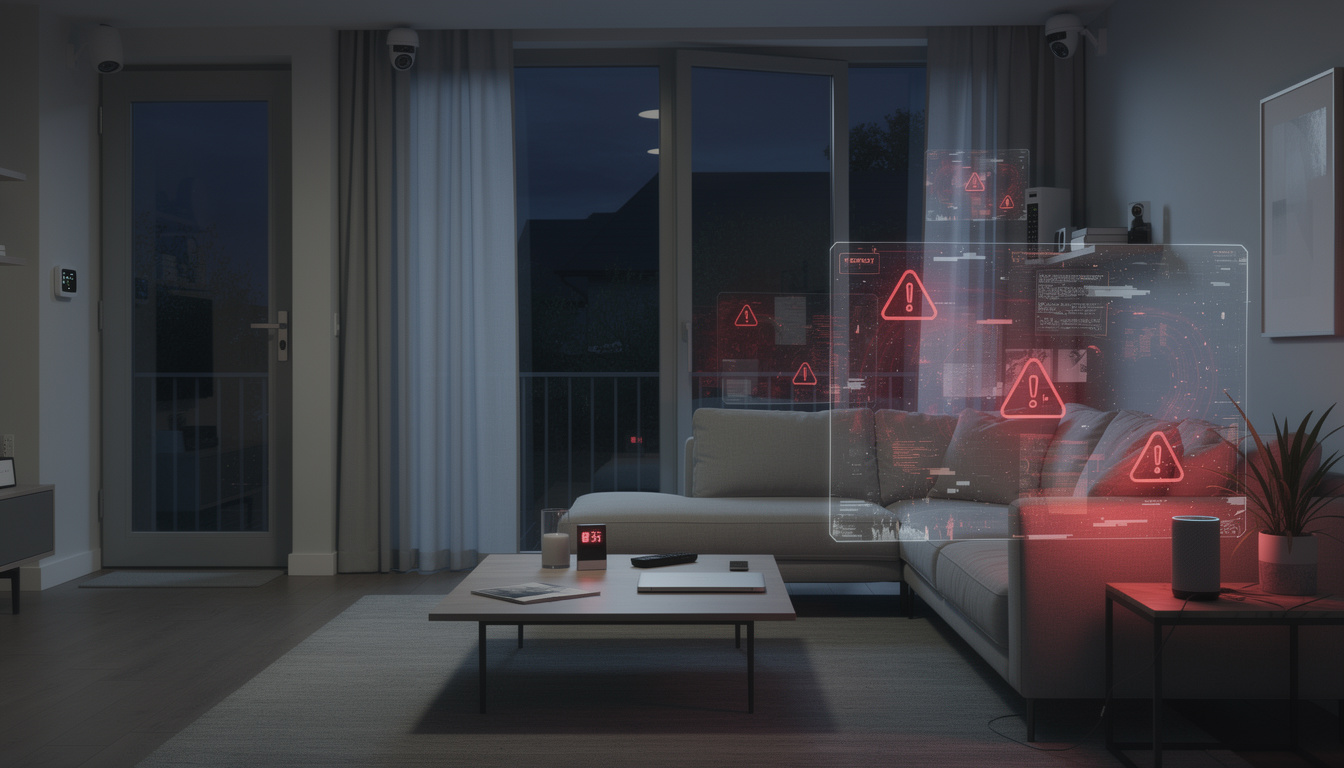
Smart home device security keeps failing in familiar ways. From Ring and ADT to Philips Hue and iBaby, past breaches still shape what buyers should watch now.
It usually starts with a tiny moment. A camera notification pops up while you are making coffee, a doorbell clip lands in the app, or a smart bulb quietly joins your home network without much thought. That convenience is exactly why smart home device security matters. When these products work, they fade into the background. When they fail, they can expose addresses, camera feeds, Wi-Fi details, or worse.
That risk is not theoretical. Over the past few years, public reports from SafeWise, the Electronic Frontier Foundation, CNET, Comcast, and academic researchers have documented bugs, privacy lapses, insider abuse, and weak default protections across several well-known brands. In 2026, those older cases still matter because they reveal a pattern buyers can recognize before bringing another Internet of Things gadget home.
Smart home device security failures followed a clear pattern
Most of the headline-making incidents did not come from science-fiction hacking. They came from familiar breakdowns, weak password practices, poor access controls, exposed data, delayed patches, and internal misuse. That is the uncomfortable thread running through many smart cameras, video doorbells, baby monitors, and connected lighting systems.
SafeWise tracked several of these cases in its home security breach roundup, published February 23, 2021. While that roundup is older, the incidents it assembled remain useful because they show how consumer IoT security repeatedly broke down in similar ways across different vendors.
Security research since then has only reinforced the concern. Broad industry reporting in 2024 and 2025 pointed to rising attacks on connected devices, often through default credentials, open ports, and outdated firmware. This is an inference based on recurring breach methods reported across the sector, not a claim that every brand below was hit in the same way.
Which brands have been breached or exposed?
Ring appears repeatedly in public reporting. In January 2021, the Ring Neighbors app had a bug that exposed user locations and addresses, according to SafeWise’s summary of the incident. Earlier, in January 2020, Ring said it fired four employees for improperly accessing customer video feeds over a four-year period.
Another Ring case drew wider public attention in December 2019, after a hacker used a Ring camera to harass a child in Mississippi. Amazon’s position at the time was that many account compromises were linked to weak customer credentials, but critics argued the company had not done enough to push stronger protections before those incidents surfaced.
ADT faced a different kind of failure. In May 2020, the company terminated an employee accused of spying on camera feeds from hundreds of customers in Texas over a seven-year period. That case became a reminder that insider abuse can be as damaging as an external breach.
Google Nest was not tied to one single narrative. A 2020 sextortion campaign targeted users of security cameras, including some Nest owners, though researchers said there was no evidence attackers held real videos. In December 2019, 2.4 million customer records were also exposed in a separate incident tied to internal analytics work, including email addresses and Wi-Fi information but not passwords.
Geeni and Merkury Innovations were flagged by researchers from the Florida Institute of Technology in February 2021 for camera security flaws. iBaby baby monitors were also cited by researchers in March 2020 for a vulnerability that could have exposed recordings and account data, with the patch reportedly arriving only after public disclosure.
Connected lighting was not exempt. In a case disclosed in 2020, researchers showed how a bug in Philips Hue could let attackers spoof a faulty smart bulb, trick a user into resetting it, and then move toward the Hue hub and local network. Signify patched the issue between late 2019 and early 2020 before the research details became public.
| Brand or product | What was reported |
|---|---|
| Ring | Address exposure bug, employee spying cases, account compromise scrutiny |
| ADT | Insider abuse involving unauthorized camera access |
| Google Nest | Data exposure case and users targeted in a camera-related sextortion campaign |
| Geeni and Merkury | Camera flaws identified by Florida Tech researchers |
| Philips Hue and iBaby | Vulnerabilities that raised broader home network security concerns |
Why cameras and doorbells draw the most scrutiny
Security cameras and video doorbells sit in the most sensitive part of the connected home. They capture routines, entrances, faces, voices, package deliveries, and in some cases the inside of a child’s room. If any category is going to trigger public alarm, it is this one.
That helps explain why Ring, Nest, Arlo, Blink, and similar brands attract heavy attention whenever a bug or privacy policy issue surfaces. It is not only about the hack itself. It is about what the device can reveal once trust breaks.
Research has shown the risks can go beyond stolen passwords. In July 2020, researchers reported that even an unencrypted camera data stream’s size could hint at whether someone was home, because video traffic changes with movement. For a connected home, metadata can be almost as revealing as footage.
If you are comparing products now, practical buying advice matters as much as breach history. DualMedia has also covered outdoor wireless security cameras and broader wireless camera choices, but the bigger lesson is simple: a camera spec sheet means little if account protection and patch support are weak.
Smart home device security is also shaped by policy and business choices
The technology itself is only part of the story. Policy, data-sharing, and law-enforcement relationships also shape how much information a smart home brand can expose. In June 2020, the Electronic Frontier Foundation highlighted Ring’s partnerships with more than 1,300 law enforcement agencies across the USA, raising civil liberties concerns around neighborhood surveillance.
That same period brought renewed focus to geofence warrants. During a July 2020 congressional antitrust hearing, Representative Kelly Armstrong asked Google about compliance with warrants that can seek data from devices in a specific location and time. For smart home users, privacy risk does not begin and end with hackers.
Business practices added another layer. In March 2020, reporting noted that Amazon and Google required some third-party partners to receive continuous device status updates, not only data triggered by a user command. In January 2020, the EFF reported that the Ring app shared varying levels of analytics data with Facebook, Branch, AppsFlyer, MixPanel, and Crashalytics.
For buyers, this creates a harder question than, was there a breach. The better question is, how much data moves around even when nothing appears to be wrong?
How the industry responded, and what improved after the backlash
Some companies did tighten protections after criticism. Ring introduced end-to-end encryption for supported video in January 2021 and had earlier added a Control Center that made security settings easier to find. That does not erase past failures, but it shows public pressure can change product design.
Blink and Arlo began requiring two-factor authentication in March 2020, while Google Nest followed with mandatory two-factor authentication in February 2020. Those changes matter because a large share of consumer account takeovers still start with reused passwords and weak login hygiene.
Government also moved, at least partially. The USA passed the IoT Cybersecurity Improvement Act in December 2020, creating standards for connected devices bought by the federal government. The law was narrow, but it signaled that device makers could no longer treat connected hardware as if software maintenance were optional.
Consumers have become more aware as well. Comcast’s 2020 Cyber Health Report said the average household saw about 104 security threats per month, and many users would not notice if non-screen devices were compromised. In 2026, that feels less like a warning and more like a baseline.
What buyers should check before trusting a device at home
Brand reputation still matters, but buying safer connected gear now means looking beyond the logo on the box. A smart home product should be judged on its update history, login protections, disclosure practices, and how quickly the vendor responds when researchers report a flaw.
There are a few practical checks worth making before you install anything on your Wi-Fi network.
- Check for mandatory two-factor authentication on the account, especially for cameras, locks, and doorbells.
- Review the vendor’s patch history and see whether updates arrive regularly for older products.
- Look for end-to-end encryption claims, then confirm what is actually encrypted, cloud storage, transit, or both.
- Read privacy disclosures for analytics sharing, law-enforcement request policies, and third-party partner access.
- Segment smart devices on a guest network or separate VLAN if your router supports it.
For readers who want a broader primer on connected-device risk, DualMedia has also explored the impact of IoT on cybersecurity, along with warnings about hackers controlling smart devices. The key point is not to avoid the category entirely. It is to stop assuming convenience equals safety.
One final test is emotional, not technical. If a device can see your child, hear your conversations, or map your daily routine, it deserves the same scrutiny as a banking app.
Frequently asked questions
Which smart home brands have had publicly reported security issues?
Publicly reported cases have involved Ring, ADT, Google Nest, Geeni, Merkury Innovations, iBaby, and Philips Hue, among others. The incidents varied, from exposed data and software flaws to insider misuse and weak account protections.
Does a past breach mean a brand is unsafe today?
Not automatically. A past incident can show weak controls, but it can also lead to stronger security features like mandatory two-factor authentication or end-to-end encryption. Based on the reported design direction and later fixes, the better measure is how a company responded.
Are cameras riskier than other smart home devices?
In many cases, yes, because cameras and doorbells collect highly sensitive visual and location data. Even when footage is not stolen, metadata or account details can reveal routines and presence at home.
What is the most common weak point in smart home security?
Weak passwords and missing two-factor authentication still rank near the top, followed by outdated firmware and poor access control. Insider abuse and excessive data sharing also remain serious concerns, even when no outside hacker is involved.
What is the fastest way to reduce risk at home?
Turn on two-factor authentication, update firmware, and place smart devices on a separate network if possible. It also helps to review app permissions and revisit products that no longer receive security updates.
What to watch next
Smart home device security is no longer a niche concern for power users. It is a basic consumer issue, especially as cameras, locks, lights, and sensors move deeper into everyday life. The most revealing lesson from past breaches is not that one brand slipped up. It is that the same weak habits kept surfacing across the market.
That is why breach history should be treated as a buying signal, not just a news cycle. In 2026, the smarter question is not which device looks best on your wall. It is which company has shown, under pressure, that it can protect what that device sees inside your home.
For more context on everyday digital risk, readers can also explore DualMedia’s coverage on up-to-date cybersecurity habits and broader cybersecurity news. Smart homes are only one front in a much bigger security story.
Want more tech and innovation coverage like this? DualMedia Innovation News tracks the technology shifts that actually matter, from AI to foldable hardware to the next wave of consumer products.