

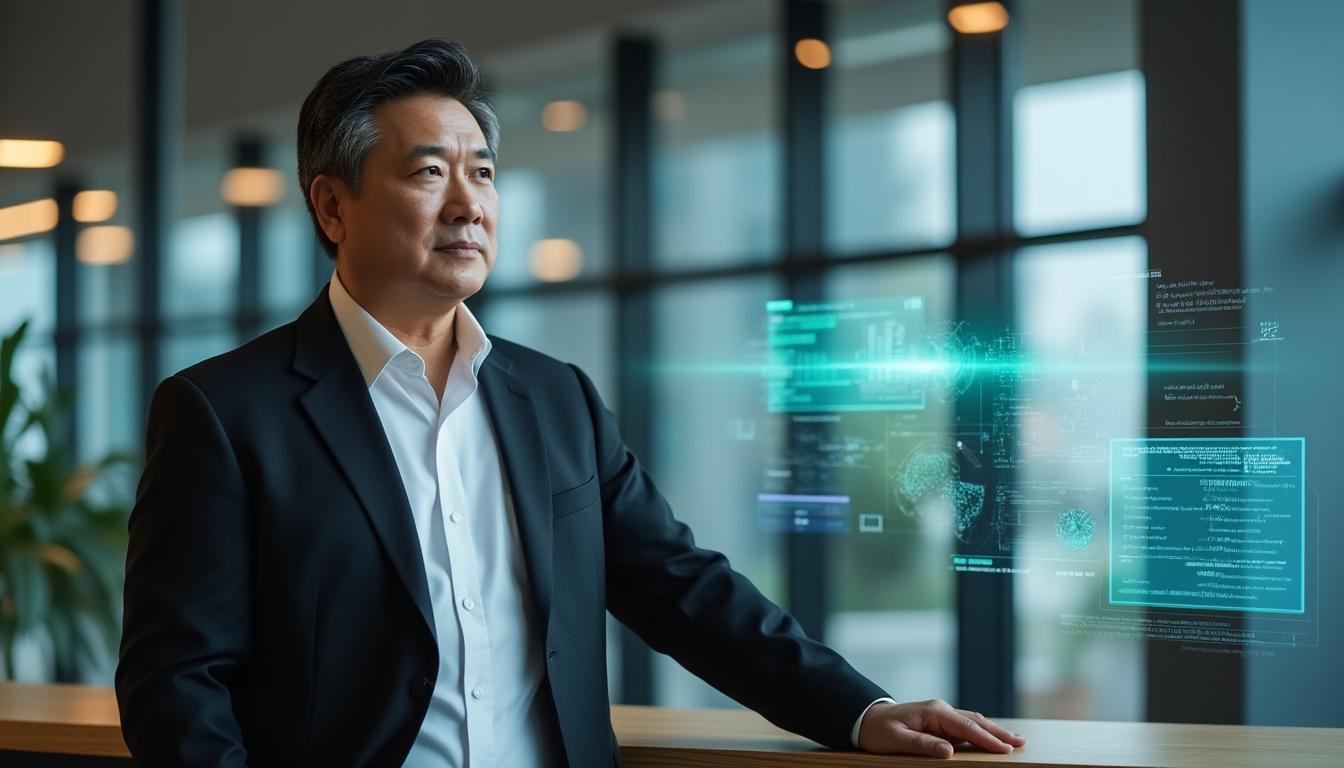
Director Jon M. Chu, known for Wicked, issued a public warning on Artificial Intelligence use and AI Misuse during recent media appearances, stressing AI Safety for creative teams and audiences. Chu framed the debate as a Technology Ethics problem tied to training data, platform incentives, and studio decisions, a thread visible in coverage from Time and a feature in the San Francisco Chronicle. Industry responses mixed protective policies with commercial interest, which created public friction explored by Financial Times and a deep dive in the Los Angeles Times. The argument centers on Digital Responsibility, Tech Awareness, and pragmatic AI safety measures for the Creative Industry moving through 2025.
Jon M. Chu on AI Misuse and Technology Ethics in film
Jon M. Chu spoke as a Film Director who navigated large scale productions and copyright complexity during the Wicked rollout. Remarks focused on AI Misuse risks for writers, performers, and designers, with concrete examples from recent generative AI disputes reported by major outlets. Chu urged industry leaders to adopt clear Digital Responsibility rules and to increase Tech Awareness across production teams.
- Primary risks identified: unauthorized training data, deepfake use, automated credit omission.
- Stakeholders affected: writers, performers, visual artists, studios, platforms.
- Immediate actions suggested: transparent data audits, consent processes, rights tracking.
| Risk | Industry Impact | Short Term Fix |
|---|---|---|
| Unauthorized training data | Legal exposure, reputation loss | Mandatory data provenance logs |
| Deepfakes of performers | Workforce trust erosion | Watermarking and verified identity checks |
| Automated script rewriting | Credit displacement | Audit trails for creative inputs |
Press clips and short interviews amplified Chu remarks, including a segment archived by NBC News, which increased public scrutiny of studio practices. Final takeaway, stricter Tech Ethics rules will protect creativity and audiences.
Wicked director perspective on AI Safety for the Creative Industry
Chu placed AI Safety at the center of a production roadmap, arguing for early stage policy integration and for systems that respect creator rights. The director compared current industry practice to prior shifts in visual effects law, pointing toward predictable legal and ethical outcomes. Media coverage from outlets such as The Wrap added context on performance rights and sequel scale management.
- Policy priority one, protect original creative sources and credits.
- Policy priority two, require vendor compliance checks for generative models.
- Policy priority three, fund independent audits of training datasets.
| Policy | Reason | Expected Result |
|---|---|---|
| Data provenance requirement | Trace training origins | Reduced legal claims |
| Performer consent registry | Protect image rights | Higher workforce trust |
| Independent model audits | Verify bias and misuse | Transparent model behavior |
Case studies from recent releases revealed patterns that studios must address through policy and engineering, with legal precedents emerging across 2024 and 2025. Closing insight, aligning creative safeguards with technical controls increases resilience for future projects.
Digital Responsibility steps for Tech Awareness and AI Safety
A practical roadmap offers studios and tech vendors a sequence of actions to reduce AI Misuse risk while preserving creative workflows. The approach pairs policy, engineering, and training, with examples from cybersecurity and media sectors. DualMedia reporting highlights overlaps between AI adoption and security exposure, useful for production teams mapping next steps.
- Perform a dataset inventory and publish a summary for stakeholder review, following guidance from independent reports on AI cybersecurity risks.
- Implement model governance with documented approval flows, inspired by case studies on managing AI workflows risk.
- Train staff in detection of deepfakes and unauthorized repurposing, using resources from Deepfake 101.
- Engage external auditors for periodic reviews, referencing technical reviews linked to cybersecurity and AI tools.
| Action | Owner | Timeline |
|---|---|---|
| Dataset inventory | Data team | 30 days |
| Model governance policy | Legal and Product | 60 days |
| Detection training | HR and Security | 90 days |
Technical teams should consult applied research and vendor assessments, including findings on AI impact in cybersecurity and digital workflows published by DualMedia, such as OpenAI impact analysis and AI cybersecurity future. Final practical insight, a coordinated policy plus engineering plan reduces exposure while preserving creative output.