


Most QA teams don’t fail because they lack effort. They fail because their tools can’t keep up with how fast their applications change. The best automation testing platforms solve exactly that, but picking the wrong one means flaky tests, brittle scripts, and coverage gaps that slip bugs straight into production. After reviewing dozens of tools across real-world use cases, test execution volume, and CI/CD fit, this guide breaks down the five strongest options available today.
Behind the ranking
Every platform here was evaluated by pulling together user reviews, published case studies, feature documentation, and ratings from well-known software review directories and official product sites. Only platforms with a demonstrated track record in QA automation made the cut.
→ See the full research breakdown
- Functionize – Best for enterprise automation and intelligent software testing
- Virtuoso QA – Best for intelligent enterprise test automation
- Selenium Testing – Best for cross-browser web automation testing
- Applause Testing – Best for enterprise software testing and digital testing
- Sauce Labs – Best for enterprise testing and continuous testing automation
The Difference the Right Automation Testing Platforms Make
Picking the wrong tool doesn’t just slow things down. It quietly erodes confidence in your entire test suite. Teams spend more time fixing broken scripts than catching real bugs, and flaky tests become background noise everyone learns to ignore.
The right automation testing platforms change that equation by keeping tests stable even as the application underneath them keeps shifting. Broad coverage across browsers, devices, and environments stops being a manual headache. And when your tooling connects cleanly to existing CI/CD workflows, defect detection goes up while test execution time drops. That combination, better test pass/fail rates and faster feedback loops, is what actually moves release quality forward.
The 5 Best Automation Testing Platforms: Quick Comparison
Information presented in this table draws from official company sources and established review platforms.
| Company Name | Years Operating | Team Size | Headquartered In |
| Functionize | Est. 2014 | ~100 | San Francisco, CA |
| Virtuoso QA | Est. 2017 | ~112 | London |
| Selenium Testing | Est. 2004 | Community-driven | Chicago |
| Applause Testing | Est. 2007 | ~1,563 | Framingham, MA |
| Sauce Labs | Est. 2008 | ~322 | San Francisco, CA |
1. Functionize – Best for Enterprise QA Automation and Intelligent Software Testing
What Is Functionize’s Main Business?
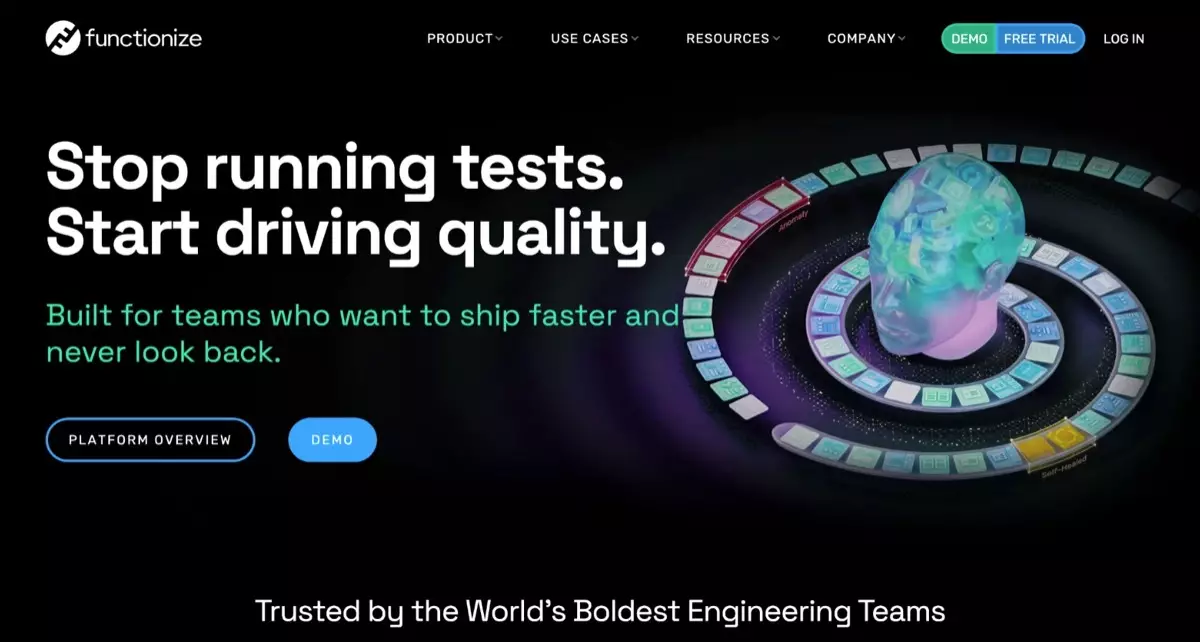
Functionize builds an AI-native software testing platform that pairs machine learning with human oversight to automate complex user workflows. Founded in 2014 and based in San Francisco, they’ve trained their system on over 30,000 data points per page across eight years of enterprise use. The result is 99.97% element recognition accuracy and automatic test healing that fixes broken tests without manual intervention. Non-technical team members can build and deploy tests up to 90% faster than traditional scripting, which is genuinely rare at the enterprise level.
Why Is Functionize a Contender for Automation Testing Platforms?
Teams dealing with constant application changes need tests that adapt without requiring a full script rewrite each cycle. That’s exactly what Functionize’s Cognitive ML technology delivers through real-time adaptation and single-click root cause fixes. The combination of self-healing tests and accessible test authoring for non-technical users addresses two of the biggest friction points in scaling testing.
From the User Reviews:
Enterprise clients like McAfee and GE Healthcare have reported testing times dropping from hours to minutes, with labor savings reaching 90% in some cases. The platform earned recognition as a Strong Performer in the Forrester Q4 2025 Wave Report on Autonomous Testing Platforms. That kind of independent validation from analysts is hard to match.
2. Virtuoso QA – Best for Intelligent Enterprise Test Automation
What Is Virtuoso QA’s Main Business?
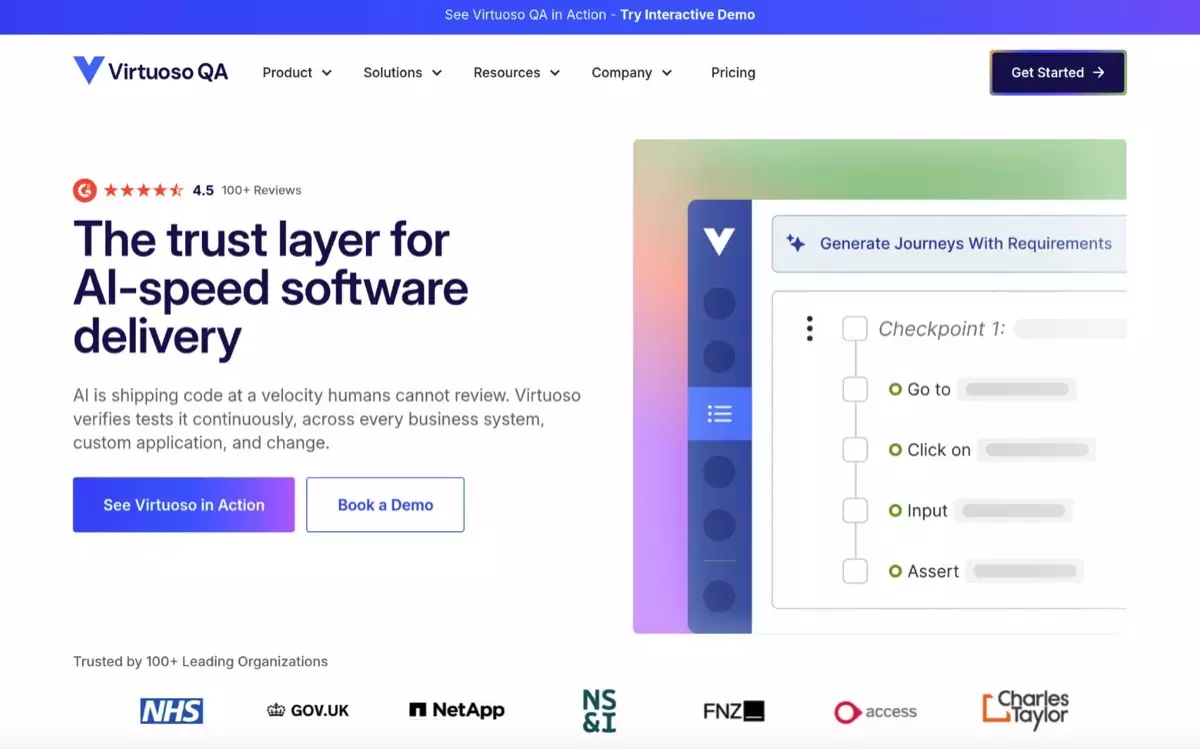
Virtuoso QA is an intelligent, AI-native test automation platform built for enterprises managing complex application portfolios. Founded in 2017 out of London, they built AI and natural language processing into the platform from day one rather than bolting it on later. This allows QA engineers, developers, and business users to write tests in plain English. Self-healing tests and intelligent root-cause analysis keep maintenance overhead low while accelerating release cycles across web, API, and legacy system testing. That last part isn’t a common combination you see done well.
Why Is Virtuoso QA a Contender for Automation Testing Platforms?
High test maintenance costs drain QA budgets fast. Virtuoso QA directly targets that by delivering up to 85% lower maintenance costs through its self-healing architecture and composable testing approach. That usually means teams get to spend more cycles on actual test coverage expansion rather than keeping existing scripts alive.
From the User Reviews:
Clients, including Harbr, KIDLY, and Toolstation, consistently mention faster test authoring and reduced maintenance burdens. The Forrester Wave recognition in Q1 2024 for Continuous Automation Testing Platforms lines up with what users report day-to-day. And the SOC 2 Type II certification adds a layer of trust for enterprise security teams who need more than a vendor’s word on data handling.
3. Selenium Testing – Best for Cross-Browser Web Automation Testing
What Is Selenium Testing’s Main Business?
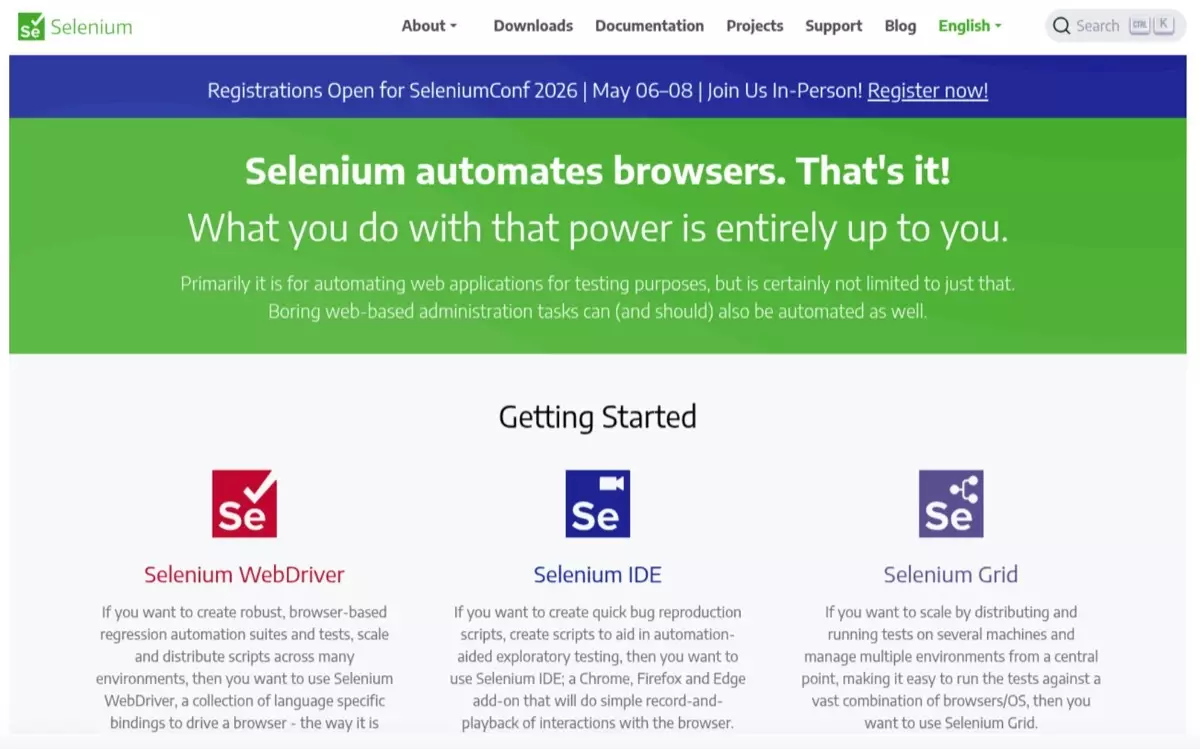
Selenium is the open-source browser automation framework that built the foundation for modern web testing. Around since 2004, the project delivers three distinct tools: WebDriver for cross-browser script execution, IDE for record-and-playback test creation, and Grid for distributed testing across multiple machines. It runs under the Apache License 2.0 and is governed by the Software Freedom Conservancy as a non-profit. There’s no licensing cost, and the community support is enormous (think millions of developers worldwide who’ve already solved most problems you’ll run into).
Why Is Selenium Testing a Contender for Automation Testing Platforms?
When cross-browser coverage is the priority and the team has strong scripting skills, Selenium removes both the cost barrier and the vendor lock-in concern at once. Universal browser support combined with community-backed stability makes it a reliable baseline that most automation stacks get built around at some point.
From the User Reviews:
Engineers consistently describe Selenium as a trusted standard rather than just another tool option. The trade-off is real: setup complexity and script maintenance demands are higher than modern AI-native platforms, but teams that invest the time get deep control over their test execution environment. That kind of flexibility is rare in free tooling.
4. Applause Testing – Best for Enterprise Software Testing and Digital Testing
What Is Applause Testing’s Main Business?
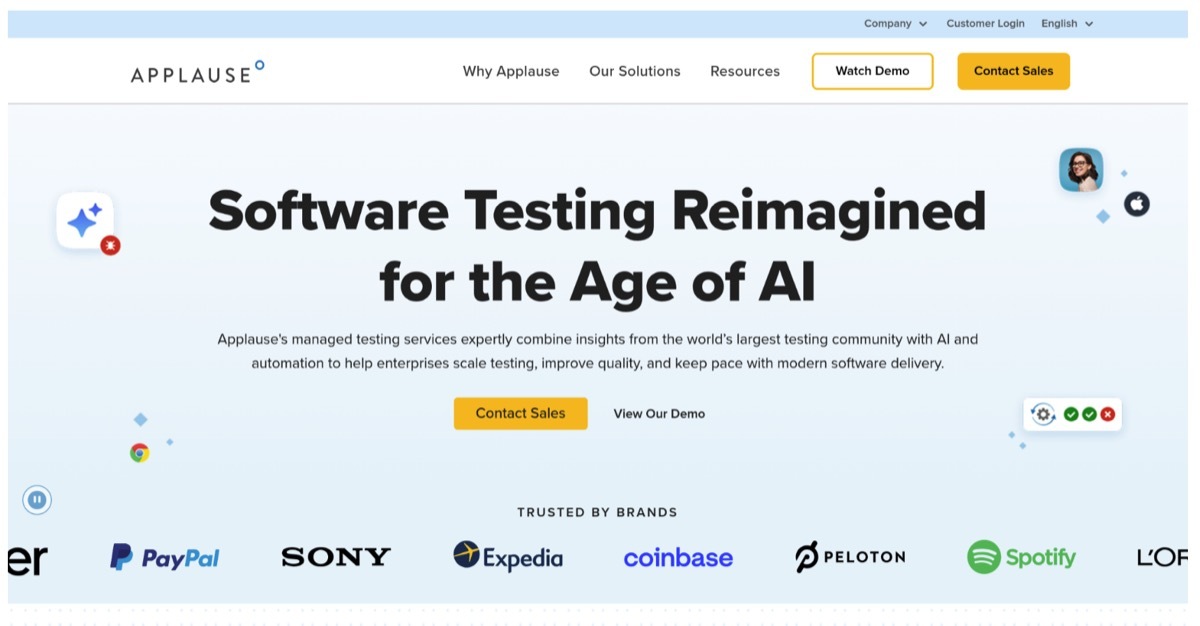
Applause runs a fully managed QA model that combines AI, automation, and a global community of 1.5 million independent testing experts. Founded in 2007 and headquartered in Framingham, Massachusetts, they cover an unusually wide scope: functional testing, accessibility testing, payment testing, security testing, and specialized testing for IoT, AR/VR, chatbots, and automotive platforms. Enterprises like Ford, Google, Microsoft, and Cisco rely on them to validate digital experiences at scale. The sheer breadth of platform coverage here is what separates Applause from most automation-only vendors.
Why Is Applause Testing a Contender for Automation Testing Platforms?
Organizations that need real human validation across uncommon platforms (AR/VR or automotive) alongside traditional automation coverage get a combination from Applause that’s hard to replicate with an in-house team alone. Their managed service model also means engineering teams don’t carry the full infrastructure overhead.
From the User Reviews:
The industry recognition tells a clear story: a Gold Stevie Award in 2025 for Company of the Year in Computer Software, plus three consecutive years on the Software Development Times Top 100. Enterprise clients value the breadth of coverage and the reliability of managed delivery more than any single feature. That kind of multi-year recognition points to consistent execution rather than a one-time strong showing.
5. Sauce Labs – Best for Enterprise QA Testing and Continuous Testing Automation
What Is Sauce Labs’ Main Business?
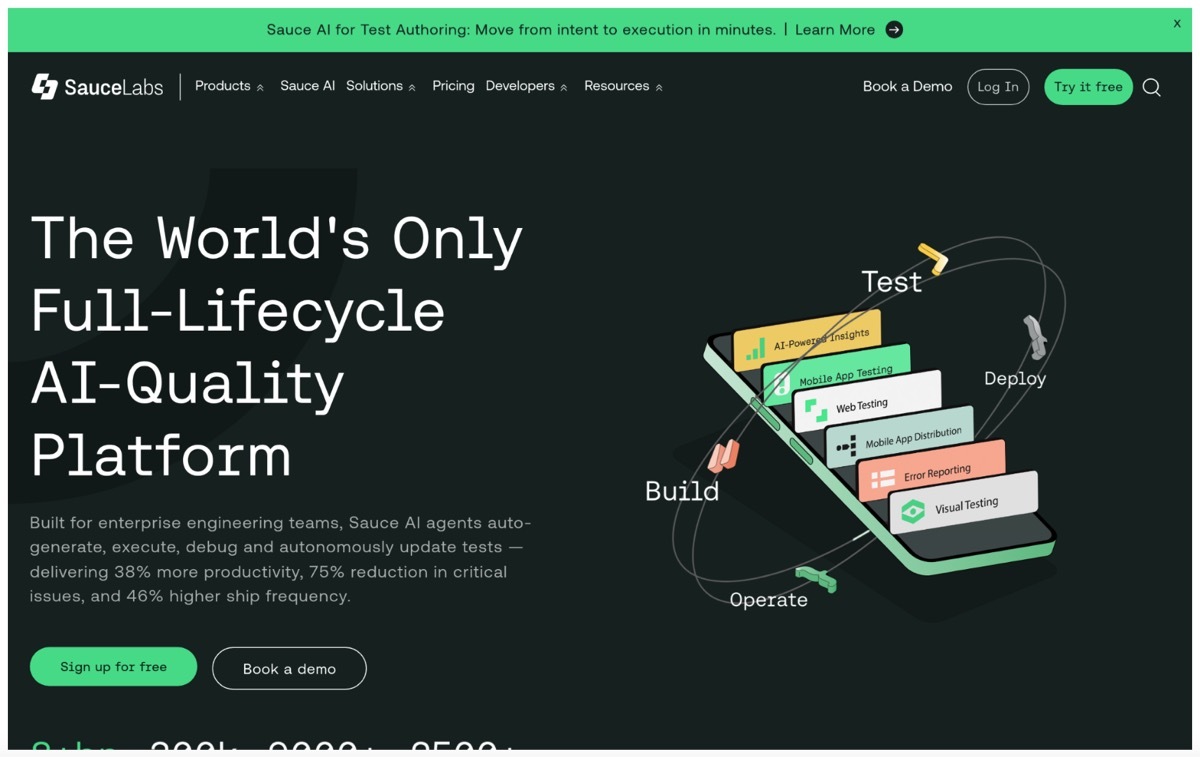
Sauce Labs is an intelligent testing platform founded in 2008 by Jason Huggins, the same engineer who created Selenium. They’ve built a unified testing environment that covers cross-browser testing, mobile app testing on 9,000+ real devices, visual testing, error reporting, and intelligent test authoring. Trusted by Walmart, Bank of America, and others, they’ve executed over 8 billion tests to date across 300,000+ active users. The real device library here is one of the deepest available anywhere. Not cheap for full access, but worth it for mobile coverage at scale.
Why Is Sauce Labs a Contender for Automation Testing Platforms?
Getting sufficient test coverage across 9,000+ real devices without building your own device lab is the exact problem Sauce Labs exists to solve, and their scale of 8 billion tests executed is hard evidence that it works at production volumes. The platform’s roots in Selenium also mean migration paths for existing test suites are far smoother than switching to an entirely new framework.
From the User Reviews:
The 2024 DEVIES Award for Code Testing and Quality Management and the 2025 CODiE Award for Best Debugging and Testing Tool show up consistently when reviewing how the market perceives Sauce Labs. Users highlight the breadth of device and browser coverage as the standout value, with adoption growth reflecting strong traction across enterprise accounts.
How These Were Chosen and Verified
Data Sourcing and Preparation
The process started by building a longlist from multiple sources at once. Software review platforms, QA-focused directories, and community forums were all scanned to identify platforms with meaningful traction in the automation testing space. Published case studies and technical documentation from each vendor were pulled alongside third-party directory listings. The goal at this stage was coverage, getting enough candidates on the table before applying any filters.
Pre-Verification Phase
Once the longlist was assembled, options without verifiable user information or documented real-world results were removed. Review patterns across G2, Capterra, and comparable platforms were analyzed to spot consistency. Platforms with isolated or suspiciously uniform reviews were flagged. Only tools with a clear pattern of verified user experiences across multiple independent sources moved forward to deeper evaluation.
The Verification Phase
Each shortlisted platform’s product claims were cross-checked against what users actually reported experiencing. When a vendor claimed specific metrics (like test maintenance cost reductions or test execution speed improvements), those figures were traced back to published case studies or credible third-party sources. Discrepancies between marketing claims and documented user outcomes were noted and factored into the final assessment. Platforms that couldn’t back up important claims with real-world evidence were cut.
Tracking Authority Markers
Beyond user reviews, authority signals were collected for each platform. Industry award wins, mentions in analyst reports (such as Forrester Wave evaluations), and appearances in respected QA and DevOps publications were tracked. Platforms with recent, credible recognition from analyst firms or industry bodies were weighted more heavily, since those signals reflect external validation rather than self-reported performance.
Automation Testing Platforms Proof Points
Each platform was also assessed for evidence of depth in the automation testing space. This meant looking for dedicated feature pages covering automation-specific workflows, verified reviews from QA engineers and test automation architects, and case studies showing measurable outcomes such as reductions in flaky test rates, improvements in automation coverage ratios, or faster defect detection. Platforms with strong general software credentials but thin automation-specific proof were not included, regardless of brand recognition.
How to Pick Your Best Match
Choosing between these platforms comes down to more than feature lists. Your team’s technical depth, existing toolchain, and the scope of your application portfolio all shape which option actually fits. Here are the five factors worth prioritizing before making a decision.
- Industry/Domain Experience: Check whether the platform has documented results in your specific application type. Web-heavy testing needs look different from mobile-first or IoT environments.
- Features and Service Offerings: Assess whether you need AI-native self-healing, a real device library, a managed service model, or a scriptable open-source foundation. Each platform here anchors to a different core capability.
- Pricing Structure: Costs vary widely from free open-source (Selenium) to enterprise contract pricing. Factor in total cost, including infrastructure, maintenance time, and team upskilling, not just licensing.
- Results Measurement: Look for platforms that give you visibility into flaky test rates, automation coverage ratios, and mean time to detect regressions. Good tooling makes these metrics easy to track.
- Industry Knowledge and Compliance: For regulated industries like healthcare or fintech, confirm the platform supports the testing standards and data security requirements your organization needs to meet.
Closing Thoughts
The right automation testing platform depends heavily on where your team is today and where your application is heading. AI-native options like Functionize and Virtuoso QA lead when maintenance overhead and test flakiness are the main problems. Sauce Labs wins on device coverage breadth. Selenium remains the flexible foundation for teams that want full control. As applications grow more complex and release cycles get faster, the automation testing space will keep rewarding teams that pick tools built for change.