

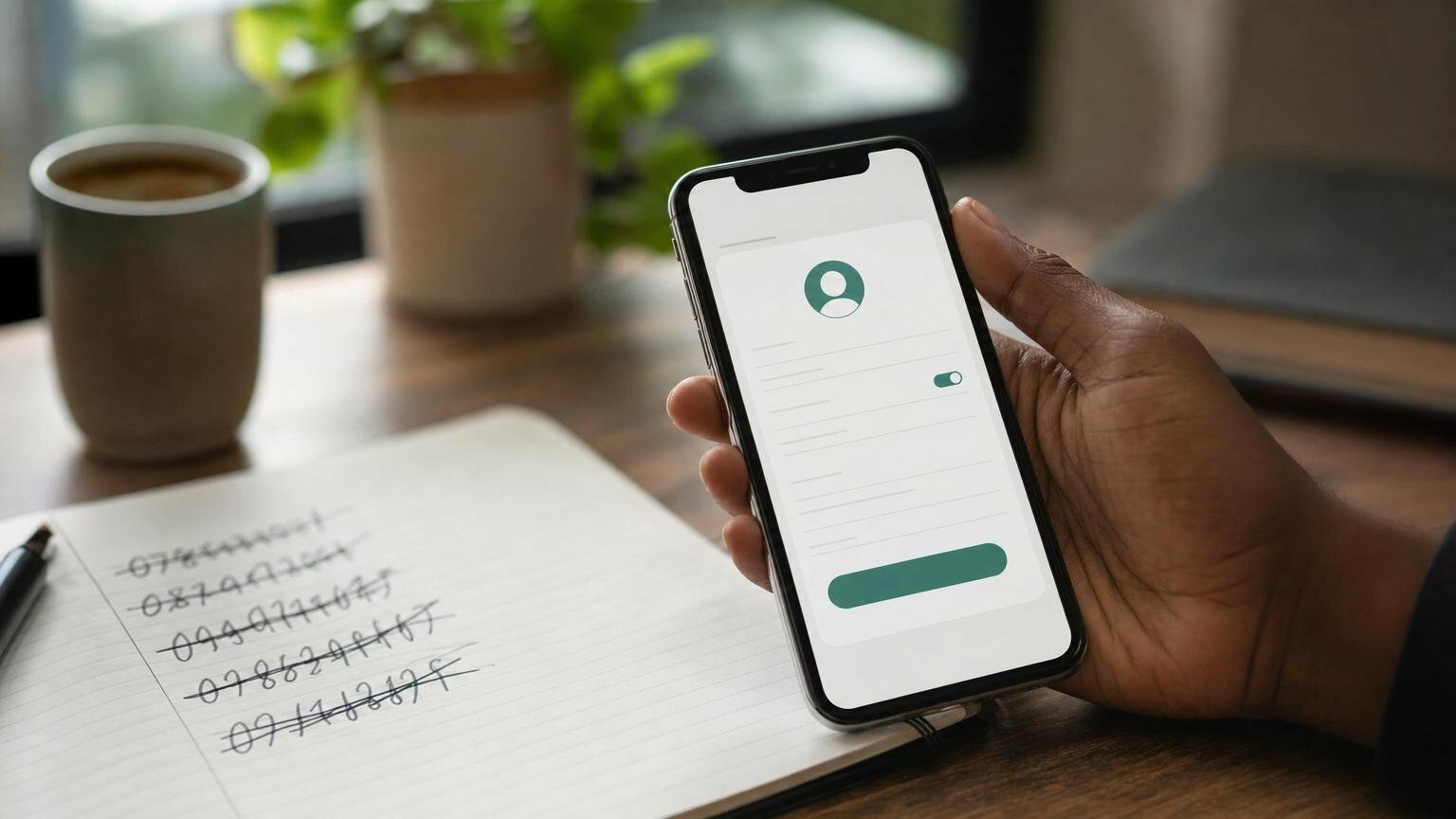
WhatsApp to allow usernames is a privacy shift, not a replacement for phone-number accounts. Starting June 29, 2026, WhatsApp opened username reservations before a wider launch later in 2026, letting you connect with new people without showing your number. You’ll still need a phone number to create an account, but first-time chats can use an exact username instead.
WhatsApp to allow usernames: what actually changes
The search intent here is simple: you want to know what usernames mean, when you can get one, and whether your phone number becomes private. The answer is mostly yes for new contacts, with a few boundaries that matter.
On June 29, 2026, Meta’s WhatsApp announced username reservations under the headline “It’s Time to Reserve Your WhatsApp Username.” The company framed the feature as a way to connect with people, businesses, creators, and organizations without immediately handing over the phone number tied to your account.
Once the feature fully launches later in 2026, if you enable a username, people or businesses you message for the first time won’t see your phone number. Existing contacts are a different story: if someone already has your number saved, a username won’t magically erase it from their phone.
AP reported on June 29, 2026, that Alice Newton-Rex, WhatsApp vice president of product, called usernames a “core privacy feature.” That description feels right. WhatsApp has always been unusually phone-number-centric compared with Telegram, Signal, Instagram, or Discord, so this is a notable course correction for a service that says it has over 3 billion users globally in 2026.
How to reserve your WhatsApp username
Username reservation opened before the full messaging feature, which means you may be able to claim a name before you can use it everywhere. Gadgets 360 reported on June 29, 2026, that reservations are rolling out and users will receive in-app notifications when available.
The official reservation path is short: latest WhatsApp version > Settings > Account > Username. If you don’t see it, don’t assume your account is broken. The rollout is staged, and WABetaInfo reported on April 8, 2026, that WhatsApp was working toward a limited rollout over the following months across Android, iOS, Windows, and Web.
- Update WhatsApp to the latest version on your device.
- Open Settings, then tap Account.
- Choose Username if the option appears.
- Enter a name that follows the rules.
- Confirm the reservation and watch for later in-app availability.
TechCrunch reported on June 29, 2026, that usernames must be 3 to 35 characters long. WABetaInfo also reported stricter formatting rules in April 2026: a username can’t start with “www.”, can’t end with a domain such as .com or .net, and must include at least one letter.
Here’s a practical calculation most quick summaries skip. If your favorite handle is 12 characters and already used on Instagram, Facebook, X, YouTube, and TikTok, your chance of getting that exact public-facing name on WhatsApp depends less on creativity and more on speed, brand proof, and rollout timing. For creators and small businesses, the smart move is to check your existing Instagram or Facebook username first, because WhatsApp says those accounts can claim existing Meta usernames on WhatsApp.
No public directory, no suggestions, fewer creepy messages
WhatsApp to allow usernames does not mean WhatsApp is becoming a searchable social network. The company says there will be no public username directory and no username suggestions. For a first-time contact, the other person must know the exact username.
That design choice is more important than it sounds. A searchable directory for 3 billion users would be a spammer’s dream, especially when attackers already use automation to scale phishing and social engineering; if you follow messaging security, the same concern appears in broader reporting on AI-driven cybersecurity risk. By forcing exact-name knowledge, WhatsApp reduces casual harvesting, impersonation fishing, and random “guess the handle” contact attempts.
There’s another layer: the optional username key. WhatsApp says you can require others to know both your username and a key before they can message you for the first time. WABetaInfo reported on April 8, 2026, that this key is a four-digit code, although WhatsApp’s public announcement simply describes it as an optional key.
A four-digit key has 10,000 possible combinations, from 0000 to 9999. That’s not bank-grade identity protection, and you shouldn’t treat it like a password. But paired with the fact that someone also needs your exact username, it adds friction against low-effort spam and accidental contact from people who only half-remember your handle.
What a username does, and what it still won’t hide
WhatsApp to allow usernames is best understood as “phone-number masking for new conversations,” not full anonymity. Your account still starts with a phone number, and TechCrunch reported on June 29, 2026, that WhatsApp will still require a phone number to create an account.
That makes sense operationally. WhatsApp’s identity system, contact discovery, account recovery, and abuse controls have long depended on numbers. Removing phone numbers from account creation would be a much bigger rebuild, and frankly, it would probably create new fraud problems unless Meta replaced it with another strong identity signal.
For your day-to-day life, the useful privacy gain is narrower but real. You can give a marketplace buyer, conference attendee, client, or local club member your WhatsApp handle instead of the number that also receives bank alerts, two-factor codes, family calls, and SIM-related recovery messages. If you’re selling or replacing a device, that should sit alongside basic hygiene such as wiping data properly; this phone data-wiping guide covers the broader privacy checklist.
The pitfall nobody mentions enough: screenshots and contact cards can still expose you. If a business asks you to send a receipt, profile screenshot, or vCard from another app, your number may appear there even if WhatsApp hides it in the chat. Usernames reduce one leak path; they don’t clean up every place your number lives.
| Feature or rule | What WhatsApp says or reports indicate | Year/source date |
|---|---|---|
| Username reservations | Opened before full launch, through Settings > Account > Username | June 29, 2026 |
| Account creation | Still requires a phone number | TechCrunch, June 29, 2026 |
| Username length | 3 to 35 characters | TechCrunch, June 29, 2026 |
| Directory | No public username directory and no username suggestions | WhatsApp, 2026 |
| Extra protection | Optional username key; WABetaInfo reported a four-digit code | 2026 / April 8, 2026 |
| Supported platforms in development reporting | Android, iOS, Windows, and Web | WABetaInfo, April 8, 2026 |
Creators, businesses, and the handle land grab
For creators, small businesses, and organizations, WhatsApp to allow usernames has a second purpose: brand consistency. WhatsApp says these accounts can claim existing Instagram or Facebook usernames on WhatsApp, which should reduce impersonation and the scramble for identical handles.
AP reported on June 29, 2026, that WhatsApp will hold back usernames for high-profile people or groups such as celebrities, public figures, and government entities. That will annoy some early claimants, but it’s the right call. A fake mayor, airline, or relief agency on a private messaging app can do more damage than a fake meme page.
Small operators should still move fast. If you run a café, consultancy, repair shop, local newsletter, or creator business, reserve the cleanest version of your existing Instagram or Facebook handle as soon as the option appears. Don’t add “official” unless your audience already knows you that way; it often makes a legitimate account look suspicious.
There’s a business downside, too. WhatsApp’s no-directory rule means usernames won’t become free discovery traffic. You’ll need to publish the handle on your website, receipts, Instagram bio, business card, or email signature, much as companies already promote WhatsApp numbers. If you rely on international customers, pairing a stable username with smart mobile connectivity choices, such as the options discussed in this 2026 eSIM travel guide, can make cross-border communication less messy.
How this compares with WhatsApp’s old phone-number model
Before usernames, WhatsApp’s trade-off was blunt: easy contact syncing in exchange for exposing your number. That worked beautifully for friends and family. It was awkward for everyone else.
A phone number is sticky. You use it for banking, medical offices, tax portals, delivery apps, school groups, and two-factor authentication. Handing it to a one-time buyer from a classifieds listing is a bigger privacy concession than many people realize, especially when SIM swaps and number recycling remain real-world risks.
WhatsApp to allow usernames narrows that exposure. A username is revocable in a social sense: you can change how you share it, add a username key, or stop giving it out in contexts where you don’t want contact. A phone number is harder to rotate, and changing it can break accounts across banks, airlines, and government services.
Compared with Telegram-style usernames, WhatsApp’s version sounds more conservative. No public directory. No suggestions. TechCrunch reported on June 29, 2026, that there is currently no QR-code option to contact a person via username without knowing their phone number. That last missing piece is inconvenient for events and storefronts; QR codes would make sense later, but only if WhatsApp avoids turning them into another spam channel.
Security-minded users should also remember that usernames don’t protect the device itself. If someone has access to your unlocked phone, they can read chats regardless of whether contacts see your number. Platform-level protections still matter, including the privacy differences you may weigh when comparing iOS and Android features.
Reserve wisely: names age, numbers leak
Pick a WhatsApp username you can say out loud, spell over a noisy call, and keep for years. Cute punctuation, repeated letters, and inside jokes age badly. So do handles tied to one job title or city if your life changes often.
Shorter isn’t always better. A five-character handle may be memorable, but it’s also easier to mistype and more likely to be impersonated with lookalike characters elsewhere. A clear 10- to 16-character name built from your real brand or public identity is usually safer than a cryptic trophy handle.
WhatsApp to allow usernames also creates a new social habit: sharing a handle plus, optionally, a key. For private groups, schools, neighborhood associations, and support communities, that could be healthier than dumping phone numbers into spreadsheets. Still, don’t publish your username key on the same public page as your username if your goal is to screen first-time messages.
My view: this is the most overdue WhatsApp privacy feature in years, but it’s deliberately restrained. That restraint will frustrate people who wanted a Telegram clone. For most users, it’s better this way.
FAQ
When will WhatsApp usernames launch for everyone?
WhatsApp opened username reservations on June 29, 2026, before the full launch later in 2026. Availability is staged, so some users will see the option before others.
Will WhatsApp still need my phone number?
Yes. TechCrunch reported on June 29, 2026, that WhatsApp will still require a phone number to create an account, even after usernames arrive.
Can people find me by searching a WhatsApp username directory?
No. WhatsApp says there will be no public username directory and no username suggestions, so a first-time contact needs your exact username.
What is a WhatsApp username key?
It’s an optional extra code that can require new contacts to know both your username and the key before messaging you for the first time. WABetaInfo reported in April 2026 that the key is four digits.
Can businesses claim their Instagram or Facebook username?
Yes. WhatsApp says creators, small businesses, and organizations can claim existing Instagram or Facebook usernames on WhatsApp, which should help protect recognizable brands.