

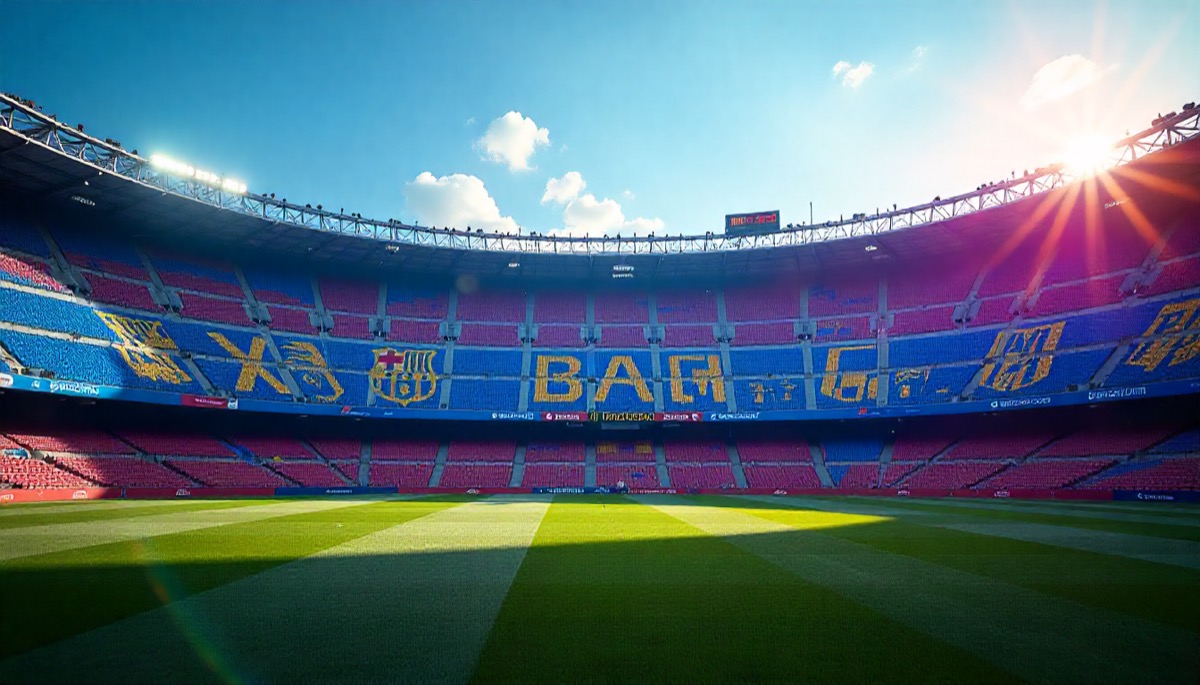
Barcelona faces a new test of trust after a short-lived crypto sponsorship turned into a reputational headache. The football club rushed into a three-year deal with Zero Knowledge Proof, a little known blockchain startup that later pushed its own cryptocurrency token to fans. After intense public backlash, the club stressed it had no link to the token and moved to cut visible ties with the sponsor’s coin, raising questions about risk, due diligence, and fan protection in modern sports marketing.
The episode highlights a broader pattern in global crypto sponsorships. Sports brands search for fresh revenue as crypto firms search for legitimacy and visibility. When a sponsor launches a token from a pseudonymous structure registered in remote jurisdictions, the risk does not only sit on the balance sheet. It lands on supporters who trust the shirt, the badge, and the stadium. The Barcelona case now serves as a reference point for any club weighing quick sponsorship cash against long term brand reputation and fan safety.
Barcelona cryptocurrency sponsor crisis after public backlash
The Barcelona cryptocurrency story started with an apparently standard sponsorship announcement. In mid November, the club introduced Zero Knowledge Proof as its official blockchain partner, with a three year agreement that promised innovation, engagement, and digital projects.
Ten days later, ZKP promoted a 200 million token launch linked to its brand. Supporters feared the football club had shifted from shirt sponsor to indirect investment promoter. The public backlash was immediate, especially on social platforms and fan forums that already viewed risky tokens with suspicion.
Under pressure, the club issued a statement stressing there was no operational role in the token launch, no control over the smart contract, and no use of the related technology. This attempt to separate sponsorship from cryptocurrency product created a confusing picture for fans who had already seen both brands side by side.
- Official partnership announcement with a blockchain sponsor.
- Rapid token launch by the sponsor, tied to the same brand identity.
- Strong negative reaction from fans and media.
- Statement from the club insisting on zero involvement in the token.
- Calls from experts for stronger due diligence on crypto sponsorships.
| Element | Before public backlash | After public backlash |
|---|---|---|
| Public messaging | Emphasis on innovation and blockchain partnership | Clear denial of any link to the sponsor’s token |
| Fan perception | Curiosity mixed with mild concern | High distrust toward both sponsor and crypto product |
| Media coverage | Short notes in sports business columns | Front page features on financial risk for supporters |
| Risk focus | New revenue stream for the club | Reputation damage and regulatory scrutiny fears |
| Club priority | Monetising global brand reach | Protecting fans and distancing from speculative tokens |
How a crypto sponsorship turned into a brand reputation risk
The Barcelona cryptocurrency partnership shows how fast a marketing deal can morph into a governance problem. ZKP’s token launch used the same sponsor identity that appeared on club material, which created a perceived endorsement. Supporters interpreted the association as an indirect guarantee, even though the legal documents separated the football club from the product.
For context on similar tensions between crypto products and public trust, analysis such as cryptocurrency market news and trends tracks how retail investors respond when strong brands sit near speculative tokens. Once things go wrong, a short legal disclaimer does little to repair emotional trust. Sponsors look for credibility, while clubs risk being portrayed as steering fans toward uncertain investments.
Barcelona’s reaction, with ties severed at the messaging level and the sponsor’s token pushed away from official communication, shows where the red line appeared. The brand reputation risk became more important than the contract’s financial upside.
- Shared branding increased perceived endorsement of the token.
- Pseudonymous leadership at ZKP amplified trust concerns.
- Media linked the deal to financial stress at the club.
- Reputational cost outweighed sponsorship revenue.
- Supporter trust emerged as the main asset under threat.
Commentators across Europe linked the case to earlier crypto failures that affected retail investors. Reports such as historical performance of cryptocurrency markets highlight repeated cycles of hype, token launches, and sharp corrections. When a football badge stands next to these cycles, the reputational fallout spreads far beyond trading charts.
Football club crypto sponsorship and fan risk management
Top clubs now act as global media platforms. They sell not only tickets and shirts, but also visibility to sponsors that want direct access to supporters’ attention. Crypto sponsorship has entered this space aggressively, with exchanges, token issuers, and mining firms buying front-of-shirt real estate, training kit deals, and “official digital partner” titles.
Barcelona’s experience mirrors warnings from financial academics and regulators about sports linked tokens. Professor Carol Alexander from the University of Sussex emphasised that sponsorship adds an aura of legitimacy to anything attached to a big badge. Supporters often underestimate the complexity of crypto products when they see them framed in a trusted stadium environment.
Guides such as comprehensive compliance overviews of cryptocurrency regulations explain how legal regimes try to keep pace with this mix of entertainment, finance, and technology. Yet even in relatively strict markets, sponsorship logos usually fall under advertising, not financial advice, which leaves a grey zone for fan protection.
- Clubs need clear internal rules for vetting any crypto sponsor.
- Supporters deserve plain language risk notices for token offers.
- National regulators watch high profile deals for consumer harm.
- Fan associations push for ethics clauses in sponsorship policies.
- Media scrutiny grows whenever sports brands align with opaque projects.
| Risk factor | Impact on fans | Impact on the football club |
|---|---|---|
| Complex token mechanics | Misunderstanding of volatility and liquidity | Perception of irresponsible partner selection |
| Pseudonymous founders | No clear party to hold accountable | Association with opaque entities |
| Offshore registration | Limited legal recourse in disputes | Regulatory questions on due diligence |
| Aggressive marketing to fans | Pressure to buy tokens based on club loyalty | Reputational accusations of exploiting supporters |
| Lack of financial education | Investment decisions driven by emotion | Public backlash if products collapse in value |
Why the Barcelona case matters for future sports marketing deals
The Barcelona cryptocurrency sponsor dispute did not happen in isolation. Other clubs in England, Italy, Germany, and South America experimented with fan tokens, NFT drops, and crypto exchanges on shirt fronts. Some partnerships delivered steady sponsorship income. Others ended early after token values crashed or projects stalled.
Analysts who track predictive analysis of cryptocurrency market trends note that volatility is not an accident. Price swings form part of the design for many tokens with low liquidity and speculative narratives. When these structures mix with fan passion, the risk profile looks very different from a classic airline or bank sponsor.
Barcelona’s public statements on ties severed with the ZKP token show that even elite clubs recognise the limit. Short term sponsorship revenue does not compensate for a damaged brand reputation in front of hundreds of millions of global supporters.
- Crypto logos on shirts link sports identity with financial risk.
- Fans trust the club more than unknown token issuers.
- Media stories focus on human losses when projects fail.
- Regulators respond faster when mainstream brands are involved.
- Clubs learn that fan trust is harder to rebuild than balance sheets.
The lesson travels outside football. US political campaigns accept digital asset donations, as seen in reports on cryptocurrency donations for campaign funding. Tech firms integrate crypto wallets into browsers, such as the work covered in reports on built-in wallet experiments. Each domain faces its own version of the Barcelona question. How far should brand owners go when associating their name with speculative digital assets?
Partnership termination, legal context and global crypto regulation
When a football club moves toward partnership termination with a cryptocurrency sponsor, lawyers step into the foreground. Contracts signed in stable European jurisdictions meet corporate structures registered in Samoa or other distant locations. Arbitration clauses, morality clauses, and performance metrics decide whether ties severed happen peacefully or end up in court.
International overviews such as comparative analysis of global cryptocurrency regulations show how fragmented the legal context remains. Some countries treat tokens as securities, others as commodities, and some still sit in regulatory limbo. A sponsorship contract that looks safe in theory can become complex when the product promoted crosses several legal definitions at once.
Barcelona serves as a case study for clubs that want to reduce exposure. Clear exit clauses related to public backlash, regulatory action, or sponsor conduct give management a clean route to end agreements when fan trust drops.
- Contracts need explicit language on crypto product launches.
- Clubs benefit from jurisdiction checks on sponsor entities.
- Termination triggers should include reputational harm metrics.
- Fan harm scenarios deserve space in board discussions.
- Legal teams must understand both sports law and digital asset law.
| Contract feature | Role in crypto sponsorship | Relevance to Barcelona case |
|---|---|---|
| Morality clause | Allows exit when sponsor damages club image | Useful when tokens trigger fan outrage |
| Product approval clause | Requires club consent for new sponsor products | Might have limited sudden token launches |
| Jurisdiction choice | Defines which court or arbitrator handles disputes | Important when sponsor sits offshore |
| Compliance warranties | Forces sponsor to follow relevant crypto regulation | Key if regulators investigate misleading promotions |
| Reputational risk KPI | Ties contract to sentiment measures or incidents | Can formalise exit when public backlash rises |
Global crypto markets, fan sentiment and sponsor selection
Boards that select sponsors cannot ignore macro conditions in digital asset markets. Periods of strong optimism drive more trading volume and more aggressive sponsorship offers. Bear phases reveal weak projects and leave fans with heavy losses. Reports on the impact of global events on cryptocurrency markets show how fast sentiment can swing after regulatory announcements, security breaches, or macro shocks.
To make informed choices, club executives need basic literacy in market analysis. Tools presented in guides to automated cryptocurrency market analysis tools and introductions for beginners help decision makers understand volatility, liquidity, and concentration risks for proposed partners. This does not turn clubs into hedge funds. It simply prevents them from aligning with projects that show obvious red flags on the data side.
Barcelona’s experience will likely push other sports entities to ask targeted questions about sponsor structure, token economics, and regulatory exposure before they allow their crest next to any digital asset brand.
- Market cycles influence which crypto firms seek sponsorship deals.
- Data analysis helps identify tokens with abnormal risk profiles.
- Boards need briefings on key crypto metrics before voting on deals.
- Fan sentiment data can serve as an early warning for backlash.
- Lessons from past sponsorship failures should feed into future policy.
| Due diligence step | Key questions | Benefit for the football club |
|---|---|---|
| Legal review | Where is the sponsor registered and regulated | Reduces exposure to high risk jurisdictions |
| Market analysis | How volatile are associated tokens | Signals potential for fan losses |
| Governance check | Who runs the project and is it transparent | Avoids pseudonymous or unaccountable structures |
| Reputation scan | Any links to controversial influencers or cases | Prevents association with toxic figures |
| Fan consultation | How do supporters view the partnership idea | Aligns sponsorship with community expectations |
Our opinion
The Barcelona cryptocurrency sponsor episode underlines a simple point. In sports marketing, trust is the core asset. Sponsorships that expose loyal supporters to complex and opaque digital products carry a structural conflict between short term cash and long term brand reputation.
Barcelona’s step to distance the football club from the ZKP token and manage ties severed with the sponsor’s coin offers an instructive case. Clubs that wish to avoid similar public backlash need stronger vetting, clearer contract terms, and honest communication with fans about financial risk. External resources such as historical overviews of cryptocurrency regulation and guides to sentiment analysis tools provide useful context for these decisions.
Supporters will continue to see crypto logos on shirts and stadium boards. The question each football club faces is whether partnerships align with the duty of care owed to fans. The Barcelona case suggests that when reputational alarms sound, walking away from a crypto sponsorship is less costly than staying silent and hoping controversy fades.
| Key lesson | Implication for clubs | Implication for fans |
|---|---|---|
| Sponsorship equals perceived endorsement | Be cautious with speculative partners | Do not assume safety from brand association |
| Public backlash changes priorities | Prepare exit routes in contracts | Use voice to influence club policy |
| Regulation lags innovation | Adopt internal standards above legal minimum | Study basic crypto risks before investing |
| Trust takes years to build | Protect badge reputation over quick revenue | Support responsible sponsorship choices |
| Data driven decisions help | Consult expert analysis on crypto markets | Question hype and seek independent information |