

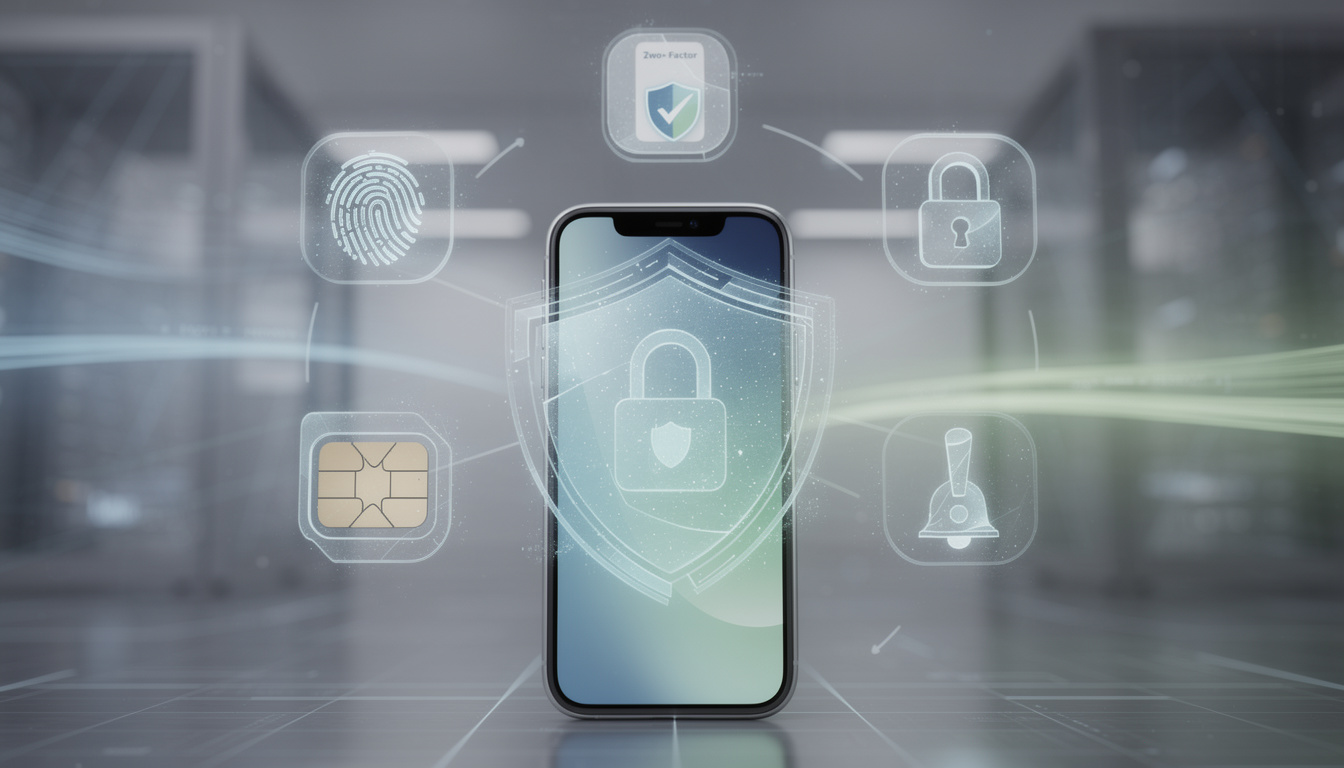
SIM swap attacks are easier to trigger than most people realize. Here are five practical moves that can help lock down your phone number before a criminal does.
One dropped signal bar can be easy to ignore. Then the texts stop, calls fail, and your bank starts emailing about password resets you never requested. That is how many SIM swap attacks begin, quietly and fast. A scammer persuades a mobile carrier to move your number to a SIM card they control, then uses that access to intercept SMS codes, reset passwords, and break into your most sensitive accounts.
This matters now because phone numbers still sit at the center of account recovery, even as regulators push carriers to tighten security. The FCC rules that took effect in 2024 are still shaping carrier practices, and they give consumers stronger protection, at least on paper. Your best defense, though, still starts with a few moves you can make today.
SIM swap attacks start with a simple weakness
A SIM swap attack, also called SIM jacking or port-out fraud, happens when a criminal convinces a wireless provider to transfer your number to a different SIM or eSIM under their control. Once that change goes through, calls and texts meant for you land on the attacker’s device instead.
That creates a chain reaction. Email accounts, banks, brokerages, social platforms, and crypto exchanges often still use SMS-based verification or phone-based recovery. If your number becomes the attacker’s tool, your identity can follow.
The FTC has warned consumers for years that scammers use phone-based account takeover to bypass weak authentication. More recently, the FBI’s IC3 complaint data has kept cyber-enabled fraud firmly in focus, though agencies do not always break out SIM swapping as a standalone category in public summaries. This is an inference based on multiple consumer advisories and incident-response patterns reported across the last year.
How criminals pull off SIM swap attacks
The playbook is usually low-tech. Attackers gather personal details from old data breaches, social media, phishing messages, or people-search databases. Then they contact the carrier, claim the phone was lost or damaged, and try to answer security questions well enough to trigger a SIM replacement.
Sometimes that is enough. In other cases, reporting and court filings have shown that insider help at retail stores or call centers can play a role, especially in high-value theft cases involving cryptocurrency. A widely cited example came from US prosecutions tied to crypto theft schemes that used number hijacking to access exchange accounts.
Watch the sequence carefully and the pattern becomes obvious. The criminal is not hacking the SIM card itself in the cinematic sense. They are hacking the human process around it.
That is also why removing exposed personal data matters. If your address, date of birth, relatives, and phone number are easy to find online, carrier verification becomes much easier to fake. Readers who want broader digital hygiene steps can also see DualMedia’s guide to protecting your digital life.
Five steps to secure your phone number today
The fastest way to reduce risk is to treat your phone number like a master key. If someone grabs it, they may not stop at messages. They may go straight for your email, then your finances.
These five steps are the most practical defenses available right now:
- Enable a carrier account lock or port freeze to block number transfers without added approval.
- Set a unique carrier PIN that is not tied to your birthday, address, or the last four digits of your Social Security number.
- Move critical accounts off SMS and onto an authenticator app such as Google Authenticator, Authy, Microsoft Authenticator, or a hardware security key like YubiKey.
- Reduce exposed personal data on broker sites and public profiles, because social engineering works best when your background is easy to map.
- Watch for warning signs, including sudden loss of service, account-change messages, or password reset emails you did not request.
Major US carriers now promote some version of account lock or number protection, though the names vary. AT&T, Verizon, and T-Mobile have all introduced stronger controls in recent years, and FCC requirements that took effect in 2024 pushed this further by requiring secure authentication and customer notifications around SIM changes and port-outs.
| Key detail | Why it matters |
|---|---|
| Carrier lock or port freeze | Stops many unauthorized number transfers before they happen |
| Random 6 to 8 digit PIN | Makes account changes harder to approve through social engineering |
| Authenticator app or hardware key | Removes the attacker’s advantage if they hijack your phone number |
| Data broker cleanup | Limits the personal facts scammers use to impersonate you |
| Fast response to service loss | Can cut off account takeovers before funds move out |
Why crypto and banking accounts are frequent targets
SIM swap attacks often hit where money moves fast. Cryptocurrency exchanges are especially attractive because once assets leave a wallet or exchange account, recovery can be difficult. Banking and brokerage accounts face similar risk when SMS recovery remains enabled.
That is why email should be secured first. If an attacker gets your phone number and then resets your email password, they can often cascade through your other accounts in minutes. The number itself is not the final prize, it is the bridge.
DualMedia has covered how fast losses can mount in crypto-related incidents, from exchange risk to wallet exposure. For readers active in digital assets, these pieces on crypto wallet security and recent crypto exchange developments add useful context.
Based on reported attack patterns and the design of SMS recovery systems, the highest-value accounts should be moved away from text-message codes first. That usually means email, password managers, banks, brokerages, and crypto platforms.
What to do the moment your phone loses service
If your phone suddenly shows no service and you did not change carriers, do not wait. Use another device and call your mobile provider immediately. Ask them to freeze the account, reverse any unauthorized SIM change, and document every step.
Then secure your email, because most account recovery flows start there. Change passwords on your primary email account, banking apps, password manager, and any services tied to money or identity. Revoke active sessions wherever that option exists.
Next, contact your financial institutions and review recent activity. If there is evidence of fraud, file reports with IC3.gov and the FTC’s fraud portal, and consider a fraud alert or credit freeze with Equifax, Experian, and TransUnion. Speed matters more than perfection in the first hour.
Frequently asked questions
Can a SIM swap happen without stealing the physical phone?
Yes. In most cases, the attacker never touches the victim’s device. The fraud happens through the carrier’s account-change process, often using social engineering or stolen personal details.
Are SIM swap attacks still a risk if two-factor authentication is enabled?
Yes, if that second factor is SMS. Text-based codes are better than no protection, but they are vulnerable when someone takes over your number. Authenticator apps and hardware keys are much stronger choices.
Do FCC rules guarantee reimbursement if a carrier makes a mistake?
No automatic guarantee exists. But FCC requirements that took effect in 2024 gave consumers a stronger basis to challenge poor carrier security practices and push disputes further when proper safeguards were not followed.
Which accounts should be updated first after a suspected SIM swap?
Start with email, then banking, brokerage, crypto, and your password manager. Those accounts can unlock nearly everything else, so protecting them first reduces the chance of a wider takeover.
What to watch next
Carriers are under more pressure than they were a few years ago, and that is a meaningful shift. But the phone number remains a weak link across the digital economy, especially when SMS is still treated like a trusted identity tool.
The smart move is not complicated. Lock the carrier account, set a strong PIN, replace SMS authentication where possible, and react fast to any unexplained loss of service. In practice, SIM swap attacks are preventable more often than they are inevitable.
Want more tech and innovation coverage like this? DualMedia Innovation News tracks the technology shifts that actually matter, from AI to foldable hardware to the next wave of consumer products.
 EN
EN  FR
FR  ES
ES