

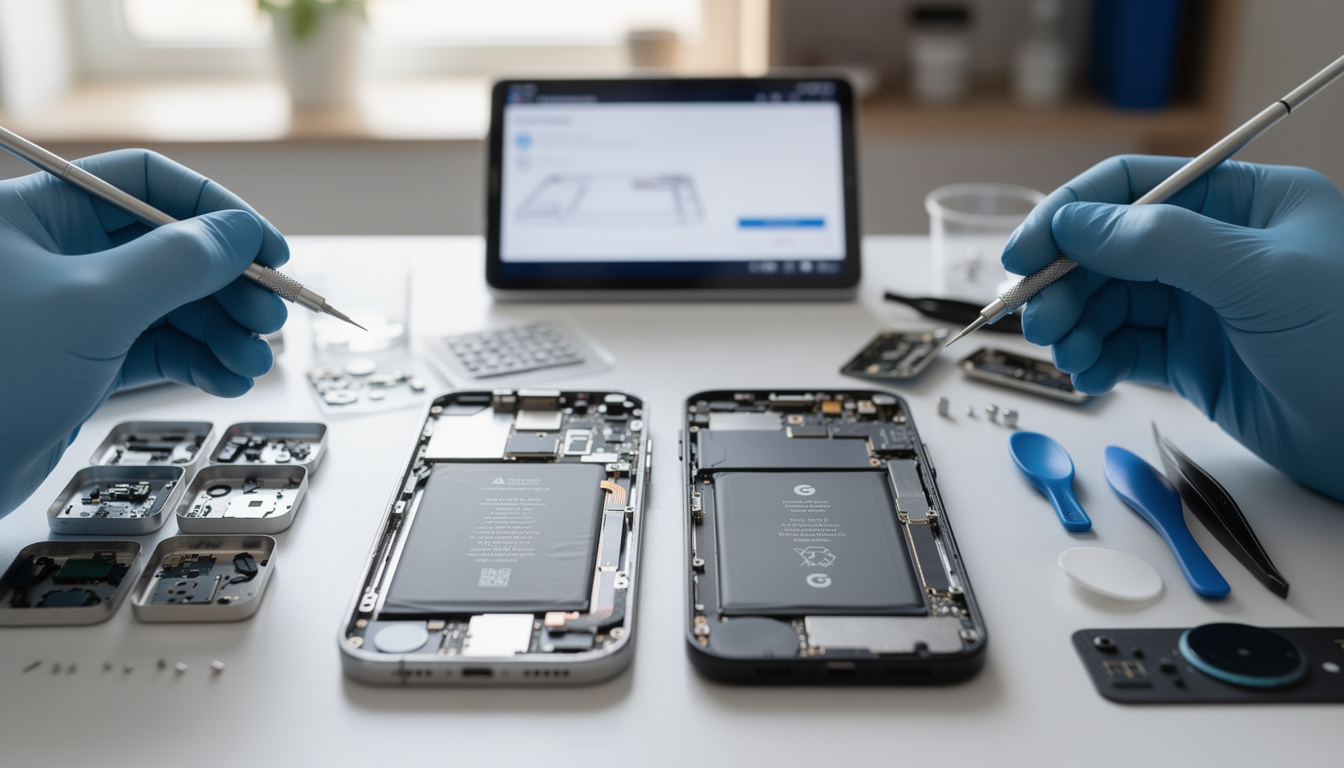
Right to Repair laws could change how your next iPhone or Pixel gets fixed, upgraded, and valued. Here is what the new rules may mean before you buy.
A cracked screen still feels like a small disaster. One drop on the sidewalk, and suddenly your next iPhone or Pixel is not just a phone, it is a repair bill, a wait time, and a question about who is allowed to fix what you own. That is why Right to Repair laws matter now. Across the USA, state-level rules in places like California, Minnesota, Colorado, New York, and Oregon have pushed manufacturers to open up access to parts, tools, and manuals. For buyers weighing Apple against Google, the shift could affect repair costs, device lifespan, and even resale value. The bigger story is simple, your next phone purchase may no longer end at checkout.
Right to Repair laws are moving from activist issue to buyer reality
For years, the fight over repair access sounded niche, the kind of policy debate that lived on advocacy sites and in legislative hearings. That changed as more states passed electronics repair laws, and as major brands faced direct pressure to support independent shops and self-service options.
Consumer Reports noted when New York’s Digital Fair Repair Act took effect in late 2023, and California’s Right to Repair Act followed with broader visibility in 2024. Public Interest Research Group, through its repair tracking, has also highlighted that all 50 states have now seen some form of Right to Repair legislation introduced, even if only a smaller group has passed broad consumer electronics laws.
For shoppers, the issue is no longer abstract. If two premium phones cost nearly the same, but one is easier and cheaper to fix, that becomes part of the buying decision.
What Right to Repair laws could mean for your next iPhone and Pixel
In practical terms, these laws aim to make parts, repair documentation, and diagnostic tools more available to consumers and independent repair businesses. That does not mean every repair suddenly becomes easy, but it can reduce the hold manufacturers have over routine fixes like screen, battery, and camera replacements.
For Apple, this pressure lands on top of its existing Self Service Repair program, which the company expanded over time after years of criticism. For Google, the conversation intersects with its repair partnerships and the broader reputation of Pixel devices as more repair-friendly in some areas, though not always consistently across models.
This is an inference based on the reported design direction and past company strategy, but buyers may start comparing phones not only by camera quality and AI features, but by repairability. That would have sounded fringe a few years ago. It sounds practical now.
Several changes matter most when you are deciding what to buy:
- Battery replacements may become easier to source outside authorized repair networks
- Screen repairs could face fewer software locks in states that limit parts pairing practices
- Independent shops may gain better access to manuals and calibration tools
- Used phone values could rise if repair histories become less restrictive and parts are easier to verify
Apple, Google, and the fight over parts pairing
One of the biggest fault lines is parts pairing. That is the practice of tying a component, such as a screen or battery, to a specific device through software, which can limit functionality or trigger warnings after a repair.
Repair advocates have argued for years that parts pairing can block perfectly valid repairs. Recent state laws in Colorado and Oregon drew extra attention because they addressed this issue more directly, especially around consumer electronics and component restrictions. Outlets covering the new laws have described these provisions as some of the most meaningful changes in the current repair wave.
Apple has gradually changed its stance, a shift covered by the Los Angeles Times and others, but it still defends many controls as necessary for safety, security, and performance. Google has taken a less combative public posture, yet its actual repair experience still depends on model, parts stock, and software support.
The core question is simple. When you replace a part, should your phone still treat it like an outsider?
How the numbers can affect price, lifespan, and resale
A premium smartphone now often costs enough to make repair economics hard to ignore. When a new flagship easily pushes past $800 or $1,000, buyers look at the total cost of ownership, not just launch price.
The Federal Trade Commission’s repair stance from recent years still shapes this debate, even if some of its most cited findings are older than 12 months. The FTC argued that manufacturers often overstated the risks of independent repair while limiting competition. That older policy backdrop matters because the current state laws build on the same logic.
Here is a quick way to think about the stakes:
| Key detail | Why it matters |
|---|---|
| Access to official parts | Can lower wait times and expand where you get a phone fixed |
| Manuals and diagnostic tools | Makes independent repair more viable for newer iPhone and Pixel models |
| Limits on parts pairing | Can reduce software roadblocks after replacing screens or batteries |
| Longer usable device life | May improve resale value and cut upgrade pressure |
This is where policy meets your wallet. A phone that stays reliable for one extra year can change whether a trade-in feels worthwhile or wasteful.
The wider trend also fits a broader consumer push toward ownership rights, sustainability, and longer product cycles. Readers following shifts in Apple’s future hardware, including reports around the foldable iPhone timeline, may notice that repairability is becoming part of the hardware conversation rather than an afterthought.
Why Right to Repair laws matter beyond the repair shop
There is also an environmental angle. FindLaw and Built In both describe Right to Repair laws as a way to cut electronic waste by making devices easier to maintain instead of replace. That matters because phones are small, but the upgrade cycle behind them is massive.
The policy story also overlaps with software and AI trends. As devices become more dependent on on-device AI, tighter hardware and software integration can make independent repair harder unless regulators keep pace. That tension is starting to look familiar across the tech sector, not only in phones but also in connected products and autonomous systems, a pattern echoed in other coverage such as real-world AI deployment.
The result is a larger question about ownership in modern tech. If a device depends on software authentication at every step, what does it really mean to own it?
Frequently asked questions
Do Right to Repair laws mean anyone can fix an iPhone or Pixel now?
No. These laws generally improve access to parts, tools, and manuals, but they do not erase technical difficulty or make every repair simple. Premium phones still use tightly packed hardware, adhesives, and software checks.
Will repairs become cheaper because of Right to Repair laws?
They can, especially if independent repair shops gain better access to components and diagnostics. Actual pricing will still vary by state, phone model, and whether manufacturers fully align their repair programs with the new legal requirements.
Does this affect only Apple and Google phones?
No. The broader legal push targets consumer electronics more widely, including laptops, tablets, and other connected devices. Apple and Google get the most attention because the iPhone and Pixel sit at the center of the premium smartphone market.
What should buyers check before purchasing a new phone?
Look at battery replacement options, display repair pricing, software support length, and whether official or independent parts are realistically available. It is also smart to check if your state has active Right to Repair protections in force.
What to watch next
The next phase will be less about headline laws and more about enforcement, compliance, and loopholes. Manufacturers may technically follow state requirements while still keeping repair experiences expensive or confusing, which is why policy details matter.
Watch for changes in parts pairing rules, broader state adoption, and how Apple and Google adapt their service models over the next product cycle. Buyers have started asking sharper questions, and that alone changes the market. A phone is still a piece of hardware, but increasingly, it is also a test of who stays in control after the sale.
Want more tech and innovation coverage like this? DualMedia Innovation News tracks the technology shifts that actually matter, from AI to foldable hardware to the next wave of consumer products.
 EN
EN  FR
FR  ES
ES