

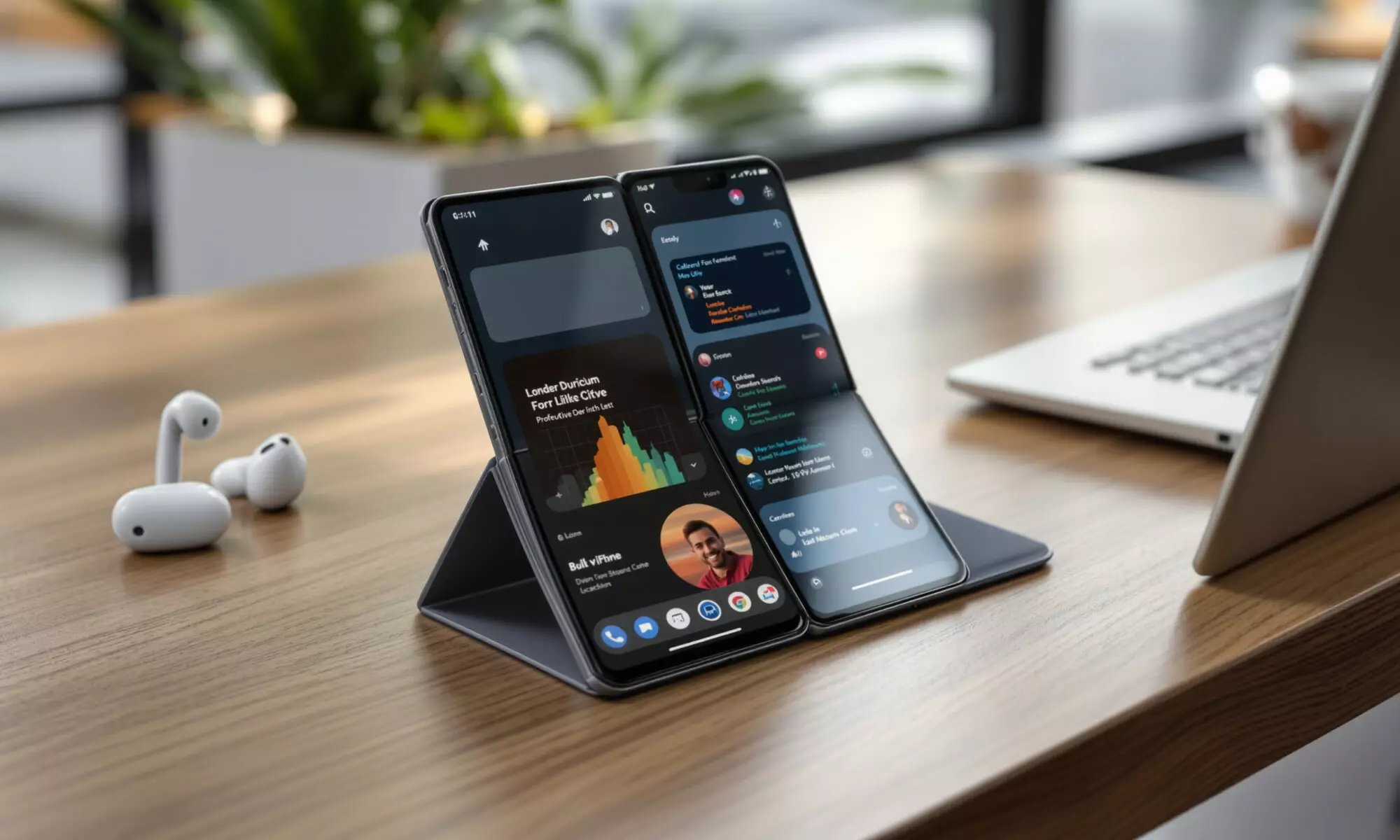
Foldable phones 2026 are finally worth buying for a specific kind of user: someone who wants a pocket tablet, multitasks daily, and can live with a $1,500–$2,400 purchase. Durability is better, Android app support is improving fast, and Apple is expected to enter the category. Still, most people should buy one on trade-in, carrier promo, or certified refurbished pricing rather than paying full retail.
Foldable phones 2026: what actually changed
The short version is simple. The hardware no longer feels like an experiment, and the software is catching up in a way it didn’t in the early Galaxy Fold years.
Samsung’s Galaxy Z Fold7, launched in 2025 with U.S. general availability on July 25, came with an Advanced Armor Aluminum frame and IP48 water and dust resistance claims. Google’s Pixel 10 Pro Fold lists Gorilla Glass Victus 2, a 6.4-inch outer display, and a “high-strength” hinge that Google says is rated for more than 10 years of folding. Motorola’s 2026 razr page also points to a titanium-reinforced hinge and IP48 protection against dust and splashes.
Software may matter more than the hinge. Android 16 set a large-screen orientation, aspect-ratio, and resizability baseline for apps targeting API 36, and Google Play will require API 36 targets in August 2026. That means more apps should behave properly on opened foldables instead of stretching awkwardly like a phone app on a cafeteria tray.
Google says more than 300 million Android large-screen devices are in use in 2026, counting tablets, foldables, ChromeOS devices, car displays, and TVs. App developers can ignore a niche. They have a harder time ignoring a nine-figure device base.
Are foldable phones durable now?
They are more durable than they used to be, but don’t confuse “better” with “indestructible.” A foldable still has a hinge, an inner flexible display, and a softer screen surface than a conventional slab phone.
IP48 is a useful step. The first digit, 4, indicates protection against solid objects larger than 1 mm, not full dust sealing. If you work around sand, construction dust, metal shavings, or beach bags, a foldable remains a higher-risk purchase than a Galaxy S, Pixel, or iPhone slab.
A quiet pitfall: the inner display is rarely the first thing you notice in a spec sheet, but it’s the part that changes the cost equation. Cases protect corners. They don’t remove the stress of thousands of folds, pocket grit, or pressure from a stray key. For a deeper look at hinge designs, IP ratings, and brand claims, the separate guide to foldable phone durability in 2026 is the natural next read.
My view: durability is now acceptable for office workers, commuters, students, frequent flyers, and people who treat phones carefully. It’s still not ideal for field work, rough travel, or anyone who regularly cracks normal phones.
Price reality: the math most buyers skip
Foldable phones 2026 still live in premium-phone territory. Samsung listed the U.S. unlocked Galaxy Z Fold7 at $1,999.99 for 256GB, $2,119.99 for 512GB, and $2,419.99 for 1TB in 2025. Multiple 2026 reports put Apple’s first foldable iPhone expectation at around $2,000, though Apple had no official iPhone Fold product page or reveal as of July 21, 2026.
Here’s the useful calculation. If you buy a $1,999.99 foldable and keep it for three years, that’s about $55.56 per month before tax, insurance, accessories, financing costs, or lost resale value. Keep it for four years and the hardware cost drops to about $41.67 per month. That sounds more reasonable, until you add a carrier protection plan or the cost of replacing a damaged inner display outside warranty.
Samsung’s Certified Re-Newed Galaxy Z Fold7 and Galaxy Z Flip7 reportedly became available on Samsung.com on April 22, 2026, in like-new condition at reduced prices. That’s the lane I’d watch first. Honestly, paying day-one MSRP only makes sense if the large inner display will replace enough tablet, laptop, or second-screen time to matter.
| Device or category | 2026-relevant figure | What it means for you |
|---|---|---|
| Samsung Galaxy Z Fold7 | 2025 U.S. unlocked MSRP: $1,999.99 for 256GB; $2,119.99 for 512GB; $2,419.99 for 1TB | Book-style foldables remain expensive unless you use trade-ins or refurbished deals. |
| Google Pixel 10 Pro Fold | 6.4-inch outer display; Gorilla Glass Victus 2; hinge marketed as rated for more than 10 years of folding | The outer screen is now usable enough for normal phone tasks, reducing how often you need to open it. |
| Expected Apple foldable iPhone | Reported September 2026 launch window; roughly 5.5-inch outer and 7.8-inch inner displays; around $2,000 pricing | Apple’s entry could normalize foldables, but official details were not available as of July 21, 2026. |
| Android large-screen ecosystem | More than 300 million Android large-screen devices in use in 2026, according to Google | Developers have stronger reasons to improve tablet and foldable layouts. |
Android, Apple, and the app problem
The biggest reason foldable phones 2026 feel different is app behavior. Android 16’s large-screen baseline for apps targeting API 36, followed by Google Play’s August 2026 requirement, should reduce the number of apps that lock orientation, refuse resizing, or look broken on a large inner screen.
Android 17/API 37 goes further, according to Google’s May 19, 2026 developer blog, by removing the developer opt-out for orientation and resizability restrictions on large-screen devices. Android documentation updated July 14, 2026 also says large-screen-specific app ratings are being introduced, so users can rate how apps work on large-screen devices. That’s a subtle but powerful pressure point.
Apple is the unknown giant. Multiple reports in 2026 say the first foldable iPhone is expected in September 2026 with a book-style design, iOS, iPad-style layouts, and side-by-side apps when opened. If you’re tracking Apple’s broader phone calendar, the reported timing fits the usual September window covered in this iPhone 18 Pro release date analysis.
No official Apple foldable announcement page was found as of July 21, 2026. Treat every “iPhone Fold” detail as reporting, not confirmed product information. A related question is how iOS 19 and Android 17 handle multitasking differently, because the operating system may decide whether a foldable feels like a tiny tablet or just a pricey novelty; see the comparison of iOS 19 vs Android 17 for power users for that broader context.
Who should buy one, and who should wait?
Foldable phones 2026 make the most sense if you already do real work on your phone. Reading PDFs, handling email, checking dashboards, editing documents, comparing travel bookings, and running two apps side by side all feel better on a 7-inch-class inner display than on a narrow slab.
Small-phone fans should be careful. Flip-style foldables are charming and pocketable, but they don’t give you the same productivity jump as a book-style Fold or Pixel Fold. They’re more about compactness and style than replacing a tablet.
Before buying, run through these checks:
- Price: compare MSRP, trade-in value, carrier bill credits, and certified refurbished options using 2026 pricing, not old launch hype.
- Durability: check the IP rating, hinge claims, inner-screen warranty terms, and whether your daily environment involves dust or grit.
- Apps: list your five most-used apps and confirm they behave well on large screens or support split-screen use.
- Insurance: price device protection before purchase, because foldable repairs can erase the savings from a discount.
- Resale: assume depreciation will be steeper than on mainstream iPhones unless Apple changes buyer confidence after its expected entry.
There’s also an edge case nobody mentions enough: if you use your phone mostly one-handed in public transit, a book-style foldable may frustrate you. The outer display helps, especially on models like the Pixel 10 Pro Fold with its 6.4-inch cover screen, but the real reason to buy the device is the opened mode. If you rarely open it, you’ve paid for hardware you aren’t using.
Travelers get a mixed deal. A foldable is excellent for maps, airline apps, translation, reading, and video in a hotel room; pair it with a good data plan and it can replace a small tablet. If you travel often, the guide to eSIM plans for international travel in 2026 is relevant because foldables are only as useful abroad as their connectivity.
Budget buyers should wait. A $300 phone won’t give you a tablet-sized screen, but it will handle messaging, banking, photos, streaming, and maps for a fraction of the price. If cost is the main concern, a tested list of budget smartphones under $300 is a saner place to start.
What Apple could change in late 2026
Apple doesn’t need to invent the foldable phone for its arrival to matter. It only needs to make millions of mainstream buyers trust the category.
Reports in 2026 describe a book-style foldable iPhone with about a 5.5-inch outer display and a 7.8-inch inner display, priced around $2,000. They also suggest iOS will use iPad-style layouts and side-by-side apps when opened. If that happens, developers who already support iPad interfaces may have a clearer path to foldable layouts than many Android phone-first apps had in earlier years.
Samsung appears to be moving before Apple lands. TechRadar reported on July 19, 2026 that Samsung was expected to reveal Galaxy Z Fold 8 models at Galaxy Unpacked on July 22, 2026, while Android Central and Tom’s Guide reported alleged Fold 8, Fold 8 Ultra, and Flip 8 leaks on July 20, 2026. Until Samsung announces final hardware, leaks are still leaks.
Should you wait for Apple’s first model? If you’re an iPhone user who keeps devices for four years, yes, unless your current phone is failing. First-generation Apple products can be expensive and conservative, but they often reset accessory support, app attention, and resale confidence. Android users, by contrast, already have more mature foldable choices from Samsung, Google, and Motorola.
FAQ
Is a foldable phone worth it in 2026?
Yes, if you use split-screen multitasking, read or edit documents, travel often, or want a tablet-like screen in your pocket. If you mostly text, browse social feeds, and take photos, a normal flagship is still the better value.
Are foldable phones 2026 durable enough for daily use?
For careful daily use, yes. Models with stronger frames, improved hinges, Gorilla Glass Victus 2 on cover displays, and IP48 claims are more reassuring, but dust-heavy environments and rough handling remain concerns.
Should I wait for the iPhone Fold?
If you’re committed to iOS, waiting makes sense because Apple’s first foldable iPhone is widely reported for September 2026, though not officially announced as of July 21, 2026. Android buyers don’t need to wait unless they want to see how Apple affects prices and app support.
What is the biggest downside of foldable phones?
Price is still the biggest downside, followed by repair risk. A $2,000-class device needs either a clear productivity benefit, a strong trade-in deal, or a long ownership plan to make financial sense.