

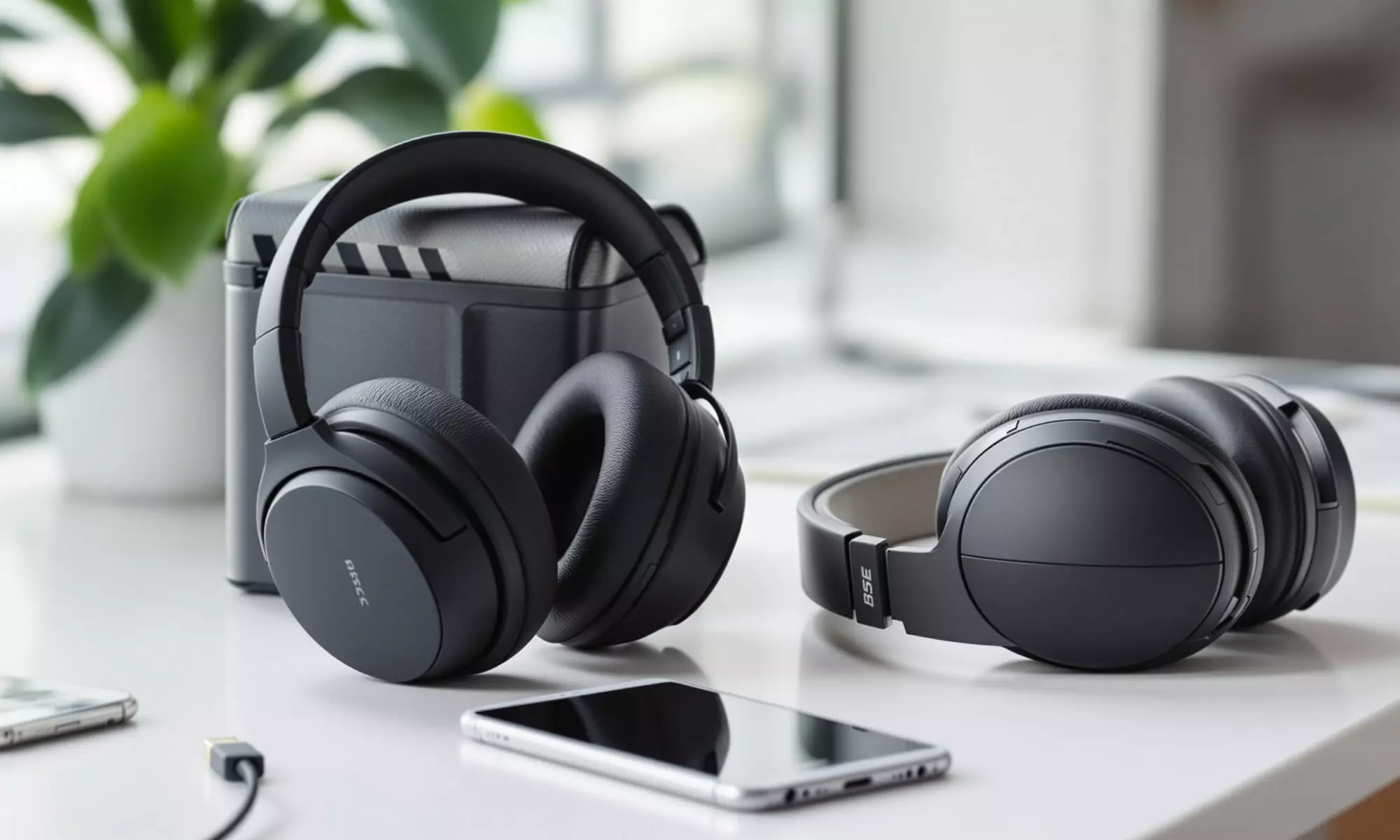
Choosing a premium headphone brand between Bose and Sony comes down to priorities: Sony offers stronger customization, LDAC support, slightly better tested noise isolation, and longer measured battery life in 2026. Bose counters with simpler controls, physical buttons, and digital USB-C audio. For most feature-focused buyers, Sony wins narrowly; Bose remains the better choice for straightforward operation and wired USB-C listening.
Is Bose or Sony the better premium headphone brand?
Sony is the better premium headphone brand for buyers who want extensive sound controls, LDAC streaming, and longer independently measured battery life in 2026. Bose is better for buyers who prefer physical buttons, a less complicated app, and digital audio over USB-C. Noise cancellation is excellent on both flagships, with Sony holding a small measured advantage.
The relevant comparison is between the Sony WH-1000XM6 and Bose QuietComfort Ultra Headphones (2nd Gen). Both are over-ear wireless models built around active noise cancellation, or ANC. Active noise cancellation is audio processing that uses microphones and opposing sound waves to reduce steady environmental noise.
RTINGS reported in 2026 that Sony’s noise isolation was “a bit stronger,” although the difference was close enough for comfort, controls, and device compatibility to decide the purchase. SoundGuys likewise described both models as leading ANC choices in 2026 and estimated that more listeners would prefer Sony’s sound.
My view is that the WH-1000XM6 is the more complete all-purpose package. The Bose flagship becomes the smarter pick when you value predictable buttons and USB-C listening more than a dense menu of adjustments.
How much do Bose and Sony premium headphones cost in 2026?
The Sony WH-1000XM6 costs $459.99 in the United States in 2026, according to Sony’s online store, while the Bose QuietComfort Ultra Headphones (2nd Gen) costs $449.00. Sony therefore carries a $10.99 premium, equal to about 2.4% of the Bose price. That gap is too small to settle the comparison by itself.
Sony introduced the WH-1000XM6 in May 2025. Bose announced its second-generation Ultra model on September 10, 2025, and released the headphones on October 2, 2025. Neither product has an age advantage large enough to make the other feel obsolete in 2026.
| Feature | Sony WH-1000XM6 | Bose QuietComfort Ultra Headphones (2nd Gen) |
|---|---|---|
| U.S. list price | $459.99 in 2026 | $449.00 in 2026 |
| Bluetooth version | Bluetooth 5.4 | Bluetooth 5.4 |
| Rated ANC playback | Up to 30 hours | Up to 30 hours |
| Measured ANC playback | 37 hours 14 minutes in SoundGuys’ 2026 test | 27 hours 12 minutes in SoundGuys’ 2026 test |
| Highlighted codecs | LDAC, LC3/LE Audio, AAC, SBC | aptX Adaptive/Snapdragon Sound, AAC, SBC |
| Wired digital USB-C audio | No; analog 3.5 mm input | Yes |
The price calculation exposes a common buying mistake. Paying $10.99 more for Sony represents less than one café lunch, yet choosing the wrong connection standard may affect every listening session. Compare phones, computers, cables, and codecs before chasing the lowest sticker price.
Bose also sells the QuietComfort Headphones (2nd Gen) for $359 in 2026. That model has six microphones, Bluetooth 5.4, multipoint connectivity, and a manufacturer rating of 24 hours, falling to 18 hours with Immersive Audio. It saves $90 against the Ultra model and deserves consideration if $449 stretches your budget.
Which has better noise cancellation and battery life?
The Sony WH-1000XM6 has slightly stronger tested noise isolation and substantially longer measured ANC battery life than the Bose QuietComfort Ultra Headphones (2nd Gen) in 2026. SoundGuys measured 37 hours 14 minutes for Sony and 27 hours 12 minutes for Bose, a difference of 10 hours 2 minutes under that publication’s test conditions.
Manufacturer ratings tell a different, simpler story. Sony and Bose each advertise up to 30 hours of playback with noise cancellation active for their 2025-generation flagships. Independent test results can diverge because volume, codec, features, signal conditions, and testing methods affect power consumption.
Here’s the practical calculation: at three hours of listening per workday, SoundGuys’ 2026 measurements translate to roughly 12.4 days for Sony and 9.1 days for Bose before recharging. That’s about three additional workdays from the Sony pair. Battery aging will reduce both figures over time.
Don’t read too much into a narrow ANC lead. Ear-cup seal, glasses, hair, and head shape can alter perceived isolation, sometimes more than the laboratory difference between these models. A comfortable seal is part of noise-canceling performance, not a separate luxury.
Which headphones offer better sound, codecs, and connections?
The Sony WH-1000XM6 offers LDAC, LC3/LE Audio, AAC, and SBC, making Sony attractive for compatible Android devices and listeners who want broader wireless options. Bose QuietComfort Ultra Headphones (2nd Gen) supports aptX Adaptive through Snapdragon Sound, AAC, and SBC, while adding digital USB-C audio that Sony’s flagship lacks.
Codec labels don’t guarantee better sound. Your source device must support the same codec, and Apple’s iPhones use AAC rather than LDAC or aptX Adaptive for Bluetooth listening. An Android phone’s exact hardware and software determine which higher-quality option is available.
Bose supports digital USB-C audio and conventional analog cable playback. Sony provides a 3.5 mm analog input, but its USB-C connection isn’t the equivalent digital listening path. That distinction is easy to miss, especially because USB-C behavior varies widely across accessories, as our explanation of why some devices omit expected USB-C functions illustrates.
The connection decision is clearest when you match the headphones to your routine. Use these criteria before buying:
- Choose Sony if your Android source supports LDAC and you intend to use it.
- Choose Bose if you want digital USB-C playback from a compatible phone, tablet, or computer.
- Check aptX Adaptive support on both the source device and Bose headphones before counting on Snapdragon Sound.
- Prefer Sony’s 3.5 mm input when your common sources already have analog headphone outputs.
- Remember that both 2025 flagships support Bluetooth 5.4 and multipoint pairing.
Sony also released WH-1000XM6 firmware version 3.1.5 on June 30, 2026. According to Sony’s support documentation, the update added the low-latency Bluetooth Gaming Audio Profile and general performance improvements. Firmware support can change the value of connected headphones after purchase, so check the installed version.
Are Bose headphones easier to use than Sony headphones?
Bose QuietComfort Ultra Headphones (2nd Gen) are easier to use for listeners who favor physical buttons and fewer adjustments, while the Sony WH-1000XM6 provides more extensive app, equalizer, and feature controls. RTINGS’ 2026 comparison characterized Bose’s interface as simpler and Sony’s software as more configurable. Neither approach is universally better.
Sony rewards time spent in settings. You can shape the experience more closely, but additional controls also create more opportunities to change an option accidentally or forget which processing mode produced a preferred sound.
Bose takes the opposite approach. The learning curve is gentler, and tactile buttons are easier to operate with gloves or without looking. Honestly, Bose makes more sense if you dislike treating headphones like another device that needs continual setup.
Comfort remains personal and can overturn every specification-based recommendation. Buy from a retailer with a clear return policy, then wear the headphones for at least one full work session. Clamp pressure and heat often become apparent only after an hour.
Frequently asked questions
Do Bose and Sony headphones connect to two devices at once?
The Sony WH-1000XM6 and Bose QuietComfort Ultra Headphones (2nd Gen) both support Bluetooth multipoint connections in their 2025–2026 specifications. Multipoint lets the headphones maintain connections with two compatible source devices, though playback handoffs can depend on the apps and operating systems involved.
Can you listen to Bose headphones through USB-C?
Bose QuietComfort Ultra Headphones (2nd Gen) supports digital USB-C audio in 2026, as well as analog cable playback. The less expensive Bose QuietComfort Headphones (2nd Gen) also supports 24-bit/48-kHz wired USB-C playback and two-way USB-C audio for calls, according to Bose’s August 2026 announcement.
Does the Sony WH-1000XM6 support wired listening?
The Sony WH-1000XM6 supports wired audio through an analog 3.5 mm input. Sony does not provide the same digital USB-C listening feature offered by the 2025 Bose QuietComfort Ultra Headphones (2nd Gen).
Is the cheaper Bose QuietComfort model a better value?
The Bose QuietComfort Headphones (2nd Gen) costs $359 in 2026, saving $90 compared with the $449 Ultra model. The cheaper pair is a credible value for buyers who want Bose ANC, Bluetooth 5.4, multipoint, and USB-C audio without paying for the flagship.