

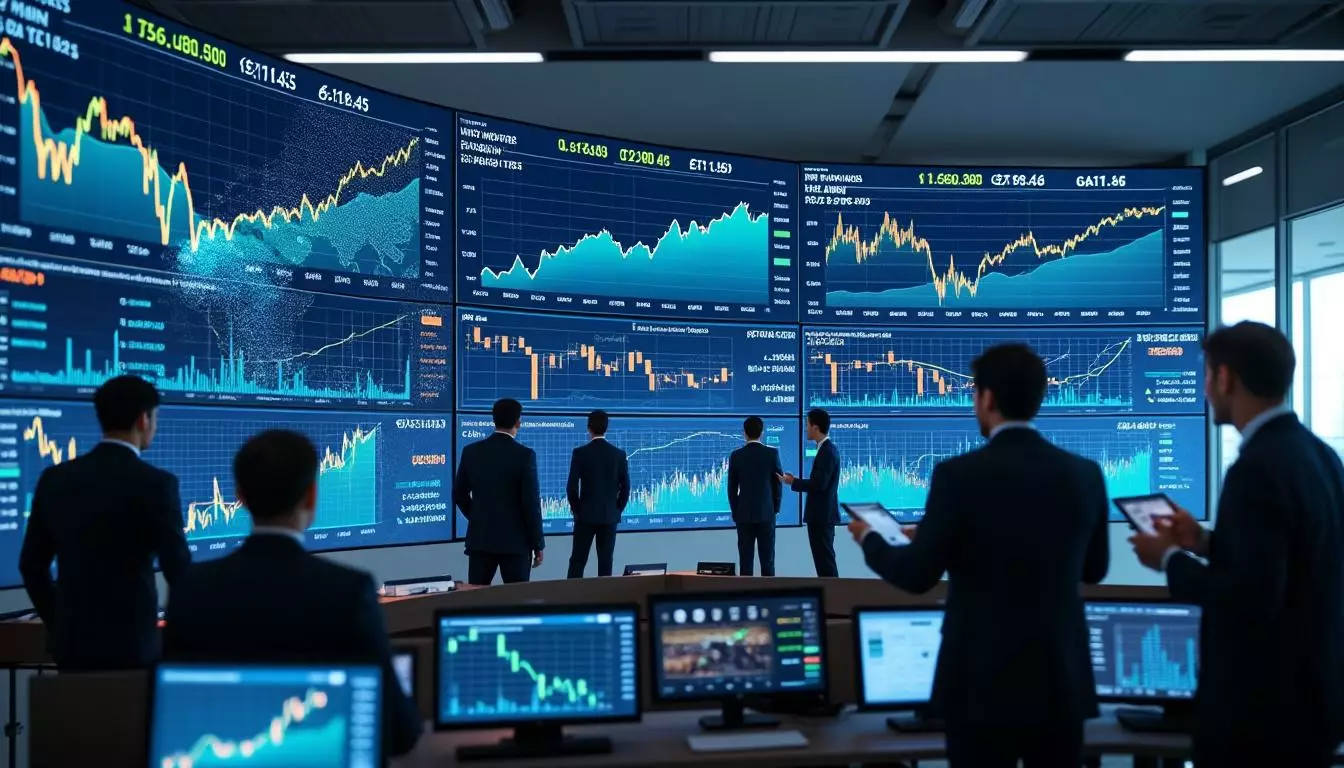
Asian Markets opened with Mixed Signals as traders weighed soft US macro prints, tariff headlines, and a fresh round of AI-Driven selling pressure tied to big-cap tech. The regional tape split early: some indexes leaned on banks, exporters, and defensives, while others tracked the latest Wall Street pullback that followed a week of uneven earnings guidance and crowded positioning in high-growth names. US Futures moved higher into the session, yet the tone stayed cautious because the prior Market Decline was not only about valuations. It was also about how fast AI spending cycles turn into profit, and how quickly investors punish any miss in margins or cash flow.
In New York, the Supreme Court decision striking down President Trump’s broad tariff package helped stabilize sentiment and supported a late bid in equities. The S&P 500 finished up 0.7%, the Dow added about 230 points, and the Nasdaq gained 0.9%, while bond yields held near recent levels as traders recalibrated inflation risk versus fiscal revenue loss. The policy shock did not vanish, though. The White House signaled alternate routes, including a 10% global tariff via executive authority with a limited time window and further Commerce-led investigations. For Stock Trading desks in Asia, the takeaway was simple: volatility is policy-driven again, and Financial News cycles move prices faster than fundamentals.
Asian Markets mixed as tariff headlines reset global risk pricing
Asian Markets traders treated the court ruling as a short-term relief, not a full de-risking signal. Supply chains still face shifting import taxes, and corporate planning still has to model multiple tariff paths, which feeds directly into forward guidance and capex timing.
A practical example came from a Hong Kong-based apparel distributor used here as a reference case, Harbor Loom Ltd. After last year’s tariff announcement, its US-bound orders were repriced twice in one quarter, forcing inventory timing changes and higher hedging costs. The court ruling reduced one branch of risk, yet Harbor Loom still modeled a five-month window of new levies, keeping its procurement conservative. The core insight is that policy optionality keeps a volatility premium embedded in Asia open-to-trade sectors.
Mixed Signals inside Asia: exporters, banks, and defensives split
Mixed Signals showed up in sector rotation rather than in one-way index moves. Exporters reacted to currency shifts and headline risk, while banks tracked rate expectations and credit spreads. Defensive areas drew flows from managers reducing drawdown risk after the latest Wall Street swing.
To keep risk decisions consistent across desks, many teams used a simple checklist during the open:
- Does the tariff path change input costs within one quarter, or only in the next fiscal year?
- Are bond yields drifting on inflation risk, or on debt and revenue expectations?
- Is AI-Driven selling hitting only a few mega caps, or spilling into suppliers and data-center names?
- Are US Futures gains tied to short covering, or supported by breadth and earnings revisions?
- Which markets price policy risk fastest: FX, rates, or equities in the region?
The last point mattered most because cross-asset confirmation often decided whether Asia followed US price action or faded it into the close.
US Futures rise as Wall Street digests the AI-Driven Market Decline
US Futures firmed even while traders kept a close eye on the same stress point: AI-Driven positioning. When large funds crowd into a narrow set of growth leaders, a small shift in guidance, margins, or regulation risk triggers fast de-leveraging, which is how a Market Decline spreads beyond tech.
The recent Wall Street drawdown also reflected a timing issue. AI infrastructure spending supports revenue for chipmakers and cloud vendors, but investors now demand proof of durable cash generation, not only top-line growth. This is where Technology Impact becomes visible in quarterly calls: higher depreciation, power costs, and networking spend pressure operating leverage. The insight is straightforward: AI winners still win, but the market punishes weak unit economics.
Stock Trading reaction: why the Supreme Court ruling did not spark euphoria
Wall Street stayed calm because many desks had priced a legal challenge outcome, which reduced surprise. Brian Jacobsen at Annex Wealth Management framed it as a market that expected the ruling, so the immediate move stayed measured while traders mapped second-order effects.
Rates told the same story. If the ruling had been read as a clean inflation-positive event, yields would have dropped. If it had been read as a major hit to fiscal revenue with higher future borrowing, long yields would have jumped. Instead, yields inched up and then steadied, signaling a wait-and-see stance rather than conviction. The insight for allocation is that policy clarity, not policy direction, drives the next leg.
Investment Trends shift as investors weigh policy risk and Technology Impact
Investment Trends in 2026 show more demand for transparency in how businesses price geopolitical and AI risks into forecasts. Portfolio managers increasingly separate “AI adoption stories” from “AI cash-flow stories,” while also pushing for tighter disclosure around supply chain exposure and tariff sensitivity.
A useful parallel comes from digital-asset markets, where policy and narrative swings often reprice risk rapidly. For readers tracking cross-market sentiment, global events and crypto market moves offer a clean illustration of how headlines can front-run fundamentals. The same mechanism now shows up in equity factor rotations during intense Financial News cycles.
For AI exposure, disclosure frameworks are turning into a mainstream topic as firms try to communicate model risk, data provenance, and deployment scope. A related angle appears in AI news nutrition labels, which mirrors the broader push for standardized reporting. The insight is that better reporting reduces rumor-driven volatility, which is now a measurable edge in risk management.
Case snapshot: a tariff-sensitive brand stock whipsaws on the headline
Ralph Lauren offered a clean example of headline-driven repricing. After the court ruling, the stock swung from an early dip to a sharp gain, flipped again, then finished higher, echoing the way traders recalculated import cost risk in real time.
The prior tariff announcement last year had pushed the stock down close to 23% over four sessions as margins came into question. This time, the market response was more controlled, implying better preparedness, more hedging, and faster information flow across desks. The insight is that policy shocks still move prices, but the second occurrence trades differently once playbooks exist.
Our opinion
Asian Markets are sending Mixed Signals because the same inputs are pulling in different directions: US Futures are supported by relief on one tariff channel, while Wall Street still wrestles with AI-Driven valuation discipline after a Market Decline tied to crowded trades. The path forward depends on how quickly policy tools shift again, and how convincingly companies translate AI spend into margins.
The clean approach is to treat Financial News as a volatility trigger, not a thesis, and to stress-test positions for both rate and tariff scenarios while tracking Technology Impact through unit economics. If this split tape feels confusing, it is also a map of where risk is priced first. Sharing this lens helps other investors avoid chasing headlines and focus on the signals that matter.