

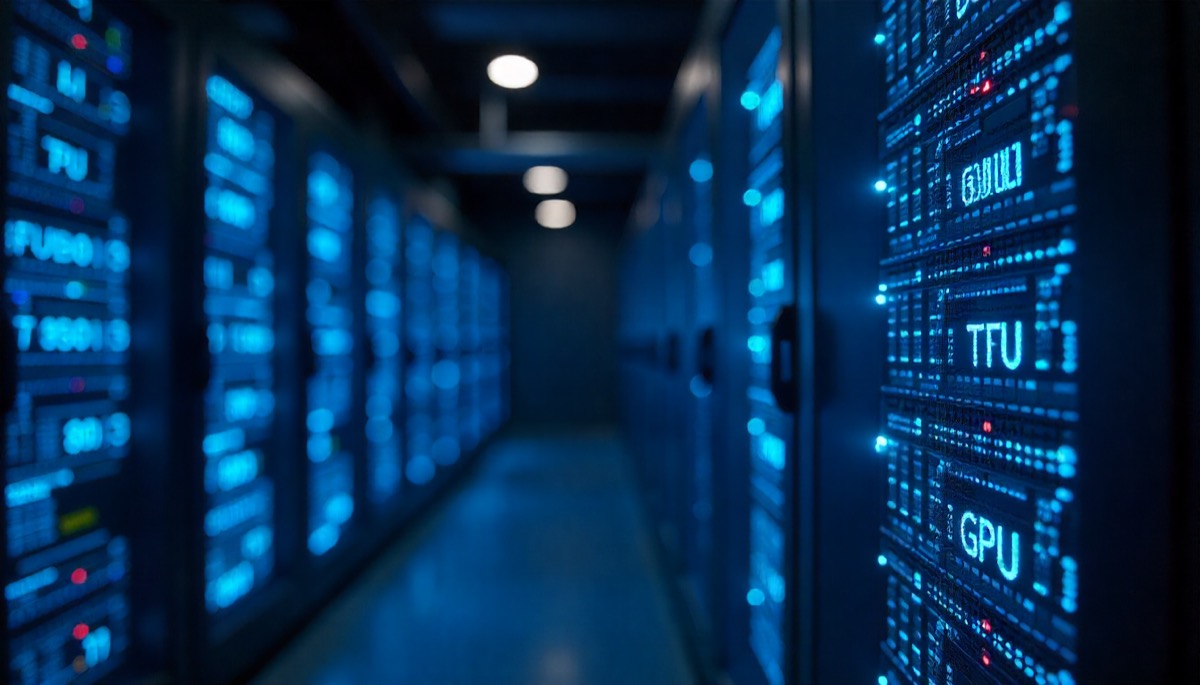
At one end of Silicon Valley, a quiet race is underway to build the most influential AI engines in history. Hidden labs, custom silicon, and vast data centers now shape the balance of power between a handful of tech giants and ambitious newcomers. This new AI Powerhouse era fuses hardware, software, and capital into a single strategic weapon that defines who leads global Tech Innovation and who falls behind.
Behind the glossy marketing of Artificial Intelligence, the reality is brutal. Trillions in market value depend on the performance of chips, models, and data pipelines that most users never see. From Google’s Tensor Processing Units to Nvidia’s GPU “AI factories,” the region’s Innovation Hub is turning into a dense network of infrastructure, energy-hungry data centers, and Machine Learning research labs. The question is no longer whether AI will shape Future Technology, but which Technology Leadership model will control the core of this new Tech Powerhouse.
AI Powerhouse Strategy Inside Silicon Valley’s Innovation Hub
Silicon Valley concentrates an AI Powerhouse model that links capital, talent, and infrastructure in a tight loop. Google, Nvidia, Apple, Meta and OpenAI sit within a short drive of each other, yet together hold trillions in market capitalization tied to AI expectations. This proximity accelerates AI Research partnerships, chip deals, and venture bets that ripple through the global economy.
Investors and founders treat the region as the central Innovation Hub for Artificial Intelligence. The most ambitious teams seek access to advanced hardware, from Nvidia GPUs to Google TPUs, along with data pipelines and cloud platforms. This cluster effect turns each successful AI model into a magnet for more talent and money, which reinforces the Tech Powerhouse position of a few players.
- Concentration of AI market cap in a handful of firms
- Direct competition over silicon, data, and energy resources
- Continuous deal-making between cloud providers and AI labs
- Rapid talent recycling between Big Tech and startups
| Company | Core AI Role | Approx. Value (USD) | Strategic Focus in AI |
|---|---|---|---|
| Alphabet (Google) | Search, Gemini, TPU | 3+ trillion | End to end AI stack ownership |
| Nvidia | GPUs, AI factories | 5+ trillion | AI infrastructure and chips |
| Apple | On-device AI | 4 trillion | Consumer hardware and privacy-first AI |
| Meta | Social AI models | 1.9 trillion | Recommendation systems and open source models |
| OpenAI | ChatGPT, AGI race | 500 billion | Foundational models and AGI pursuit |
This concentration increases both speed and risk. When a third of the S&P 500 value hinges on a small group of AI-heavy firms, any correction in AI sentiment spreads to pensions, index funds, and sovereign portfolios. The AI Powerhouse model delivers scale, but also system-level fragility.
Inside Google’s TPU Lab And The New AI Supply Chain
Behind the playful image of Googleplex, the TPU lab shows how serious this AI push is. The lab, about the size of a five-a-side football pitch, is full of blue lights, cable meshes, and loud cooling systems. These Tensor Processing Units are custom ASICs tailored for AI workloads, designed to handle trillions of operations with high efficiency.
TPUs give Google tighter control over the AI supply chain. Instead of depending fully on external GPU suppliers, Google integrates silicon, data, and models into one stack. This integration supports Gemini, Search, YouTube recommendations, and Android features that run on billions of devices worldwide.
- TPUs as ASICs specialized for AI inference and training
- Clusters arranged as “AI factories” in global data centers
- Direct link between TPU investments and Gemini improvements
- Strategic buffer against chip shortages and pricing shocks
| Chip Type | Primary Use | Strength In AI Context | Weakness In AI Context |
|---|---|---|---|
| CPU | General computing | Flexible and widely available | Limited parallelism for deep learning |
| GPU | Graphics and AI workloads | Massive parallel processing | High cost and energy demand |
| ASIC | Specific algorithms | High efficiency | Less flexible for new models |
| TPU | Google AI tasks | Tuned for Google models and services | Tied to Google ecosystem |
This integration strengthens Google’s Technology Leadership, but also raises the stakes. The more the firm links revenue streams to its TPU driven AI stack, the more sensitive its valuation becomes to any slowdown in AI adoption or regulatory pushback.
AI Bubble Fears Versus Long-Term Tech Innovation
Analysts and regulators watch the AI surge with growing concern. Comparisons with the 1999 dotcom bubble are frequent, and central banks already warn about stretched valuations in AI-focused firms. Even industry leaders such as Sam Altman describe parts of the AI market as “bubbly”, especially where spending relies on borrowed money and complex chip deals.
The tension sits between obvious, tangible AI value and speculative expectations about Artificial Intelligence transforming every sector. Silicon Valley learned from the dotcom crash that sharp corrections do not eliminate structural technology shifts. Amazon survived a share price collapse and grew into a multi-trillion firm, which fuels the belief that AI leaders will endure even if many followers fail.
- Heavy AI exposure in major stock indexes
- Rising leverage to fund AI infrastructure
- Growing gap between infrastructure cost and near-term revenue
- Global contagion risk through passive investment products
| Aspect | Dotcom Bubble (2000) | AI Wave (Today) | Key Risk Factor |
|---|---|---|---|
| Main Hype | Web presence | Generative AI and AGI | Overestimation of short-term gains |
| Cost Driver | Marketing and websites | Chips and data centers | Capital intensity and energy demand |
| Index Exposure | Spread across many small firms | Concentrated in a few giants | Systemic impact of a correction |
| Survivors | Amazon, Google, others | TBD | Ability to fund long AI cycles |
The AI Powerhouse model increases resilience for those who self-fund and own their infrastructure. Smaller players that lease capacity at high cost and rely on aggressive funding terms take the bulk of the downside if sentiment turns.
Why AI Infrastructure Spending Stays Aggressive
OpenAI’s talk of commitments in the trillion range illustrates how aggressive the AI leaders think. They treat current spending levels as the entry ticket to long-term dominance in Future Technology, especially in AGI and superintelligence research. This logic views short-term bubble risks as secondary to strategic positioning.
To manage this, leading firms work on AI costs management strategies that align hardware usage, model design, and energy efficiency. For a practical breakdown of such approaches, resources like this guide on AI cost management strategies help business leaders understand how to match AI ambition with financial discipline.
- Shifting from generic models to specialized AI systems
- Optimizing inference costs with custom silicon and pruning
- Negotiating long-term energy and data center contracts
- Exploring government-backed AI infrastructure partnerships
| Spender Type | Funding Source | AI Infrastructure Focus | Resilience To Correction |
|---|---|---|---|
| Big Tech | Own cash flows | Global data centers and chips | High |
| VC-backed startup | Equity and debt | Rented GPU clusters | Low to medium |
| Government-backed lab | Public funding | National AI infrastructure | Medium |
| Mid-size enterprise | Operating budget | Managed AI platforms | Medium |
This aggressive spending suggests that, even if a bubble forms, AI infrastructure will remain in place as a permanent layer of global computing capacity.
Nvidia, Google, And The Rise Of AI Factories
Nvidia’s CEO popularized the term “AI factories” to describe large data centers packed with high-performance chips, power lines, and cooling systems. These facilities sit at the core of the Tech Powerhouse model. They convert capital into AI Research output, model training runs, and real-time inference that supports consumer and enterprise services.
Google’s TPU clusters form one flavor of AI factory, while Nvidia-based facilities power a broad ecosystem of startups and cloud providers. Stories of founders and executives competing over chip allocations, or hosting dinners to secure more GPUs, show how strategic access to hardware has become.
- AI factories as strategic infrastructure similar to past industrial plants
- Increasing size and density of chip clusters
- Rising dependence on reliable energy and cooling
- Growing link between AI factories and national competitiveness
| AI Factory Type | Main Operator | Hardware Base | Primary Customers |
|---|---|---|---|
| Internal AI factory | Google, Meta | Custom TPUs or tuned GPUs | Own products and services |
| Public cloud AI factory | Microsoft, AWS, Oracle | Nvidia GPUs and accelerators | Startups and enterprises |
| Specialized AI factory | Research labs | Mixed custom silicon | Long-horizon AI Research |
| National AI infrastructure | Governments | Diverse AI hardware mix | Public sector and academia |
These factories demonstrate why AI is not only about models and code. Control over physical AI infrastructure defines who leads the next phase of Future Technology adoption.
Energy, Climate Targets, And The AI Power Question
AI factories demand huge amounts of electricity. Forecasts suggest global data centers will consume as much power as a large country within a few years. This collides with climate commitments that push grids toward low-carbon sources and higher efficiency.
Technology Leadership now requires credible plans to scale AI without overwhelming energy systems. Governments that aim to become AI leaders must reconcile infrastructure rollouts with emissions targets. Firms that solve this tension gain an edge in regulatory acceptance and societal trust.
- Negotiation of long-term clean energy contracts for AI campuses
- Investment in cooling innovation such as liquid cooling solutions
- AI models optimized for efficiency instead of raw size alone
- Policy debates about data center siting and grid impact
| Stakeholder | AI Interest | Energy Concern | Strategic Response |
|---|---|---|---|
| Tech giants | Maximize AI performance | Energy cost and public image | Direct investment in green power |
| Governments | Global competitiveness | Climate targets | Regulation and incentives |
| Local communities | Jobs and taxes | Water and grid impact | Negotiated data center conditions |
| Investors | AI returns | ESG constraints | Screening for energy strategies |
Regions that align AI ambitions and sustainable power infrastructure position themselves as long-term Innovation Hubs, not temporary booms.
From Gemini Versus ChatGPT To Real-World AI Adoption
Silicon Valley boardrooms often focus on headline battles such as Gemini versus ChatGPT. Yet the real influence of AI comes from how Machine Learning transforms workflows in retail, media, finance, and industry. The winners in Tech Innovation will be those who translate foundational models into practical systems that deliver measurable outcomes.
Retailers use AI forecasting models to optimize stock, reduce waste, and personalize offers. For decision-makers interested in concrete examples, detailed analysis such as this guide on AI insights for retail growth shows how targeted AI deployments increase margins and customer retention.
- Shift from general chatbots to domain-specific AI assistants
- Integration of AI into existing ERP and CRM stacks
- Use of AI for video, content, and marketing optimization
- Run-time monitoring to avoid AI hallucinations and security gaps
| Use Case | Sector | AI Role | Primary Benefit |
|---|---|---|---|
| Dynamic pricing | Retail | Model demand and adjust prices | Higher revenue per product |
| AI driven editing | Media | Automated cuts and effects | Faster production cycles |
| Fraud detection | Finance | Anomaly detection | Lower loss rates |
| Predictive maintenance | Industry | Sensor signal analysis | Reduced downtime |
These deployments matter more to the global economy than which chatbot wins a benchmark. They turn AI from a buzzword into operational leverage.
Content, Mobile, And The AI Layer In Daily Tech
Outside corporate IT, AI reshapes how users create and consume content. Short-form video workflows integrate Machine Learning for auto-cuts, captioning, and effect suggestions. For creators and marketers, lists such as these top video editing apps for 2025 show how AI support features become standard in creative tools.
On mobile, AI layers interact closely with operating systems. Google’s Android system integrates AI for smart replies, picture enhancement, and predictive app behavior. Business and technical readers who need a foundation on the OS side often turn to resources like this overview of Google’s Android platform to plan app strategies aligned with AI features.
- AI-assisted video and image editing in consumer tools
- On-device Machine Learning for privacy-sensitive tasks
- Contextual suggestions in keyboards and messaging apps
- Adaptive UI flows guided by AI usage patterns
| Device Context | AI Function | User Benefit | Technical Challenge |
|---|---|---|---|
| Smartphone camera | Scene recognition | Better photos with less effort | Latency and battery impact |
| Messaging app | Smart reply | Faster communication | Context understanding |
| Video editor | Automated cut suggestions | Reduced editing time | Quality consistency |
| Mobile browser | AI summary of content | Quicker information access | Accuracy and bias |
This layer of AI infused daily tech shows how Silicon Valley’s AI Powerhouse work translates into experiences users touch every hour.
Security, Hallucinations, And Trust In AI Powerhouses
As AI spreads through critical systems, security and reliability move to the center of the debate. High-profile AI hallucinations, where models output false yet confident statements, undermine trust. When these errors touch finance, health, or national security, they turn into serious risks instead of amusing failures.
Cybersecurity experts treat AI as both an asset and an attack surface. Language models can support threat detection, but they can also be manipulated through prompt injection or poisoned training data. For leaders concerned with these issues, analysis such as this overview of AI hallucinations as cybersecurity threats highlights concrete attack paths and mitigation strategies.
- Monitoring of AI model outputs for anomalous patterns
- Red-teaming AI systems with adversarial prompts
- Segmentation of AI services in sensitive architectures
- Regulatory pressure for transparency and auditability
| Risk Type | AI Failure Mode | Impact Area | Mitigation Strategy |
|---|---|---|---|
| Hallucination | False factual output | Information services | Human review and retrieval-augmented generation |
| Prompt injection | Malicious instruction following | Automation flows | Input sanitation and policy layers |
| Data poisoning | Contaminated training data | Model behavior | Dataset curation and anomaly detection |
| Model theft | Weights exfiltration | IP protection | Access control and monitoring |
Trust becomes a strategic asset. AI Powerhouses that demonstrate robust security and reliability will win long-term sensitive deployments in finance, healthcare, and public infrastructure.
AGI Ambitions, National Competition, And Capital Flows
Behind the commercial race, an ideological and geopolitical race advances. Many Silicon Valley leaders speak openly about Artificial General Intelligence and superintelligence as attainable goals. That vision pulls enormous capital into AI Research, even if near-term use cases do not justify current valuations.
Governments watch this tension with interest. China funds AI efforts centrally, while the United States relies on a competitive private market in Silicon Valley and other hubs. To understand how capital structures change innovation speed, some observers track crypto-driven financing routes and experiments, such as those highlighted in this overview of crypto fueling innovation, which present alternative models for financing high-risk technology bets.
- AGI as a narrative that concentrates elite talent and capital
- National policies that treat AI infrastructure as strategic
- New funding paths outside traditional equity and debt
- Ongoing debate on public versus private AI control
| AI Ambition Level | Main Actors | Funding Model | Policy Sensitivity |
|---|---|---|---|
| Incremental AI | Enterprises | Operating budgets | Low |
| Industry-scale AI | Cloud providers | Capex and long-term contracts | Medium |
| AGI-level AI | AI labs, Big Tech | Large equity and strategic deals | High |
| National AI projects | States, alliances | Public funding and PPPs | Very high |
This interplay between ambition, risk, and national interest anchors AI Powerhouses at the center of geopolitical strategy.
AI Powerhouse Effects On Developers And Technical Talent
For developers, the AI wave reshapes skill priorities. Knowledge of Machine Learning frameworks helps, but so does a strong foundation in core programming languages. Lists such as these leading web development languages show how languages with strong AI and cloud ecosystems attract more projects and communities.
Many AI-first startups and service providers partner with firms specialized in custom software delivery to move faster. Overviews such as these leading custom software companies illustrate how expert teams integrate AI APIs, data engineering, and security into production systems without guesswork.
- Stronger demand for engineers fluent in data pipelines and MLOps
- Growing importance of security and privacy by design
- Hybrid roles that combine product sense and ML basics
- Continuous learning around emerging AI tooling and SDKs
| Talent Profile | Core Skill | AI Relevance | Opportunity Area |
|---|---|---|---|
| Backend engineer | APIs, databases | Integrating AI services | AI-enabled SaaS products |
| Data engineer | ETL, pipelines | Feeding training and inference | Enterprise AI deployments |
| ML engineer | Model training | Optimizing AI performance | AI labs and core R&D |
| Security specialist | Threat modeling | Protecting AI assets | Critical infrastructure and finance |
Silicon Valley’s AI Powerhouse status depends not only on capital and chips, but on its capacity to attract and train technical talent that understands both AI and production-grade systems.
Our opinion
Silicon Valley’s AI Powerhouse dynamic rests on one argument. Control over AI infrastructure, models, and talent grants disproportionate influence over global Tech Innovation. Trillions in market value and national strategies already orbit a small set of players that treat Artificial Intelligence as the next structural computing platform, not a passing trend.
The path ahead will include corrections, failed experiments, and regulatory friction. Yet the AI factories, TPUs, GPUs, and Machine Learning pipelines built today will still shape Future Technology decades from now. For readers, the essential question is not whether AI is overhyped, but how to position skills, products, and strategies in relation to this concentrated Technology Leadership, rather than staying on the outside looking in.