

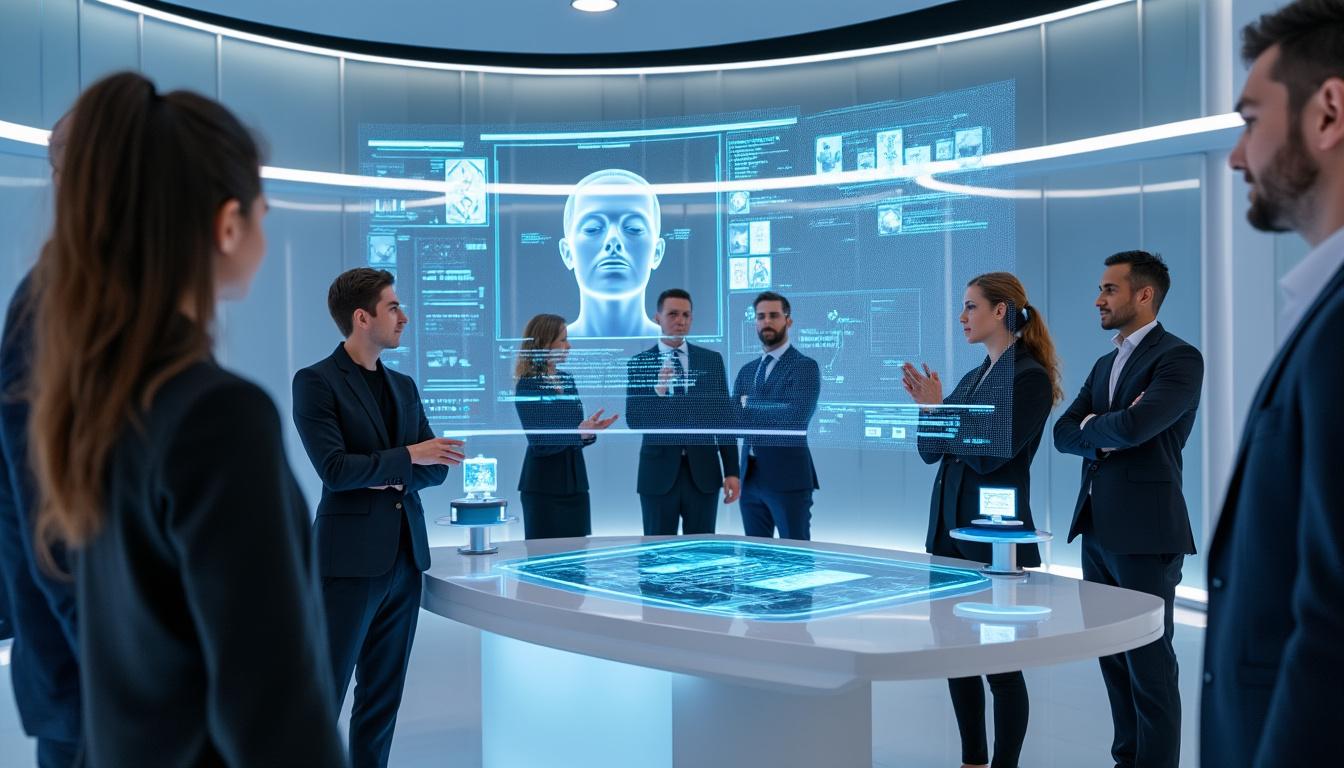
Perfect Corp. and Make Over turned Beauty Science Tech 2026 in Jakarta into a live lab for AI-Driven Beauty, where Personalization moved from posters and shade charts to real-time guidance on a screen. Over five days, ParagonCorp’s flagship event blended science demos with consumer testing, and the most visible shift was simple: visitors stopped guessing and started validating looks with camera-based analysis. Face ratio signals and face attribute scoring translated into clear makeup suggestions, while hyper-realistic virtual try-on removed the friction between inspiration and purchase. The experience felt closer to a product consultation than a marketing booth, because every recommendation was tied to measurable facial data and instant visualization.
The same logic extended beyond makeup. ParagonCorp’s skincare brand LABORÉ rolled out Skin Analysis through an API Integration approach, using image-based assessment to help users track visible concerns and pick routines with fewer blind spots. The result is a collaboration model where Beauty Technology supports both in-store engagement and digital services, with a shared technical backbone. For teams shipping web and mobile experiences, the takeaway is practical: the winners are building reliable pipelines from camera input to on-device rendering to secure backend scoring, then presenting the output in language users trust.
AI-Driven Beauty at Beauty Science Tech 2026: what changed
Beauty Science Tech 2026 positioned AI-Driven Beauty as an operational tool, not a futuristic promise. Perfect Corp. brought enterprise-grade capabilities into a consumer setting, and Make Over used them to replace static merchandising with guided discovery. This shift matters because it changes how products get evaluated, moving the decision from “what looks good on a model” to “what fits your features right now.”
In practice, ParagonCorp used the event to show how Personalization scales when the experience is repeatable and fast. A visitor spends seconds in front of a camera, receives structured feedback, then tests multiple looks without wiping off makeup or waiting for a consultant. The insight is direct: speed and consistency are now part of brand trust.
Perfect Corp. Face Attribute analysis and Virtual Try-On in a live booth
Perfect Corp. combined Face Attribute analysis with Virtual Try-On to deliver immediate, readable outputs. The system maps key facial landmarks, evaluates proportions, then pairs those signals with makeup recommendations designed for quick action. Instead of technical jargon, the interface converts measurements into steps a visitor can follow in front of a mirror.
A useful way to understand the impact is to imagine two visitors with similar skin tone but different facial structure. The same lipstick shade may be suitable for both, yet the suggested liner placement, brow shape, or contour intensity changes when face ratio analysis shifts. The insight for product teams is clear: Personalization needs geometry, not only color matching.
Personalization workflows Make Over used with ParagonCorp audiences
Make Over’s experience zone was built around repeatable steps, so visitors could self-serve without losing the “advisor” feel. The goal was not to overwhelm users with metrics, but to provide a short path from scan to decision. This is where AI-Driven Beauty earns adoption: it respects attention span, then proves value within one session.
Teams watching this model can borrow the workflow design even without a trade-show booth. The same flow fits a retail kiosk, a pop-up, or an in-app guided session, as long as latency stays low and the output stays consistent across devices.
- Capture: live, camera-based scan with stable framing guidance
- Analyze: face ratio analysis and Face Attribute analysis for feature-level signals
- Explain: short, user-friendly insights tied to visible features
- Visualize: hyper-realistic Virtual Try-On with shade and finish controls
- Decide: save a look, compare variants, and map to products
- Follow-up: share results to a profile for future Personalization sessions
Why real-time consultations beat static product displays
Static displays force users to infer outcomes. Real-time consultations let users test assumptions instantly, which reduces returns and increases confidence at checkout. At Beauty Science Tech 2026, the difference showed up in behavior: visitors iterated through multiple looks quickly, then returned to the product shelf with a clearer target.
There is also a staffing angle. A human advisor remains valuable, but the AI layer standardizes the first pass so advisors spend time on preference, occasion, and education. The insight is practical: the best Collaboration is human plus machine, not one replacing the other.
Skin Analysis and API Integration: LABORÉ’s scalable model
Beyond makeup, ParagonCorp expanded the Collaboration into skincare through LABORÉ, using Skin Analysis delivered via API Integration. The technical advantage is clear: a single Skin Analysis service can support multiple front ends, from a mobile app to an e-commerce site to a consultation tool. This reduces duplicated logic and keeps scoring consistent across channels.
Image-based Skin Analysis helps users connect daily routines to visible changes, which supports retention. A user who sees the same categories tracked over time is less likely to jump between products randomly. The insight for digital teams is that Skin Analysis becomes more valuable when it is treated as a longitudinal feature, not a one-off quiz.
Security and reliability checkpoints for Skin Analysis API Integration
API Integration in beauty carries sensitive image inputs, so engineering discipline matters. Strong implementations focus on transport security, minimal data retention, and clear user consent. On the client side, guidance for lighting and framing reduces noisy inputs, which protects model output quality and user trust.
For teams benchmarking modern AI commerce patterns, two adjacent trends are worth tracking: social discovery formats and conversational shopping layers. A relevant view on shoppable visual formats appears in Pinterest AI collages and shopping trends, while conversational flows are covered in AI SkinChat shopping experiences. The insight is simple: AI-Driven Beauty performs best when discovery, analysis, and purchase live in one flow.
Beauty Technology Collaboration: what product teams should copy
Perfect Corp. and ParagonCorp treated Beauty Technology as infrastructure, not a campaign. Make Over benefited because the experience looked consistent across touchpoints: scan, recommendation, visualization, and product mapping. When users see coherent logic across surfaces, they treat the output as guidance rather than advertising.
A useful case pattern is a “look card” users can save and reuse. A saved look becomes a portable data object: preferred shades, style tags, and the analysis summary powering the recommendation. This supports retargeting without guesswork, since the user opted into the profile signal. The insight is that Personalization scales when it creates artifacts users want to keep.
Retail data lessons linked to AI-Driven Beauty execution
When AI-Driven Beauty enters retail, data discipline becomes the differentiator. The key is aligning what users see on screen with what gets recorded in analytics: which looks were tried, which products were mapped, and which outcomes led to purchase. This closes the loop between Personalization and merchandising decisions.
A related retail data perspective is outlined in AI retail data strategies in beauty. The insight is straightforward: once recommendations become measurable, product teams stop debating preferences in meetings and start tuning flows based on observed behavior.
Our opinion
Perfect Corp., Make Over, and ParagonCorp used Beauty Science Tech 2026 to prove a point many brands still miss: AI-Driven Beauty works when Personalization is immediate, explainable, and tied to a visual outcome users control. Face Attribute analysis and Virtual Try-On reduced uncertainty in seconds, while Skin Analysis via API Integration created a scalable path for skincare services across the ParagonCorp ecosystem.
The strongest signal from this Collaboration is not the novelty of scanning a face. It is the operational maturity of the pipeline, from capture quality to output clarity to repeatable deployment across channels. Beauty Technology teams who build for latency, privacy, and consistency will set the baseline users expect next.