

There was a time when web scraping was considered a niche developer trick – something you’d cobble together with a Python script on a Saturday afternoon to pull product prices or grab a few headlines. That era is over. In 2026, web scraping has matured into a foundational data strategy used across virtually every corner of the IT industry, from cybersecurity threat intelligence to SaaS competitive analysis to AI training pipelines.
The shift is driven by a simple reality: the internet is the world’s largest, most frequently updated database, and the teams who can extract and act on that data faster than their competitors are operating with a structural advantage.
Here’s how web scraping is actually being used across key IT niches – and why it’s no longer optional to have a strategy around it.
Cybersecurity: Threat Intelligence at Scale
Security teams were among the earliest professional adopters of automated web data collection, and for good reason. The threat landscape moves fast. Monitoring paste sites, dark web forums (where accessible), vulnerability disclosure boards, and CVE databases manually is simply not feasible at any meaningful scale.
Web scraping lets security operations centers (SOCs) automate the collection of indicators of compromise (IoCs), track newly registered domains that resemble their brand or infrastructure, and aggregate public breach data before it gets weaponized downstream. It also powers phishing detection tools that continuously scrape known-bad URL patterns and compare them against live DNS records.
For smaller security teams, this kind of intelligence used to require expensive third-party feeds. Automated scraping – whether custom-built or via a managed platform – brings similar capabilities within reach at a fraction of the cost.
SaaS & Product Teams: Competitive Intelligence Without the Guesswork
In the SaaS world, pricing pages, feature changelogs, and job listings are remarkably rich sources of competitive intelligence – if you can monitor them systematically.
A product team that scrapes competitor pricing pages on a weekly cadence can detect repositioning strategies months before a press release lands. Job listing data reveals what technologies a competitor is betting on. App store review scraping surfaces what real users love or hate about alternative tools. Review platforms like G2 or Capterra are goldmines of unfiltered user sentiment that can directly inform roadmap decisions.
This isn’t theoretical. Product intelligence teams at growth-stage companies are running these workflows today – and the ones doing it well are making positioning decisions with a lot more confidence than those relying on analyst reports that are six months stale by the time they’re published.
AI & Machine Learning: The Data Pipeline Problem
One of the most underappreciated uses of web scraping in IT is its role in AI development pipelines. Training data is the oxygen of modern machine learning, and high-quality, domain-specific training data rarely falls from the sky.
Research teams scrape technical documentation, Stack Overflow threads, GitHub issues, and academic preprints to build specialized corpora for fine-tuning language models. E-commerce AI teams scrape product descriptions and reviews to train recommendation systems. Computer vision researchers pull labeled images from specific domains where existing datasets are thin.
As AI applications become more vertical and specialized – legal AI, medical AI, code-specific models – the need for targeted, well-structured scraped data is only going to grow. Teams that treat data acquisition as a first-class engineering problem are shipping better models.
IT Procurement & Vendor Monitoring
Enterprise IT teams responsible for vendor management and procurement have a less glamorous but equally valuable use case: tracking the public signals of the vendors they depend on.
Scraping vendor release notes, community forums, and status pages can give procurement teams early warning of service degradation or product discontinuation. Monitoring pricing pages across cloud infrastructure providers lets cost engineers catch price changes before they blow a budget. Tracking open source repositories for activity levels helps engineering teams assess whether a dependency is healthy or quietly going unmaintained.
These aren’t exotic use cases. They’re just systematic versions of things IT professionals already try to do manually – which means automation delivers outsized returns.
The Barrier That’s Been Removed
For most of the history of web scraping, the skill gap was the bottleneck. Building a scraper that handles JavaScript-rendered pages, manages rate limits, cleans extracted content, and exports it in a usable format required meaningful engineering time. That kept a lot of potentially high-value use cases sitting on the backlog.
That barrier has largely disappeared. No-code and low-code scraping platforms now let analysts, researchers, and product managers extract structured data from virtually any website in minutes – without touching a line of code. The focus has shifted from “how do we build this” to “what do we do with the data.”
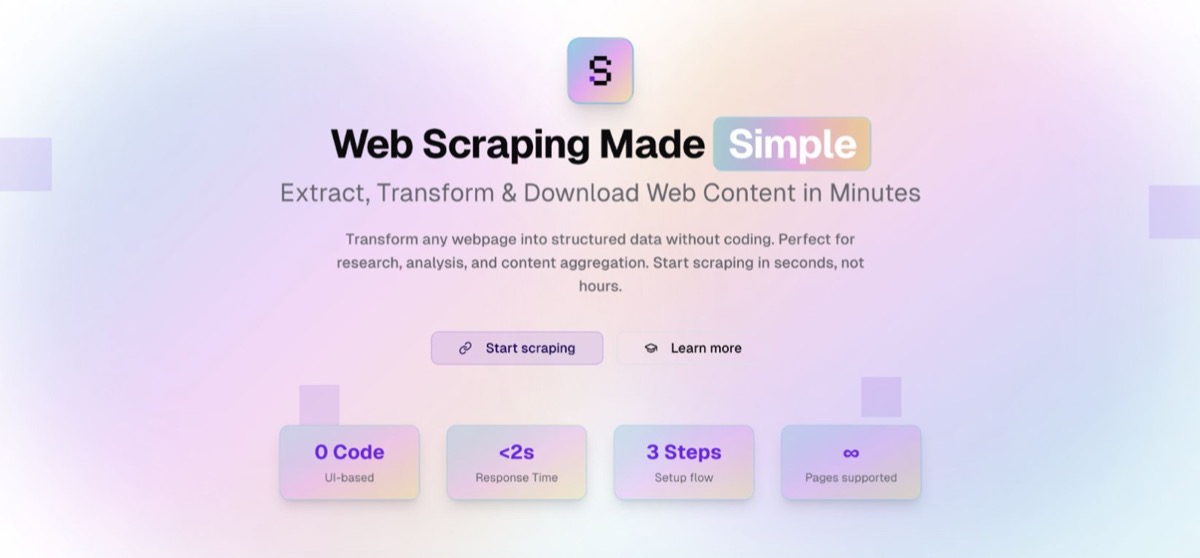
One tool that’s become increasingly useful in this space is ScrapeIntel – a no-code web scraping platform designed specifically for speed and simplicity. Users paste a URL, and ScrapeIntel’s AI-powered extraction engine pulls out the relevant content automatically, cleaning noise and delivering structured output in JSON, CSV, or HTML. For teams that need to move fast without spinning up infrastructure, the response time (under two seconds) and the three-step setup flow genuinely deliver on the promise of scraping without the engineering overhead.
ScrapeIntel runs on a flexible credit-based pricing model – starting at €20 for 2,200 scraping credits – which makes it approachable for individual researchers and small teams, while scaling toward custom enterprise arrangements for higher-volume workflows. For IT professionals who’ve been deferring web data projects because the setup cost felt too high, it removes the main excuse.
A Note on Responsible Scraping
Web scraping, like any powerful capability, comes with obligations. Responsible use means respecting robots.txt directives, avoiding scraping of personal or sensitive data without a lawful basis, and staying within the terms of service of the platforms you’re collecting from. Most legitimate use cases in IT – competitive intelligence, threat monitoring, research aggregation – don’t require anything that conflicts with these principles. The goal is public, structured, actionable data – not circumventing security controls or harvesting private information.
The Bottom Line
Web scraping has graduated from developer side project to legitimate IT strategy. Whether the use case is security intelligence, competitive analysis, AI training data, or vendor monitoring, the teams investing in automated data extraction are operating with better, faster information than those who aren’t.
The tools have caught up with the ambition. The question now isn’t whether web scraping belongs in your IT team’s toolkit – it’s which workflows you’re going to automate first.
Have a web data use case you’re exploring? Let us know in the comments.