

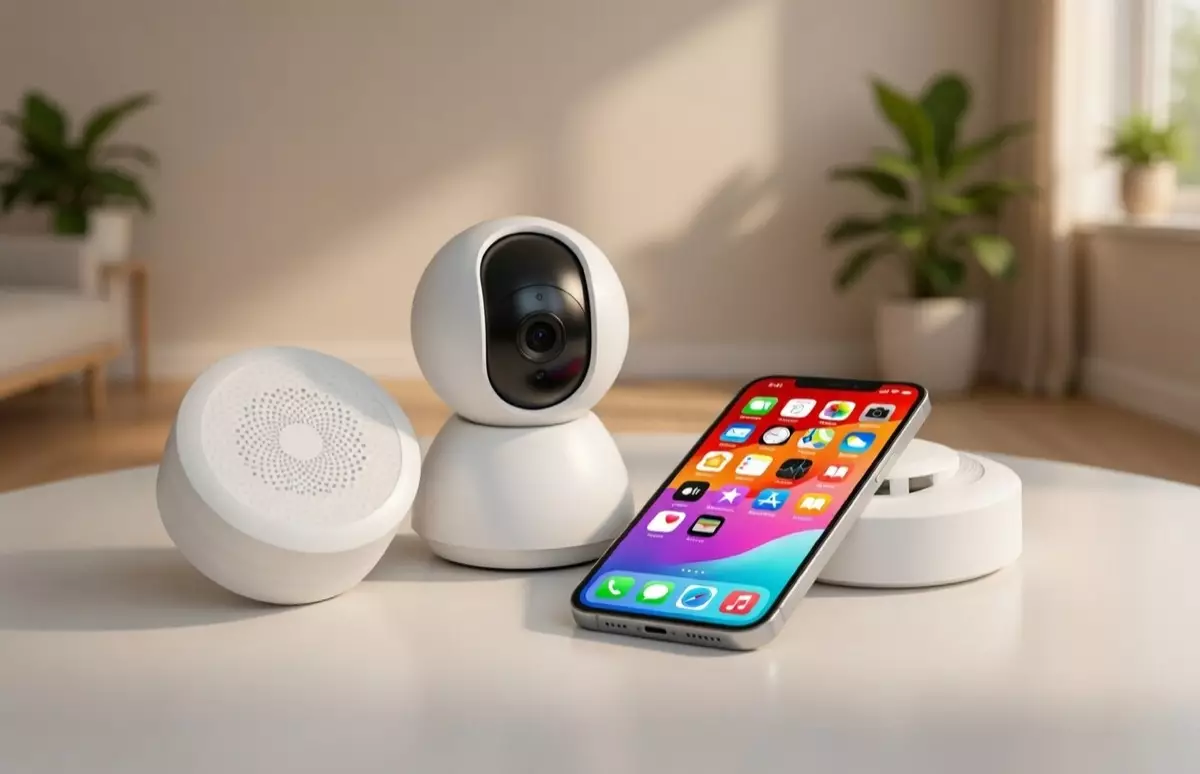
Most revolutions announce themselves. IoT didn’t. It just quietly showed up — in your thermostat, in the warehouse down the road, in the hospital monitoring a patient three floors up — and the developers at https://lampa.dev/ will tell you the same thing: it started changing how the world works before most people even noticed.
And the numbers tell their own story. The global IoT market sits at roughly $175 billion in 2026 and is projected to reach $344 billion by 2035. There are already 21.1 billion connected devices worldwide, a figure expected to nearly double to 39 billion by 2030. This isn’t a niche tech trend anymore. It’s infrastructure.
But what does that actually mean for businesses — and for the rest of us?
It’s Already Everywhere. You Just Don’t See It.
That’s kind of the point. The best IoT implementations are invisible. You don’t think about the sensor on a shipping container tracking its location across three time zones. You don’t see the Bluetooth beacon attached to a piece of industrial equipment telling a manager exactly where it is and how long it’s been sitting idle. You just see a business running more smoothly than it used to.
Take asset tracking as a practical example. Companies that manage physical inventory — equipment, vehicles, tools, containers — used to rely on spreadsheets, manual checks, and a lot of guesswork. Things got lost. Workflows stalled. Money disappeared into inefficiency.
IoT flipped that. Real-time location data, automated alerts, interactive maps showing exactly where every asset is right now — these aren’t futuristic concepts anymore. They’re operational tools that mid-sized companies are using today.
A good example of this in practice is a project delivered by the team at Lampa.dev for Keg Speed, a platform built to manage beer kegs across multiple locations. Each keg was equipped with a Bluetooth beacon. The mobile app, built in React Native, pulled live location data from those beacons and displayed it on an interactive map — showing not just where each keg was, but how long it had been at any given location. Users could manage company profiles, edit asset details, and get a full picture of their inventory in real time. The results were concrete: a 35% reduction in asset loss and a 40% increase in operational efficiency. That’s what happens when physical objects start talking to software.
The Business Case Is Getting Harder to Ignore
More than 80% of executives now report that IoT is crucial for their business. That’s not marketing language — it reflects a genuine shift in how companies think about operations.
The industries leading adoption right now tell an interesting story:
| Industry | Primary IoT Use Case |
| Manufacturing | Predictive maintenance, production monitoring |
| Logistics & Supply Chain | Asset tracking, route optimization |
| Healthcare | Remote patient monitoring, connected devices |
| Retail | Inventory management, customer behavior data |
| Smart Cities | Traffic management, energy optimization |
What these have in common is that they all involve physical assets generating data that used to be invisible. IoT makes that data visible — and actionable.
For smaller businesses, the entry point is often simpler than people expect. You don’t need a massive infrastructure overhaul to start. A targeted solution — tracking one category of assets, monitoring one part of a production line — can deliver measurable ROI within months.
The Consumer Side of the Story
On the consumer end, IoT has already changed daily life in ways people barely register. Smart home devices, wearables, connected cars — 57% of U.S. households are expected to own IoT devices, and that number keeps climbing.
But the more interesting consumer story isn’t about convenience. It’s about health. Connected devices monitoring heart conditions, diabetes management apps pulling data from glucose sensors, fitness trackers that do more than count steps — these products are genuinely improving health outcomes for real people. The line between tech and healthcare is getting blurry in the best possible way.
What’s Coming Next
A few trends worth watching as IoT continues to mature:
- AI + IoT = faster decisions. Connecting devices to AI systems means data doesn’t just get collected — it gets interpreted instantly. Anomalies get flagged before they become problems. Maintenance gets scheduled before something breaks. The AIoT market alone is estimated to reach $102 billion by 2026.
- Edge computing is reducing latency. Processing data closer to where it’s generated — rather than routing everything through the cloud — makes real-time responses actually real-time. This matters a lot for manufacturing, autonomous vehicles, and anything where a half-second delay has consequences.
- Security is still the weak link. 47% of organizations reported vulnerabilities in connected devices. The more devices you connect, the larger the attack surface. Any serious IoT implementation needs security baked in from the start, not added as an afterthought.
The Quiet Part Out Loud
IoT’s real power isn’t in any single device or use case. It’s in the pattern: physical world meets digital world, data becomes visible, decisions get better. That loop — sense, transmit, analyze, act — is running in the background of more industries than most people realize.
The businesses that get this right aren’t necessarily the biggest or the most tech-forward. They’re the ones who identified a specific operational problem, found a focused solution, and built from there. A company managing physical assets across multiple locations isn’t trying to reinvent logistics — they’re just making sure they know where their inventory is at any given moment. Simple problem. Real solution. Measurable outcome.
That’s how most IoT success stories actually start.