

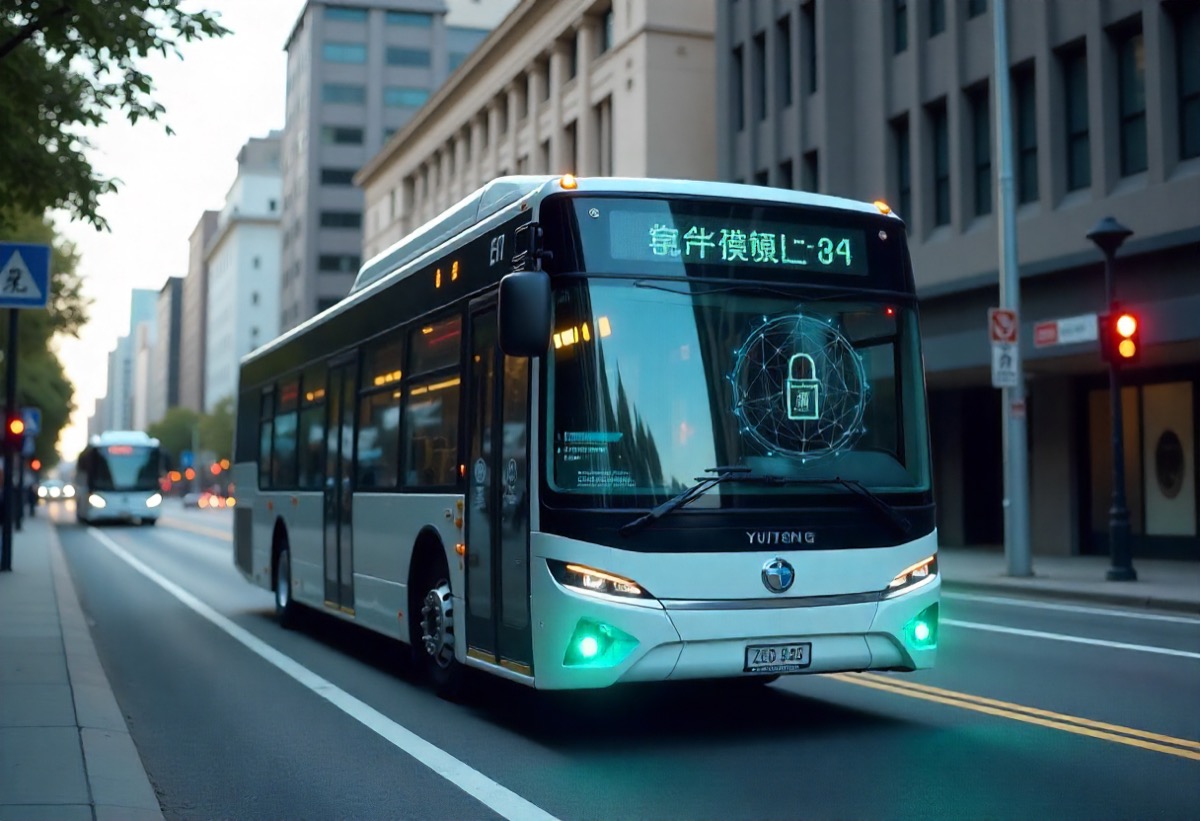
Australian roads show a rapid rise in Chinese-built buses. The surge fuels fresh cybersecurity concerns for public transport and government fleets. European tests raised alarms after a transport operator found remote access to control systems on a new Yutong model. Australian distributors state most updates occur at service centres and claim Australian buses lack remote control of braking or steering. The contrast between European test findings and Australian practice creates a policy gap for transport agencies, defence sites, and local councils. Experts warn that connected vehicle telemetry, firmware updates, and cloud links create attack surfaces for state-level actors and criminal groups. Transport Canberra received 90 Yutong E12 buses under a 2023 contract, with the first delivery in May 2024. Yutong Australia reports over 1,500 deliveries since 2012 and local data routing via AWS Sydney. Vendors such as BYD, King Long, Higer, Foton, Changan, Geely, Zhongtong, Ankai, and Sunlong now supply parts or whole vehicles to Australia. This mix of global suppliers complicates procurement checks and technical oversight. Readers will find concrete technical points, procurement options, and policy steps to reduce exposure across public transport networks.
Chinese buses on Australian roads: cybersecurity alarm
European tests exposed remote access to diagnostic and update systems on a new Yutong bus model. Australian distributors report a different model set and local update procedures. Security experts urge risk assessments for any connected vehicle used near critical sites.
- Key vendors active in Australia: Yutong, BYD, King Long, Higer, Foton.
- Local presence: dealers and workshops in all major cities, AWS data routing in Sydney.
- Fleet details: public contracts include Transport Canberra E12 series.
| Topic | Australian status | Security implication |
|---|---|---|
| Yutong deliveries | Over 1,500 vehicles since 2012, 90 E12 buses ordered by Transport Canberra | High fleet exposure across states |
| Battery-electric buses | Approximately 133 low-floor city buses, 12 charter/coaches battery-electric | Limited EV fleet reduces attack surface, growth likely |
| Remote update practice | Distributor policy prefers physical updates at service centres | Lower remote risk when policy followed |
Expert commentary points to a systemic problem with connected vehicles. Access to microphones, cameras, GPS, and firmware update paths creates multiple vectors. National security teams must assess fleets before awarding government contracts.
Technical findings and vendor access
Ruter published test results showing access to control systems on a new Yutong model. The report warned that remote updates and diagnostics could alter vehicle state, including engine shutdown. Yutong Australia states the tested model differs from local fleet models and claims no remote control of acceleration, steering, or braking in Australian units.
- Telemetry links route operational data to cloud endpoints in Sydney.
- Firmware updates occur through onboard terminals and authorised workshops.
- Vendor claims include compliance with Australian data protection laws.
| Vendor | Australian footprint | Reported feature |
|---|---|---|
| Yutong | Dealers and workshops nationwide, AWS Sydney data routing | Over-the-air capability present, local practice uses physical updates |
| BYD | Growing EV presence in fleets and private sales | Connected systems in cars and buses |
| King Long, Higer, Foton | Importers and parts suppliers | Varied telematics implementations |
Technical risk exists when manufacturers retain remote update privileges. For government use, strict vendor controls and on-premise gateways reduce exposure.
Policy responses and risks to public services
Former national cyberlead commentary shifts focus from origin to control. Access rights held by foreign domiciled firms create legal exposure when authorities request data or influence operations. Defence departments use layered security around bases, yet local councils manage most bus depots.
- Immediate action items for agencies: audit telematics, enforce physical update policies, restrict vendor remote access.
- Procurement steps: include data routing clauses, require local data centres, require third-party code audits.
- Operational rules: restrict sensitive staff vehicle use, isolate critical fleet segments from public networks.
| Policy area | Recommended controls | Expected outcome |
|---|---|---|
| Procurement | Mandatory security testing, data localisation clauses | Lower supply-chain uncertainty |
| Operational security | Service-centre updates, segmented networks | Reduced remote exploit surface |
| Regulation | Precontract national security assessments | Better risk visibility before deployment |
Academic and former law-enforcement experts highlight gaps in telemetry transparency. Clear disclosure on data collection, frequency, destinations, and access lists must appear in contracts. Agencies should consult independent security labs and require FedRAMP-style authorisations for cloud endpoints, similar to the Qualys FedRAMP authorization approach.
For strategic context, readers will find related discussions on cloud and AI security in the transport sector via analysis of AI hacking trends and the broader critical infrastructure cybersecurity debate.
Risk management case study: Canberra E12 rollout
Transport Canberra ordered 90 Yutong E12 buses, with the first units arriving in May 2024. The contract included local maintenance support and workshop access. Authorities applied operational limits on route types for initial units to monitor telemetry and software behaviour.
- Fleet staging: deploy new units to low-risk routes first.
- Monitoring: central logging to a local data centre for 90 days post-delivery.
- Audit: independent firmware inspection before fleet-wide deployment.
| Phase | Action | Metric |
|---|---|---|
| Acceptance | Firmware audit and baseline tests | Zero unauthorized access events |
| Pilot | Operate on low-density routes with local monitoring | Operational telemetry stability over 90 days |
| Scale | Expand routes after clearance | Audit reports clean for two successive months |
Canberra’s phased approach offers a model for other jurisdictions. Agencies achieve measurable risk reduction through staged deployment and local audit requirements.
Our opinion
Connected buses provide mobility benefits while introducing new cyber risk paths. Australia’s mixed fleet of Yutong, BYD, King Long, Higer, Foton, Changan, Geely, Zhongtong, Ankai, and Sunlong products requires a consistent national approach. Strong procurement clauses, mandatory technical audits, and local data controls will reduce exposure for government and public services.
- Require independent security validation before contract award.
- Enforce on-site update procedures for high-risk fleets.
- Mandate transparent data logs and localised cloud endpoints.
| Measure | Short term | Long term |
|---|---|---|
| Technical audits | Independent firmware and telematics review | Continuous supplier audit program |
| Data governance | Route telemetry to local data centres | Legal frameworks for cross-border access |
| Operational rules | Service-centre updates only for sensitive fleets | Certified secure update pipelines for all fleets |
Agencies and fleet operators should review best practices from national and international security programs. Resources on workforce training and information sharing help build resilience, for example material on the NIST cybersecurity training and the cybersecurity information sharing act. For individual steps to protect systems and staff, see guidance on how to protect your digital life. Final procurement decisions should pair technical controls with legal safeguards, and include independent verification before fleets enter sensitive environments.