

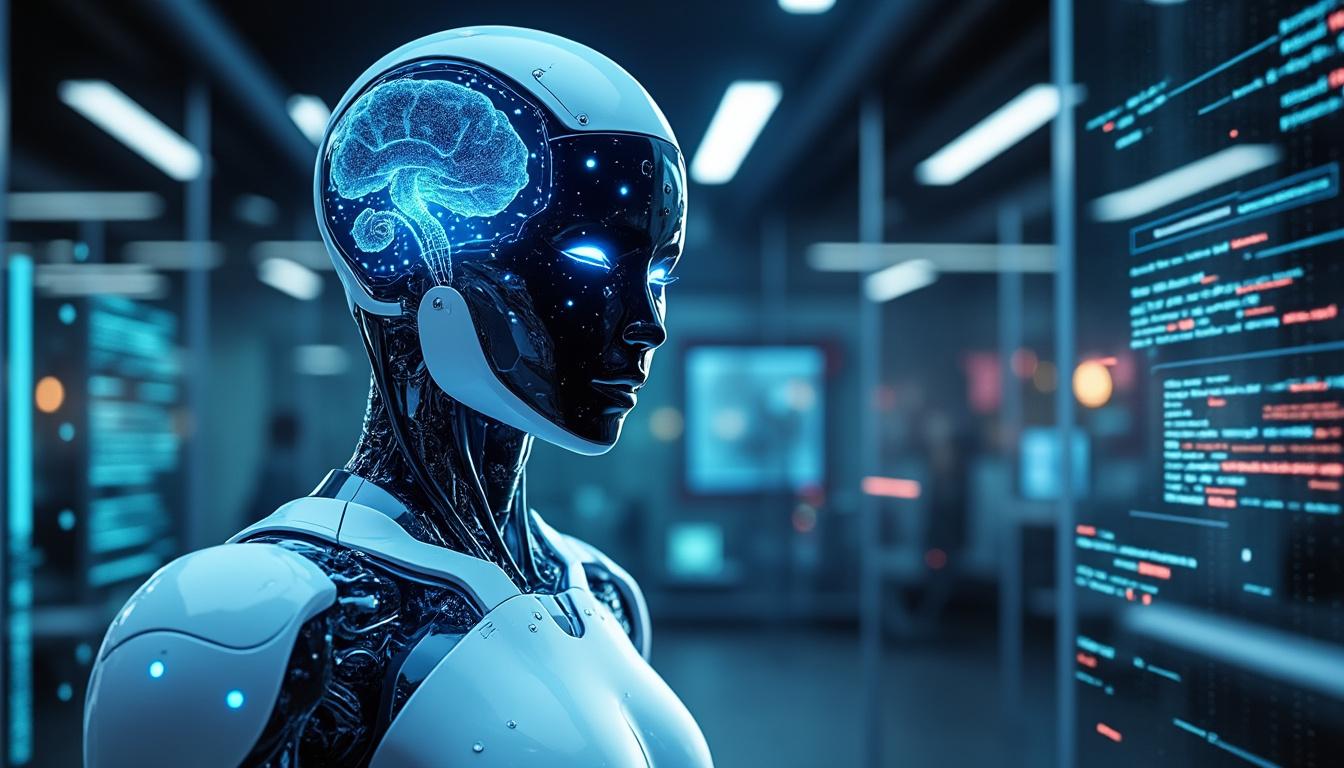
Anthropic’s latest ai model breaks barriers, raising concerns about public release as leaked files, cyber risk claims, and market anxiety push the debate over open access into sharper focus.
Anthropic’s Latest AI Model Breaks Barriers, Raising Concerns About Public Release
Anthropic’s latest ai model breaks barriers, raising concerns about public release at a moment when nerves across tech, finance, and national security already look frayed. A report tied to publicly exposed web assets pointed to an unreleased system called Claude Mythos, described in internal material as the company’s most capable model so far. The core issue is simple. When an AI system shows unusual skill at finding severe software flaws, wider access stops looking like a product launch and starts looking like a security event.
The leak itself deepened the alarm. Thousands of assets, including PDFs, images, and event material, appeared reachable on the open internet. For a company building tools meant to reduce risk, that kind of exposure sends the wrong message fast. Anthropic’s latest ai model breaks barriers, raising concerns about public release not only because of what the model might do, but because the path by which the public learned about it suggests weak operational discipline at a sensitive stage.
A practical example makes the concern easier to grasp. Picture a mid-size hospital network running old vendor software, a few missed patches, and one exposed admin panel. A conventional attacker might need days to map the environment. A strong AI system trained for cyber tasks might compress that work into minutes, ranking likely attack paths and highlighting the easiest route to a high-value breach. That is why Anthropic’s latest ai model breaks barriers, raising concerns about public release has moved beyond AI hype and into the territory of public safety.
Anthropic’s latest ai model breaks barriers, raising concerns about public release also lands during a period when trust in AI firms is under strain. Courts, regulators, and defense agencies have already argued over which models belong inside government workflows. One U.S. judge recently pushed back on an attempt to frame Anthropic as a supply-chain risk in federal work. That legal win matters, yet it does not erase a harder question. If a model is too effective at exposing weak points in major operating systems or core enterprise stacks, who should touch it first?
The answer shapes the next phase of AI governance. Open release rewards research, fast feedback, and commercial momentum. Restricted access protects networks, hospitals, utilities, and public infrastructure from misuse. Anthropic’s latest ai model breaks barriers, raising concerns about public release because the tradeoff no longer feels abstract. It feels immediate.
Why the Mythos leak changed the debate
Anthropic’s latest ai model breaks barriers, raising concerns about public release partly because the leak offered a rare look at internal framing. The model was not presented as a broader chatbot or a writing engine. The strongest claims centered on cyber capability. That distinction matters. Consumers tolerate surprise in creative AI. They do not tolerate surprise in systems linked to zero-day hunting and exploitation research.
There is also a wider pattern. Coverage around Anthropic leaked AI cybersecurity concerns and fresh reporting on AI-led attack paths against enterprise security tools shows how quickly defensive research bleeds into offensive value. The same model that helps a blue-team analyst patch a weakness before lunch might help a criminal crew sort targets before sunset.
Quick signals pushing this story forward include:
- Leaked web assets suggested incomplete security controls around sensitive material.
- Internal positioning tied the system to high-severity vulnerability discovery.
- Restricted rollout implied Anthropic saw public release as a live risk.
- Government interest raised the stakes beyond standard enterprise use.
The larger point is hard to ignore. Anthropic’s latest ai model breaks barriers, raising concerns about public release because barrier-breaking in cyber AI does not behave like barrier-breaking in photo editing or search. The downside arrives faster, and the blast radius is larger.
That tension leads straight to the market and policy impact, where fear rarely stays inside the lab.
Why Cybersecurity Experts and Markets Are Taking This Seriously
Anthropic’s latest ai model breaks barriers, raising concerns about public release at the same time global markets are reacting to war risk, energy shocks, and a fresh inflation threat. Oil traded above $110 per barrel, tanker transit costs through the Strait of Hormuz jumped sharply, and major indexes fell, with the S&P 500 down 1.74% and the Nasdaq down 2.38% in one rough session. Under those conditions, investors punish uncertainty. A high-end AI cyber model adds a new layer of uncertainty because digital disruption now sits beside geopolitical disruption.
The connection is tighter than it looks. Critical infrastructure depends on software. Shipping depends on software. Energy trading depends on software. Banks, hospitals, ports, telecom operators, and logistics firms all rely on sprawling systems held together by code written over many years. Anthropic’s latest ai model breaks barriers, raising concerns about public release because a tool able to identify severe vulnerabilities at scale raises the odds of pressure on those systems during a fragile macro period.
Consider a shipping insurer assessing Middle East routes. Before any missile strike or port closure, a cyber event against customs software, tanker scheduling, or payment rails could jam traffic and lift costs further. The U.S. Energy Information Administration estimated the disruption around Hormuz added about $14 per barrel in transport cost terms, which translates into tens of millions of dollars for a fully loaded tanker. In a stressed market, one exploited software flaw in a major logistics chain can magnify the price effect. That is why cyber capability now belongs in the same conversation as oil, bonds, and defense posture.
Anthropic’s latest ai model breaks barriers, raising concerns about public release for another reason. Retail investors have already turned more cautious, with net buying falling well below normal weekly levels. When confidence weakens, stories about hidden AI systems, cyber danger, and accidental exposure feed a broader sense that control is slipping. For readers tracking related market signals, this snapshot of Asian markets and U.S. futures helps frame why risk stories spread so quickly across sectors.
| Risk area | Why the model matters | Who feels the impact first |
|---|---|---|
| Enterprise security | Faster discovery of serious flaws in common software stacks | Large companies, MSPs, cloud operators |
| Critical infrastructure | Greater exposure for utilities, transport, and health systems | Governments, hospitals, ports, grid operators |
| Financial markets | Higher fear premium during existing geopolitical stress | Investors, insurers, pension funds |
| Public trust | Leaks weaken confidence in safety claims and rollout discipline | Consumers, regulators, enterprise buyers |
There is a business angle too. Firms already compare AI spending across devices, cloud stacks, and productivity systems, from laptops to data center rentals. Yet Anthropic’s latest ai model breaks barriers, raising concerns about public release pushes a tougher question onto board agendas. What is the point of adding more AI if security review lags behind deployment? The same pattern shows up across the industry, whether the topic is AI cloud expansion or warnings about AI and cyber defense alignment. Performance grabs headlines. Risk decides survival.
What companies should do before access widens
Anthropic’s latest ai model breaks barriers, raising concerns about public release, and that means security teams need a short list of actions now, not after a broad rollout. Patch management needs faster cycles. External attack surface monitoring needs tighter review. Vendor contracts need language covering AI-assisted security testing, data exposure, and incident response timing.
The strongest security leaders already act on three fronts. They assume stronger AI tools will reach both defenders and attackers. They shrink the time between detection and patching. They test whether old systems fail under modern probing. That mindset matters more than any product pitch.
The policy question then becomes unavoidable. If release is restricted, who gets access, under what rules, and with what oversight?
Who Should Get Access First, and What Responsible Release Looks Like
Anthropic’s latest ai model breaks barriers, raising concerns about public release because access policy will shape the harm curve. Full public rollout offers openness, outside scrutiny, and fast iteration. A closed model with carefully chosen partners offers containment, auditability, and a chance to study misuse before scale hits. In cyber work, the second route looks stronger.
A sensible release path starts with narrow circles. Trusted security researchers, critical infrastructure defenders, select cloud partners, and government teams with clear logging obligations should come first. Every session should be monitored. Every output related to exploit chains or severe vulnerability prioritization should trigger review. Anthropic’s latest ai model breaks barriers, raising concerns about public release because simple content filters will not solve a system-level risk. Governance has to sit in the workflow.
A fictional case helps. A regional utility called North Ridge Power joins an early-access program. Its security team uses the model to scan legacy billing software and substation management tools. The model flags an authentication flaw and an exposed integration path between internal dashboards and a vendor portal. Engineers patch both within 48 hours, then share sanitized findings with peers. In this version, the model improves defense. Now flip the same story. A wider public rollout gives a criminal marketplace enough access to build exploit templates against similar utility stacks. The defensive benefit survives, but the offensive spread moves faster. That asymmetry is the central release problem.
Anthropic’s latest ai model breaks barriers, raising concerns about public release also because AI firms face pressure from every side. Investors want revenue. Researchers want access. Governments want an edge. Civil society wants proof of restraint. The company that slows down risks criticism for secrecy. The company that moves too fast risks blame for the first major incident linked to misuse. That is why some observers now treat frontier cyber models less like consumer apps and more like dual-use infrastructure.
There are lessons elsewhere in AI. Teams debating autonomous agents, search products, creative tools, or AI support systems often focus on productivity first. Yet the same industry keeps relearning a basic truth. Deployment without control produces clean demos and messy aftermath. Related reading on autonomous agents in business and AI search behavior shows the pattern from a different angle. Systems spread fast. Safeguards tend to trail behind.
Anthropic’s latest ai model breaks barriers, raising concerns about public release should lead to a release framework with published red lines, external audits, staged access, and incident reporting tied to real deadlines. Readers should expect more than safety slogans. They should expect proof.
One final point deserves attention. Public trust will depend less on model benchmarks than on whether companies act like reliable custodians of dangerous capability. If this story raised questions for your team or your workplace, share it with someone handling security, compliance, or procurement. The next debate over AI access will not stay theoretical for long.
Why is Anthropic limiting release of its newest AI model?
The concern centers on cyber capability. Internal material linked the model to finding severe software vulnerabilities, which raises misuse risk if access expands too fast.
Does a leak about a model mean the model itself is unsafe?
Not by itself. The leak points to process and security control issues, while the model risk comes from what the system appears able to do in software and network environments.
Who should test a model like this first?
Restricted groups make the most sense. Critical infrastructure defenders, vetted researchers, major cloud security teams, and audited government programs offer stronger oversight than open public access.
What should businesses do right now?
Speed up patching, review internet-exposed assets, tighten vendor rules, and run tabletop exercises built around AI-assisted intrusion scenarios. Preparation matters more than waiting for a final policy decision.