

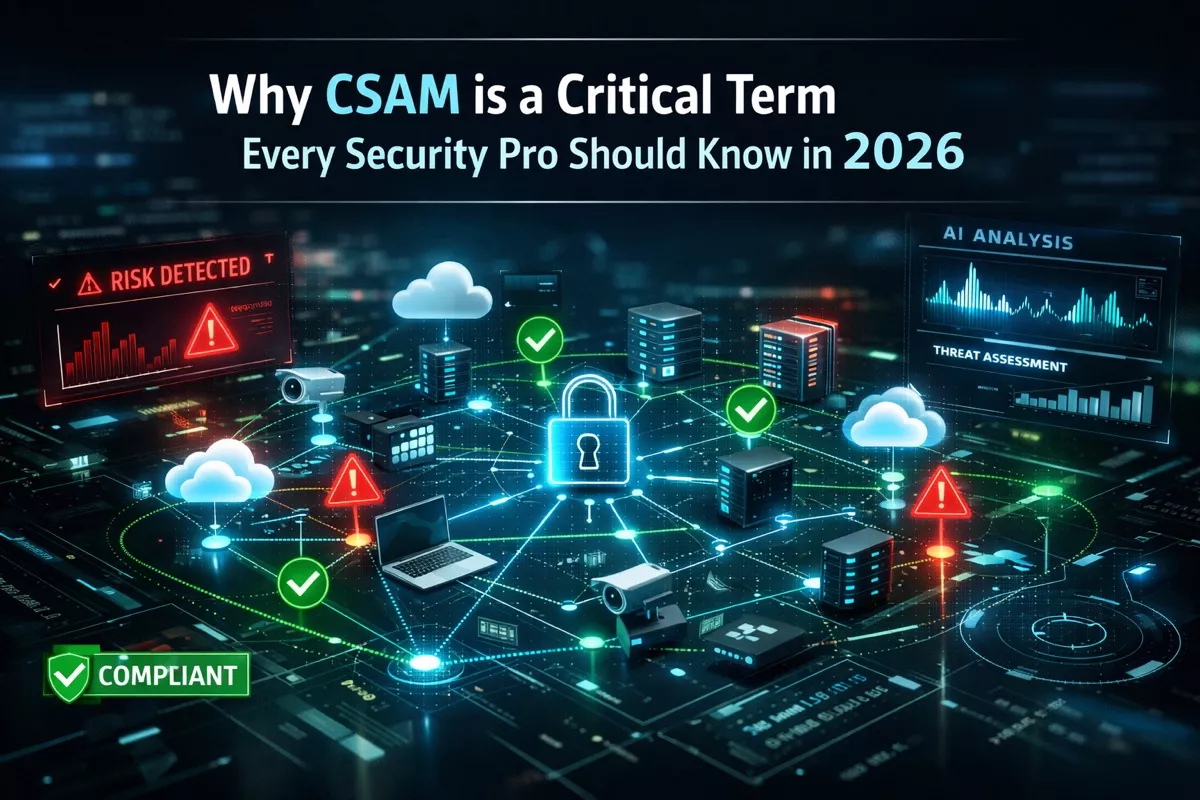
CSAM in cybersecurity means Cybersecurity Asset Management: the key to visibility, risk reduction, and defense in 2026. Why every security professional must master it now. (148 caractères)
In 2026, blind spots in your digital environment are no longer acceptable. With AI-driven attacks accelerating and attack surfaces exploding, CSAM in cybersecurity—Cybersecurity Asset Management—has become non-negotiable. This strategic practice gives security teams full visibility into every asset, exposing risks before attackers do. Here’s why every security pro needs to know CSAM inside out this year.
The rise of attack surface complexity
Organizations now juggle cloud, hybrid, IoT, shadow IT, and remote endpoints. Traditional IT asset management falls short—it tracks ownership and cost, but ignores security posture. CSAM in cybersecurity flips the script: it continuously discovers, classifies, monitors, and secures every digital asset with a risk-first lens.
Without CSAM, unknown or unmanaged assets become prime entry points for ransomware, supply chain exploits, and zero-days. In 2026, where 87% of experts flag AI vulnerabilities as the fastest-growing threat, complete asset visibility is the first line of defense.
How CSAM differs from classic ITAM
IT Asset Management asks: “What do we own?” CSAM asks: “What risks do these assets introduce, and how do we fix them fast?” It integrates vulnerability data, exposure analysis, misconfigurations, end-of-life software, and even external attack surface insights.
Tools like Qualys CSAM, Tanium, or SentinelOne deliver real-time inventories tied directly to remediation workflows. The result? Faster prioritization, reduced mean time to remediate (MTTR), and stronger compliance with frameworks like NIST, NIS2, or CMMC.
Key benefits driving adoption in 2026
| Benefit | Impact in 2026 | Real-world outcome |
|---|---|---|
| Full asset visibility | Eliminates blind spots | Discover shadow IT & rogue devices instantly |
| Risk-based prioritization | Focus on high-impact fixes | Reduce exploit window by weeks |
| Continuous monitoring | Real-time posture tracking | Detect misconfigs & EoL assets automatically |
| Integrated remediation | Automate patch & response | Lower breach probability significantly |
| Compliance & reporting | Prove due diligence | Easier audits & regulatory alignment |
Why 2026 makes CSAM essential for every security pro
- AI supercharges both attacks and defenses—CSAM helps separate signal from noise in massive datasets
- Geopolitical tensions and supply chain risks demand exhaustive asset control
- Boards and regulators now demand measurable risk reduction—CSAM provides the metrics
- Workforce shortages push teams toward automated, intelligent tools like CSAM platforms
Master CSAM to stay ahead of tomorrow’s threats
CSAM in cybersecurity isn’t just another acronym—it’s the foundation of resilient security programs in 2026. By shifting from reactive firefighting to proactive asset intelligence, pros can shrink attack surfaces, boost ROI on security investments, and build unbreakable trust. Ready to level up your cybersecurity game? Start mapping your assets with CSAM today.
What does CSAM stand for in cybersecurity?
CSAM stands for Cybersecurity Asset Management. It is the continuous process of discovering, inventorying, monitoring, and securing all digital assets with a strong focus on risk and exposure.
While ITAM focuses on ownership, cost, and lifecycle, CSAM prioritizes security risks, vulnerabilities, misconfigurations, and remediation to protect against cyber threats.
With exploding attack surfaces, AI-powered threats, and stricter regulations, CSAM provides the visibility and risk intelligence needed to prevent breaches and demonstrate due diligence.