

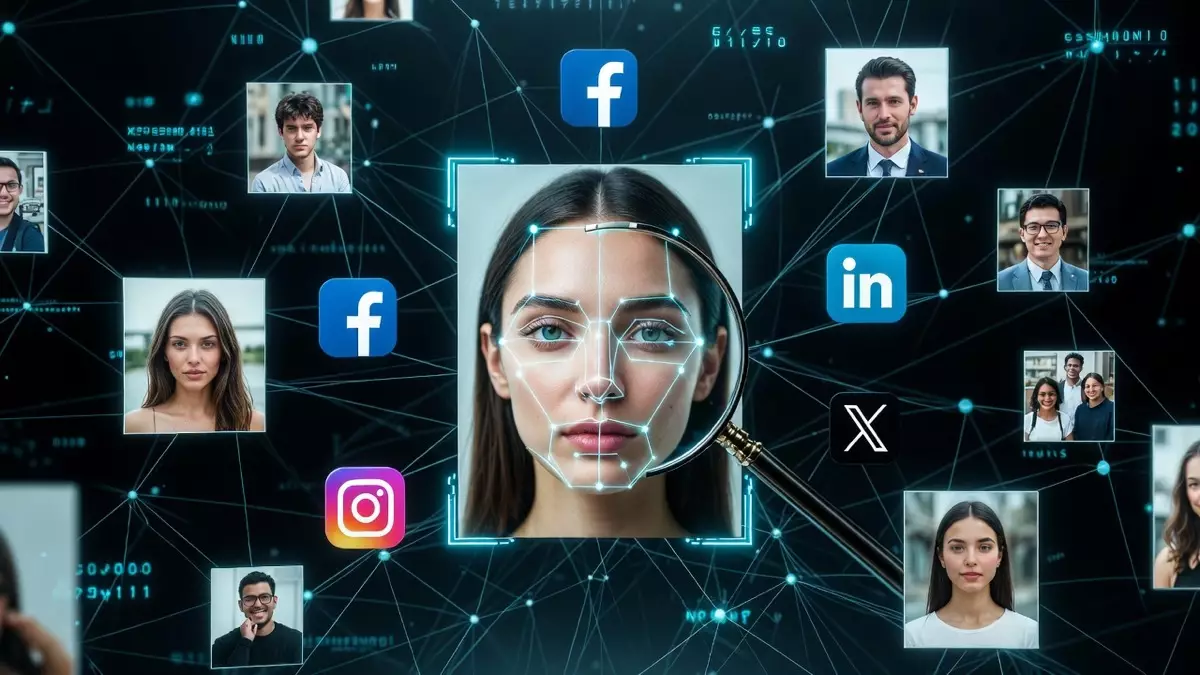
People often share images without consent, context, or credit. Sometimes, a picture shows a stranger, and curiosity or concern takes over. Other times, a face appears in a suspicious profile or a copied post.
Can a photo really lead you to a real person online? Yes, it does.
In this blog, we will discuss how it is possible to find people by photos. Also, we will enlighten you with the top tools that can do the job perfectly.
Let’s get started!
Is Finding People By Photo Really Possible?
Yes, it’s possible today. Anyone with a photo of a person can easily find them. In fact, they don’t need specialized tools for that. Let’s learn why it’s possible!
Facial Pattern Recognition Works
Face search tools study fixed facial points instead of surface details. Eyes, nose spacing, jaw shape, and forehead curves form a unique pattern. These systems compare that pattern with indexed images online. Lighting, background, and clothing matter less than people think. Because of this method, tools can match faces even when photos look different. This approach explains why results appear accurate across social platforms, blogs, and public pages without manual effort.
Public Image Indexing Makes It Easier
Millions of public images sit openly on websites, forums, and profiles. Search tools scan and catalog those images continuously. They do not touch private accounts or locked content. Because so many people share photos publicly, databases grow fast. A face posted once can appear on dozens of pages later. This public spread allows tools to connect one image with others showing the same person across unrelated sources.
Advanced Matching Reduces Errors
Older reverse image searches relied on colors and shapes. Face search uses trained models that learn facial differences over time. These systems reduce false matches by checking proportions instead of simple similarities. As a result, results feel more focused. You see fewer random images and more relevant matches. That improvement makes face search useful for identity checks, stolen image tracking, and personal safety concerns.
Cross-Platform Coverage Increases Reach
Modern tools do not depend on one search engine. They pull results from multiple sources at once. Social sites, news pages, blogs, and image hosts all feed into results. This broad coverage increases the chances of finding where a photo appears. One search can replace hours of manual scrolling. The wider the net, the stronger the outcome becomes for users.
Best Tools to Find Someone by a Photo
Reversely.ai
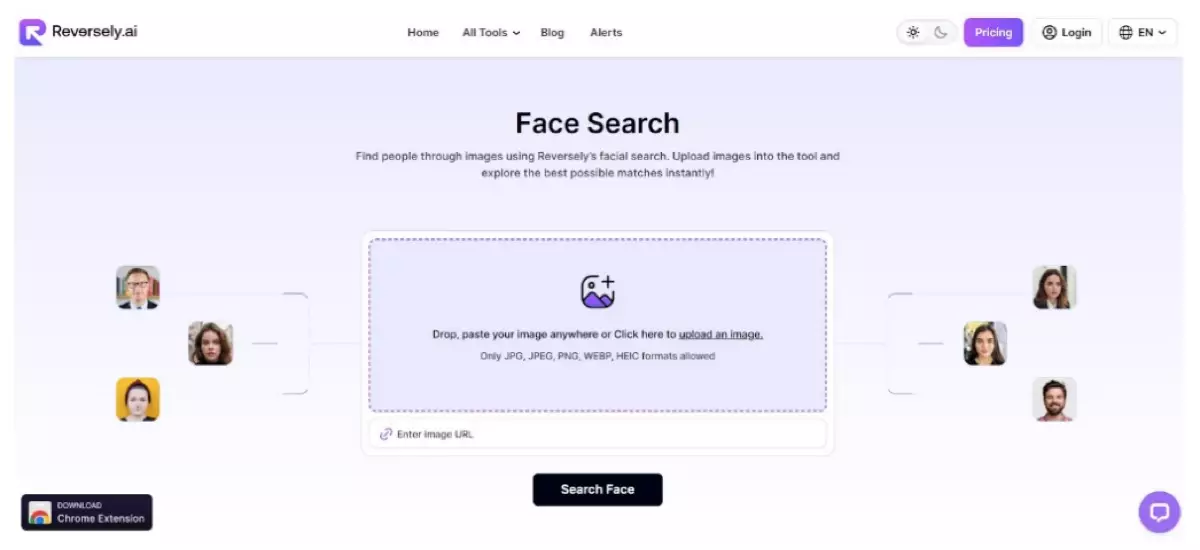
Reversly.ai offers an AI face search tool aimed at identity discovery. It scans uploaded photos against publicly available images. The system prioritizes facial structure instead of visual surroundings. That focus improves the match relevance for portraits, selfies, and profile images.
The interface feels straightforward for first-time users. Uploading an image takes seconds, and results load without complex steps. The tool highlights similar faces rather than random visuals. This helps users quickly judge whether a match holds value.
This tool helps users track photo misuse or repeated appearances. It works well for checking profile photos on unknown accounts. By showing where a face appears, the tool supports safer online decisions without technical confusion.
Benefits Of Using This Tool:
- Focused Face Matching: It scans facial features instead of relying on background or clothing cues.
- Fast Result Delivery: Search results appear quickly without complex processing delays.
- Clean Interface: The layout stays simple and avoids visual clutter during searches.
- Public Source Coverage: It searches openly accessible websites and indexed image sources.
- Minimal Input Requirement: A single clear photo usually works without extra adjustments.
ReverseImageSearch.org
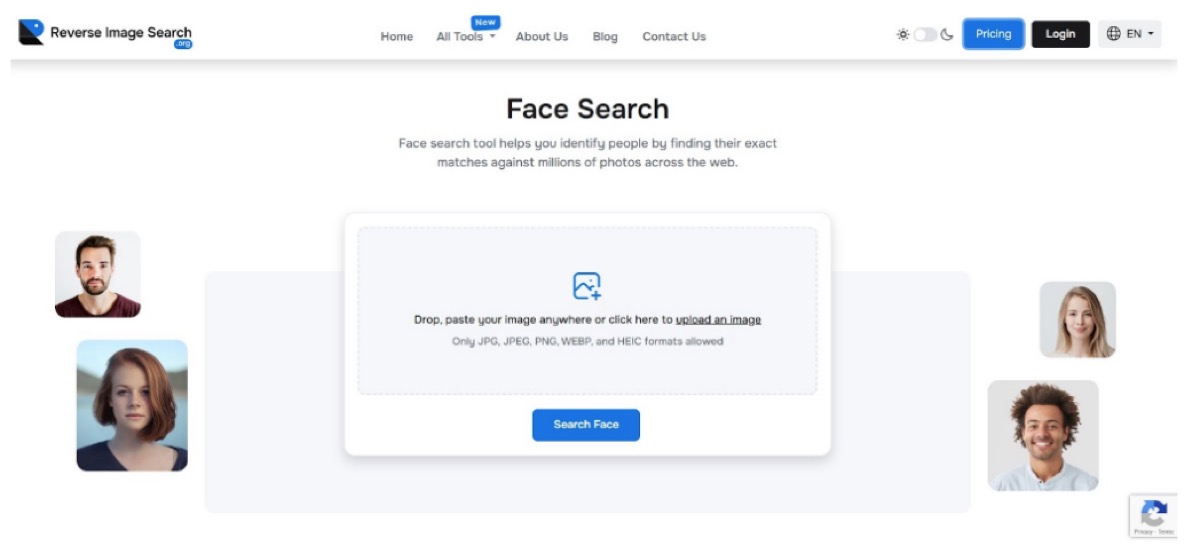
ReverseImageSearch.org offers face finder as a specialized option. The platform examines facial landmarks instead of full image layouts. Users upload a photo showing a visible face region. The tool then searches indexed public pages for facial resemblance. This method works even when the background changes.
The service handles different image sizes without heavy compression loss. That feature preserves facial details during analysis. It also avoids pulling unrelated objects into results. Focus stays on facial similarity alone.
Search results display image previews with source links. This setup helps users trace original uploads or reused profile photos. The experience feels straightforward and practical.
Benefits Of Using This Tool:
- Facial Landmark Detection: It identifies unique face structures instead of surface image details.
- Broad Public Indexing: The system scans multiple public platforms for potential matches.
- Image Quality Preservation: Uploaded photos keep their clarity during the search process.
- Source Visibility: Each result links directly to its original public page.
- Simple Upload Process: Users complete searches without technical setup steps.
SmallSEOTools.com
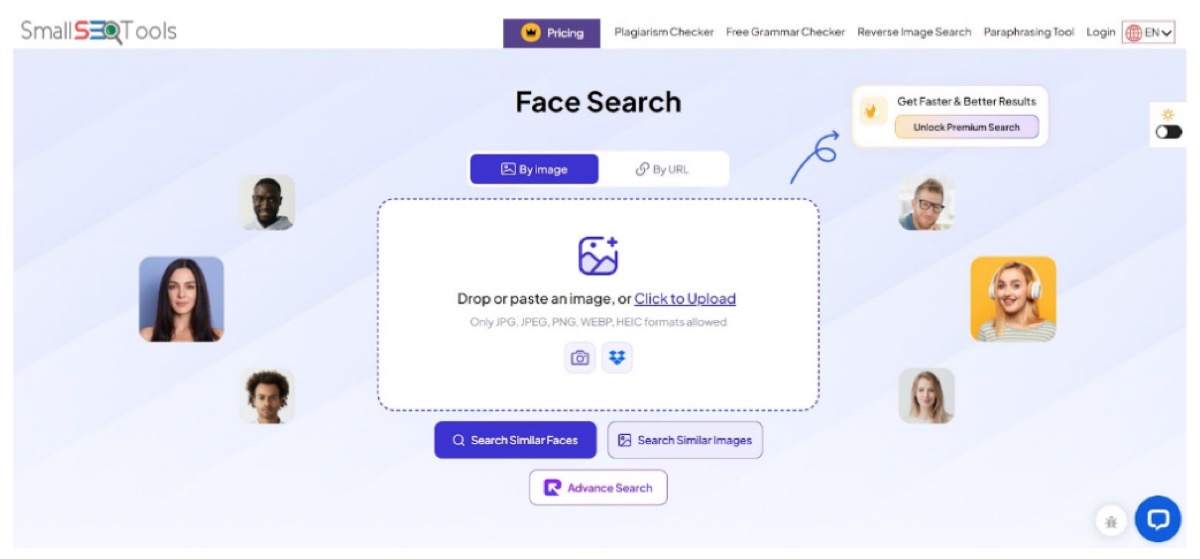
SmallSEOTools.com includes a free AI face search as part of its image analysis features. The face search option targets facial structure recognition across indexed sources. Users submit a photo that clearly shows facial features. The tool processes the image without adding filters or alterations.
The platform handles common formats smoothly. It also supports images taken from mobile devices. Facial recognition works even when photos include mild expressions or angle changes. That flexibility improves usability.
Results focus on visually similar faces rather than identical images only. This approach helps users locate profiles or reused photos across different platforms. The tool keeps the experience accessible for general users.
Benefits Of Using This Tool:
- Angle Tolerance: It detects facial similarity even with slight head position changes.
- Mobile Friendly Uploads: Photos taken from phones work without resizing issues.
- Clear Result Presentation: Matches appear with preview images for quick review.
- Public Data Focus: It limits results to openly available online sources.
- Beginner-Friendly Design: The interface suits users without a technical background.
DupliChecker.com
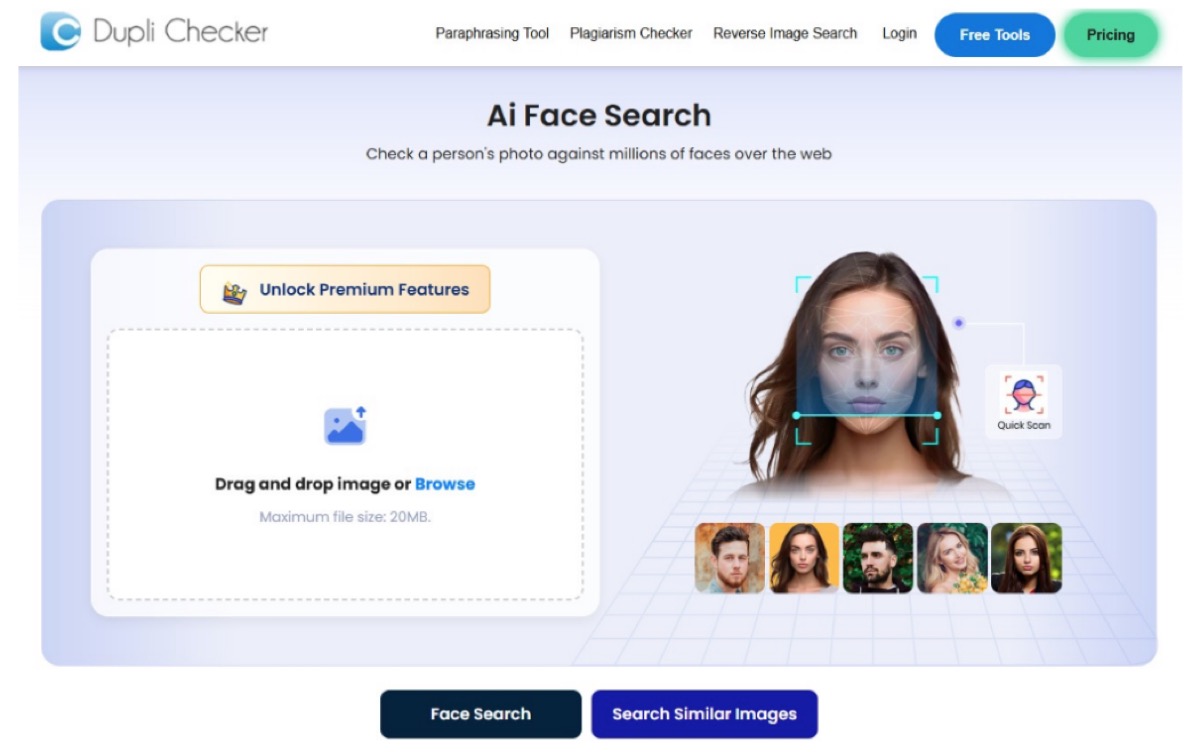
DupliChecker.com extends its verification focus into AI-powered face search. The tool scans uploaded photos to locate similar faces across public websites. It relies on facial structure recognition rather than surface visuals. This method improves reliability for identity-related searches.
Users appreciate the straightforward upload process. The platform handles face detection automatically. Results are displayed alongside their source links, allowing immediate verification. This setup helps users check authenticity without confusion.
DupliChecker.com suits users who check profile legitimacy or image reuse. Its face search feature complements its broader verification tools. The platform balances ease of use with dependable results, making it useful for everyday checks.
Benefits Of Using This Tool:
- Geometry-Based Matching: It relies on facial structure instead of image surroundings.
- Lighting Adaptability: The system handles uneven lighting with reasonable accuracy.
- Organized Results: Matches appear in a clean and readable format.
- Public Web Scanning: It searches only accessible online image sources.
- Easy Verification: Source links help confirm original image usage.
Conclusion
Finding people by photo no longer sounds unrealistic. Face search tools now work with surprising accuracy when images stay public and clear. Each platform uses facial structure instead of surface details. That shift improves relevance and reduces confusion. Still, results depend on image quality and online presence. These tools help locate sources, reused photos, or public profiles. They do not promise personal data access. Used responsibly, face search supports verification, research, and identity confirmation without crossing ethical lines.