


MacBook neo benchmarks reveal surprising database task performance, and the latest results point to an unusual strength: workloads tied to indexing, query bursts, and local data handling seem faster than many readers expected from a thin consumer laptop.
MacBook Neo Benchmarks Reveal Surprising Database Task Performance in Early Tests
MacBook neo benchmarks reveal surprising database task performance because the gap between headline CPU scores and lived developer experience is often wider than benchmark charts suggest. A laptop might post solid multicore numbers yet still feel sluggish once a local PostgreSQL instance starts ingesting logs, rebuilding indexes, and serving test queries at the same time. In the MacBook neo results circulating across early reports, the surprise comes from consistency under mixed database workloads, not from one flashy synthetic result.
MacBook neo benchmarks reveal surprising database task performance in situations many web and mobile developers know well. Picture a small product team preparing a release. One machine runs a local stack with Docker containers, seeded test data, an API server, and a browser full of tabs. This is where laptops often slow down. Yet the Neo appears to hold latency down during repetitive operations such as schema migrations, local search queries, and batch inserts. For readers tracking Apple laptops, this changes the discussion from raw chip branding to task-level efficiency.
Why does this matter? Database work punishes weak memory behavior and poor thermal control. Short spikes are easy. Sustained pressure is harder. A machine that stays responsive while developers run local services saves time every day, even if the benchmark lead looks modest on paper. That is why comparisons with broader Apple laptop coverage, such as this M5 MacBook Air review, help frame the Neo story. Thin laptops no longer compete only on battery life and display quality. They compete on whether they keep local development smooth.
The early discussion also fits a larger pattern seen across modern tooling. Teams care less about a single export test and more about workflow friction. A laptop that finishes an index build faster but freezes during browser-based admin work still fails the test. The stronger narrative around the Neo is balance. Reports suggest efficient storage access, stable sustained performance, and fewer slowdowns during multitasking. That combination explains the attention around the MacBook Neo launch coverage.
| Workload | What reviewers watch | Why it matters |
|---|---|---|
| Bulk inserts | Time to import sample data | Shows storage and memory behavior |
| Index rebuilds | Completion speed under heat | Reveals sustained throughput |
| Concurrent queries | Latency during multitasking | Reflects daily developer use |
| Containerized stacks | Responsiveness with Docker active | Tests practical coding workflows |
The key point is simple. MacBook neo benchmarks reveal surprising database task performance because practical speed looks stronger than many expected from its class.
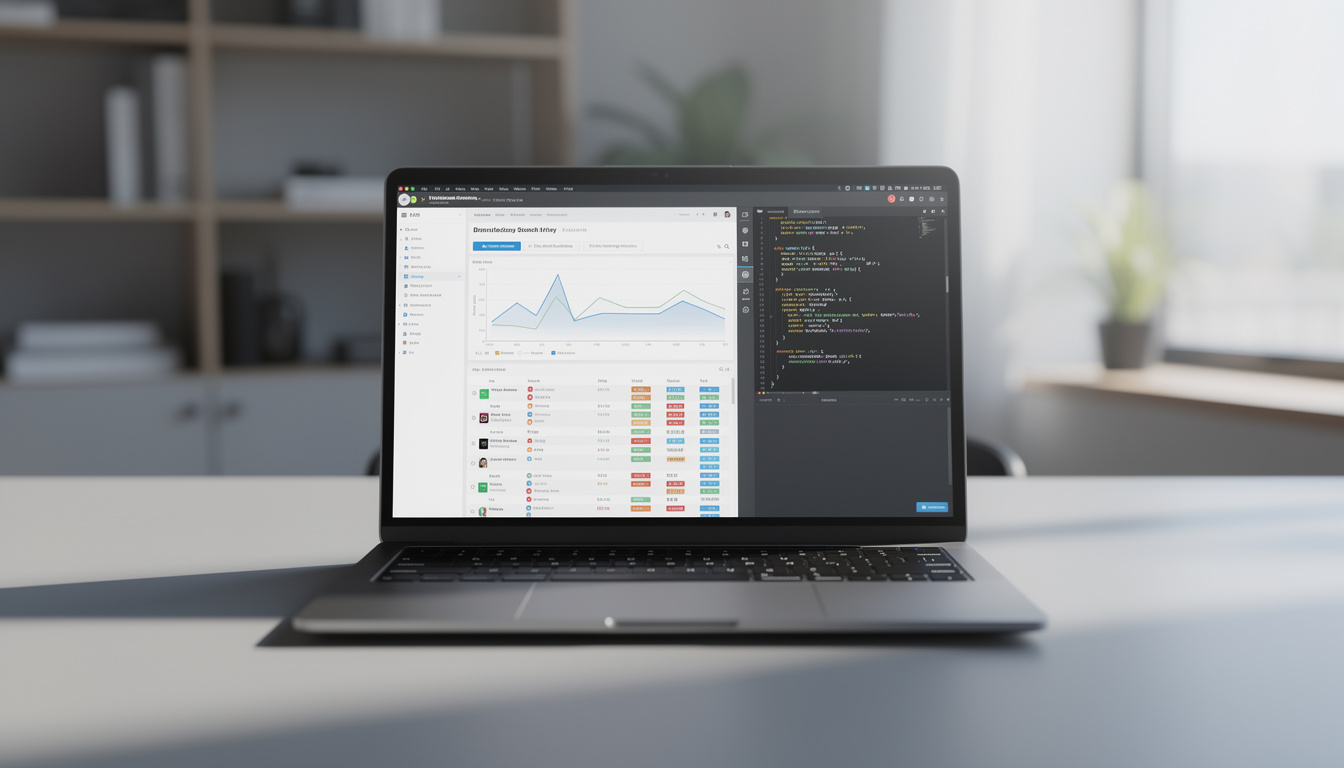
Those first numbers raise a harder question. What inside the machine helps database-heavy tasks feel quicker than expected?
Why MacBook Neo Database Results Stand Out More Than Standard CPU Scores
MacBook neo benchmarks reveal surprising database task performance partly because database jobs expose parts of a system many buyers ignore. CPU speed matters, yet local data work depends on a stack of smaller wins. Fast unified memory behavior helps cache hot datasets. Solid SSD throughput reduces pain during import and export cycles. Better thermal stability keeps repeated queries from slowing after ten minutes. Each factor looks minor alone. Together, they shape what developers notice during long sessions.
Consider a fictional app team building a booking platform. During a normal afternoon, one engineer runs migrations, seeds tens of thousands of rows, checks API responses, and opens analytics snapshots. Another tests local fraud rules and IP checks, the sort of pipeline discussed in broader security tooling coverage like IP fraud detection analysis. This workflow is not glamorous. Still, it is where laptops earn trust. If the Neo handles these overlapping tasks without major lag, buyers get a clearer reason to care than any synthetic benchmark headline.
MacBook neo benchmarks reveal surprising database task performance for another reason. Apple silicon systems often shine when software leans on efficient memory movement and low-latency storage access. Databases do both. A local MySQL or PostgreSQL environment constantly reads, writes, caches, sorts, and flushes data. Once thermals stay under control, those operations feel smooth. Reviewers who expected the machine to land closer to mainstream ultraportables are now debating whether the Neo sits in a stronger tier for developer productivity than its name first implied.
There is also a practical angle for app teams. Strong local database performance reduces dependence on remote dev environments for every test cycle. Remote environments still matter, especially for shared staging data, but local speed changes habits. Developers iterate faster when they can reset a dataset, rerun a migration, and validate output in minutes. That is why the subject overlaps with interest in mobile app performance tools. Speed at the laptop level shapes the entire debugging loop.
Signals buyers should watch before trusting the hype
Not every benchmark tells the same story. Buyers should focus on a few signals that map to daily work.
- Query latency under multitasking, because idle tests hide bottlenecks.
- Import and export times, because many teams move sample datasets often.
- Thermal consistency, because repeated runs expose whether speed falls off.
- Container performance, because modern web stacks rarely run one app alone.
MacBook neo benchmarks reveal surprising database task performance when those checks stay strong across repeated sessions, not one clean run. That distinction matters more than marketing language. The stronger the repeatability, the more credible the result.
The next issue is where this matters outside the benchmark lab. Raw speed is useful. Workflow gains matter more.
What MacBook Neo Benchmark Results Mean for Developers, Analysts, and Everyday Buyers
MacBook neo benchmarks reveal surprising database task performance, and the practical impact reaches beyond software engineers with complex local stacks. Data analysts working on CSV-heavy pipelines, content teams querying local CMS copies, and students learning backend development all benefit when a machine handles local databases without strain. A responsive laptop shortens the feedback loop. That effect is easier to feel than to chart.
Take a small agency building retail apps. One editor reviews product feeds while a developer validates inventory sync logic against a local database dump. On weaker machines, browser tabs, terminal sessions, and background sync tools start competing for resources. The result is slow search, delayed query returns, and fan noise. If the Neo reduces those weak points, the benefit shows up as steadier work and fewer interruptions. This is the same principle behind the blunt argument in performance-first product thinking. People remember responsiveness.
MacBook neo benchmarks reveal surprising database task performance in a market where buyers often separate consumer laptops from technical workstations too rigidly. That old line keeps fading. Many buyers no longer need a massive machine to test APIs, run local databases, edit media, and keep productivity apps open. If the Neo handles moderate to heavy local data tasks well, it lands in a sweet spot. It becomes a machine for people who build, test, and analyze, yet still want portability.
There is still a limit. Teams handling giant production-like datasets, complex virtualization, or nonstop analytics jobs will still lean toward higher-tier hardware. No benchmark should erase workload size. Yet early Neo database numbers suggest a smarter question for buyers: How much machine is enough for the work done every day? For many readers, the answer looks different after these tests.
The same shift affects buying advice in 2026. People compare laptops through lived use, not lab mythology. They want a machine that opens a local stack fast, runs a seeded database cleanly, and does not lose pace halfway through a work block. MacBook neo benchmarks reveal surprising database task performance because they challenge a familiar assumption, thin and light means compromise. In this case, the evidence points to something more useful, a portable system with stronger local data behavior than expected. Share the results with someone choosing a new work laptop, or compare notes in the comments after your own tests.
Are these benchmark results enough to recommend the MacBook Neo for developers?
They are a strong signal, though daily workload fit still matters. Developers running local databases, containers, and browser-based tools should compare sustained performance, memory options, and storage capacity before buying.
Why do database tasks reveal more than standard CPU benchmarks?
Database workloads stress memory, storage, and thermals at the same time. That mix exposes how a laptop behaves during real work instead of short benchmark bursts.
Is the MacBook Neo suitable for students learning backend development?
Yes, especially for local SQL practice, lightweight APIs, and test datasets. Larger enterprise-style labs with heavy virtualization still favor higher-end hardware.
Do local database gains matter if a team uses cloud infrastructure?
Yes, because local speed improves testing, debugging, and migration checks before code reaches shared environments. Faster local loops save time across the week.