

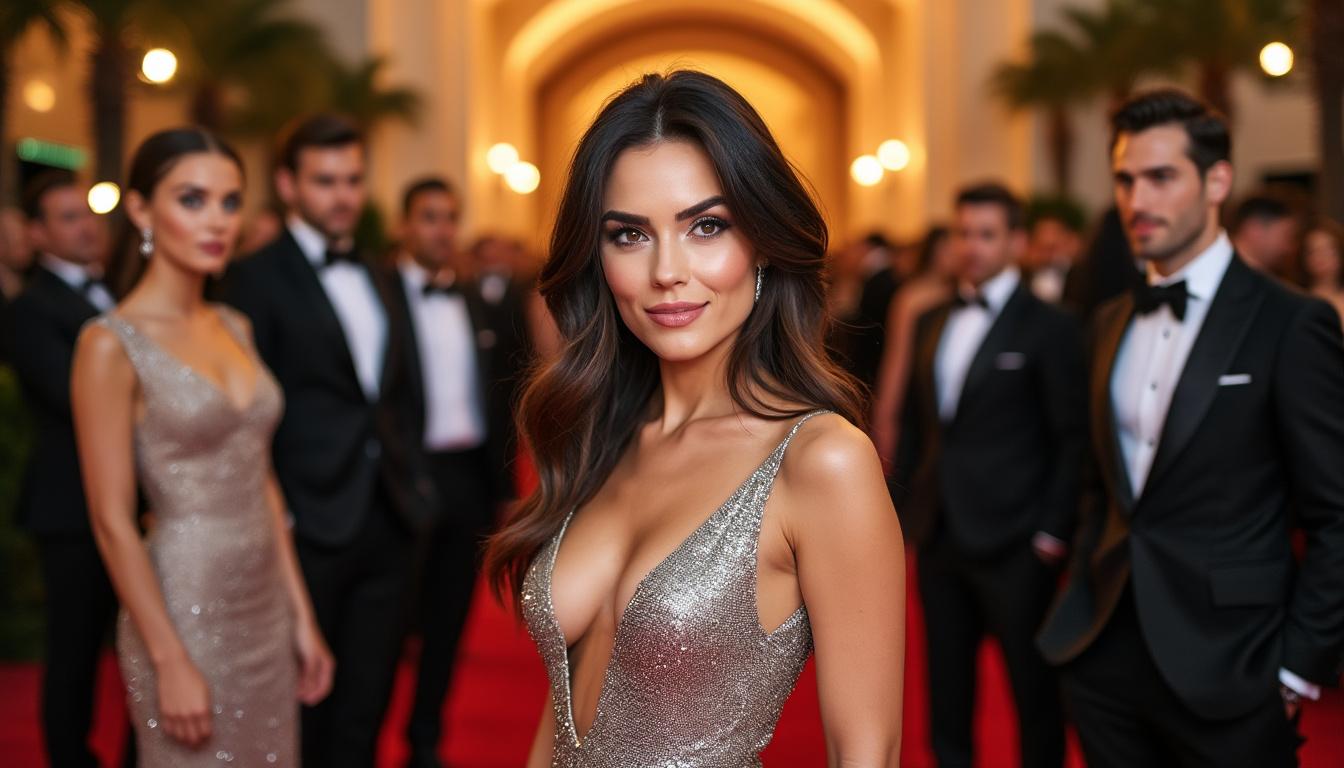
Hollywood thought AI would stay in the background, helping with de-aging, virtual sets, and invisible effects. Instead, an AI-generated actress named Tilly Norwood has stepped into the spotlight and turned into a headline sensation. She exists only as data and pixels, yet she triggers the kind of reactions usually reserved for the most polarizing human celebrity. Supporters see a new form of digital performance. Critics see a direct threat to jobs, identity, and the future of entertainment.
The story behind this AI-generated star looks less like a tech demo and more like a pressure test for the entire industry. A small studio uses current technology and thousands of iterations to build an artificial performer engineered for global reach. Unions push back and demand strict protection of name, image, and likeness. Producers debate whether this form of innovation is a creative ally or a cost-cutting weapon. In the middle of that conflict sit audiences who must decide what Hollywood should look like when a digital actor earns top billing.
Hollywood AI-generated star Tilly Norwood and her origin story
The character known as Tilly Norwood did not start as a random AI avatar. Her creator, Dutch actor and producer Eline van der Velden, set out to design an AI-generated sensation that felt like a plausible Hollywood star. The process required close to 2,000 model iterations before reaching a look and performance style that seemed consistent on screen. Each version pushed the digital face, expressions, and emotional range a bit further until the team believed the character could lead a commercial or short narrative.
From the beginning, the goal was not a tech prototype but an entertainment-ready digital celebrity. Van der Velden positioned Tilly as an international figure, built to perform across languages and formats. The project reflects a broader trend where AI-driven creativity touches more sectors, from genome sequencing evolution to AI-driven marketing and automation. Hollywood now faces the same question as finance and healthcare: how much performance work should be done by algorithms.
- Tilly Norwood emerged from a dedicated AI talent division inside a production studio.
- The team refined facial structure, lighting, and expression across thousands of tests.
- Early acting attempts looked stiff and unconvincing, so training continued.
- The goal was a stable, reusable digital performer for repeated media projects.
One clear insight from this origin story is that the first Hollywood-grade AI-generated actor required more human labor and iteration than many outside the industry expect.
From rough AI tests to a believable entertainment presence
Early footage of Tilly showed the usual problems associated with synthetic faces. Emotional cues lagged behind the voice. Micro-expressions did not match the intensity of the scene. The performance felt closer to a video game NPC than a Hollywood lead. Van der Velden’s team treated those failures as part of a training cycle and pushed through multiple generations of expressions and facial rigs.
The process looked similar to test automation in software, where rapid iteration exposes edge cases and defects. Studios interested in this method study progresses in areas such as AI test automation, since robust pipelines are essential when digital performers need to behave consistently across dozens of scenes and lighting setups. Each acting test for Tilly served as another dataset to correct, refine, and benchmark.
- Expression libraries were expanded to cover subtle reactions, not only broad emotions.
- Lighting tests ensured the digital face held up in close-ups and fast cuts.
- Voice and lip sync alignment improved to avoid the “uncanny” effect.
- Internal quality standards stayed aligned with human-level acting benchmarks.
The evolution from awkward prototype to credible on-screen presence signals how fast AI-generated talent can mature once a focused production pipeline exists.
AI-generated sensation meets Hollywood backlash and fear
Once the AI-generated star reached social feeds and trade press, Hollywood’s reaction was immediate. Established actors, including names such as Whoopi Goldberg and Emily Blunt, voiced their anger and concern. Their public comments framed Tilly less as a technical curiosity and more as a symbol of job displacement. For many performers who endured recent strikes over streaming residuals and AI clauses, a synthetic “actress” felt like the logical next threat.
Sean Astin, as president of SAG-AFTRA, addressed the topic directly. His position draws a line between AI characters and human performers. He describes Tilly more as an avatar or character than an actress, and stresses that such a construct does not replace real people. The union’s focus turns instead to AI systems that harvest facial data, voices, and performance styles from the internet without consent, a topic explored in broader analyses such as AI risk insights.
- Actors worry about AI-generated doubles taking roles without proper agreements.
- Unions demand strong contract language on name, image, and likeness usage.
- Studios face public relations risk if AI appears to undermine working artists.
- Audiences watch how far producers push synthetic celebrities into mainstream roles.
The backlash confirms that AI in entertainment has become an ethical and economic crisis point, not a background technical issue.
Union protections, legal pressure, and data ethics
AI-generated entertainment content relies on massive datasets. Faces, voices, movement references, and performance clips feed into training pipelines. Unions and privacy advocates argue that uncontrolled scraping of public media violates the rights of both celebrities and ordinary citizens. The legal debate now focuses on whether rights holders should receive compensation whenever training data leads to monetized output, such as a synthetic ad or a digital actor.
This aligns with broader concerns around cybersecurity and data misuse. Analysts following AI trends point to cases described in reports such as AI hacking and the cybersecurity arms race and expert views on data breaches. If training data is harvested in opaque ways, studios risk legal exposure and reputational damage when AI-generated faces appear on screen.
- Consent-based datasets reduce legal friction but cost more to assemble.
- Watermarking and traceability tools help prove model training sources.
- Contract clauses now cover synthetic replicas and future AI use cases.
- Regulators monitor AI-generated content more closely across digital media.
The Tilly Norwood case reinforces the idea that AI entertainment must run on secure, consent-driven data foundations to stay credible.
Technology, budgets, and the business logic behind an AI-generated celebrity
Behind the noise over ethics and artistry sits a plain financial motive. Film, streaming, and advertising projects carry heavy production costs. AI-generated performers look attractive to executives who manage shrinking budgets and tight timelines. An AI star never asks for a day off, does not age, and appears in global campaigns with translated audio on demand. For brands and streaming platforms, this looks efficient.
Executives such as Kevin Reilly, now leading the AI video startup Kartel.ai, describe AI as a friend to business rather than an existential threat. From their perspective, generative technology offers creative flexibility that traditional shoots struggle to match. A small team can ideate, test, and produce multiple concepts in days, without travel or long casting cycles. You see comparable enthusiasm in other industries, highlighted in work on AI insights and opportunities and AI insights for fintech dashboards.
- AI-generated actors align with remote-first production pipelines and digital workflows.
- Location-free shoots reduce logistics, insurance, and travel expenses.
- Brands reuse the same AI celebrity across platforms with small incremental costs.
- Studio leaders frame AI as a way to survive in a saturated entertainment market.
The business case for AI actors explains why Hollywood attention will not fade, even when public criticism grows louder.
From virtual coffee shops to global campaigns in days
Kartel.ai’s demonstration of a fictional “Cup of Jo” coffee shop illustrates how AI-generated performance shifts timelines. A human presenter records a short reference video. The team gathers public photos of the host, feeds them into an AI pipeline, then generates multiple virtual versions of that person across different locations. The result is a polished ad with international settings produced in a fraction of traditional time.
This mirrors the kind of efficiency leaps seen in AI-assisted marketing, documented in pieces like marketing AI trends. Instead of weeks of scouting and scheduling, a creative director updates prompts and renders new versions overnight. Tilly Norwood fits directly into this mindset. A digital celebrity is an asset that slots into dozens of campaigns without the overhead associated with a human star.
- AI doubles replace location shoots with high-quality virtual environments.
- Reference footage from a single day fuels months of future campaigns.
- Brands adapt AI spokespeople to local languages while retaining visual identity.
- Testing of alternate stories and taglines becomes cheaper and faster.
The Cup of Jo example hints at why an AI-generated star appeals so strongly to advertisers who need constant fresh content.
How an AI-generated star reshapes audience expectations and media culture
An entertainment culture that embraces a digital celebrity like Tilly must rethink the nature of fame. Traditional Hollywood stars build reputations through years of performances, interviews, and public appearances. Their image changes with age and life events. An AI-generated actress, by design, stays frozen at a chosen aesthetic point. Her team tunes emotional responses and public persona through data, not lived experience.
Younger audiences already live in a hybrid space where influencers, VTubers, and AI characters share the same feeds. Music fans follow virtual idols. Gamers watch synthetic streamers that respond to chat in real time. The rise of an AI-generated film star sits on top of this broader cultural shift. Analysts who track content trends, like those writing on how content creators embrace AI while keeping human elements, often warn that emotional authenticity still matters even when the avatar is digital.
- AI celebrities operate 24/7 across platforms, unconstrained by human schedules.
- Fan engagement can be driven by scripted responses adjusted through analytics.
- Parasocial relationships might deepen even when the “person” is synthetic.
- Human actors may differentiate themselves through live, unpredictable experiences.
The arrival of a Hollywood-scale AI-generated sensation accelerates the blending of virtual and human celebrity cultures in daily media consumption.
Emotional realism versus algorithmic perfection
One unresolved question is whether audiences will accept a digital actor as emotionally equal to a human one. Even with advanced training, AI performances often feel too polished or too controlled. Human actors bring mistakes, hesitations, and unpredictable chemistry with their co-stars. These flaws contribute to memorable scenes. Some directors argue that no dataset can reproduce the improvisational chaos of an experienced cast.
Others argue that AI will evolve until the difference becomes negligible for most viewers, especially on smaller screens. Visual quality from tools similar to those described in AI art and image generation platforms already rivals traditional production for many use cases. As models gain better emotional timing and voice control, the line between synthetic and human performance will keep shrinking.
- Human actors emphasize subtle eye movements, pauses, and physical tension.
- AI models replicate those cues based on pattern recognition, not internal emotion.
- Some viewers value authenticity over perfection in drama or comedy.
- Others accept synthetic stars in genres where style and spectacle dominate.
The tension between emotional realism and algorithmic precision will shape how far Hollywood pushes AI-generated talent into prestige projects.
Our opinion
Tilly Norwood sits at the intersection of technology, art, and labor rights. On one side, the project showcases how far generative models have progressed in synthesizing faces, expressions, and performances that look at home in Hollywood. The same type of innovation drives new AI assistants, such as smart digital partners described in AI agent platforms. On the other side, the backlash from actors and unions underscores a basic truth. No innovation in entertainment exists in isolation from the people whose livelihoods depend on that industry.
Hollywood’s latest AI-generated star should not be read as a verdict on the future, but as a test case. The key questions revolve around consent, compensation, and creative control. If AI-generated celebrities stay in clearly labeled synthetic domains, with transparent data practices and fair agreements, they might enrich entertainment without erasing human performers. If they turn into shortcuts to avoid paying workers, resistance will harden. The next phase of this debate will show whether studios treat AI as a collaborator or as a replacement, and audiences will vote with their attention.
- Transparent rules on training data and likeness rights are essential.
- Hybrid productions that mix human leads and AI characters will likely dominate.
- Education on AI, from workforce impact reports like AI workforce analyses to sector-specific studies, helps stakeholders react with facts rather than fear.
- Viewers hold real influence by rewarding projects that respect both innovation and human talent.
The future of AI-generated sensation in Hollywood will depend less on what technology allows and more on how responsibly the industry chooses to use it.