

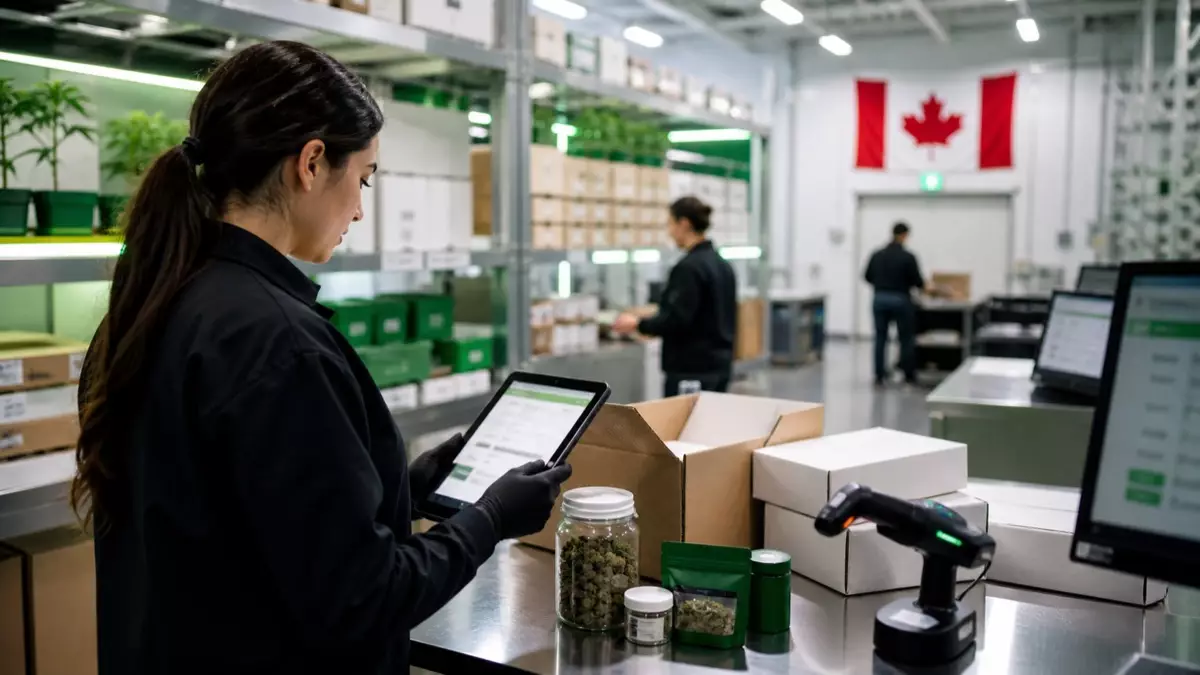
Canada legalised recreational cannabis on October 17, 2018, and the online retail category has matured considerably since then. The first wave of online dispensaries in 2019 looked like minimal e-commerce sites bolted onto compliance paperwork. The category in 2026 is a different animal: real product photography, real age-gating systems, real delivery logistics, real customer-data security. The difference is mostly invisible to the buyer until something goes wrong, but it shapes whether the experience feels like buying a book on a major retailer or buying something risky on a sketchy forum.
This piece is for the tech-aware Canadian buyer who is curious about what is actually running underneath a modern online cannabis dispensary. The category that practices like The Herb Centre, based in Vancouver, British Columbia, operate within has standardised on a specific technology stack across about 80 percent of legitimate Canadian operators. Understanding the stack makes it easier to spot the practices that are doing it well and the ones that are quietly cutting corners.
What an Age-Gating System Actually Does on a Modern Dispensary?
Age-gating is the most visible technology layer on any cannabis e-commerce site, and it is also the layer most often misunderstood. The popup that asks for a date of birth on the homepage is a thin layer; the real age-verification work happens deeper in the checkout flow.
A modern Canadian dispensary typically combines three separate verification layers:
- A self-attested date-of-birth check at the homepage, blocking minors from browsing in the first place
- A secondary government-ID upload at first purchase, processed by a verification provider that checks the ID against issuing-authority databases in 8 to 15 seconds
- A delivery-time photo-ID check at the door, performed by the licensed courier when the package is handed over
The triple-layer setup is not one technology being bolted on top of another. It is three independent failsafes, each catching different failure modes. The homepage layer blocks 95 percent of underage casual browsers; the checkout layer catches the small percentage who lie at the homepage; the delivery-time check catches the smaller percentage who use someone else’s ID or have a friend who fits the age profile.
A dispensary that runs only the first layer is doing the bare legal minimum. A dispensary that runs all three is operating to the standard a tech-aware buyer should expect. The infrastructure powering modern age-gating overlaps with the broader category of parental-control and age-verification apps that have matured across consumer software in the past five years.
How Does Product Discovery Work in a Modern Dispensary?
The catalog is the second technology layer that has changed dramatically. Early dispensaries listed strain names and a price. Modern ones produce product pages that read more like wine retailers, with cannabinoid profiles, terpene breakdowns, lineage notes, and sourcing information. The reason is part regulatory, part competitive.
Health Canada’s labelling requirements force operators to publish THC and CBD percentages, harvest date, packaging date, and producer license number on every product. Beyond the regulatory floor, competitive pressure has pushed the better operators into territory like:
- Detailed terpene profiles with searchable filters
- Effect-based recommendations driven by tagged consumer reviews
- Transparent sourcing notes including the licensed producer, harvest batch, and approximate THC range
- A typical product page now carries 12 to 25 distinct data points, up from 3 in 2019
The recommendation engine sitting underneath this catalog is increasingly powered by machine-learning models that segment users by purchase history and browsing behavior. The engine is the same kind of tooling discussed in broader AI insights coverage across other consumer e-commerce categories, applied to a regulated product. The result is a customer experience that surprises buyers who remember the early days of the category.
What Does the Checkout and Payment Stack Look Like?
The payment layer is where Canadian online cannabis differs most from American e-commerce. Cannabis remains federally illegal in the U.S., which limits American operators to cash, debit, and a small number of friendly fintech services. Canadian operators have access to the full payment stack but still face heavy fraud risk because the product itself attracts both legitimate customers and bad actors.
A modern checkout page on a Canadian dispensary typically combines:
- An e-transfer option for budget-conscious buyers, with confirmation usually within 4 to 12 hours
- A debit or credit-card option for buyers prioritising speed, with same-day shipping when ordered before 2 PM local time
- Address validation against Canada Post’s database to catch typos that would delay or fail delivery
- Fraud detection that flags first-time orders above a threshold (typically $250 to $400) for manual review before shipping
- Optional Interac e-transfer auto-deposit for repeat customers who want to skip the security-question step
The checkout layer also handles tax. Canadian provinces vary on excise and retail tax for cannabis, and the dispensary’s pricing engine has to apply the right rate based on the shipping address. A buyer in Ontario sees a different total than the same product shipped to British Columbia, even though the headline price is the same.
A definition worth knowing: an excise stamp is a provincial tax certificate affixed to legal cannabis packaging, distinguishing a regulated product from grey-market alternatives. The presence of an excise stamp is the single fastest visual signal that what is in the package came through the licensed system.
Why Does Delivery Logistics Matter More Than Buyers Realise?
Delivery is the layer most likely to break a customer’s experience. Canada is a geographically vast country, and cannabis cannot cross provincial lines easily, which forces dispensaries into a multi-warehouse logistics model. The technology decisions here are surprisingly consequential.
A modern Canadian dispensary typically operates 2 to 5 regional warehouses, each holding inventory routed by the customer’s shipping address. The order management system has to:
- Choose the right warehouse for each line item
- Confirm carrier capacity for the destination postal code
- Print compliant packaging labels with all required Health Canada markings
- Schedule the courier pickup window
- Track the shipment through delivery and handle the photo-ID confirmation at the door
The orchestration tooling has to talk to about 6 to 10 separate software systems for an average shipment, including the warehouse management system, the courier dispatch platform, the compliance label printer, and the customer notification service. When one of those integrations fails, the customer sees a delayed package; the operator sees a six-line stack trace in their alerting channel. The mature operators have invested in monitoring that catches these failures within minutes; the immature ones find out when the customer emails support.
For comparison, the U.S. Centers for Disease Control and Prevention publishes public-health information on cannabis that tracks the harm-reduction angle on the same compound, and the U.S. National Center for Complementary and Integrative Health maintains a cannabis and cannabinoids overview that summarises the research base. Both are useful references for Canadian buyers thinking about safe consumption alongside the e-commerce experience.
Common Mistakes Canadian Buyers Make Around Online Dispensaries
A short list of recurring mistakes that show up in operator support tickets.
- Buying from sites that do not display a Health Canada license number on the footer. The license number is a public registry entry; it is the single fastest authenticity check.
- Skipping the first-purchase ID verification because the form feels intrusive. The verification is required by law and protects both the buyer and the operator.
- Ignoring the delivery-window photo-ID check. A driver who hands a package over without checking is a driver whose dispensary will eventually face a regulatory investigation.
- Paying by methods other than the operator’s published checkout options. Wire transfers and crypto-to-cash workarounds are red flags.
- Treating cannabis e-commerce like ordinary e-commerce. The product is regulated; the rules are different; the consumer protections are stronger when the buyer engages with the system as it was designed.
What Tech-Aware Canadian Buyers Should Look For
A short checklist for evaluating a dispensary before placing the first order.
- Health Canada license number visible on the homepage footer, and the number checks out on the public registry
- All three age-verification layers in place: homepage, checkout, delivery
- Detailed product pages with cannabinoid percentages, terpene profiles, and producer information
- Standard payment options (e-transfer, debit, credit) without unusual workarounds
- Stated delivery timelines that match the operator’s regional warehouse footprint
- A returns and quality-complaint process documented on the site
- A typical successful first-order experience runs from cart to delivered package in 2 to 4 business days for most Canadian addresses
A definition worth knowing: a licensed producer is a Health Canada-authorised business that grows or processes cannabis under federal supervision; only product from a licensed producer is legal to purchase from an online dispensary.
Frequently Asked Questions From Canadian Buyers
Why does the dispensary need my government ID for the first order?
Federal law requires age verification at point of sale for cannabis. A modern dispensary uses a verification provider that checks the ID against issuing-authority databases in roughly 10 seconds, then deletes the ID image within 24 hours. The data minimization is part of the privacy framework most Canadian operators have adopted.
How can I tell whether the dispensary is operating legally?
The Health Canada license number on the footer should resolve to an active entry in the public registry at canada.ca. The product packaging should carry an excise stamp from the destination province. The checkout flow should not require unusual payment methods like wire transfer or cryptocurrency. If any of those signals are off, the operator is probably grey market.
What happens if my package is delivered to an address other than my own?
The licensed courier is required to obtain a photo-ID match at the delivery point. If the recipient is not the buyer named on the order, the courier should refuse delivery and return the package. Buyers who routinely have packages delivered to a workplace or roommate should confirm the receiving party is also of legal age and willing to handle the ID check.
Are the typical delivery timelines actually achievable?
Yes for most Canadian addresses. The 2 to 4 business day window assumes a regional warehouse within 800 kilometres of the destination. Remote northern addresses, some rural Atlantic provinces, and Yukon or Northwest Territories addresses often run longer because the courier network into those regions is thinner.
A Final Note for Canadian Buyers
The Canadian online cannabis category has matured into a real e-commerce sector with infrastructure, standards, and a customer experience that is meaningfully better than the early-2019 baseline. A buyer who picks an operator running the full technology stack (proper age verification, transparent product data, mature logistics, compliant payment processing) gets a product that is safe, traceable, and legally protected. A buyer who shops on price alone and ends up on a grey-market site loses all of those protections. The difference is invisible at the homepage and obvious six months later. Tech-aware Canadians who treat the category the same way they treat any other regulated e-commerce purchase tend to come out of the engagement with what they were promised on the product page, on the timeline they were promised, in compliant packaging that holds up to whatever questions come later. The buyers who look for the right signals on Vancouver-based and other Canadian operators end up with the experience that the legalisation framework was designed to produce in the first place.