

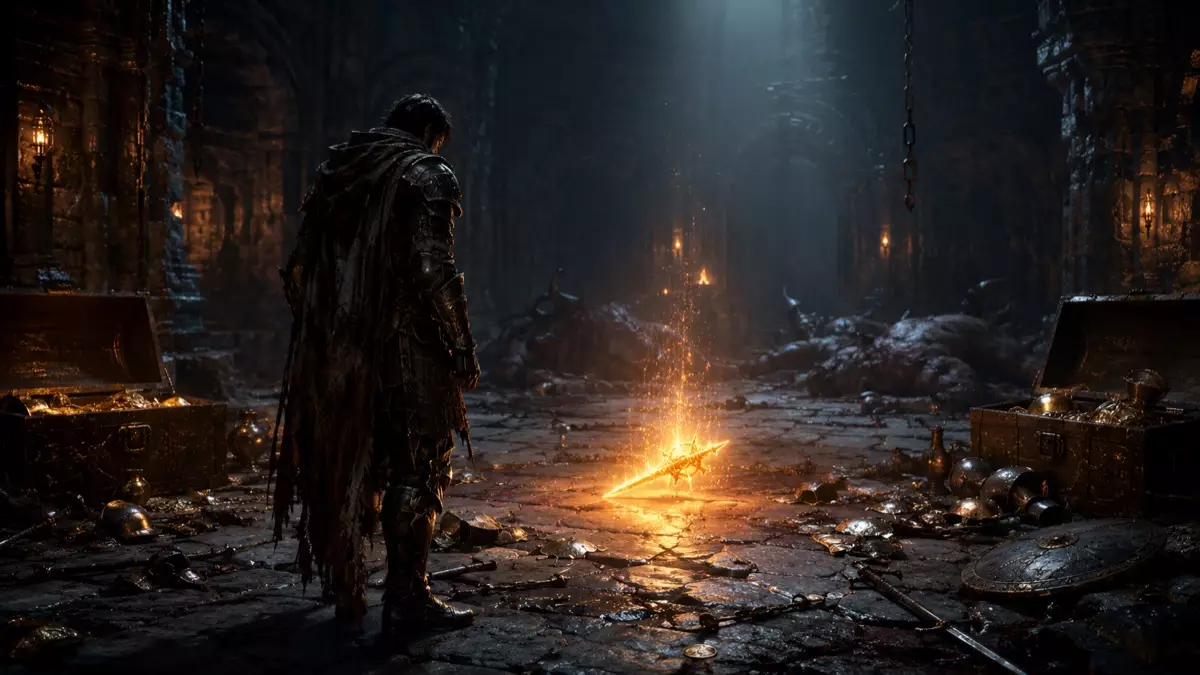
Diablo 4 is not the most technically intensive RPG. Its plot will not be a literary award. However, millions of players come back to play every day. There is something that is drawing them back. It is not that something is accidental. Blizzard did not simply create a game. They constructed a psychological retention system. Each drop, dungeon, and reset has a particular behavioral purpose. Knowing those functions, it is possible to understand why Diablo 4 is really difficult to stop.
The compulsion starts at the core loop. Kill enemies, collect loot, get stronger, kill harder enemies. Simple on paper. Devastatingly effective in practice. Many players turn to Diablo 4 boosting to skip the early grind, getting a Ring of Starless Skies immediately instead of 200 hours of farming. That decision reveals something important. The endgame is where Blizzard’s design hits hardest.
The Dopamine Loop in Every Drop
Unpredictable rewards produce stronger behavioral responses than predictable rewards. This is a counterintuitive finding discovered by behavioral psychologist B.F. Skinner decades ago. The loot system of Diablo 4 is based on this principle. Each enemy kill is a pull of the lever. The majority of drops are useless. Now and then, something interesting comes along. Something extraordinary falls seldom.
That is a chemically important moment. Studies indicate that dopamine rises by 200% following unexpected positive results. The brain perceives the potential of reward as motivating as the reward itself. The same is not true of fixed reward systems. Random systems ensure that players are always on the run.
Blizzard is surgically precise in drop rates. The legendaries are frequent enough to seem achievable. Perfect rolls are so rare as to remain aspirational. The difference between the two states makes players grind forever.
Color, Rarity, and the Hierarchy of Hope
The color-coded loot system of Diablo 4 is more than a system of organizing items. It plays with expectations. Gray means trash; it is ignored instantly. Blue is an indicator of a great improvement. Purple is a true leap. Orange triggers euphoria. This gradient establishes a psychological hierarchy. Players are always in pursuit of the next level of color. The level increases the urge for the next level.
This is further reinforced by the pity timer mechanic. Once the number of kills is sufficient without a major drop, the system will ensure one. Players feel this trend unconsciously. The sense of reward impending turns into a recurrent thought. The expectation is a strong behavioral anchor. It retains players in sessions that they were about to leave. Compare this with real-life lotteries. One out of a million wins. Millions keep on playing anyway. Diablo 4 is a game that scales psychology throughout its moment-to-moment gameplay.
Sound and Visual Design as Behavioral Triggers
The audio team at Blizzard does not simply make atmosphere. They design conditioned responses. A typical fall makes a rustling sound. A Legendary drop causes a complete fanfare. Physical resonance is produced by deep bass tones. The reward center of the brain is stimulated by high notes. The animation is slowed down intentionally. The camera is in focus. Players take those additional seconds as the suspense is built up before the item is shown.
This is the textbook Pavlovian conditioning. Sound equals reward. The brain picks up the association. Blizzard is said to be experimenting with audio differences with fMRI scanning. This way, they try to measure real brain activity to maximize dopamine response. The sound of the fanfare has not changed much between patches. It is always referred to by players in community discussions. It works. Blizzard is aware of its success.
These visual and auditory stimuli have quantifiable effects on increasing the duration of sessions. Players report remaining 40% longer following a major drop. The emotional feeling created by one good item will continue to motivate another hour of play.
The Build Identity and Power Fantasy
All loot-based RPGs sell power. Diablo 4 does it better than most. This is because of the build flexibility. One Legendary item can completely transform the way a class plays. A single drop changes a whole strategy. Players are not simply becoming numerically stronger. They are finding new methods of communicating with the systems of the game. That revelation is artistic and not mechanical.
This forms a second loop within the first one. Players cultivate power. They also cultivate identity. Discovering a build that clicks. One that makes a character feel like their own brings deep satisfaction. The loot system allows that gratification to be repeated hundreds of hours over and over again.
Perfection remains always out of reach. Stats roll within ranges. A player can find a Legendary with the right affix but a poor roll value. The item is functional. The perfect version does not exist yet. That gap fuels continued play more effectively than any content update could.
The Trap of Investment and Sunk Cost
Diablo 4 players are often aware that they are being psychologically manipulated. They continue anyway. This is not a weakness. It is sunk cost fallacy in full force. Fifty hours spent in a character make it feel wasteful to quit. Perceived obligation to continue is created by the time already spent. The logical choice of quitting when the fun is lost is in opposition to the emotional burden of investment. Feeling prevails nearly always.
Blizzard reinforces this through progression systems tied to time investment. Paragon levels, Glyph upgrades, and gear optimization all require accumulated hours. Each system deepens the investment. Each deepened investment makes leaving psychologically harder.
Why Diablo 4 is Psychologically Leading the Genre
Comparing Diablo 4 to its competitors reveals deliberate design choices. Path of Exile runs on harder RNG with thousands of unique items. The complexity paralyzes casual players. Last Epoch offers more targeted loot acquisition. It is less psychologically compelling as a result.
Diablo 4 occupies a calculated middle ground. Enough randomness to maintain the dopamine loop. Enough structure to prevent pure frustration. The pity timer softens brutal dry spells. Targeted farming gives players directional agency. Neither pure chaos nor pure predictability. The balance is the product.
Blizzard has refined this formula across 25 years. Rod Fergusson, the franchise’s lead creative voice, has cited Skinner’s behavioral research as a direct influence on loot design. That is not a coincidence. It is a design philosophy applied consistently across decades.
Players understand the system intellectually. They recognize the mechanics clearly. They return regardless. That is not a flaw in the players. That is the system working exactly as designed.