

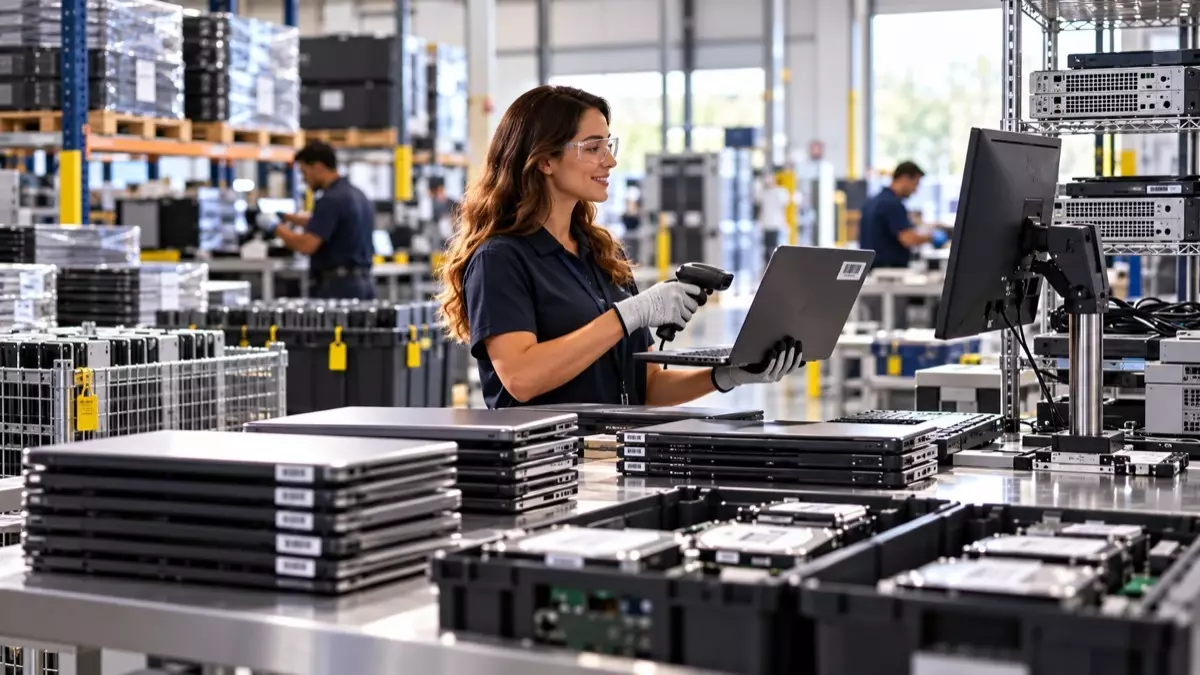
Relying on internal teams for IT disposal creates massive data breach vulnerabilities and compliance gaps. Managing depreciating hardware across multiple corporate locations drains internal resources and hides costs in plain sight. Outsourcing IT Asset Disposition (ITAD) to certified professionals guarantees data security, ensures regulatory compliance, and recovers financial value. Understanding the severe risks of the storeroom liability is exactly why more enterprises are outsourcing IT asset disposition instead of managing it in-house.
What Are the Specific Risks of Attempting In-House IT Asset Disposal?
Internal disposal attempts stretch IT resources thin and expose the company to severe regulatory liabilities. Without specialized workflows, large-scale hardware refresh rollouts cause major internal operational disruptions and increase the likelihood of lost devices.
Managing hardware lifecycles is fundamentally different from managing active network infrastructure. When internal teams handle disposal, they must juggle standard helpdesk tickets alongside the physical demands of moving, wiping, and storing hardware. This dual focus frequently leads to skipped steps, undocumented processes, and unsecured devices sitting on loading docks.
The Limitations of In-House Data Sanitization
Internal data wiping carries high risks, whereas industrial-grade data destruction provides absolute security. IT departments typically rely on basic software erasure, which often fails to meet regulatory standards and leaves hidden partitions intact.
Internal IT teams rarely possess the industrial degaussers or high-throughput shredders needed to guarantee tamper-proof erasure. Standard software wipes take hours per machine and tie up valuable network bandwidth. If a technician unplugs a device too early or misses a failed wipe notification, the data remains fully accessible to anyone who acquires the drive.
The regulatory danger of these oversights is immense. In one high-profile example, the SEC fined Morgan Stanley $35 million after the firm handed its hardware decommissioning over to a standard moving company instead of a specialized disposal vendor. Because they lacked a verified destruction process, thousands of unwiped enterprise hard drives ended up being sold on an internet auction site. The financial risk of those kinds of blind spots climbs even higher when you factor in the direct fallout of a cyber incident.
Offloading retired drives to a certified ITAD provider eliminates these vulnerabilities by replacing internal guesswork with documented, industrial-grade shredding and sanitization. This guarantees a verified chain of custody and serialized documentation that shields your enterprise from audit penalties and compliance exposure.
IT Resource Drain and Complex Logistics
Managing hardware refreshes internally hides labor costs and pulls productivity away from core business goals. The logistical burden of decommissioning hardware scales exponentially with every new corporate location you add.
Managing multi-site hardware pickups, inventory tracking, and warehousing drains internal IT staff from mission-critical business projects. An enterprise refresh involves palletizing servers, securing transport, and cross-referencing hundreds of serial numbers. When senior engineers spend their days moving heavy equipment and managing freight logistics, the business loses valuable time that should be spent on cloud migrations or cybersecurity enhancements.
To prevent missing assets, organizations need a secure chain of custody featuring serialized asset tracking from on-site pickup through final processing. Internal teams struggle to maintain this level of tracking because standard IT service management tools are not built for reverse logistics. Spreadsheets quickly become outdated, and assets disappear during transit.
Outsourcing provides turnkey enterprise logistics that remove this burden completely. Certified partners handle the packing, shipping, and real-time tracking, allowing internal teams to focus on managing the network instead of managing the freight.
How Does Outsourced ITAD Recover Financial Value?
Outsourcing recovers financial value by moving hardware into secondary markets before it becomes obsolete. This asset value optimization turns aging infrastructure from a sunk cost into a returning revenue stream.
Internal IT teams lack secondary remarketing channels, causing valuable assets to depreciate into worthlessness in storage rooms. The technology secondary market fluctuates rapidly. A fleet of laptops might hold significant resale value today, but after sitting in a storeroom for twelve months, that value often drops to zero.
A certified ITAD provider conducts systematic testing, refurbishment, and remarketing on depreciating hardware. They use automated diagnostic tools to assess battery health, screen quality, and component viability in minutes. Once wiped and repaired, these providers tap into global buyer networks that internal procurement teams simply cannot access.
This process of value recovery and client rebates describes how outsourced ITAD turns depreciated technology into tangible financial returns. When providers sell refurbished units or harvest functional parts, they return a portion of that revenue to the enterprise. These rebates frequently offset the entire cost of the disposal logistics and data destruction services.
What Are the Environmental Benefits of a Zero-Landfill ITAD Provider?
Outsourcing to a zero-landfill provider solves environmental liabilities and directly aids corporate sustainability and ESG reporting. It guarantees that toxic electronics stay out of landfills and are processed ethically.
The global e-waste crisis requires immediate corporate action. Globally, 62 million metric tons of e-waste were generated in 2022, but only 22.3% of it was formally recycled. The rest was dumped, burned, or illegally exported, causing massive environmental damage and creating serious legal exposure for the companies that originally owned the hardware.
Improper disposal can lead to heavy EPA fines and devastating brand reputation fallout. If a local news station or environmental watchdog traces a dumped server back to your enterprise, the public relations damage far exceeds the cost of proper recycling.
These sustainable practices give enterprises auditable metrics for their annual ESG and corporate reporting demands. Providers track the exact weight of materials recycled and the greenhouse gas emissions avoided through refurbishment. You can drop these exact figures directly into your corporate sustainability reports to prove your commitment to the circular economy.
Conclusion
Holding onto depreciating IT assets drains internal resources and creates severe financial and compliance blind spots. The storeroom liability turns what should be a simple lifecycle process into a major enterprise risk. Relying on internal staff to wipe drives and manage pallets of old hardware diverts focus from strategic IT initiatives and leaves data dangerously exposed.
Outsourcing to a certified partner ensures maximum data security, regulatory compliance, and environmental sustainability. It protects your brand from e-waste scandals and data breaches while turning aging assets back into recovered value.