

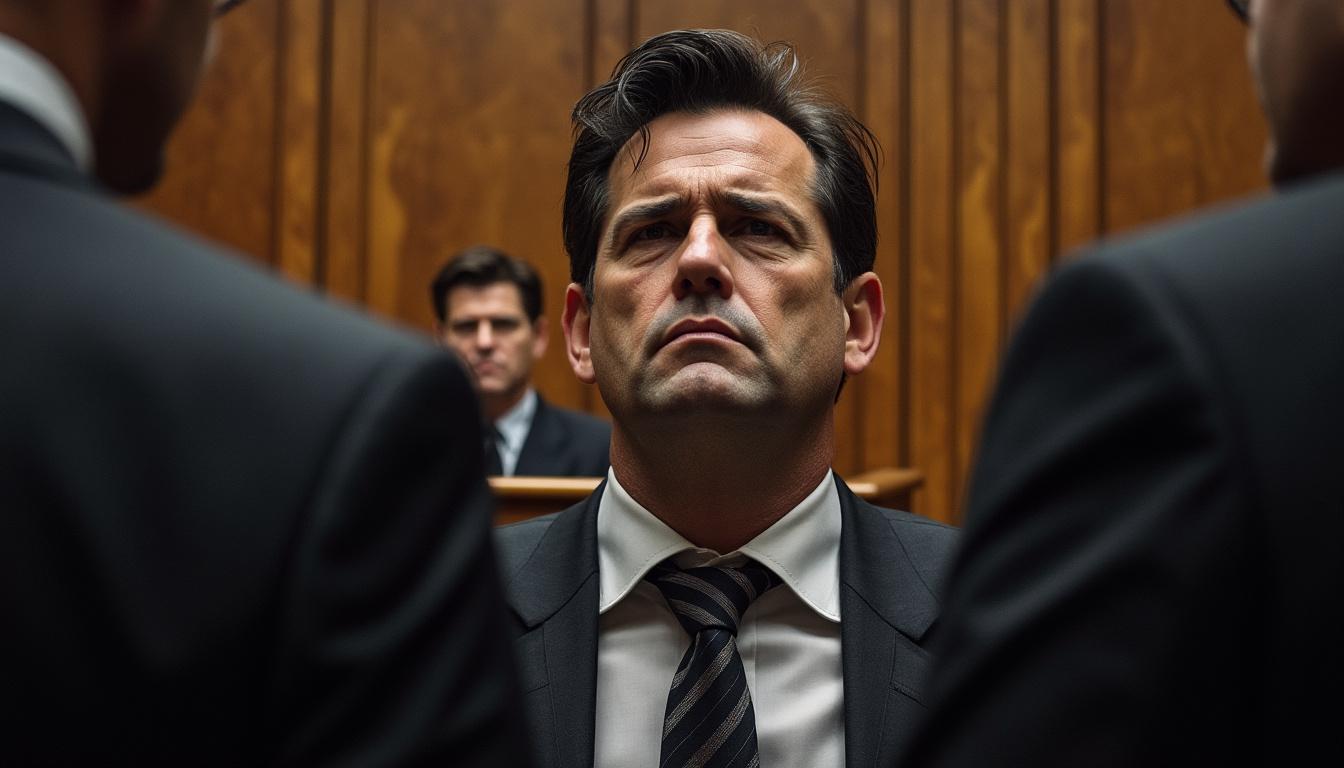
Do Kwon, creator of TerraUSD and co-founder of Terraform Labs, received a 15-year prison sentence in New York after a crypto crash that erased around 40 billion dollars in market value. The former cryptocurrency star admitted to deceiving investors about how his stablecoin worked and how its value was maintained. This sentencing marks one of the most severe punishments linked to a financial scandal in the digital asset sector. It also sends a direct warning to founders and traders who treat blockchain projects as an unregulated playground.
The court described the scheme as financial fraud on a generational scale, pointing to repeated lies, hidden market support, and a collapse that damaged trust in cryptocurrency worldwide. For thousands of retail investors, the TerraUSD and Luna crash in 2022 was not an abstract crypto collapse but the loss of savings, homes, and retirement plans. As regulators and courts tighten their grip in 2025, the Do Kwon case now serves as a reference point for legal risk in crypto projects, from stablecoins to DeFi protocols.
Do Kwon sentencing and the TerraUSD crypto crash
The sentencing of Do Kwon followed guilty pleas to conspiracy to defraud and wire fraud in a US federal court. Prosecutors argued that when TerraUSD slipped below its 1 dollar peg, he misrepresented what happened and hid critical information. Instead of an autonomous algorithm restoring the peg, a trading firm secretly bought large amounts of TerraUSD to support the price. This intervention was never disclosed to investors, who believed the blockchain system held on its own.
The crypto crash that followed in 2022 triggered a chain reaction across exchanges, lenders, and hedge funds. The failure of TerraUSD and its sister token Luna exposed how concentrated risk in one ecosystem can affect the broader cryptocurrency market. For regulators observing from the sidelines, the episode became a clear example of why transparency and real reserves matter more than promotional claims in whitepapers and on social media.
How TerraUSD failed and why investors trusted it
TerraUSD was presented as a stablecoin designed to stay at 1 dollar through an algorithmic mechanism linked to Luna. Many investors assumed blockchain logic ensured stability without fully understanding the risks. Marketing, public appearances, and confident statements from Do Kwon created a sense of safety that mimicked traditional finance language. The promise of stability combined with attractive yields drew in both retail traders and institutional players.
When the peg broke, the technical model behind TerraUSD did not withstand stress from massive withdrawals and speculation. As the price fell, more Luna tokens were created, which pushed Luna down even faster and accelerated the crypto collapse. For many observers, this showed how code and incentives alone are not enough when market structures amplify panic. Trust in algorithms turned into doubt about every similar stablecoin in the market.
Financial fraud patterns in the Do Kwon case
The court identified a series of actions by Do Kwon that formed the core of the financial fraud. He overstated the resilience of TerraUSD, misled investors about how its peg was restored, and hid the involvement of a trading partner that secretly supported the price. These actions created an illusion of strength during the crypto crash, which encouraged more capital to flow in while structural weaknesses stayed hidden. When confidence evaporated, the damage was larger than it would have been with full disclosure.
US District Judge Paul A. Engelmayer highlighted the scale of harm and compared it to some of the biggest corporate cases in federal history. The judge emphasized that investors trusted Do Kwon with serious amounts of money, based on technical claims and public statements presented as fact. By turning TerraUSD’s problems into a hidden operation instead of an open risk, the leadership of Terraform Labs crossed the line from bad design into deliberate manipulation.
Key red flags before the crypto collapse
Several warning signs appeared before the final TerraUSD failure, yet many market participants ignored them. The stablecoin’s dependence on reflexive incentives and continuous demand, combined with aggressive promotional language, indicated fragility. Large yields offered in related protocols looked unsustainable when compared with traditional interest rates in 2022. Still, fear of missing out in cryptocurrency circles pushed users toward higher risk.
During small de-pegs, insiders reassured the community that the algorithm worked as designed, without providing complete data. Each recovery strengthened the illusion that the system was self-correcting. Only later did court documents show that external support had been used to restore the peg, turning those earlier events into evidence of concealed intervention. For risk managers and developers in 2025, these red flags now serve as a checklist for assessing new stablecoin projects.
Impact of the prison sentence on cryptocurrency regulation
The 15-year prison sentence for Do Kwon changed the discussion around accountability in cryptocurrency. For years, many founders treated legal risk as secondary to growth, assuming regulators would stay slow or confused. After this financial scandal, enforcement agencies now point to the case when explaining why misleading disclosures in blockchain projects count as fraud, not innovation. This clarity affects how new protocols approach transparency and governance.
Legislators in the US, Europe, and parts of Asia already used the TerraUSD crash as a reference when designing stablecoin and reserve rules. In 2025, some jurisdictions require issuers to show real-time reserve reports or submit to independent audits. The prison sentence strengthens these moves by proving courts support strong action against deceptive behavior. Project teams launching tokens today face a higher bar for documentation and risk disclosure than those active before 2022.
How blockchain projects adapt after the TerraUSD scandal
After the TerraUSD failure and the sentencing of Do Kwon, many blockchain developers shifted focus to transparency and verifiable data. Instead of marketing stablecoins purely on algorithmic design, projects highlight on-chain proof of reserves, regulated custodians, and stress testing reports. Audits became a selling point rather than an afterthought. Teams understand that investors now ask tougher questions about downside scenarios and liquidity.
Some protocols also build internal controls that resemble traditional finance standards. Examples include independent risk committees, whistleblower channels, and structured incident reporting. Even in decentralized ecosystems, governance tokens often integrate formal procedures to react to systemic threats. This adaptation reflects a broader belief in the industry that sustainable growth in cryptocurrency depends on trust, not only on code and yield.
Crypto collapse vs traditional financial scandals
The TerraUSD crypto crash has been compared to classic financial scandals such as Enron or major mortgage-backed securities failures. In each case, investors received incomplete or misleading information about how value and risk were structured. The difference with this cryptocurrency event lies in speed and global reach. Blockchain markets run 24/7 and connect users worldwide, so a single failure transmits across borders within hours.
Traditional scandals also involved complex instruments, but they operated inside regulated environments with slower feedback loops. The TerraUSD crash, in contrast, exposed how quickly algorithmic models break down under social media pressure and instant liquidity. This contrast helps regulators frame new oversight models for digital assets, focusing on real-time monitoring and service provider accountability. For users, it shows that technology does not remove human responsibility or ethical duties.
Comparison of impacts: crypto vs traditional finance
When comparing crypto collapses to older financial crises, the TerraUSD case offers a unique mix of retail exposure and technical opacity. Many holders did not fully understand the mechanisms behind the stablecoin, yet invested significant savings based on trust in public figures. In mortgage or stock scandals, at least some intermediaries such as advisors or banks filtered products before they reached individuals. Here, direct access through exchanges removed that layer, which increased personal risk.
Another difference lies in perception. For some traditional investors, the TerraUSD story reinforced a belief that cryptocurrency remains a speculative arena. For younger traders who grew up with blockchain assets, the event felt like a betrayal by one of their own sector leaders. This divide influences how education programs and product disclosures are designed in 2025, with more emphasis on plain language and scenario analysis.
| Aspect | TerraUSD crypto crash | Traditional financial scandal |
|---|---|---|
| Market speed | 24/7 global trading, instant liquidity, rapid collapse | Limited trading hours, slower unwinding of positions |
| Investor access | Direct access through exchanges and apps, high retail exposure | Often filtered through banks, brokers, or advisors |
| Transparency | On-chain data available but complex, claims about algorithms | Regulated reporting, yet subject to accounting manipulation |
| Regulatory scope | Fragmented oversight across countries, evolving rules | National or regional regulators with established mandates |
| Core failure | Algorithmic stablecoin model combined with misleading statements | Accounting fraud, mispriced risk, or hidden liabilities |
| Public outcome | 15-year prison sentence for Do Kwon, stricter crypto rules | Fines, prison sentences, and reforms in conventional markets |
Lessons for investors after the Do Kwon sentencing
For individual investors, the prison sentence of Do Kwon offers practical lessons on how to approach cryptocurrency risk. Trust in a founder’s online presence or technical jargon is not a substitute for clear, verifiable data. Before buying into a stablecoin or yield product, it makes sense to ask simple questions about reserves, redemption mechanisms, and stress scenarios. If answers rely on slogans instead of evidence, risk levels are likely higher than presented.
Investors now see the value of diversification across different assets and platforms instead of concentrating funds in one ecosystem. The TerraUSD event showed how a single point of failure in blockchain infrastructure can affect related lending, trading, and yield services. Using multiple exchanges, wallets, and asset types reduces exposure to similar systemic shocks. This approach aligns with principles already known in traditional finance, adapted to the speed and global reach of cryptocurrency.
- Verify whether a stablecoin such as TerraUSD holds audited reserves or relies on algorithms.
- Check if the team discloses previous de-pegs or incidents and how they were handled.
- Review whitepapers and documentation for clear risk descriptions, not only benefits.
- Diversify across multiple cryptocurrencies, including less correlated assets.
- Use independent research sources rather than relying on marketing or influencers.
- Monitor regulatory news, especially cases involving financial fraud or prison sentences.
Our opinion
The fall of TerraUSD and the 15-year prison sentence for Do Kwon mark a turning point in how the world treats serious misconduct in cryptocurrency. What once looked like a technical failure now stands in legal records as a financial fraud with global consequences. Courts, regulators, and users refuse to accept the excuse that innovation on blockchain removes responsibility for honest disclosure. This collective stance pushes the sector toward higher standards that resemble those in established financial systems.
The TerraUSD crypto crash will remain a reference example for years, both as a warning and as a learning case. Entrepreneurs building new solutions in 2025 face a clear choice between transparency and short-term hype. Investors also bear responsibility to question claims, spread risk, and treat every token, from stablecoins to governance assets, as part of a broader financial life, not a separate universe. The Do Kwon story shows what happens when ambition, opaque design, and global liquidity meet without enough restraint, and it encourages everyone in cryptocurrency to choose a different path.