The gaming industry crossed $220 billion in global revenue in 2024 and the growth didn’t come from where most analysts predicted five years ago. Mobile dominance kept climbing. Console sales flattened. Cloud gaming quietly became profitable for a few operators while swallowing money for others. Esports contracted, consolidated, and started rebuilding on infrastructure that actually works. And Web3 gaming — declared dead twice — keeps finding niches where the blockchain angle delivers something specific rather than everything vaguely.
I spent the past year tracking how the tech stack underneath gaming shifted, and the pattern is clearer than most of the headlines suggest. Here’s what’s actually working in 2026, where the money is flowing, and what to watch before the next console cycle announcements.
Cloud gaming finally found its business model
Remember when Google Stadia was supposed to end console gaming? That prediction aged badly. Stadia died in 2023. GeForce Now, Xbox Cloud Gaming and PlayStation Cloud kept building, and by late 2025 the numbers started working. Microsoft reported Xbox Cloud crossing 20 million monthly active users in its November 2025 earnings call, with attach rates to Game Pass making the unit economics defensible. Nvidia’s GeForce Now hit an estimated 30 million registered accounts by early 2026, with the premium RTX 4080 tier pulling enough subscribers to cover the substantial GPU costs.
The shift that made this viable: giving up on the “replace your console” pitch. Cloud gaming in 2026 is positioned as a complement — a way to try games before buying, to play AAA titles on devices that couldn’t run them natively, to avoid downloads on metered connections. That’s a smaller market than “every gamer on Earth” but it’s a real market with real willingness to pay.
Where it still doesn’t work: competitive multiplayer where every frame of latency matters. Cloud input lag improved from 80-100ms in 2020 to around 35-50ms in 2026 for well-connected users, which is playable for most genres but still a handicap in fighting games, tactical shooters, and anything where peek-shoot timing separates wins from losses. The infrastructure is genuinely hard — you’re asking for input-to-display round trip through a data center that needs to be within 100-150km of the player.
Cloudflare’s breakdown of the edge compute economics remains one of the clearer explanations of why this hits physical limits faster than cloud advocates want to admit.
The resources tracking this space have gotten more technical over the past two years. Only-Gaming has been running solid coverage of cloud gaming latency benchmarks across operators — the kind of head-to-head testing that only makes sense if you actually have multiple setups running and measure input lag with proper equipment. That level of rigor is rare in gaming press, which is still mostly review-driven.
Esports in 2026: smaller, smarter, finally sustainable
The esports crash of 2022-2023 wiped out most of the venture-backed organizations that had burned through cash betting on viewer growth that never arrived at the projected scale. What survived is a very different industry. League of Legends, Counter-Strike, Dota 2, Valorant and a handful of fighting games anchor the competitive scene with stable, self-funding or publisher-subsidized ecosystems. Call of Duty and Rainbow Six moved franchise leagues toward more open structures. The “build audiences for sponsors” era gave way to something more like traditional sports economics.
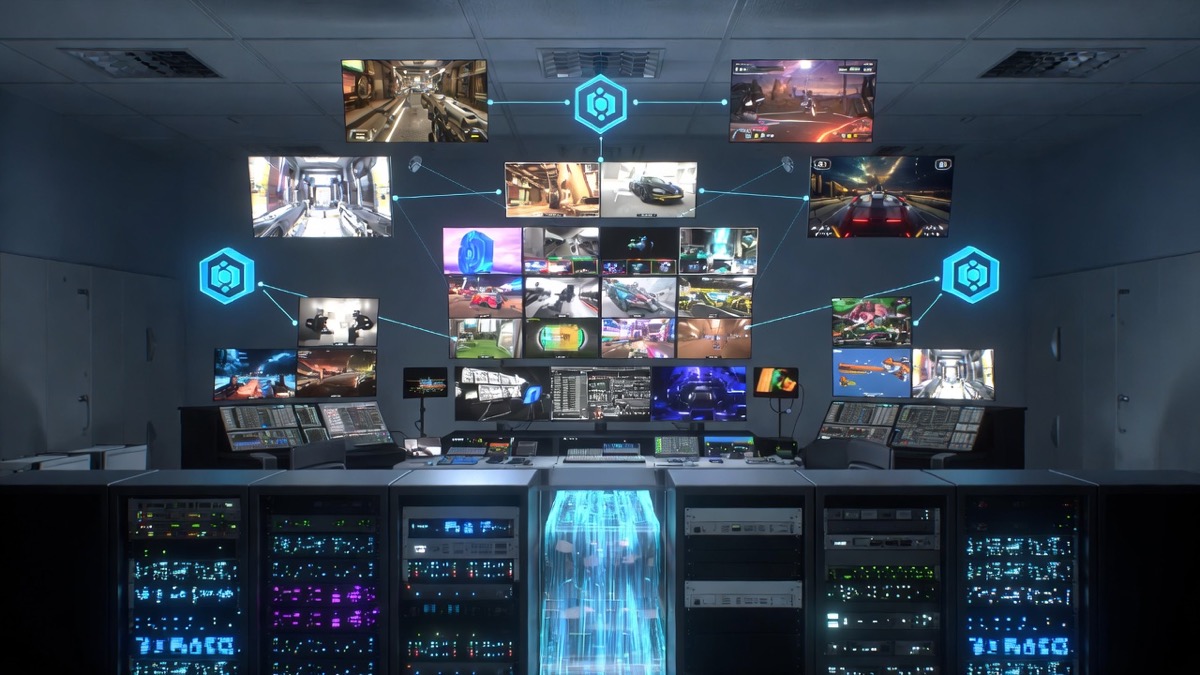
The infrastructure side of esports is where the interesting 2026 story sits. Broadcast production for tier-one events now rivals traditional sports in technical quality. Real-time data overlays, AI-generated camera switching for competitive matches, automatic translation of player communications, low-latency multi-feed streaming — all of it commoditized enough that tier-two organizations can produce credible broadcasts on reasonable budgets.
DualMedia Esports has been tracking the broadcast tech stack evolution through the European and French scene, where the production standards caught up to North American and Korean events faster than expected. Their coverage of the 2025 ESL Pro League finals production workflow was useful enough that I ended up citing it in a piece I wrote for another client trying to budget their own tournament broadcast. For English-speaking readers following the same trends from the North American angle, Only-Gaming covers the US and international esports scene in parallel — useful cross-reference when regional differences in broadcast economics or player compensation come up.
The revenue question is still unresolved. Sponsorship money returned, but at lower multiples than the 2019-2021 peak. Media rights deals consolidated around a few major publishers (Riot, Valve, Activision Blizzard) who effectively own their own leagues. Third-party tournament operators that survived the shake-out are leaner and more disciplined, but the path to unicorn valuations that attracted 2020-era VCs is clearly closed.
Live streaming: where the creator economics actually work
Twitch remains the dominant live streaming platform for gaming content, but the monoculture cracked through 2023-2025. YouTube Gaming captured significant chunks of the mid-tier creator market with better revenue splits. Kick — TPG-backed, controversy-prone — built a real audience among creators frustrated with Twitch’s subscription revenue model and content moderation approach.
The technical evolution that matters: streaming latency dropped. End-to-end latency on Twitch’s low-latency mode is now around 2-3 seconds for most channels, down from 10-15 seconds a few years ago. That makes real-time chat interaction actually work, which changes the kind of content that succeeds. Reactive content (streamers responding to chat suggestions) performs better than pre-planned content in genres where the audience wants to feel part of the action.
For creators, the economics split along a brutal line. Top 1% of streamers earn more than ever — the best-compensated live streamers in 2026 are pulling sums that rival mid-tier traditional media personalities. Everyone below that line faces a harder market than 2020. The platform take on subscriptions, the proliferation of mid-roll ads, the algorithmic pressure toward shorter retention windows — it all compresses margins for anyone not in the top bracket.
Web3 gaming: mostly dead, occasionally useful
The 2021-2022 NFT gaming boom was embarrassing in retrospect. Axie Infinity’s token collapse, STEPN’s ecosystem implosion, the hundred “play-to-earn” clones that paid out to early adopters and left late entrants holding worthless assets — most of it was either poorly designed Ponzi dynamics or just bad games with tokens grafted on.
What emerged from the wreckage is narrower but more defensible. A few game designs genuinely benefit from blockchain components: player-owned economies where secondary markets have real utility (trading card games, certain strategy games), digital collectibles where provenance matters (competitive achievement records, tournament artifacts), cross-game asset portability in specific gaming ecosystems. The Web3 gaming market in 2026 is a fraction of what 2022 projections predicted —
a16z’s State of Crypto 2024 report put total Web3 gaming monthly active users at around 2 million, versus headline claims of “tens of millions” that circulated during the peak.
Gambling sits in an adjacent category that’s worth distinguishing. Crypto-native online poker and casino platforms built on blockchain rails have carved out a real niche, particularly for users in jurisdictions where traditional online gambling is heavily restricted or where banking friction makes traditional operators unusable. The tech argument (provably fair randomization, transparent payouts, wallet-native deposits) is more defensible than most Web3 gaming pitches. Casino-Poker has been running analysis on how these platforms compare to traditional operators, and the operational differences are more interesting than the hype suggests — regulatory arbitrage matters, but so does cold-storage custody and the actual fairness proofs some platforms publish.
The competitive skill ceiling: where training tech actually moved
One of the quieter but more important 2023-2026 shifts: the tooling available to serious competitive gamers got dramatically better. Replay analysis, aim training platforms, macro-aware trainers, AI-powered coaching systems — the stack that pro players and aspiring amateurs use today would have been a training camp’s worth of resources five years ago.
Aim training platforms have commoditized. Kovaak’s and Aim Lab are free or near-free, and the scenarios available cover basically every competitive shooter’s mechanics. Replay analysis tools now use ML to flag decision errors in specific matches, highlighting moments where a player’s positioning or ability usage deviated from optimal patterns the model learned from professional play. That’s been transformative for players grinding toward competitive tiers.
IronToRadiant has been a useful resource through this shift — the kind of genre-specific tutorial content that goes deeper than YouTube highlights, covering the micro-mechanical patterns that separate rank brackets. I’ll give them credit: the workflow of breaking down specific scenarios frame-by-frame, with commentary on decision points, is harder to do well than most gaming guides acknowledge, and they’ve kept the quality consistent over a long stretch.
What’s coming in the next 18 months
Three things I’m tracking closely through the rest of 2026 and into 2027. Next-generation console hardware announcements from Sony and Microsoft are expected in late 2026 or early 2027, and both vendors face the question of whether to push cloud-hybrid architectures more aggressively or stay with traditional local-compute boxes. The answer will shape the next seven years of AAA game development economics.
AI-generated content in games is another shift that’s arriving faster than most studios are ready for. Not the surface-level “AI-generated dialogue” demos that made headlines in 2023-2024 — the deeper integration of generative systems into level design, NPC behavior, and procedural content is now in production-quality engines. Expect at least two major AAA titles in 2026-2027 to ship with generative AI as core gameplay architecture rather than marketing garnish.
Finally, the regulatory pressure on loot boxes, gacha mechanics and predatory monetization is tightening across Europe and parts of Asia. The Netherlands, Belgium, and now Germany have moved against the worst offenders, and EU-wide harmonization is on the policy roadmap. Publishers that built their mobile and free-to-play economics around these mechanics face either retrofitting or withdrawing from markets. That reshaping is going to hit the industry’s 2027-2028 revenue projections hard, and most financial models haven’t adjusted yet.
The gaming industry in 2026 is bigger, more fragmented, and more technically interesting than most of its coverage suggests. The infrastructure wins of the past five years enable things that weren’t possible in 2020. The business model failures killed off a lot of bad bets that were always going to fail. What’s left is a real industry, building on real technology, and the next cycle looks more interesting than the last two.