

For most of the internet’s history, progress has been measured visually. Cleaner interfaces. Faster load times. More responsive layouts. Each generation of websites improved how things looked and how quickly they worked. And for a long time, that was enough. But the next phase of the web is shifting away from purely visual improvements. It’s becoming experiential.
The Interface Is No Longer the Experience
Traditionally, the interface defined the experience. Designers focused on layout, hierarchy, and interaction patterns. Developers ensured performance and responsiveness. Together, they created environments that were easy to navigate and visually consistent.
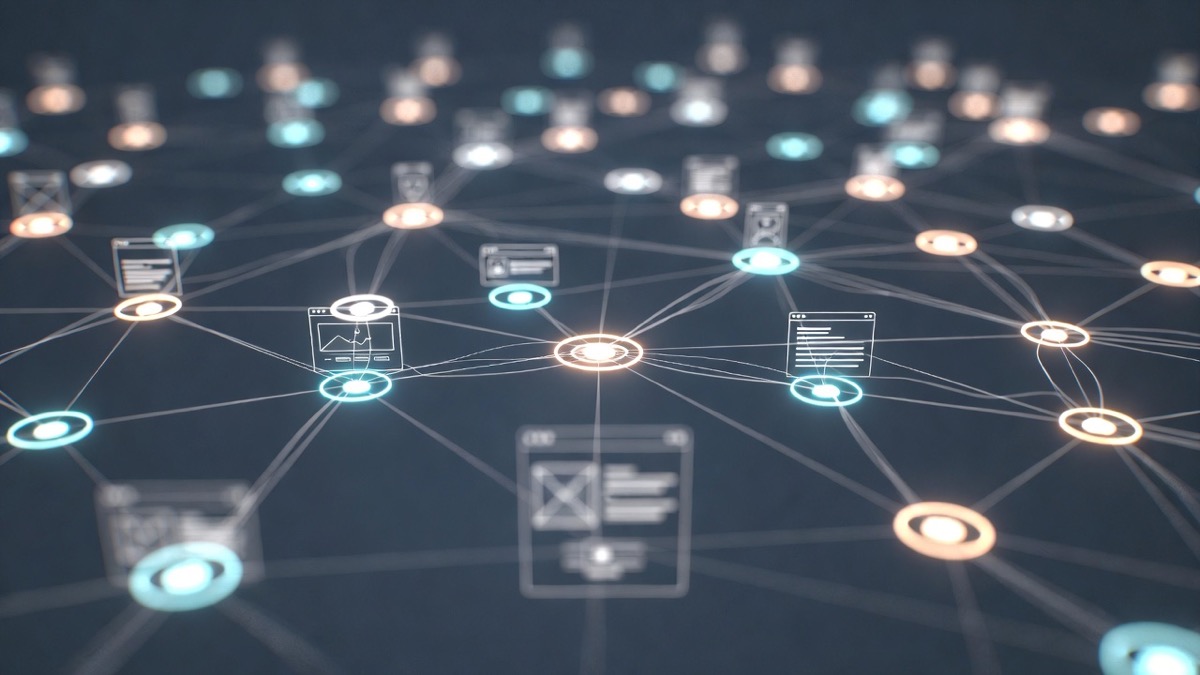
That model is starting to break down. Today, users don’t just interact with interfaces. They move through systems. They arrive from AI-generated summaries, jump between pages, and form impressions based on fragments rather than full journeys. The experience is no longer contained within a single page or even a single session. It’s distributed.
AI Is Reshaping How Users Arrive
Artificial intelligence is fundamentally changing how people access information. Instead of starting at a homepage, users often begin with:
- a direct answer
- a summarized result
- a deep link to a specific page
This means they arrive with context already shaped by another system. The website is no longer the first narrator. It’s part of a larger conversation. And that changes what it needs to do.
Every Page Is Now a First Impression
Because entry points are unpredictable, every page must carry more responsibility. A product page must establish credibility immediately. A blog post must connect to a broader system. A landing page must orient users without relying on prior context. There is no guarantee that a user will see anything else.
This shifts design from guiding journeys to supporting moments. Each interaction must stand on its own, while still contributing to a larger experience.
Emotion Is Becoming a Design Layer
As usability becomes standardized, differentiation moves elsewhere. Emotion is emerging as a critical layer. Not in an exaggerated or decorative way, but in how experiences feel over time. Pacing. Tone. Visual rhythm. Micro-interactions. These elements shape perception in ways that go beyond functionality.
Two websites can offer the same information. Only one will be remembered. Recent thinking on experience design highlights how emotional clarity and intentional pacing are becoming just as important as usability in modern web systems.
Systems Thinking Is Replacing Page Thinking
The way teams build websites is also evolving. Instead of designing individual pages, teams are designing systems. Content models define how information is structured. Components define how it is displayed. Interactions define how it behaves.
This approach allows experiences to scale without losing coherence. It also aligns with how users actually interact with the web today — non-linearly.
Consistency Creates Trust
In distributed experiences, consistency becomes more important. Not just visual consistency, but conceptual consistency. Does the messaging align across pages? Do interactions behave predictably? Does the tone remain stable across contexts?
When these elements are aligned, users feel confident. When they are not, trust erodes. This is especially important in environments where users are arriving from external systems and making quick judgments.
The Role of AI in Experience Design
AI is not just changing how users arrive. It’s also changing how experiences are built. Design systems are becoming more dynamic. Content is becoming more adaptable. Personalization is becoming more sophisticated.
But these capabilities introduce new complexity. Without clear structure, AI-driven experiences can become inconsistent. Without defined constraints, personalization can feel disjointed. This reinforces the need for strong foundational systems.
The Web Is Becoming Ambient
One of the most interesting shifts is how the web is becoming more ambient. It is no longer something users engage with in a single, focused session. It exists in the background — surfaced through notifications, integrated into workflows, accessed through multiple devices and interfaces.
This changes the nature of engagement. The goal is no longer just to capture attention. It’s to create experiences that hold meaning across contexts.
What This Means for Builders
For designers, developers, and product teams, this evolution requires a new mindset. The focus shifts from: “What does this page look like?” To: “How does this experience feel over time?”
That includes:
- how users arrive
- how quickly they understand
- how easily they move forward
- how clearly they remember
These are not isolated considerations. They are connected.
The Future of the Web Is Cohesive
The next generation of web experiences will not be defined by visual innovation alone. They will be defined by cohesion. How well systems connect. How clearly information is structured. How consistently experiences are delivered. The most effective websites will feel less like collections of pages and more like unified environments.
A Different Kind of Progress
The web is not becoming less important. It is becoming more integrated. More connected to other systems. More influenced by AI. More dependent on structure and clarity. This is a different kind of progress. Less visible. But more meaningful.