

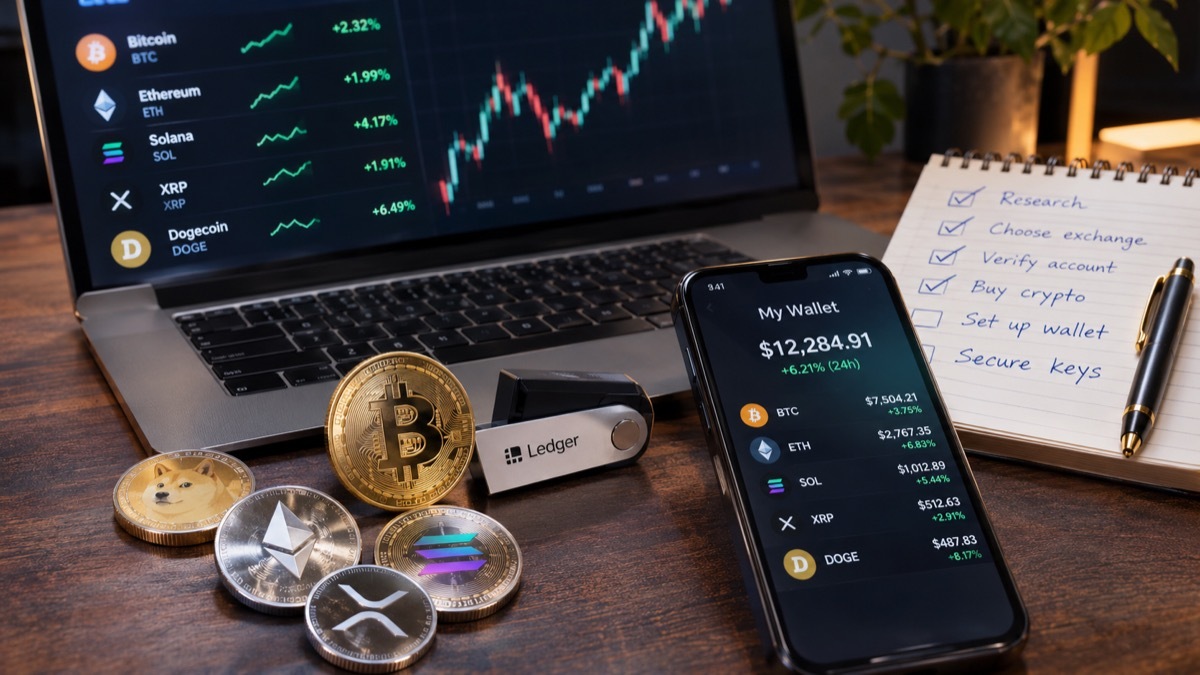
Crypto now reaches a broader audience than the specialist circles that first took an interest in it. Bitcoin, Ethereum, Dogecoin, Solana and XRP show how varied this market has become, with blockchain networks allowing digital assets to move without relying on the same arrangements as conventional money.
Buying one of these assets means doing more than finding an exchange. Research what you intend to own and learn how to buy Bitcoin or whichever cryptocurrency you have chosen, then consider where it will be kept. A completed order leaves you with a holding to look after, and its security depends on the wallet and who controls the keys.
Let’s look first at what deserves your research, then follow the buying steps and the wallet choices that come afterward.
The Asset Behind the Purchase
Placing an order can be easy while understanding the asset takes considerably more work. Crypto prices respond to many influences and can swing sharply, so this market is better suited to investors with a high tolerance for volatility. Bitcoin pioneered decentralised cryptocurrency and remains the largest by market capitalisation; projects that followed introduced different purposes and features.
That variety makes research part of choosing what to own. Examine the project’s purpose, place in the market, liquidity, actual uses and risks. Use the findings to weigh what an asset offers against its risks.
From Exchange Choice to Completed Order
Once you have chosen an asset, the buying process has several practical stages.
Compare Exchanges Before You Open an Account
An exchange is the platform through which you buy and trade crypto. Compare those serving your jurisdiction by checking whether they support your chosen asset and payment method, what they charge, how clearly the fees are explained and how they protect accounts and holdings. Reputation belongs in that decision too: choosing a provider you cannot trust adds another risk to an investment whose price already moves sharply.
Open the Account and Complete Verification
Create the account after you have chosen the exchange. Check which personal details and identity documents it requires for your jurisdiction, and complete any required verification before you try to fund the account or place an order.
Arrange Payment or Fund the Account
Look at the payment methods actually available to you on that platform. You may see bank transfers, debit or credit cards, or online payment services, with availability varying by country. The platform’s chosen route will tell you whether to deposit money first or pay while placing the purchase order.
Review and Confirm the Order
Once the payment route is ready, choose the asset and the amount you intend to buy. Review the price and charges before confirming the order, then check the account after processing to see the completed holding. Your next decision is how to keep that holding accessible and secure.
Wallets, Keys and Blockchain Records
A wallet lets you receive cryptocurrency and authorise transfers from your holding. The blockchain records the assets, while the wallet manages the private keys or other credentials used to access them. It is those keys you need to consider when choosing between hot and cold storage: a hot wallet keeps them in an online environment, whereas a cold wallet keeps them offline.
Cold Storage for Offline Keys
Because cold storage keeps private keys offline, it reduces the exposure they would have on an internet-connected device. For larger holdings or a longer holding period, favour cold storage. A self-custody cold wallet lets you retain the keys yourself, while leaving you responsible for protecting access and the recovery backup.
Hot Wallets for Connected Access
For a beginner, the appeal of a hot wallet is that it is often quick to set up and easy to use. Mobile apps, desktop software and web services give you those connected options, with the private keys kept in an online environment for convenient access. That convenience makes protecting the device and account part of protecting the holding.
Six Precautions for Wallet Security
Scams can target the accounts and wallets you use, so learning to recognise them belongs alongside learning to make a purchase. The following precautions help protect access to your holdings.
- Never disclose the words used to restore your wallet—its seed or recovery phrase.
- Learn to spot phishing emails that impersonate trusted senders to steal information.
- Keep multifactor authentication (MFA) codes to yourself.
- Ignore recovery-phrase requests, even when the sender calls themselves support.
- Keep sizeable holdings in an offline wallet.
- Verify the site’s full address before making a wallet connection.
Who Will Hold the Keys?
Alongside the hot-or-cold choice, decide who will control the private keys. When you leave a purchase on an exchange, you are trusting that business to look after them. Access to that balance depends on the provider keeping its systems secure and remaining able to process withdrawals. A hack, an account freeze or the company becoming insolvent can therefore interrupt your access.
Moving the holding to a self-custody wallet changes who has that job. You control the keys that authorise spending, so an exchange no longer holds them for you. This is the reason to consider a personal wallet for security, provided you are ready to protect the keys and recovery information yourself. Keeping control and keeping access safe have to go together.
The Work That Continues After Buying
Crypto’s popularity is a reason to learn. Use project whitepapers to help you compare your options, then choose a reputable platform when you are ready to buy. After the purchase, keeping access secure through the wallet setup you choose remains part of looking after the investment.