

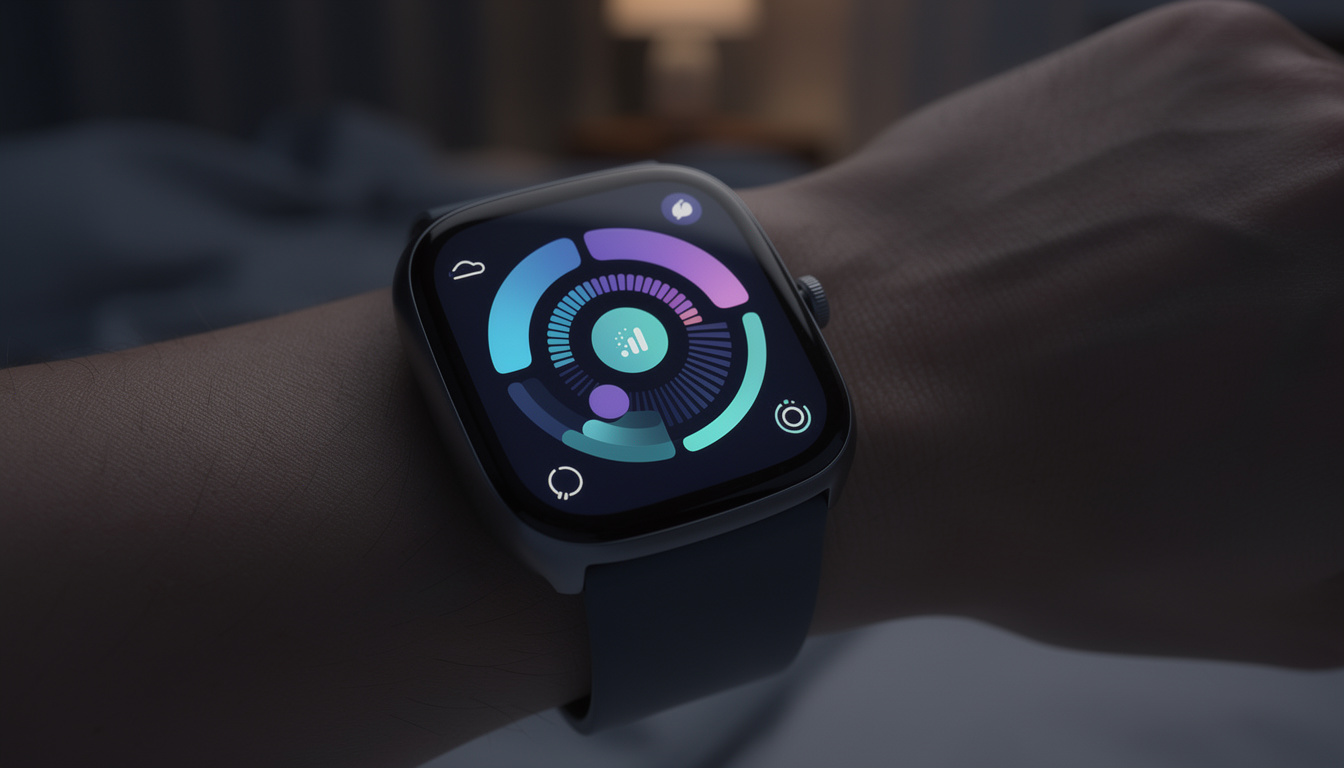
Fitbit enhances sleep monitoring with new sleep score feature gives tired users a faster way to tell whether last night supported focus, recovery, and energy, using a simpler 0 to 100 score built from sleep duration, stage estimates, heart rate patterns, and overnight restlessness.
Fitbit Enhances Sleep Monitoring With New Sleep Score Feature for Everyday Use
Fitbit enhances sleep monitoring with new sleep score feature because most people do not want to study graphs before coffee. They want one answer. Did sleep help, or did sleep fall short. That is the problem Fitbit is trying to solve, and the new scoring approach targets friction first.
Fitbit enhances sleep monitoring with new sleep score feature by turning a full night of wrist data into one number from 0 to 100. The number is not built to diagnose apnea, insomnia, or any disorder. The number exists to make a fast morning decision easier. If the score is low, users know they should look deeper or ease up during the day. If the score is stable, they move on.
This approach matters because sleep tracking often fails at the last step. Devices collect motion, pulse, and estimated stages, yet the user still has to interpret the mess. Fitbit cuts through that. The company leans on three main pillars, duration, sleep stages, and restoration, with restoration shaped by overnight heart rate and movement. The result is simpler than Apple’s native presentation and less training-focused than Garmin’s recovery model.
Consider a common case. A remote worker goes to bed for eight hours but wakes up feeling dull. The app shows a middling score because heart rate stayed elevated and restlessness increased after a late meal. Time in bed looked fine. Recovery did not. That difference is where the score earns its value.
Fitbit enhances sleep monitoring with new sleep score feature in a way that also fits broader behavior trends. People now expect health tools to summarize data, not dump raw charts on them. This is the same shift seen in digital wellness coverage around modern napping habits, where context matters more than isolated numbers.
The score bands stay broad on purpose. Below 60 signals poor sleep. A range from 60 to 79 points to fair sleep. Scores from 80 to 89 suggest good recovery. A 90 plus score stands out as excellent. Broad ranges reduce panic over tiny swings, which is smart. Sleep changes from night to night even under stable routines.
| Score Range | What Fitbit Is Signaling | What Users Should Do |
|---|---|---|
| 0 to 59 | Poor sleep quality or fragmented recovery | Review bedtime, stress, alcohol, and illness factors |
| 60 to 79 | Fair sleep, usable but not ideal | Watch trends across several nights |
| 80 to 89 | Good sleep, solid recovery signs | Maintain current routine |
| 90 to 100 | Excellent sleep quality | Use as a reference for what worked |
There is also a practical reason this feature lands well on Fitbit devices. Battery life on trackers like Inspire 3 and Charge 6 often stretches far beyond a day, which means fewer missed nights. A sleep score loses meaning if users skip half the week because the watch was charging on the nightstand.
Fitbit enhances sleep monitoring with new sleep score feature by making sleep data feel usable, not technical. That is the core argument in its favor. A wearable does not need to act like a lab. It needs to help people live better with less effort. The next question is whether the sensors behind the score are good enough to deserve that trust.
The score starts with simplicity, but simplicity only works when the data underneath holds up.
Fitbit Enhances Sleep Monitoring With New Sleep Score Feature Through Smarter Night Data
Fitbit enhances sleep monitoring with new sleep score feature only because the hardware tracks enough overnight signals to support the score. Fitbit relies on optical heart rate sensing, accelerometer motion tracking, and on some models, extra context such as skin temperature trends, breathing rate, and blood oxygen variation. No EEG exists on the wrist, so stage tracking is inferred, not directly measured. That limitation should not be ignored.
Still, inferred data is often good enough when the goal is behavioral guidance. Fitbit detects sleep onset through reduced movement and lower heart rate, then estimates light, deep, and REM sleep from patterns across the night. Deep sleep tends to match calmer heart rhythms and less motion. REM tends to show more variability with physical stillness. This is not lab-grade scoring. Yet for trend tracking, it works well enough to show what changes after alcohol, travel, stress, or a shifted bedtime.
Fitbit enhances sleep monitoring with new sleep score feature because wearability supports continuity. A slim tracker worn every night often produces better long-term insight than a richer device left on a charger twice a week. This is why form factor matters. Inspire and Charge devices stay light, flexible, and easier to sleep with. Sense and Versa offer richer context, though some users notice the larger case overnight.
A few practical rules shape data quality more than people think.
- Wear the band snugly, not tight, so heart rate readings stay stable.
- Charge during the day, not before bed, to avoid missed nights.
- Look at weekly patterns, not single strange nights.
- Use stage data as guidance, not as exact minute-by-minute truth.
The strongest part of the system is often not the stage chart. It is the physiology layer. Sleeping heart rate and overnight variability often reveal stress, overtraining, sickness, or a poor evening routine before the user fully feels the impact. In this sense, Fitbit’s approach mirrors a wider move in personal tech toward meaningful interpretation. Similar debates show up in discussions about burnout in high-pressure digital work, where the issue is not missing data but missing context.
Fitbit enhances sleep monitoring with new sleep score feature by blending four useful ideas into one signal. Duration sets the ceiling. Stage balance adds structure. Heart rate reflects recovery. Restlessness penalizes fragmented sleep. This is why a short but calm night sometimes beats a long restless one. The score judges restorative quality, not only hours logged.
Compared with rivals, Fitbit sits in the middle. Apple gives plenty of raw data but expects the user to build meaning from it. Garmin links sleep tightly to athletic readiness, which suits runners and cyclists more than casual users. Oura often delivers smooth overnight readings from the finger, though many users still prefer a wrist tracker for comfort during the day and better feature range.
The key point is clear. Fitbit does not need perfect precision to be useful. It needs consistency. And consistency is exactly what matters when sleep becomes a weekly pattern instead of a nightly obsession.
Once the score is treated as a trend signal, its practical value becomes much stronger.
Fitbit Enhances Sleep Monitoring With New Sleep Score Feature by Making Trends Actionable
Fitbit enhances sleep monitoring with new sleep score feature most effectively when users stop chasing a perfect number. One bad night means little. A bad week means something. Fitbit’s long-term advantage is not the number on a single morning. The advantage is the history behind it.
The app stores nightly scores and compares them with personal baselines. That baseline model is more useful than generic standards. Two people can sleep seven hours and receive different ratings for good reason. One person may show stable heart rate and low movement. Another may show fragmented rest, low recovery, and a rising overnight pulse. Same duration. Different result.
Fitbit enhances sleep monitoring with new sleep score feature by supporting daily choices without pushing users into sleep anxiety. A lower score after a hard workout, a late dinner, or several stressful meetings should change the next day’s decisions. Ease off intense training. Move caffeine earlier. Pick a consistent bedtime. The score becomes a traffic signal, not a moral judgment.
This is where Fitbit has an edge for general readers interested in health tech, not elite sports. The platform gives direction without burying users in physiology terms. Recent updates also point toward more personalized coaching linked to AI summaries, readiness signals, and richer baseline analysis. The likely path forward is clear. More context, less generic advice.
There is also a business logic behind this shift. Wearables now compete on interpretation, not sensor count alone. The same pattern appears across modern AI tools and consumer platforms, from health systems to AI-driven growth strategies. Raw data has become cheap. Good guidance is harder.
Fitbit enhances sleep monitoring with new sleep score feature in a way that should improve with future software. Better use of HRV trends, skin temperature, stress load, and sleep debt across multiple nights would make the score even more useful. The most promising direction is adaptive scoring. A healthy seven-hour sleeper should not be punished for missing an eight-hour ideal built for someone else.
What should users keep in mind right now? Three ideas matter most. First, trust the score more when changes last several days. Second, trust heart rate and restlessness trends more than exact REM totals. Third, do not confuse wellness feedback with diagnosis. If sleep feels persistently poor, a doctor matters more than any dashboard.
Fitbit enhances sleep monitoring with new sleep score feature because it respects a simple truth. People need a sleep tool that informs behavior without taking over their morning. That balance is rare. If the feature keeps moving toward personal baselines and calmer coaching, Fitbit will stay competitive well beyond 2026.
If this update changed how you view sleep tracking, share the article and compare notes with someone whose wearable tells a different story.
Many readers also want a quick visual walkthrough before choosing a device or changing their routine.
How accurate is Fitbit Sleep Score?
Fitbit Sleep Score is most useful for trends over time. Sleep duration and wake detection are usually strong, while exact stage minutes are better treated as estimates.
Does Fitbit Sleep Score diagnose sleep disorders?
No. The score is a wellness feature, not a medical diagnosis tool. Persistent fatigue, loud snoring, or ongoing sleep disruption should be discussed with a clinician.
Which Fitbit is best for sleep tracking?
For many users, Charge 6 offers the best balance of comfort, battery life, and sensor quality. Inspire 3 works well for people who want a lighter device with simpler tracking.
Why did my Fitbit sleep score drop after a long night?
Long sleep does not always mean restorative sleep. Elevated sleeping heart rate, frequent movement, alcohol, stress, or disrupted stages often pull the score down even after many hours in bed.