

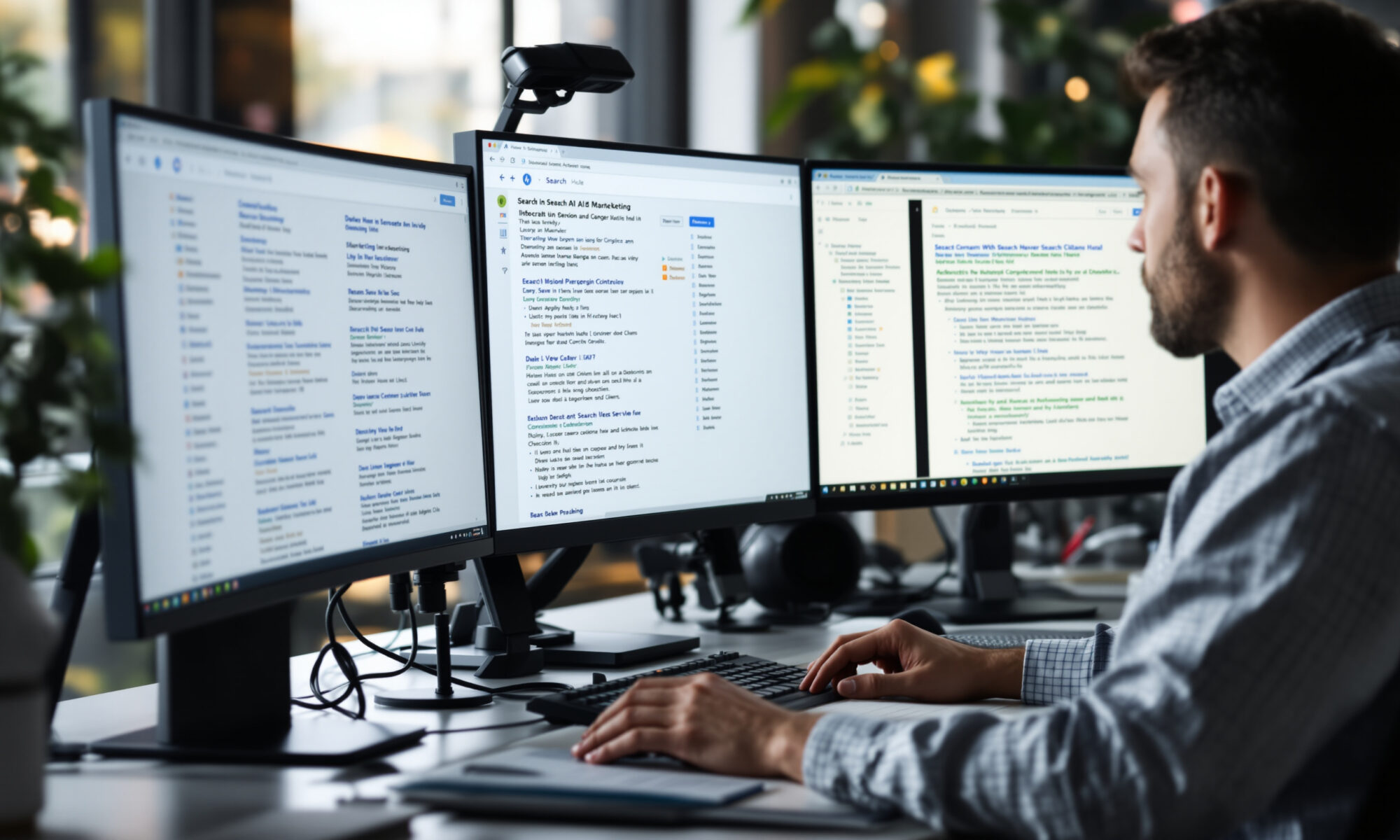
Answer engine optimization is the practice of making your content easy for Google AI Overviews, ChatGPT Search, Bing Copilot, Perplexity, Gemini, and similar systems to understand, trust, extract, and cite. It doesn’t replace SEO. In 2026, the smart play is to keep search fundamentals strong, then add answer-first structure, clearer entities, verifiable sources, crawl access, and AI citation tracking.
What answer engine optimization means in 2026
Search intent for this topic is informational with a practical edge: you want to know what answer engine optimization is, how it differs from SEO and GEO, and what to do about it without buying snake oil. The short version: AEO aims for visibility inside answers, not just rankings below them.
Answer engines include traditional search features such as featured snippets and People Also Ask, but the 2026 conversation is mostly about generative systems. Google AI Overviews and AI Mode, OpenAI’s ChatGPT Search, Microsoft Copilot Search in Bing, Perplexity, Claude-connected search experiences, and Gemini all shape how people receive answers before they click.
The phrase answer engine optimization is often used beside GEO, or generative engine optimization. The 2024 academic paper “GEO: Generative Engine Optimization,” associated with KDD 2024, framed GEO as a way to improve content visibility in generative-engine responses. In practice, GEO is usually the generative-AI subset of AEO, while AEO is the wider umbrella.
Here’s my view: if someone sells AEO as a magic workaround for weak SEO, be skeptical. Google said in 2026 that there are no special optimizations or extra requirements for AI Overviews and AI Mode beyond Search fundamentals, though it still recommends crawlability, indexability, useful content, and structured data that matches visible page content.
AEO vs SEO vs GEO: the useful distinction
SEO is about earning visibility in search results. Answer engine optimization is about becoming a source that answer systems quote, summarize, cite, or recommend. GEO overlaps with that second goal when the answer is generated by an AI model rather than selected as a classic snippet.
Old-school SEO still matters because answer engines don’t live in a vacuum. They need crawlable pages, trusted entities, topical coverage, internal links, external references, and content that solves the query cleanly. If your site has technical problems, thin content, or messy authorship, adding an FAQ block won’t rescue it.
For technical foundations, you may want to pair AEO work with a broader review of search architecture and technical SEO for SMBs. The machinery underneath the page still decides whether your content can be found, parsed, indexed, and reused.
| Discipline | Main goal in 2026 | Typical visibility surface | What you measure |
|---|---|---|---|
| SEO | Rank in organic search results | Google Search, Bing Search, organic listings | Rankings, impressions, clicks, conversions |
| Answer engine optimization | Be extracted, cited, or presented as a direct answer | AI Overviews, AI Mode, Copilot, ChatGPT Search, Perplexity, snippets | Citations, mentions, cited URLs, AI referral traffic |
| GEO | Improve visibility in generated AI responses | Generative search and AI chat interfaces | Prompt-level visibility, share of voice, source position |
| Content marketing | Build demand, trust, and audience memory | Owned site, email, social, search, communities | Engagement, assisted conversions, leads, revenue |
The trap is treating these as separate departments. They aren’t. A practical 2026 content plan should connect AEO to your digital marketing strategy, because a citation inside an AI answer is only useful if it leads to a business outcome you can name.
How answer engines choose sources
No public source gives the full proprietary formula for ChatGPT, Gemini, Perplexity, Copilot, or Google AI Overviews. That’s the pitfall many guides skip. Nobody outside those teams can honestly promise that one markup trick will make you cited next week.
Still, official and research-backed signals point in the same direction. Google emphasizes useful content, crawlability, indexability, and structured data that reflects visible content. OpenAI said in 2025 that ChatGPT Search includes inline citations and that publishers should allow OAI-SearchBot crawling to be eligible for inclusion. Microsoft said in 2025 that Copilot Search in Bing includes citations and inline source links.
Academic GEO research from 2024 reported that methods such as citing sources, adding statistics, and using quotations could improve visibility in generative-engine responses, with secondary summaries citing gains of up to 40%. Treat that number carefully. It doesn’t mean every page gets a 40% lift; it means answer systems may reward content that sounds evidential rather than vague.
One uncomfortable detail: answer engines may cite a page that isn’t the original source if that page explains the answer more clearly. A manufacturer spec sheet can lose to a publisher comparison if the comparison is cleaner, better structured, and easier to quote. Accuracy matters, but packaging matters too.
Build pages that can be cited
The best answer engine optimization work starts before writing. Pick a query, identify the exact answer format the user expects, then produce the shortest reliable answer near the top. After that, add depth for the reader who keeps going.
A good AEO page usually has a direct definition, named entities, dates on figures, source attribution, and sections that mirror real follow-up questions. If you’re writing about software, name versions and products. If you’re writing about prices, date the range. If you’re making a recommendation, say when it doesn’t apply.
- Lead with the answer. Put the direct response in the first 50 to 80 words, before context or brand storytelling.
- Make entities unambiguous. Spell out people, companies, products, places, standards, and dates instead of relying on pronouns.
- Use evidence. Add statistics, quotes, official guidance, test results, or observed price ranges when you can verify them.
- Structure around questions. Use H2s and H3s that match how people ask, then answer each one plainly.
- Keep crawl access open. Check robots.txt, indexability, canonical tags, and AI/search bot access before blaming the content.
- Add schema only when it matches the page. FAQ, Article, Product, Organization, and HowTo markup can help machines parse content, but fake markup is a liability.
For teams already using AI in content production, the danger is sameness. AI can help draft briefs, compare SERPs, and generate schema, but you still need original judgment, examples, and verification. A useful companion read is this broader look at AI in marketing strategy for 2026.
Honestly, the biggest AEO win is often editing, not tooling. Cut the throat-clearing. Replace “solutions may help improve operational efficiency” with the specific thing the user asked for. Answer engines are allergic to fog because readers are too.
A simple AEO calculation most teams skip
Answer engine optimization can look soft until you put numbers around it. Suppose you track 50 high-intent questions across ChatGPT Search, Google AI Overviews, Perplexity, Gemini, and Copilot once a week. That’s 250 answer checks per week, or roughly 1,000 checks in a four-week month.
If your brand or URL appears in 80 of those 1,000 checks, your raw AI answer visibility rate is 8% for that query set in that month. If two competitors appear 150 and 110 times, you have a share-of-voice problem, not just a content problem. Now you can decide where to invest.
Measurement should not rely on one prompt, one day, one tool. A 2026 arXiv paper on measuring visibility in AI search argues that GEO measurement needs to account for variability rather than one-time prompts. That matches real use: answers can shift with wording, location, freshness, user context, and model updates.
Bing Webmaster Tools introduced “AI Performance” in public preview in 2026, according to Microsoft, showing how publisher content appears across Microsoft Copilot, Bing AI-generated summaries, and partner integrations, including cited URLs and citation changes over time. That matters because native platform reporting is more useful than screenshots in a spreadsheet.
You should also watch referrals from AI assistants, but don’t overread them. Some answer interactions satisfy the user without a click. Similarweb reported zero-click data for the keyword “answer engine optimization” using December 2025 to February 2026 worldwide keyword data, though the specific figure wasn’t independently verifiable from accessible sources. Directionally, the risk is clear: citations may build trust even when traffic doesn’t spike.
Controls, risks, and the part nobody likes
Publishers want visibility and control. Those goals sometimes collide. In 2025, Bing said the data-nosnippet HTML attribute lets publishers control content shown in Bing Search and AI-generated answers while keeping pages discoverable. Useful, but heavy use may reduce the very answer visibility you’re trying to earn.
OpenAI’s publisher guidance said ChatGPT Search eligibility depends in part on allowing OAI-SearchBot. Blocking crawlers can protect content, reduce server load, or support licensing strategy. It can also remove you from the pool of sources that search-connected assistants can cite. There isn’t one correct setting for every site.
Reputation is another edge case. If answer systems summarize your executives, doctors, lawyers, restaurants, or products inaccurately, the “answer” may become the version people remember. For individuals and brand leaders, this connects directly to personal reputation inside AI answers.
Legal and ethical risks sit nearby. Health, finance, politics, and environmental topics are more sensitive because wrong citations can do real damage. A May 2026 arXiv paper audited ChatGPT, Copilot, Gemini, and Perplexity across 712 real-world queries in politics, health, and environment, underscoring how citation quality has become a serious research topic.
My practical advice: don’t optimize low-quality claims for extraction. Make the page more accurate first. If an answer engine quotes you, you want the quoted sentence to survive a lawyer, a customer, and a subject-matter expert reading it slowly.
Where to start this month
Start with 20 questions your best customers ask before buying, subscribing, booking, or trusting you. Map each question to an existing page, then check whether that page gives a direct answer, names the relevant entities, cites evidence, and has a clear next step.
Next, run those questions through the answer systems your audience actually uses. A B2B software buyer may lean on Google, ChatGPT, and Perplexity. A local service buyer may still begin in Google Search and Maps. A developer may compare Gemini, ChatGPT, docs, Stack Overflow, and GitHub discussions.
Fix pages in order of commercial value. Definitions and glossaries are nice, but comparison, pricing, compliance, troubleshooting, and “best for” pages often matter more. If you’re already improving snippets and metadata, this guide to AI-assisted SEO meta descriptions can support the click-through side of the work, though metadata alone won’t win citations.
Then create a monthly AEO report with four lines: tracked questions, answer appearances, cited URLs, and AI-referred visits or conversions. Add notes for answer errors and competitor citations. Simple beats theatrical.
Answer engine optimization is still young enough that discipline beats sophistication. The teams that win in 2026 won’t be the ones chasing every prompt hack; they’ll be the ones publishing clean answers, maintaining technical access, proving claims, and measuring visibility often enough to notice change.
FAQ
Is answer engine optimization replacing SEO?
No. In 2026, AEO is adjacent to SEO, not a replacement. Google says Search fundamentals still apply to AI Overviews and AI Mode, and most AEO tactics depend on strong SEO basics.
What is the difference between AEO and GEO?
AEO covers optimization for direct answers across snippets, voice, AI search, and chat-style systems. GEO usually refers more narrowly to visibility inside generative AI responses.
How do I measure answer engine optimization?
Track whether your brand, pages, and competitors are cited or mentioned across Google AI features, ChatGPT Search, Copilot, Perplexity, and Gemini. Record cited URLs, answer position, referral traffic, and changes over time.
Does schema markup help with AEO?
Schema can help answer systems understand your content, especially when it matches visible page content. It won’t compensate for thin content, blocked crawling, weak evidence, or unclear answers.
Should I allow AI crawlers to access my site?
If you want inclusion in search-connected AI answers, allowing relevant crawlers can help eligibility. If content licensing, privacy, or server control matters more, you may choose restrictions and accept lower answer visibility.
 EN
EN  FR
FR  ES
ES