

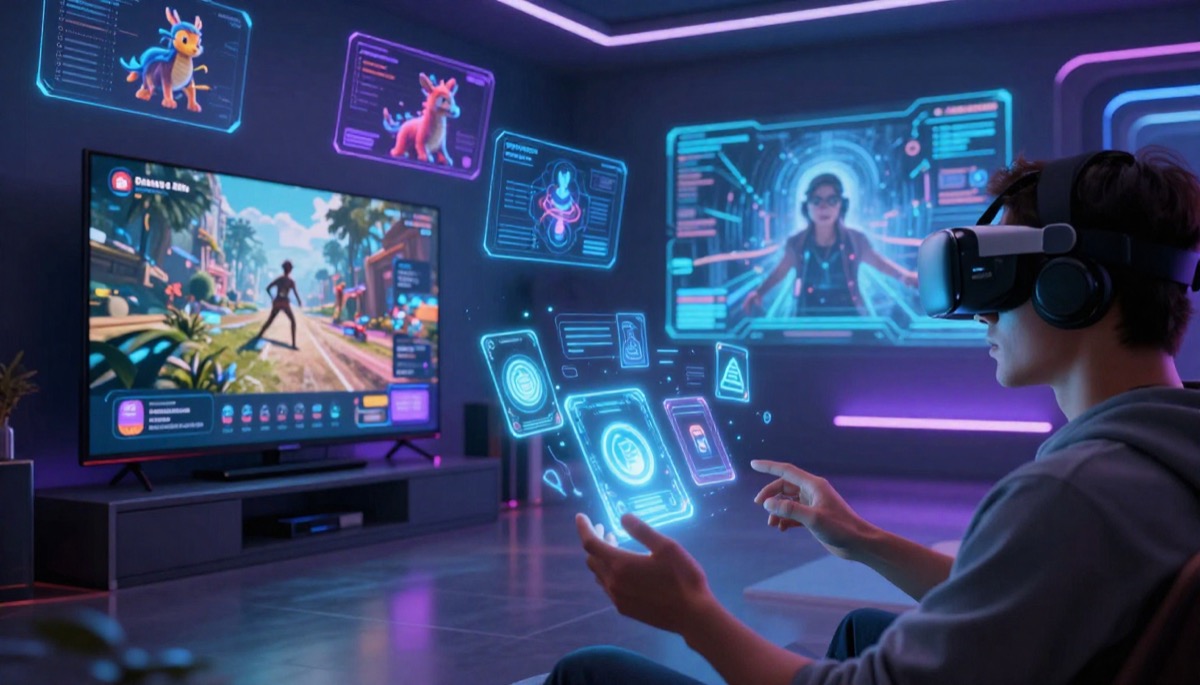
Discover digital breakthroughs in entertainment and gaming technology: cloud streaming, VR/AR immersion, blockchain ownership, and AI-driven personalization converge to deliver inclusive fun.
Entertainment and gaming have always moved forward with the pace of technology, yet the past few years have felt like a sprint rather than a steady jog. From lightning-fast internet connections to tiny chips packing console power into phones, the digital stage is shifting beneath everyone’s feet. Studios, streamers, and hardware makers race to surprise audiences with smoother graphics, smarter stories, and new ways to connect. To understand how big this shift is, it helps to explore the pillars holding up today’s breakthrough moment together.
For example, online casinos around the globe once focused on credit cards alone, but today some accept cryptocurrencies for lightning-quick deposits, a trend that places them among the most innovative bitcoin casinos. This shift matters because younger players already manage crypto wallets on their phones, so meeting them where they spend and save keeps the industry ahead of the curve while teaching older fans that the future of payment is already here, and growing faster every month.
Cloud Gaming Redefines Access
Once, gamers needed to buy bulky consoles or build pricey computers just to keep up with fresh releases. Cloud gaming flips that equation by moving the heavy lifting to remote servers. A simple smart TV, tablet, or even a school laptop can now stream blockbuster titles at 60 frames per second, provided the internet connection is stable. This model mirrors the rise of movie streaming a decade ago, turning hardware from a barrier into a basic doorway. Players simply log in, pick a game, and jump straight into action.
Behind the scenes, data centers juggle thousands of video feeds, compressing and delivering them in milliseconds. This requires vast bandwidth, smarter traffic routing, and edge nodes placed closer to neighborhoods. Tech giants invest billions in such infrastructure because it widens their audience overnight. A teen in a rural town who could never afford a next-gen console can now explore the same open worlds as friends in big cities. For developers, subscription based cloud platforms shrink piracy risks and extend the life of niche titles far beyond launch day. Lower entry costs also help parents say yes more often.
Virtual and Augmented Reality Bring Worlds Alive
Virtual reality (VR) headsets once felt like science fiction props, but lighter designs and sharper displays have turned them into household gadgets. By blocking out the real world, VR tricks the brain into believing it is walking on alien planets, battling dragons, or sitting courtside at a playoff game. Spatial audio deepens the illusion, letting sounds travel naturally from behind or above. Motion controllers map every swing, toss, or wave into digital space, so actions feel immediate. Even classrooms now adopt VR to illustrate history lessons in immersive ways.
Augmented reality (AR) takes a different path by layering graphics over the physical environment rather than replacing it. Phone cameras and see-through glasses can paint navigation arrows on sidewalks, summon animated tutors onto a desk, or let grandparents place virtual furniture in their living room before buying. Popular mobile games have already sent millions wandering parks chasing digital creatures, proving that AR experiences scale well on everyday hardware. Businesses notice, using AR apps to train technicians, preview store layouts, and guide tourists. As 5G spreads, latency drops make overlays stick perfectly to moving objects.
Blockchain Opens New Doors for Ownership
When a player buys a digital sword today, the item usually stays locked inside one publisher’s server. Blockchain technology promises to flip that model by giving each asset a unique token, stored across thousands of computers and claimed directly by the buyer. Through non-fungible tokens (NFTs), costumes, trading cards, or pieces of virtual land can move between compatible games, storefronts, or even social platforms. Ownership becomes verifiable, tradeable, and potentially profitable. This shift borrows lessons from collectible markets and gives developers fresh ways to reward loyal fans with limited-edition content.
Critics worry about speculation, energy use, and market bubbles, but creative studios are finding balanced solutions. Some chains now rely on proof-of-stake verification, cutting electricity demands by over 90 percent. Others bundle assets behind fixed prices to curb runaway bidding wars. The most exciting experiments tie NFTs to game play itself: a racing title might let winners upgrade a tokenized car, which grows more valuable as victories pile up. Musicians are joining in, selling token-gated concert tickets that double as digital souvenirs. When handled responsibly, blockchain can hand real control back to players.
Artificial Intelligence Personalizes Play
Artificial intelligence already decides which songs appear on playlists, and the same logic now tailors gaming experiences. Machine learning models analyze a player’s decisions—how often they explore side quests, whether they prefer stealth or direct combat, the pace at which they quit—and then adjust difficulty, enemy behavior, or story branches in real time. Instead of recalibrating settings manually, the adventure molds itself like a living dungeon master. This keeps newcomers from feeling overwhelmed while still challenging veterans who crave high stakes. The result is longer engagement and more satisfying victories.
Developers also employ AI to generate vast landscapes and unique character dialogue on the fly, slashing production time. An algorithm can stitch together rivers, valleys, and towns in minutes, then place quests that suit a player’s style. Voice synthesis lets non-player characters greet each user by name, switching tone depending on past choices. Outside the game, support bots detect cheating, match teammates with complementary skills, and even suggest break reminders to encourage healthy habits. As AI chips arrive in handheld devices, these personalized touches will follow players wherever they go, online or offline.
What the Next Decade Could Hold
The innovations above rarely stay isolated; they weave together into new forms of entertainment. Imagine launching a cloud stream of a medieval world, slipping on light AR glasses that project the heads-up display onto your living room, and meeting friends represented by NFT avatars, all while AI dials challenges to fit each mood. None of these pieces need to live on the same device, yet they cooperate through fast networks and open standards. This convergence hints at a future where boundaries between mediums fade into a single, fluid playground.
Regulation, accessibility, and environmental concerns will shape that playground’s rules. Governments may call for clearer data protections as cloud services gather piles of personal metrics. Hardware makers must ensure headsets remain comfortable for players with disabilities, while network providers look to renewable energy to keep servers cool. Still, early signs are hopeful: industry alliances are already writing universal protocols, and cross-play agreements let friends team up no matter the platform. If cooperation continues, the coming decade could turn today’s breakthrough into tomorrow’s baseline, leaving imagination as the only remaining limit for developers, players, and curious newcomers alike.