

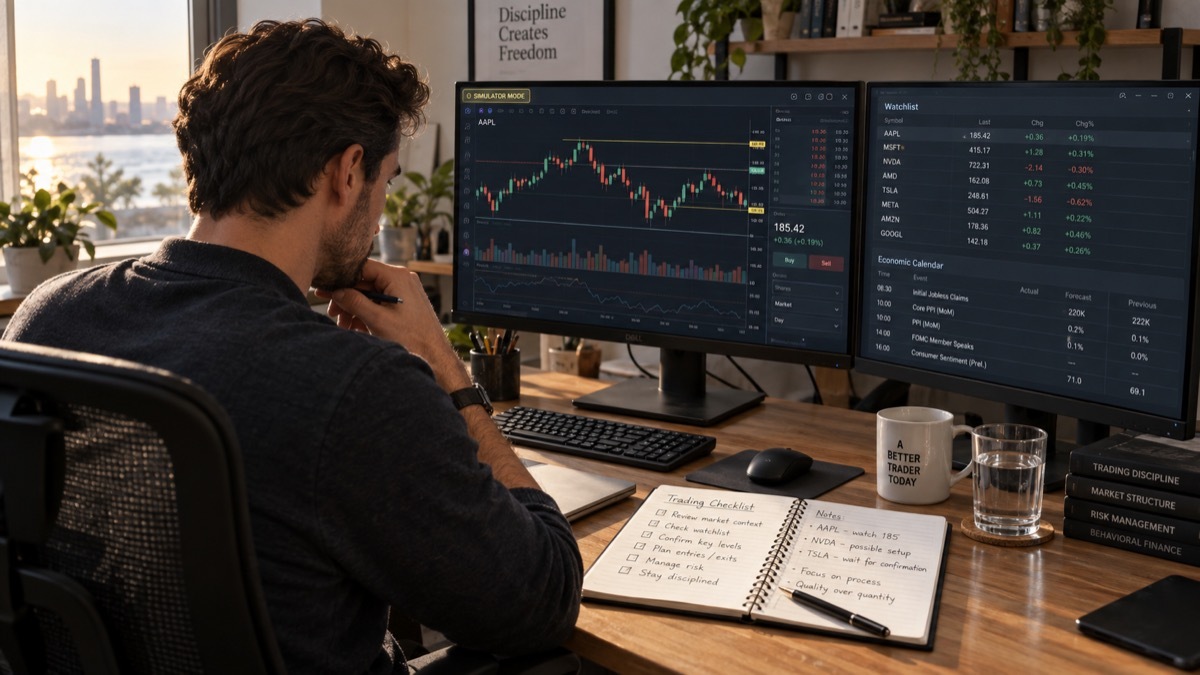
The opening bell might mark the official start of the trading day, but your preparation should begin well before it rings with practice on a day trader simulator and a ready watchlist. Jumping straight into fast-moving charts without a plan can make every price swing feel urgent. Before long, you may find yourself reacting rather than making deliberate decisions.
A pre-market routine creates some structure before the action begins. It gives you time to understand what’s happening, identify potential opportunities, and decide how you’ll respond to different scenarios. More importantly, it can help you sit down at your trading setup feeling prepared rather than overwhelmed.
1. Start Before You Open the Charts
Your morning routine doesn’t need to begin with candlesticks and financial headlines. In fact, giving yourself a little time away from the market may help you approach it with a clearer perspective.
Get enough sleep, eat something, drink some water, and give yourself a few quiet minutes before opening your trading platform. Even a short walk or cup of coffee away from your screens can create separation between waking up and making financial decisions.
2. Practice Before Real Money Is on the Line
Not every trading session has to involve actual money. Using a simulator gives you an opportunity to practice setups, test strategies, and become more comfortable making decisions without putting capital at risk.
Simulation can also become part of your broader routine. You might rehearse how you’ll respond to certain price movements, practice entering orders, or review a strategy that you’ve been developing.
3. Check the Bigger Market Picture
Once you’re ready to dig in, start broad. Check major indexes, futures, overnight activity, and the general mood of the market before focusing on individual stocks.
You’ll also want to know what’s on the economic calendar. Interest-rate announcements, employment reports, inflation data, earnings releases, and other events can quickly change market activity.
Just don’t confuse preparation with consuming every financial headline published before breakfast. Look for information that could genuinely affect your trading plan.
4. Build a Focused Watchlist
Trying to follow 30 different tickers at once can turn your trading screen into a source of information overload. Instead, build a short watchlist based on specific criteria.
Look for stocks showing unusual volume, meaningful news, earnings activity, or interesting technical setups. Then write down why each one deserves your attention.
A focused watchlist gives you somewhere specific to direct your attention once trading begins. Instead of chasing whatever happens to be moving, you’ll already know what you’re watching, and, more importantly, why.
5. Mark Your Important Levels
Once you’ve narrowed down your watchlist, spend a few minutes identifying the price levels that could matter during the session. Previous highs and lows, support and resistance zones, gaps, and pre-market highs and lows can all provide useful reference points.
Marking these areas ahead of time means you aren’t trying to interpret everything as prices move quickly. Instead of predicting exactly what will happen, think through a few possibilities. What would you do if the price breaks resistance? What if it immediately reverses? Planning for multiple scenarios can make it easier to respond rather than react.
6. Decide Your Risk Before the Bell
Risk management is much easier when you’re calm. Before trading begins, decide how much you’re willing to risk on an individual trade and across the entire session.
You can also establish potential entry points, stop-loss levels, and profit targets for setups you’re considering. These numbers don’t necessarily have to be permanent, but they can give you boundaries.
Most importantly, establish a point at which you’re done for the day. Having a maximum daily loss can help prevent one disappointing trade from turning into an emotional attempt to win everything back.
7. Write Down Your Trading Plan
Your trading plan doesn’t need to resemble a complicated business proposal. A few sentences or a simple checklist can be enough.
Write down which setups you’re looking for, the stocks you’re watching, your risk limits, and what needs to happen before you’ll consider entering a trade. You can also note situations that would make you stay out entirely.
8. Give Yourself a Mental Check-In
Before the bell rings, check yourself as carefully as you’ve checked the market. Are you exhausted? Distracted? Frustrated about yesterday’s loss? Feeling overly confident after a winning streak?
Your mindset can influence how you interpret opportunities and risk. If you’re not in a good position to make thoughtful decisions, sitting out can be a valid choice. There will always be another trading session.
Preparation Is Part of the Trade
A productive trading routine doesn’t need to be elaborate. It simply needs to give you enough time and structure to approach the market intentionally.
Review the bigger picture, narrow your watchlist, establish risk limits, and check your mindset before trading begins. With repetition, those habits can make preparation feel automatic. You can’t control what the market does after the opening bell, but you can control how prepared you are when it rings.