

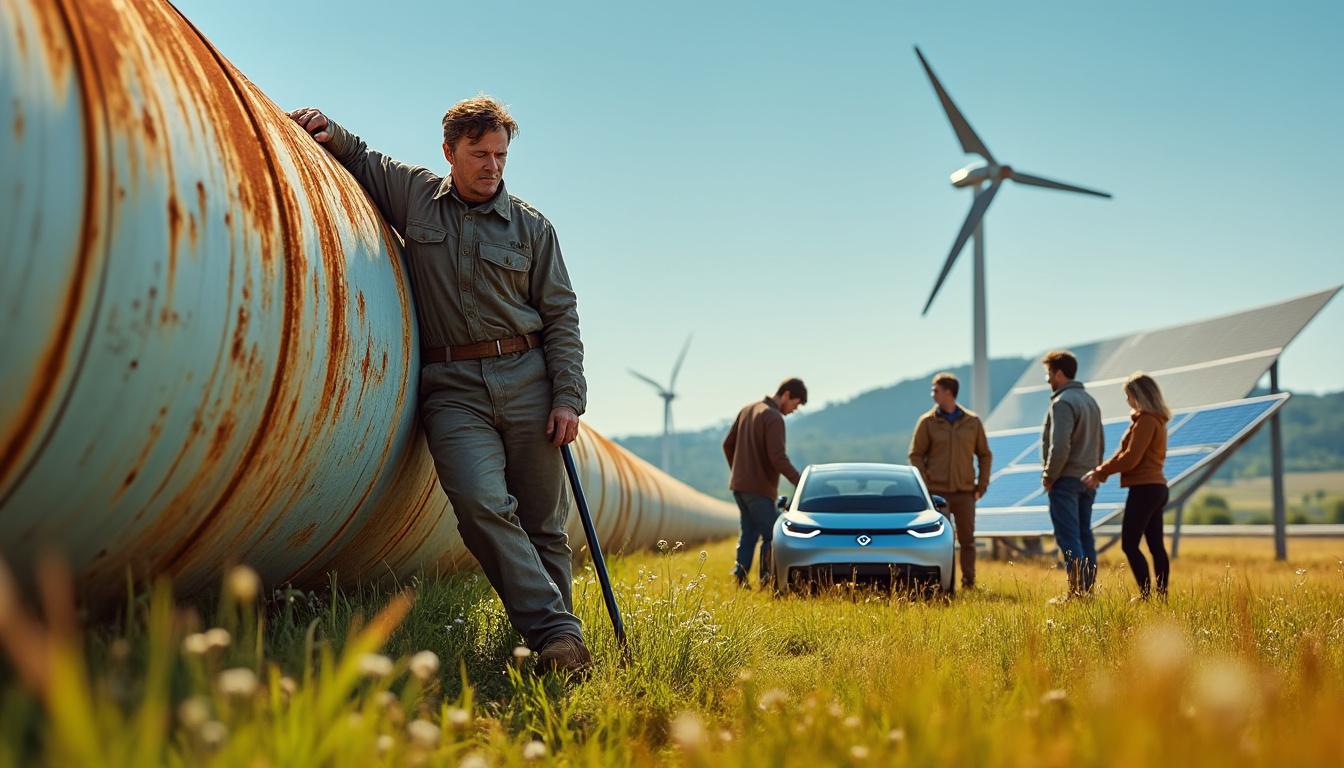
Fossil fuels still hold the energy system together, but artificial intelligence is starting to reshape how grids run, how data centers consume electricity and how renewable energy assets compete. Surging AI workloads increase demand for stable power, which tempts investors and policymakers to lean back on gas and other hydrocarbons as a short-term fix. At the same time, AI offers precise forecasting, smart control and new business models that make wind, solar and storage more reliable and more profitable. The tension between a fossil-based safety net and a digital push for clean energy defines the next phase of the energy transition and will decide how fast carbon emissions fall.
Across Europe, North America and Asia, utilities and tech firms race to secure capacity for large data centers while governments try to keep climate change targets in sight. Renewable energy already delivers close to half of European power output, with a strong pipeline waiting for grid connection, yet integration challenges depress prices and delay projects. AI-driven analytics promise sharper planning and real-time optimization, from siting turbines to scheduling industrial loads, while continuous fossil fuel reliance risks locking in outdated infrastructure. The central question now is not whether artificial intelligence will influence the grid, but whether it will anchor fossil fuels for decades or push clean energy and green technology to the forefront of global energy innovation.
Fossil fuels, AI demand and the next phase of the energy transition
Fossil fuels still provide the backbone of global power systems because they offer controllable output and established infrastructure. The rapid rise of artificial intelligence workloads in cloud regions adds strain, since data centers require stable, high-quality electricity around the clock. In regions where renewable energy integration lags behind, gas and coal plants often receive life extensions to guarantee reliability.
Forecasts from major agencies show global renewable energy generation rising roughly 60% by 2030, with around 45% of total electricity coming from clean energy sources. Yet expectations for this growth were revised downward after policy shifts and grid constraints slowed new connections. AI-driven demand sometimes pushes governments to prioritize immediate capacity, which leads to more investment in gas plants as a perceived low-risk option.
Industry analysts describe this as using fossil fuels as a crutch to support the AI boom while grids modernize. The risk is clear: overbuilding gas for short-term security can lock in carbon emissions beyond climate targets. The opportunity lies in aligning data center growth with aggressive renewable energy deployment, storage build-out and advanced digital control.
How data centers expose the weakness of fossil fuels as a crutch
AI data centers pack immense compute capacity into compact sites that draw hundreds of megawatts on a near-continuous basis. This profile matches the strengths of fossil fuels, so gas plant operators often pitch themselves as natural partners for digital hubs. Reports on AI data centers and their impact highlight how regions with cheap gas and loose planning rules attract hyperscale investments.
At the same time, this dependence exposes structural weaknesses. Fossil fuels remain exposed to fuel price volatility, geopolitical risk and tightening climate policy. Carbon pricing, methane regulations and air quality rules can raise operating costs faster than expected, turning once-cheap gas plants into stranded assets. AI companies that pin long-term contracts to such facilities risk higher costs and reputational damage.
Energy transition leaders now experiment with hybrid models where AI data centers co-locate with large solar or wind farms and rely on gas only for backup. This reduces carbon intensity while keeping reliability high, and supports grid stability by aligning flexible loads with renewable peaks. The trend hints at how artificial intelligence might gradually reduce fossil fuel use instead of extending it indefinitely.
AI insights for renewable energy integration and grid stability
The core promise of artificial intelligence in energy lies in prediction and optimization. Renewable energy output depends on weather patterns that shift on hourly, daily and seasonal timeframes. AI models process decades of meteorological data, satellite imagery and real-time sensor feeds to anticipate wind and solar production with much higher accuracy than traditional methods.
With better forecasts, grid operators dispatch fossil fuels more efficiently, run fewer spinning reserves and rely more on clean energy without compromising stability. This directly lowers carbon emissions and fuel costs. When combined with advanced grid management, AI supports higher renewable penetration, reduces curtailment and smooths price spikes that previously scared off investors.
European institutions refer to this as the twin potential of energy for AI and AI for energy. The same digital infrastructure that feeds large language models can coordinate millions of distributed assets, from rooftop solar to electric vehicles, into a coordinated virtual power plant. The result is a smarter, more flexible system where clean energy does more of the heavy lifting and fossil fuels fill a shrinking residual role.
Why intermittency challenges need artificial intelligence, not extra gas
Intermittency remains the standard argument for continued reliance on fossil fuels. Wind output drops in calm periods and solar panels produce nothing at night. Traditional responses use gas units as quick-start backup, but this approach keeps emissions high and reduces the economic case for storage and demand flexibility. Artificial intelligence offers a different path.
Machine learning models optimize not only generation but also consumption. Industrial plants, commercial buildings and even smart homes shift part of their demand to align with renewable energy availability. Electric vehicle charging, heating and cooling systems respond to AI-driven price signals that reflect real-time grid conditions. This reduces the need for fossil-based backup and opens new revenue streams for flexible loads.
Analysts describe how AI algorithms can orchestrate battery storage fleets, deciding when to charge during low-price, low-carbon periods and when to discharge to avoid peaks. The result is a system where intermittency is managed primarily through intelligence and flexibility instead of extra smokestacks. Gas still plays a role, but not as the default solution.
How AI shifts the investment logic of fossil fuels vs clean energy
Investment flows respond to risk and visibility. Fossil fuels historically attracted capital because revenue streams seemed stable and technology risk appeared low. As artificial intelligence spreads across the energy sector, this logic is shifting. Renewable energy projects with integrated AI control and storage show more predictable output and improved margins.
Global data shows renewable energy prices dropping by more than 90% over the past decade, with most new projects cheaper than fossil alternatives. When paired with AI-driven forecasting and trading, developers reduce imbalance costs and capture higher prices during scarcity periods. This strengthens the business case and draws fresh capital into solar, wind and storage.
Meanwhile, AI improves asset management in conventional plants as well, monitoring equipment health and optimizing fuel use. Yet these gains do not remove exposure to long-term climate change policy and carbon pricing. Investors understand that fossil fuel assets risk sudden revaluation, whereas AI-enhanced clean energy platforms align with sustainability goals and public pressure.
Digital trends that tie AI, renewables and new infrastructure together
Artificial intelligence does not evolve in isolation. Its expansion depends on infrastructure trends in data centers, connectivity and semiconductor design. Analysis of AI titans and data center build-out shows how location choices shift toward regions with abundant clean power and supportive regulation. This reinforces renewable energy investment in those areas.
Technology roadmaps such as emerging technology trends highlight convergence between AI, edge computing and advanced storage. These trends support more granular control of local grids, where distributed solar and batteries coordinate automatically. As these systems mature, the comparative advantage of fossil fuels declines.
Digital innovation extends beyond energy. Insights from web and internet trends or advances in entertainment and gaming technology show how low-latency computing and immersive services also require efficient, green infrastructure. The same optimization techniques that reduce lag in online platforms help balance power flows in a decarbonized grid.
Artificial intelligence for smarter storage, grids and sector coupling
Mass deployment of renewable energy depends on three pillars beyond generation: storage, transmission and flexible demand. Artificial intelligence strengthens each pillar. Storage costs dropped nearly 90% over fifteen years, but project economics still suffer from uncertain utilization. AI models reduce this uncertainty by predicting market price spreads, weather patterns and demand peaks with higher precision.
Transmission networks face congestion patterns that change with new solar and wind connections. AI-based tools support planning by simulating different build-out scenarios and identifying lines with the highest impact on system reliability and carbon emissions. During operation, algorithms route power flows to minimize losses and avoid overloads, delaying the need for expensive new infrastructure.
Sector coupling links electricity to transport, heating and industry. AI coordinates charging of electric vehicles, operation of heat pumps and industrial processes so they sync with renewable energy output. This turns electrification into an ally rather than a burden for the grid, reinforcing the case for clean energy instead of fossil fuels. The net effect is a more resilient and sustainable energy system.
Real-world examples of AI pushing renewable energy ahead of fossil fuels
Several companies already deploy artificial intelligence to increase renewable energy value and support sustainability goals. Wind optimization platforms use sensor data from turbines to adjust blade pitch in real time, raising annual energy production while lowering mechanical stress. Case studies on AI research impacting industries show similar gains in industrial efficiency and logistics.
Other firms focus on granular energy tracking and digital certificates, making it simpler for corporates to match consumption with clean energy production hour by hour. This supports new contracts where AI-driven data proves when and where renewable energy flowed to a customer. It also gives data center operators hard evidence of emissions reduction, which matters for climate reporting.
Smart manufacturing platforms apply AI to heavy industry processes, cutting waste heat and optimizing material use. Heavy industry accounts for a large share of global energy demand, so each efficiency gain reduces fossil fuel consumption and carbon emissions. In this way, AI improves both the supply side and demand side of the energy system.
AI pollution, climate impact and the risk of fossil fuel lock-in
Critics warn that artificial intelligence risks becoming a climate problem if powered by uncontrolled fossil fuels. Training large models and running inference at scale consume significant electricity and water for cooling. Analysis of AI pollution and climate impact outlines scenarios where unchecked data center growth pushes emissions higher even as other sectors decarbonize.
This risk intensifies if policymakers allow fossil fuels to expand as a default response to new demand. In such a case, AI would slow the energy transition instead of accelerating it. The lure of the fossil fuel crutch becomes hard to resist when grid upgrades lag, yet each year of delay increases cumulative emissions and deepens climate change impacts.
Clear standards and transparency on the energy mix behind AI workloads provide a way forward. Requirements for renewable energy procurement, hourly matching and public reporting steer companies toward greener strategies. Artificial intelligence then becomes an incentive to build more clean capacity instead of more gas plants.
Location choices: why clean grids attract AI while fossil grids lag
Data center operators evaluate locations based on power price, reliability, climate risk and regulation. Detailed studies of why Texas is emerging as a data center hub show the importance of abundant wind and solar, flexible grid rules and access to fast-growing clean energy capacity. Regions with strong renewable energy resources gain a competitive edge.
Other digital sectors face similar choices. Cryptocurrency miners, for example, seek low-cost electricity and sometimes end up tied to fossil fuels, as seen in reviews of cryptocurrency mining innovations. AI leaders increasingly avoid such traps because customers and regulators demand credible decarbonization pathways.
Long term, regions that combine high-quality renewable energy, advanced grid management and clear climate policy attract the most AI investment. Those leaning heavily on fossil fuels risk losing competitiveness as green technology matures and investors favor low-carbon compute regions.
How AI-driven energy innovation supports a broader sustainable future
The influence of artificial intelligence on fossil fuels and renewable energy extends into other technologies and sectors. New materials, advanced sensors and robotics all draw from AI-enabled research pipelines. Studies on sustainable technologies for a greener future highlight how digital tools accelerate development of more efficient solar cells, better batteries and improved grid components.
Military and industrial research, sometimes linked to novel fields like next-generation laser systems, also feed back into civilian applications. Precision manufacturing, advanced cooling and resilient communication networks developed for one domain often lower costs for clean infrastructure. AI helps optimize these crossovers and makes them faster.
In parallel, strategies for managing computational power for AI aim to reduce energy intensity per operation. More efficient chips, pruning techniques and workload scheduling all contribute to sustainability. Each improvement eases pressure on the electricity system and reduces the temptation to lean on fossil fuels.
Key actions to ensure AI pushes renewables ahead of fossil fuels
To prevent fossil fuels from becoming a permanent crutch, policymakers, utilities and AI firms need coordinated action. Practical steps exist at each level of the energy system, from high-level planning down to data center design. A simple checklist helps clarify priorities and links digital ambitions with climate goals.
- Mandate transparent reporting of the energy mix and carbon emissions of AI workloads.
- Align data center permitting with local renewable energy and grid upgrade plans.
- Support AI-driven forecasting, flexibility markets and virtual power plants in regulation.
- Provide long-term contracts that reward flexible, low-carbon capacity instead of fossil baseload.
- Encourage co-location of data centers with renewables and storage through grid tariffs and incentives.
These measures change the default response from “add more gas” to “add more smart clean capacity.” Artificial intelligence then becomes a driver of energy transition and sustainability instead of a drain on progress.
Our opinion
Fossil fuels as a crutch for artificial intelligence reveal both the fragility and adaptability of today’s energy systems. On one hand, gas plants still rescue grids when renewable energy falters and storage remains sparse. On the other hand, the same AI workloads that strain power systems offer the analytical strength to integrate clean energy, orchestrate flexibility and compress the cost gap between fossil-based and low-carbon infrastructure.
The decisive factor is intent. If AI, data centers and digital services expand without strict attention to energy sourcing, they extend the lifetime of carbon-intensive assets and slow climate change mitigation. If, instead, each new AI deployment is tied to renewable energy procurement, advanced grid integration and investment in storage, artificial intelligence accelerates the shift to clean energy and reduces long-term dependence on fossil fuels. The next decade will show whether this technology-heavy wave strengthens sustainability and energy innovation or leaves society leaning on the same old crutch.